
Even if Gelb is not yet in his final Metropolitan Opera chapter, he is beginning to contemplate the twilight of his tenure. There is already speculation about his successor. Leading that list is Alexander Neef, the general director of the Paris Opera, and, to a lesser extent, Anthony Roth Costanzo, the countertenor who was appointed general director of the Opera Philadelphia just two years ago.
Deborah Borda, a former president of the New York Philharmonic, said Gelb would be “hard to replace.”
“Running the Metropolitan Opera is the single most challenging and difficult job in the American arts world — and perhaps the entire world,” she said. “He keeps springing back. He keeps it going. He figured out what the old-time audiences wanted, but he had the courage to bring in so many new productions.”
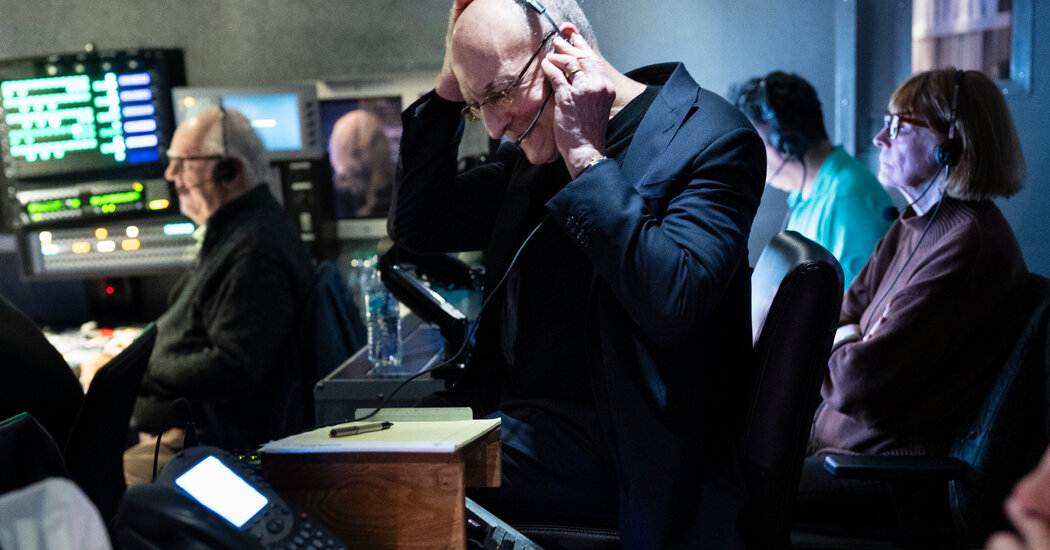
GELB WAS STANDING AT ROW Q in the darkened Met auditorium, leaning over a plank laid across four chairs, on which rested a laptop, a landline, a cellphone charging stand and a dispenser of hand sanitizer. “This is my field station,” he said. Gelb had set up an office in the auditorium for a piano-only rehearsal of “El Último Sueño de Frida y Diego,” and he was a whirl of texting, telephoning and emailing, pausing to talk to singers, musicians, directors and technicians who stopped by with a greeting, question or concern.
His cellphone lit up in the dark, displaying the name and picture of the director Yuval Sharon, and for the next five minutes, Gelb and Sharon talked through casting ideas for the new production of Wagner’s “Ring,” which Sharon is directing. Gelb then loped onstage to talk to the director of “Frida,” Deborah Colker, about safety concerns as the stage splits apart to reveal an underworld.

