
When I first heard inositol being name-checked on yet another wellness podcast, I rolled my eyes internally. Not another supplement being touted to women as some kind of miraculous panacea, I thought. I’d already tried the probiotics, the omega 3s, and the weirdly chunky turmeric tablets, and noticed next-to-no difference (aside from the visible dint in my bank account, of course).
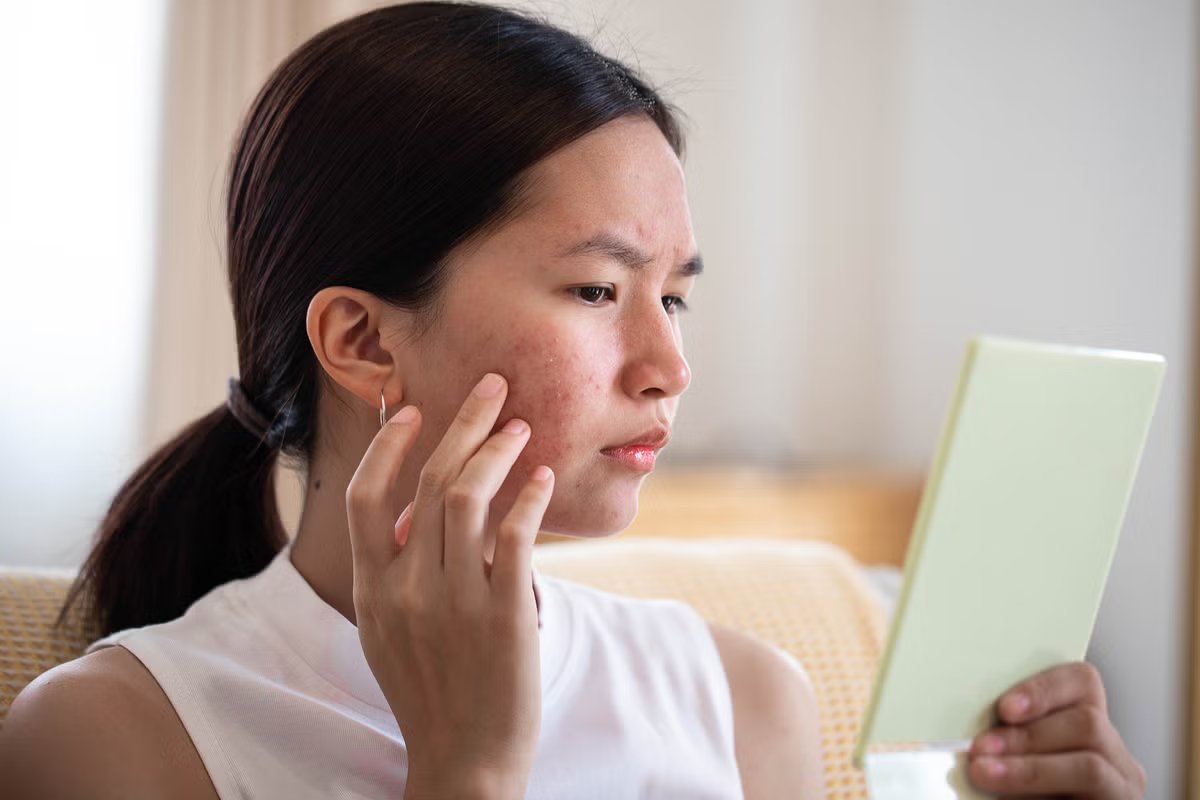
But the online testimonies about its potential acne-clearing benefits (purely based on anecdotal evidence, I should add) forced me to temporarily put cynicism aside. For the past year or so, I’ve been engaged in a war of attrition with my skin as my hormonal acne has returned with a vengeance.
In your mid-30s, I’d argue, acne is perhaps even more of an emotional drain than it is in your teens – at that point, at least most of your peers are also going through the same thing. So forgive me for being more receptive than most to anything that might offer me a chance, however narrow, of clearer skin.
I’d already spent £100 on an LED mask with a “blemish clearing” blue light setting that only seemed to lay further siege to my skin, so I figured a supplement that seemed to work out at about £4 per month probably couldn’t hurt (as with most dietary extras, you can hand a lot more money for a product with more Instagram-friendly branding, but I went for a stripped back option).
Almost three months later, I’m so glad I gave it a go. Daily myo-inositol tablets (this is one of the most common types of inositol; the other is called D-chiro) have helped to calm my skin in a way that countless serums, masks, spot patches and weird gadgets – argon “high frequency wand”, anyone? – never managed to do.
Over the past few years, there has been a massive rise in women attempting to get to grips with their hormones, explains Dr Sima Al Asad, the founder of Dr Sima Aesthetics in Knightsbridge, who is also training in obstetrics and gynaecology. It has become something of a wellness fixation, with countless podcasts and social media accounts dedicated to the subject. Concepts such as “cortisol [levels], insulin resistance, hormone imbalance and cycle syncing” – whereby you adjust your lifestyle according to your menstrual cycle – are now “part of everyday wellness conversations online”, she adds.
Inositol, she continues, “has become one of the supplements constantly mentioned in those conversations when it comes to the recently renamed polyendocrine metabolic ovarian syndrome (PMOS), hormonal acne and weight struggles”. Patients, she notes, “are definitely far more aware of it than they were even a couple of years ago”, with women regularly coming into the clinic “already taking it or specifically asking about it”. On TikTok alone, there are currently around 55,000 videos tagged with the hashtag “inositol”.
Dr Nicole Chiang, a cosmetic, medical and surgical dermatologist, paints a similar picture. “Compared with even a few years ago, patients are much more informed about hormonal health and often arrive already aware of supplements such as inositol, particularly women with hormonal acne or polycystic ovary syndrome,” she says. “Some patients have already tried it themselves, and I have certainly had patients report improvements in areas such as menstrual regularity, hormonal breakouts and overall wellbeing.”
So how does it work? Inositol is a naturally occurring sugar-like compound that is “involved in how the body manages things like insulin, hormones and cell communication”, explains Al Asad.
It is produced in the body, but is also found in certain foods such as nuts, legumes and whole grains. Previously it was considered to be part of the vitamin B family, and is still sometimes referred to as vitamin B8, but inositol is actually a “pseudovitamin” (because the kidneys and liver can make it, and it is not considered an essential nutrient).
There is growing interest in whether improving insulin signalling may indirectly benefit some patients with hormonally driven acne
Dr Nicole Chiang, cosmetic, medical and surgical dermatologist
One of its key roles, explains Dr Susan Mayou, consultant dermatologist at the Cadogan Clinic, is that it helps cells to “absorb and use glucose efficiently for energy”. When this process becomes less effective, she says, insulin resistance can develop, and this is linked to a whole range of metabolic and hormonal conditions – including PMOS.
For those with the condition, “insulin resistance is thought to contribute to hormonal imbalance, elevated androgen levels” – these are the group of sex hormones typically associated with men – and disrupted ovulation, says Chiang. Higher insulin levels, she notes, “can stimulate the ovaries to produce more androgens”, which can worsen symptoms including irregular periods, fertility difficulties, excess hair growth and hormonal acne.
Plus, elevated insulin levels can stimulate the sebaceous glands, the microscopic oil-producing glands in the skin, as well as skin inflammation, so “there is growing interest in whether improving insulin signalling may indirectly benefit some patients with hormonally driven acne”.
As for the differences between myo-inositol and D-chiro? The former controls the entry of glucose into the cells, and also plays a role in follicle-stimulating hormone (FSH) signalling, the communication process that prompts follicles in the ovaries to mature and eggs to develop. D-chiro-inositol, meanwhile, manages the storage of glucose as glycogen, helping to regulate blood sugar in the process.
The strongest evidence around inositol’s benefits is specifically related to PMOS: Chiang points out that research has already suggested that it may help with “ovulation, menstrual regularity and some markers of androgen excess, particularly in women with insulin-resistant forms of the condition”. Some research has also suggested “possible benefits for fertility outcomes and egg quality” too.
A handful of studies have explored inositol’s acne-fighting capabilities, too. One piece of research from Italy, published in 2017, looked at the impact of taking 2g of myo-inositol twice a day on a group of 50 women with PCOS, over the course of six months. The authors noticed a “marked improvement” in inflammation and in the number of skin lesions, based on the Global Evaluation of Acne clinical scale.
An earlier study, from 2009, found that participants taking myo-inositol saw a reduction in testosterone and insulin levels after three months, and a decrease in acne after six months. But not all research has come to similar conclusions. A 2016 study, also focusing on 50 women with PCOS and insulin resistance, compared the impact of metformin, a drug used to control blood sugar. In both groups, half of the women saw improvements in insulin sensitivity and in menstrual cycle regularity, but no significant skin changes were noted.
Social media can blur the line between awareness and self-diagnosis
Dr Sima Al Asad, medical doctor and founder of Dr Sima Aesthetics
It’s important, therefore, to take glowing social media recommendations with the proverbial pinch of salt. International guidelines on PMOS from 2023 “note that evidence is limited and variable, so it should not be presented as a guaranteed alternative to medical treatment”, says Dr Rupert Critchley, founder of VIVA Skin Clinics. He notes that the skin benefits of inositol are indirect – it is “not an acne treatment in the same way as prescription skincare, antibiotics, spironolactone or hormonal medication”, he says.
Patients, Chiang notes, should also “be cautious about assuming that all inositol supplements are interchangeable or that higher doses are necessarily better”. For those with PMOS, she adds, the specific balance of myo-inositol and D-chiro-inositol seems important: the “most studied ratio” is 40:1, which “reflects physiological levels seen in healthy women”. Higher or prolonged doses of D-chiro-inositol might worsen some androgen-related symptoms in some cases, she warns.
And it is also vital to keep in mind that “social media can blur the line between awareness and self-diagnosis”, as Al Asad puts it. “A lot of women are understandably trying to connect the dots with symptoms they’ve often felt dismissed over for years, but not every case of bloating, tiredness or acne automatically means PMOS or a hormone imbalance.” Supplements, she says, “should complement proper medical advice, not replace proper investigations or blood tests” – they are “rarely the entire picture on their own”.
Dr Chiang agrees, noting that it is “important to keep expectations realistic”, as hormonal conditions like PMOS can vary from person to person, so “what works well for one patient may not work for another”. For her, too, supplements are just one component of a broader plan, “rather than a miracle cure”.

