

An iconic Indian rum brand has been caught in a regulatory battle over a surprisingly basic question: what exactly makes rum, rum?
Old Monk needs little introduction in India, where the dark spirit has been sold for decades by the Mohan Meakin group and has become near-synonymous with rum.
But the national food regulator is now telling the Bombay High Court that three Old Monk variants cannot be sold as rum because of how they are made.
The Food Safety and Standards Authority of India halted sales of the liquor products in the western state of Maharashtra after inspecting the Khopoli manufacturing facility operated by Mohan Rocky Springwater, a Mohan Meakin subsidiary.
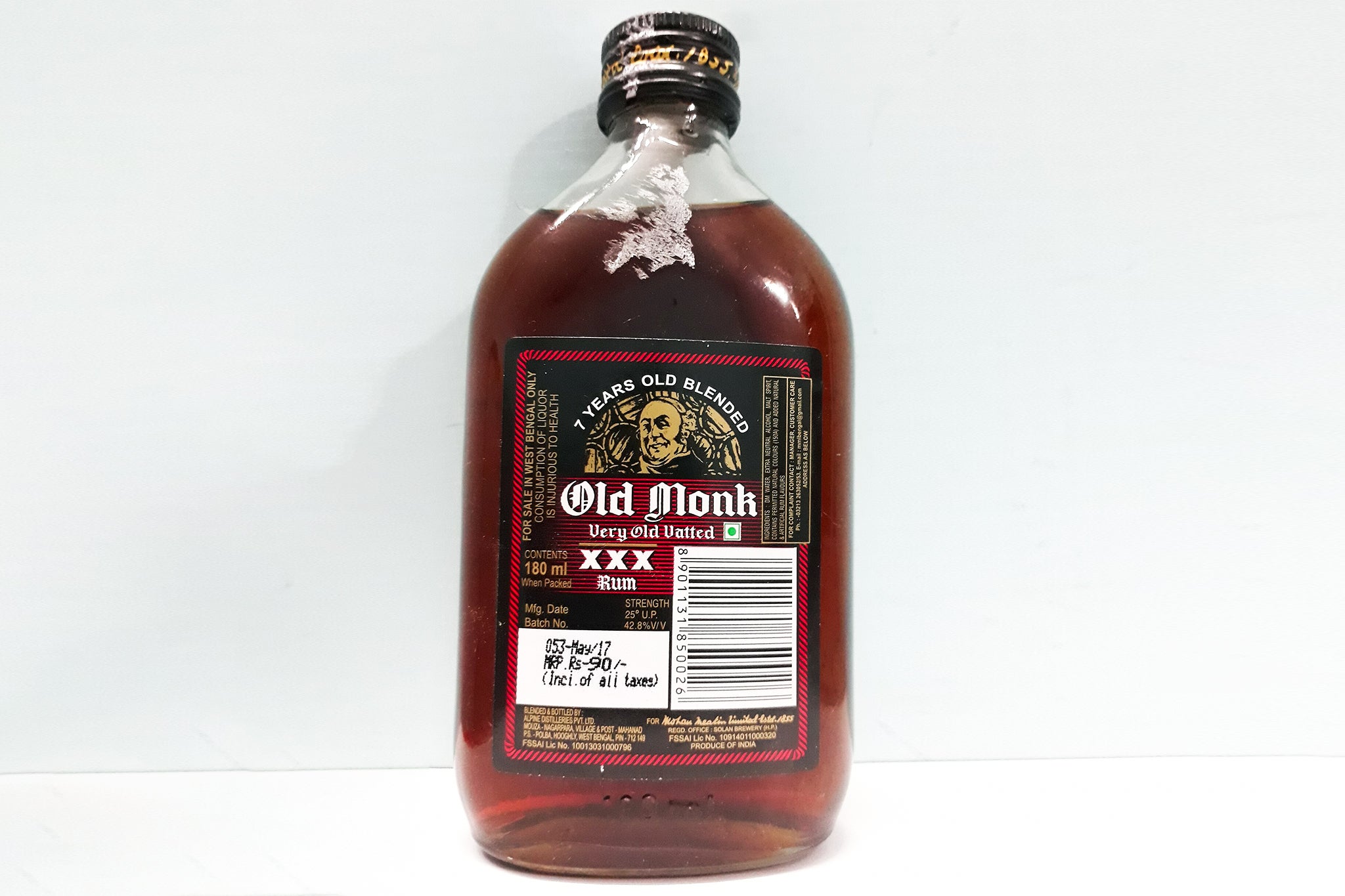
The move affects three Old Monk spirits – The Legend, Gold Reserve, and XXX Matured Rum, the last of which claims, rather eye-catchingly, to be “seven years old blended”.
The three variants were made using neutral spirit with added rum flavouring, the FSSAI told the court earlier this month, and therefore should not be sold under the standard name “rum”.
The regulator’s counsel, Rajshekhar Govilkar, said it objected to the “very description” of the products as rum.
“It cannot be sold as a rum. Neutral spirit added with rum flavours is not a product which can be called as a rum,” Govilkar said, according to the Indian Express. “It mimics as a rum.”
The rules, however, give Old Monk quite a bit of leeway.
According to the Food Safety and Standards Regulations of 2018, rum can be made using “neutral, rectified, distilled spirit of agricultural origin”, but the finished drink must possess “the characteristic taste and aroma associated with the product”.
While the FSSAI says the added rum flavouring is doing much of the heavy lifting, giving neutral spirit the taste and aroma needed to pass as rum, the company argues that the regulations allow the use of neutral agricultural spirit.
Rum is made from fermenting and distilling sugarcane juice or molasses, with the resulting spirit developing its characteristic flavour and aroma through the production and maturation process.
The FSSAI says the Old Monk variants under scrutiny take a different route, using neutral, unaged spirit and adding flavouring. Lab tests found matured rum spirit accounted for less than five per cent of the XXX Matured Rum, the regulator noted, but external artificial or nature-identical flavouring supplied the characteristic taste and aroma associated with rum.
Then there are the words “seven years old blended” on the bottle. The rules state a blend can only claim the age of its youngest spirit and the FSSAI’s position is that a bottle with a sliver of seven-year-old rum cannot wear the label.
The regulator has suggested Old Monk use the label “flavoured rum” or “premix rum” or “rum-flavoured spirit” instead.
Mohan Rocky Springwater has agreed to remove the seven-year claim and make the “added flavour” disclosure more prominent.
For many Indians, discovering that a drink that has followed them from hostel rooms and college parties into their first jobs and early adulthood may not technically qualify as rum has hit a personal nerve.
“Wow! All along, Old Monk hasn’t been a rum at all, but a ‘rum flavoured spirit,’” television presenter Siddhartha Basu exclaimed on X.
“Biggest shocker of this year. It was all a lie,” a Reddit user said.
Another said they had always known Indian whiskies were made from molasses rather than grain, but “I didn’t know that even the rum isn’t rum”.
Journalist Joy Bhattacharjya said the alleged mislabelling was hard to reconcile with the memories attached to the drink. “It does feel wrong though, being cheated about the one thing that you drank when you felt cheated.”
Then there was the drinker who perhaps best summed up the whole scandal: “Let us just accept we all love rum-flavoured spirit.”
The court is yet to allow the bottles back in the Maharashtra market.
The company claims that the prohibition is costing it Rs 10m (£77,446) a day. That’s a claimed loss of Rs 1.2bn (£9.3m) over four months since the suspension.
The FSSAI has also targeted other popular liquor brands like the McDowell’s No 1 Rum, Bagpiper Deluxe Whisky, Old Cask Deluxe XXX Rum, Central Province Whisky, Antiquity Blue Whisky, and Royal Challenge Whisky after testing their products and finding artificial or nature-identical flavouring.
The row has exposed the peculiar history of Indian spirits.
Molasses has become a major raw material for the mass-market liquor industry, producing extra neutral alcohol that can be blended and flavoured into drinks sold as whisky and other spirits.
Whisky, under EU rules, must be made from a fermented cereal mash, distilled so that it retains flavours from those raw materials and matured in wooden casks for at least three years.
Michael D’Souza, master distiller at Paul John, told The Print that this was partly a product of India’s limited distilling infrastructure.
“Grain distillation was rarely heard of. There were no grain distilleries. Molasses was the best option,” he said.
In 2002, EU officials told India its molasses-based whisky could be sold in Europe if it was called rum, because European whisky had to be grain-based.
India does export spirits, but the bottles making waves overseas tend to be the ones that can stand up to international definitions. Indian single malts such as Paul John and Amrut found their fans sometime ago while newer rums like Camikara are beginning to make their own mark.

