

It’s a simmering issue in banks, where technology budgets are already under pressure from competing demands ranging from legacy IT modernization to cybersecurity. Some of the greatest hopes for productivity improvements are pinned on agentic AI, which can tackle complex tasks autonomously, but are inherently difficult to budget for as the amount of computing power each task consumes can be unpredictable.
“I actually don’t think anybody in the organization has a good handle on it – if I am going to do XYZ, what is going to be my cost,” said Bhavi Mehta, a partner at Bain & Co. and its global lead for advanced analytics in financial services. “As AI moves toward more sophisticated reasoning and agentic workflows, the tokens required for a given task can vary significantly. That makes understanding cost alongside business value increasingly important as banks scale AI,” he added.
ALSO READ | Spooked By Claude: Deepinder Goyal Reveals Uncanny Chatbot Encounter Behind Dark.ai Launch
Also Read | Layoffs Are Rising In Tech, But These Skills Are Helping People Unlock Better Pay
Only 12 of the 50 largest global banks tracked by AI benchmarking firm Evident have publicly attributed projected or realized returns to their adoption of AI, according to its latest report. Yet it’s a rare CEO who doesn’t talk up the potential benefits. Rising investment in the technology came up during third-quarter earnings calls at several US banks from Citigroup Inc. to Goldman Sachs Group Inc., but only a few executives had precise figures for their AI expenditures or the financial benefits they are generating.
So as the industry moves from the experimentation to the deployment stage, Bloomberg News spoke with more than a dozen engineers, executives and advisers about their experiences and strategies.
Match the Model to the Job
While tokenmaxxing – the practice of engineers using AI as much as possible – has become notorious – that’s not always the cause of token usage blowout.
When Deutsche Bank AG’s monitoring flagged individual employees consuming unusually large volumes of tokens, many turned out to be doing useful work, said Christoph Rabenseifner, the bank’s chief strategy officer for technology, data and innovation. Instead of cutting them off, the bank steered that usage in a more productive direction. It also tested one task on a smaller, specially trained model instead of a large frontier model, cutting costs several times over, Rabenseifner added.
Banco Santander SA runs large frontier models only to check whether an application meets its quality bar, then shifts proven workloads to lighter, cheaper ones. The approach helped cut execution costs from about €5 ($5.61) to €0.03 per loan approval process, said Ignacio Bernal, the bank’s chief artificial intelligence officer.
“When you move AI from pilots to production across a global bank, inference cost stops being a rounding error and becomes a real operational cost line,” Bernal said, noting some processes run millions of times a year, driving up computing expenses significantly.
Canadian Imperial Bank of Commerce has found that its most powerful models, including Anthropic PBC’s Opus, can cost C$3,000 ($2,130) per employee a month, a bill that could add up quickly across thousands of workers. As a cost-control measure, the bank restricted access to a few hundred employees, while capping its latest in-built workspace CAI 2.0, still in testing, at 250 users who can each spend between C$4 and C$250 a month.
“It’s too powerful to have 50,000 people just using it without control,” Jaime Tatis, CIBC Chief Data and Artificial Intelligence Officer, said in a July interview.
Agentic AI is emerging as a primary driver of rising costs. Big banks announced 19 agentic AI use cases in the first quarter of 2026, up from eight the previous quarter, according to Evident. In the second quarter, the number halved – not because banks are cooling on agents, but because the firms are asking them to take on more complex work. Wells Fargo & Co., for instance, wants agentic AI to master 1,100 steps in the mortgage process before deploying it across workflows, the Evident report said.
Unlike conventional AI tools, agentic systems autonomously execute complex, multistep tasks, which include analyzing financial statements, tracking borrowers, verifying documents and detecting money laundering activity. This processing demands significant computational resources, translating into heavier token consumption, and in turn, drives up monthly costs.
At one Asian lender after some teams burned through their allocation of tokens in the first week, the bank decided to pool tokens and build an agent that trims prompts before they reach a model, according to a senior data executive who asked not to be identified talking about internal matters.
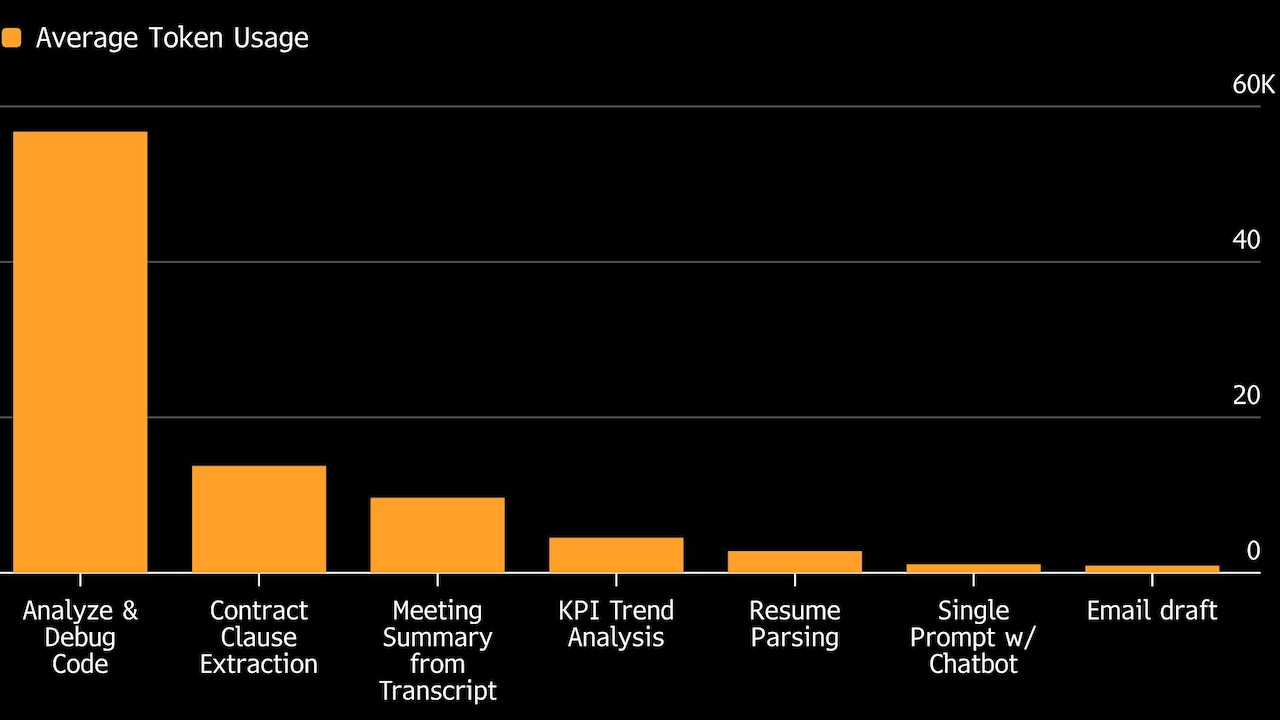
Consider AlternativesThe cost question has brought Chinese models into the conversation. A July JPMorgan Private Bank note said a GLM model from Beijing’s Z.AI performed on par with the best model available in March at more than 80% less than the priciest frontier model at the time. Singapore’s biggest lenders are experimenting with a variety of models. United Overseas Bank Ltd.’s neutral AI framework is open to Chinese providers, and DBS Group Holdings Ltd. says it is not overly reliant on any one provider, whether it is US or Chinese ones. Regulators have flagged some concerns. Canada’s banking watchdog recently asked staff to draft minimum standards for how lenders use frontier AI models, including on security, while the US Federal Reserve Vice Chair for Supervision Michelle Bowman has warned banks to shore up their systems against AI-driven threats. ALSO READ | EBay Layoffs 2026: Company To Cut 1,000 Jobs; Who Will Be Affected And Why Is Company Downsizing? That makes less-vetted models, particularly foreign ones, harder to justify to boards. Risk chiefs also worry that AI agents, once deployed, can behave unpredictably inside a bank’s own systems, a concern that has gained traction in recent months. National Australia Bank Ltd. cited security and governance concerns when considering alternatives to US-built AI models, including Chinese ones, Bloomberg News reported in August. 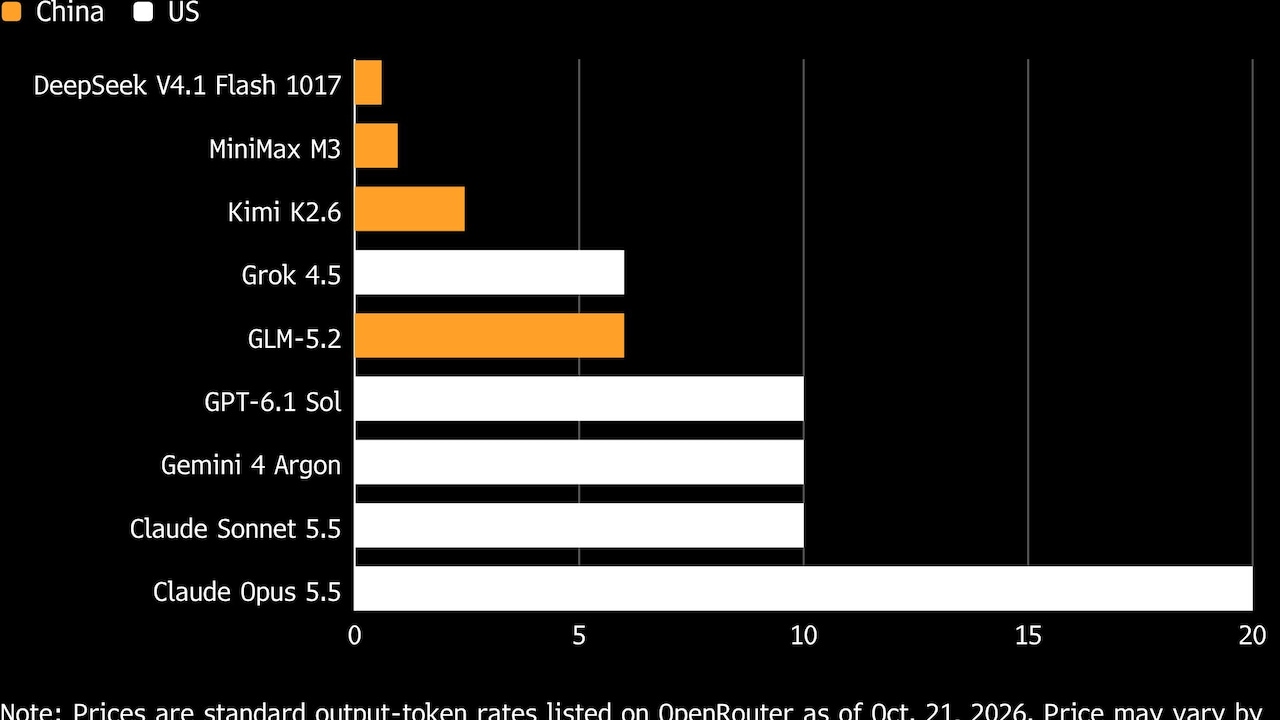 Oversight StrategyDuring the early rush to cloud services more than a decade ago, banks took at least five years to control costs that rose with usage and bring them under a dedicated budget line, according to J.R. Storment, executive director of the Tokenomics Foundation. What’s different now is that financial chiefs are reacting to AI cost spikes within 6 to 18 months of adoption, making it difficult to put a final price tag on premium AI models, he added. Nitin Madan, formerly CFO at Barclays Plc’s India operations, remembers the pressure well. When he asked his colleagues on the technology side which AI models they planned to deploy and what they would cost, he was told such questions were “making everybody uncomfortable,” Madan said. As new AI tools and upgrades hit the market in rapid succession, Madan said AI spending across the industry can’t be spread over several years the way most software costs are, so it hits profits right away. No one can say with confidence whether today’s models will still be in use three years from now, he added. At JPMorgan Chase & Co., some employees were “spending more on tokens than their salary” and yet the company wasn’t rationing AI usage at that time, Zachery Anderson, chief data and analytics officer for the bank’s payments division, told Semafor in June. JPMorgan has since set monthly spending limits of $2,000 on Anthropic’s Claude Code for certain engineers, Business Insider reported this month. The bank’s CFO Jeremy Barnum said on the lender’s earnings call this month that its annual AI expense was about $700 million, though a precise figure is hard to pin down because the technology is now spread across the entire bank.  At many other banks, leadership has also shifted from treating AI spending as virtually limitless to finding ways to contain it. Alex, a senior machine-learning engineer, at a large European bank was asked to cap his team’s AI spending in February this year. The trigger was an €80,000 bill the team had piled up after building an advanced chatbot and deploying it across thousands of workflows. The sum, though hardly outrageous for a large bank, signaled to the finance chief that it might snowball into millions if left unchecked. For Alex, who asked not to be identified by his full name to avoid professional repercussions, the question quickly shifted from whether the chatbot worked to whether the bank could afford to run it at scale. To cut costs, he reworked the chatbot so it cached answers to frequently asked questions and resurfaced them whenever a user asked again. Simpler requests went to open-source models. Only token-intensive prompts, the ones requiring deeper searches, went to premium models from platforms like ChatGPT or Claude. That brought the AI bill down by roughly a third. Some banks are tackling the forecasting problem earlier. French lender BNP Paribas SA approves every AI project after its running cost is calculated. The group’s internal platform sets a token price, multiplies it by expected volumes and weighs the total against the value the tool should deliver, said Hugues Even, the bank’s group chief data officer. BNP covers most of its computing needs with its own chips, bought as multiyear investments, and supplements them with cloud providers. BNP spreads oversight of AI across committees chaired by the heads of technology, risk, finance and human resources, plus a group AI committee led by the chief executive officer. “Each one is taking his share of the cake,” Even said. The finance chief controls the cost of deploying AI across the group, he added. Accountability FocusMany lenders are contending with the speed of change, as newer and pricier models arrive before the last integration is complete. And to help them measure and rein in the potential cost surges, a cottage industry is emerging. Ramp, which helps companies track and control token spending, says one in three businesses using its tool found out where they could shift from costlier frontier models to cheaper ones without compromising quality. Rogo Technologies Inc., an AI startup that works with bankers, says it pools demand across clients to negotiate discounts with AI labs and lets banks set token budgets down to individual users. Tokenomics Foundation, whose members include JPMorgan, Bank of New York Mellon Corp., KPMG LLP, and Google Cloud, has been created to set shared industry standards for tracking AI costs, which are often opaque. It seeks to measure what companies get back in return. Access has become a hiring issue, too. At the Asian lender, developer candidates ask in job interviews about their token budget alongside their salary. Engineers ask which models they will get and what limits apply, Madan the former CFO said. David Hardoon, who led AI enablement at Standard Chartered Plc and is now head of advanced AI for Southeast Asia at Accenture Plc, argues every large organization needs a chief AI officer with real authority. While several banks already have one, few have given the role enough power to impose discipline on forecasting and deployment without slowing innovation. A chief AI officer could own that question but only with the authority to act across the whole organization, Hardoon said. For now, keeping a tab on the cost equation during the AI gold rush can cause internal tensions, especially when bank executives feel they cannot risk falling behind on adoption. The thinking is: “If we’re not doing it, our competitors are doing it,” said Vitaly Gordon, CEO of Faros AI, a software firm that helps banks and tech companies tie AI spending to results. This arms race mentality across the industry is translating into cash burn and causing a situation where he said “in most cases, it’s just a CFO getting a bill and screaming.” |
(This story has not been edited by NDTV staff and is auto-generated from a syndicated feed.)
Essential Business Intelligence,
Sharp Market Insights,
Practical Personal Finance Advice, Daily Fuel, Gold and Silver Prices and Latest Stories — On NDTV Profit.
Newsletters
Update Email
to get newsletters straight to your inbox
⚠️ Add your Email ID to receive Newsletters
Note: You will be signed up automatically after adding email


