
It’s been almost a year since the Energy Department began issuing emergency orders to prevent aging coal plants from closing as planned.
Three states and nine nonprofit groups have filed a lawsuit challenging the emergency order, and they’re back in court on Friday. Today, I wrote about the consequences of the Trump administration’s coal plant orders that have piled up in the meantime.
Running the plants has cost hundreds of millions of dollars, much of which will most likely wind up on household electricity bills. And the plants contributed to the reversal of a longstanding decline in mercury emissions nationally, a New York Times analysis found.
But while the top line figures tell part of the story, I was struck by a spreadsheet tucked into a document filed by one of the plant operators with a federal energy regulator. It helped explain why these orders have been so costly.
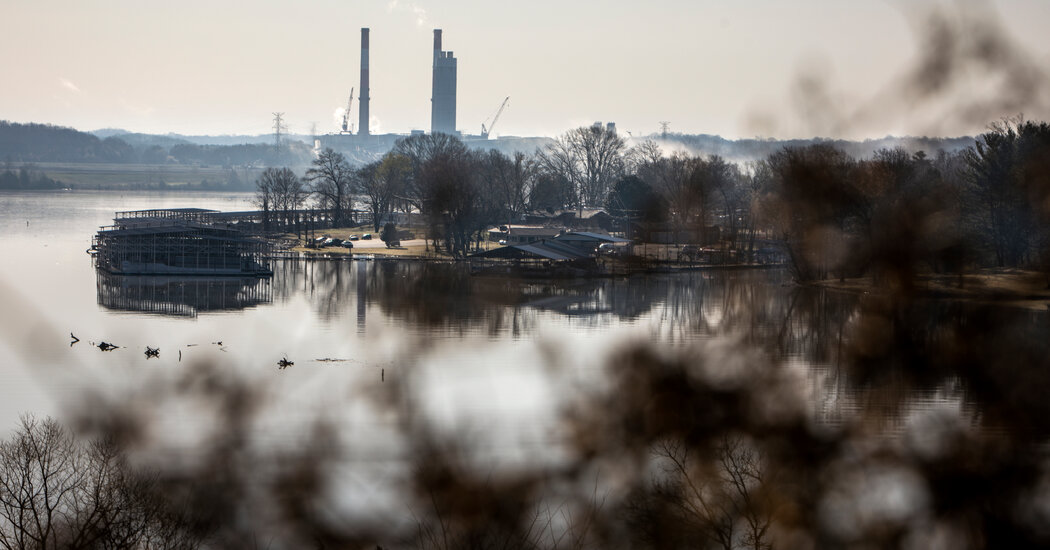
The plant in question, TransAlta’s facility in Centralia, Wash., hasn’t burned a single lump of coal since an emergency order forced it to stay open in December. But it is seeking $20 million in reimbursements for three months of expenses, and the numbers will climb if it ever produces energy.
It’s important to note that companies affected by these orders are legally allowed to recover their costs from the federal government with regulatory approval. (TransAlta, a power company based in Canada, said its facility remained available but has not been directed to operate.)
Here’s where that money is going.
The cost of sitting still: $20 million
The document, an affidavit signed by a TransAlta treasurer, Cody Duncan, itemizes what the company spent to comply with the first emergency order.
More than half of that money is for fuel. When the order was issued, the plant had a stockpile of 98,063 tons of coal, enough to keep it running for nine or 10 days, until a train carrying a new shipment could arrive. The facility also has 58,800 gallons of diesel.
The plant asked regulators for $4.6 million as a reimbursement for this “already acquired fuel on-hand.”
And what happens when the emergency order eventually expires? Centralia could be left with a pile of coal it has no way to use. According to the affidavit, the plant has not found any buyers for leftover coal. The company is asking for $7 million to get rid of the coal pile and dispose of it in a landfill near the Oregon border.
These are all one-time costs. There will be an additional $8 million in recurring costs every time the Energy Department renews the emergency order, TransAlta said. These costs include things like $4.5 million for salaries and wages, $1 million for “materials (e.g. Tools, chemical, lubricant)” and $354,000 for insurance.
The order was renewed for a second 90-day period in March.
The cost of restarting a coal plant
The Centralia plant has not produced energy in months, and starting it back up would require a lot of energy.
TransAlta has not asked for reimbursement for these hypothetical costs. But the affidavit provided some estimates for what the reboot process would entail.
A first “cold” start would rely partly on stockpiled diesel. After that, a start-up would burn through 75,000 gallons of diesel and 3,200 megawatt-hours of electricity at a cost of around $600,000.
A new sales tax
When I spoke to State Representative Joe Fitzgibbon, a Democrat, about the emergency order affecting the Centralia plant, he seemed perplexed about why the Energy Department had bothered ordering it to stay open. (The Energy Department said its emergency orders prevented blackouts during times of peak demand last year and has argued that keeping plants open will prevent future outages.)
Back in 2011, TransAlta made an agreement with Washington State legislators to close the plant. Centralia would be the last coal plant in the state to shutter, and, starting Jan. 1, local utilities in the state were barred from supplying their customers with electricity from coal.
In other words, even if the plant did start up again, it might have trouble finding nearby customers. It has announced plans to convert to natural gas.
Fitzgibbon had another idea to make sure the plant didn’t burn any more coal. He sponsored a bill to ensure it was covered by the state’s cap-and-trade program as well as other taxes and fees. It was signed into law in March.
The effects showed up in TransAlta’s accounting: A new sales tax would add 87 cents per ton to the cost of coal. And an “environmental and emissions charge” of $77.59 per megawatt-hour more than doubled the cost of producing each unit of electricity.
“We think that with our new law,” Fitzgibbon said, “we’re pretty confident that the plant is not going to start burning coal again.”
What’s next
Beyond Centralia, other plants affected by the emergency orders may have to spend big on their facilities if the renewals continue. In a recent regulatory hearing, one executive estimated his Indiana coal plant required more than $100 million in investments to operate at full capacity. Ratepayers will most likely foot much of these bills in the end.
Related: E.P.A. Moves to Weaken Water Pollution Rule for Coal Plants
Geoengineering
Can some very tiny particles cool the planet?
A company at the forefront of solar geoengineering — the notion that blocking radiation from the sun could cool a warming planet — has disclosed details of the materials it wants to sprinkle in the atmosphere.
Stardust Solutions, led by former members of Israel’s nuclear energy program, is publishing research on Thursday that reveals the chemical properties of its particles, how they would affect the atmosphere and how high-flying aircraft would disperse the material.
The privately held company is farthest ahead in the contest to take an idea that was once the stuff of science fiction and move it into the mainstream. But the idea of manipulating the atmosphere to turn down the temperature of Earth remains contentious, and more than 600 scientists and academics have called for an international ban. — Eric Niiler
Pollution
Federal chemical safety board sends warning on Trump disaster policy
For a year now, the Chemical Safety Board, a small independent agency that investigates chemical spills and other disasters, has faced elimination under President Trump’s budget cuts.
That hasn’t stopped the board from taking on the Trump administration. The agency is now opposing an attempt to roll back new chemical disaster rules that were introduced under former President Joe Biden and aimed at preventing accidents at thousands of industrial sites.
The board’s two remaining members warned publicly in a letter this week that the administration was taking “a significant step backward” in preventing catastrophic chemical incidents. — Hiroko Tabuchi
Climate and conflict
Using restored peat bogs to stop Russian tanks
In a scrubby forest an hour outside the Lithuanian capital on a recent day this spring, excavators were digging ditches and tree harvesters were whirring in an effort to restore a waterlogged, mosquito-infested ecosystem that was drained in the Soviet era.
The reason is twofold: to help the climate and to defend the country from invasion.
The area was once a vast peat bog, and peat bogs are highly efficient at storing planet-warming carbon dioxide. They also happen to be very good at stopping tanks, because the spongy soil can’t support the weight of armored vehicles. The tanks get stuck and sink, often permanently.
Tomas Godliauskas, the Lithuanian vice minister of defense, said the bogs would form “an integral defensive line” when combined with other military tactics. — Avril Silva
Number of the day
Up 27 percent
Jack Ewing reports that, in Europe, where gasoline can cost almost twice as much as in the United States, sales of electric vehicles have surged, rising 27 percent in April compared with a year earlier, according to Benchmark Mineral Intelligence.
In the U.S., it’s another story: E.V. sales plunged 23 percent over last April, when customers rushed to take advantage of federal tax incentives that have since expired.
Quote of the day
‘This is actually the canary in the coal mine.’
That’s from Charles Perry, a Republican who leads a committee on water in the Texas Senate. Perry was discussing Corpus Christi, a coastal city of 300,000 residents, that is quickly running out of water, and how it could serve as a warning for other cities across the country.
“Half the nation,” Lauren McGaughy writes, “is dealing with a persistent drought, according to federal data, at the same time as industrial water demand has risen because of growing needs from power plants and data centers.”

