
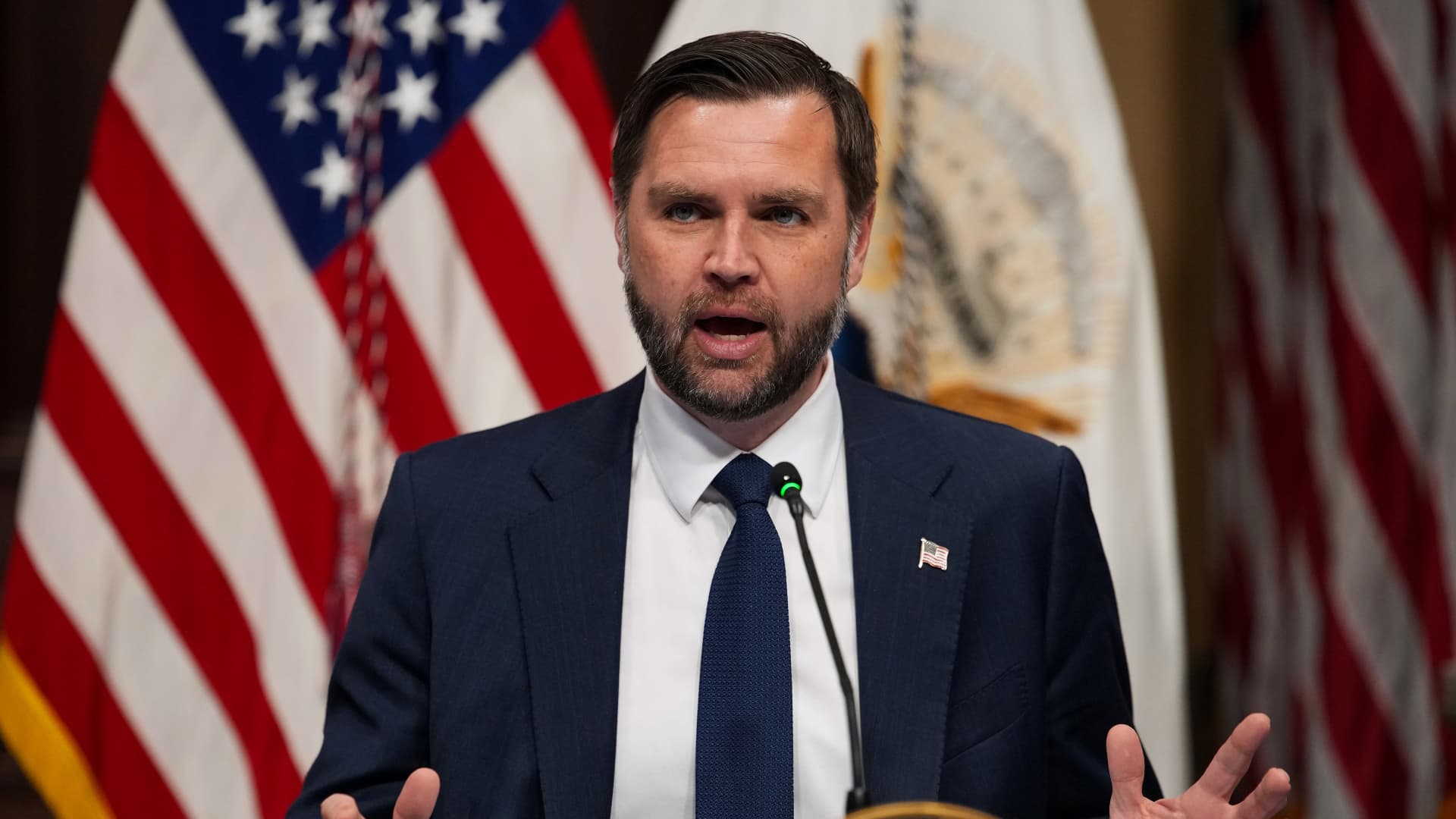
U.S. Vice President JD Vance speaks during a roundtable discussion in the Eisenhower Executive Office Building on the White House Campus on May 26, 2026 in Washington, DC.
Andrew Harnik | Getty Images
A version of this article first appeared in CNBC’s Healthy Returns newsletter, which brings the latest health-care news straight to your inbox. Subscribe here to receive future editions.
Good morning! The Trump administration is ramping up efforts to crack down on fraud in the federal Medicaid program.
Earlier this month, Vice President JD Vance announced that the administration is withholding $1.3 billion in Medicaid payments to California and is threatening to suspend federal funding to all states if they don’t aggressively prosecute fraud in their Medicaid programs. The move is similar to the one the administration took in February suspending Medicaid payments to Minnesota.
Fraud is a real issue not just in Medicaid, but against Medicare and commercial plans. Even so, there is reason to believe the administration’s move would have ramifications well beyond rooting out genuine fraud.
But this action by the administration “will really do nothing to address fraud in Medicaid,” Joan Alker, research professor at the Georgetown McCourt School of Public Policy, said in an interview.
Alker, who is also the executive director of the Center for Children and Families, said the move will pressure California to “encounter even more serious budget problems than they’re already facing” due to the historic Medicaid cuts in Trump’s One Big Beautiful Bill Act.
And the same could happen to other states, which may lead to less insurance coverage and worse health outcomes.
State Medicaid budgets are projected to decline by $664 billion between 2025 and 2034 due to the president’s massive tax and policy law enacted last summer, according to a February report by the nonpartisan research institute RAND.
“I don’t think anyone can or would argue that there was no fraud in Medicaid,” said Leighton Ku, director of the Center for Health Policy Research at George Washington University. “But how much it is sort of pales with respect to the relatively deep cuts that are being made under the legislation.”
Here’s what to know about the Trump administration’s crackdown, and why some experts believe it may do little to address fraud.
Why the administration says it’s targeting California, other states
Vance earlier this month said the administration is taking aim at California because the state “isn’t taking its program seriously.”
The administration has specifically taken issue with California’s In-Home Supportive Services, or IHSS. That program helps roughly 900,000 seniors in the state and people with disabilities with daily activities so they can remain in their homes instead of institutional settings like a nursing home.
Dr. Mehmet Oz, Centers for Medicare and Medicaid Services administrator, claimed that California’s home health spending is growing at twice the rate of other states. The federal government will withhold Medicaid funds until the state can explain why, he added.
Where the effort could go wrong
But California Medicaid Director Tyler Sadwith said in a press release that the program’s growth has been intentional, pointing to higher hourly wages for home health workers, expanded eligibility for the program and more hours logged as workers serve people with greater needs, among other factors. Sadwith said CMS has “repeatedly endorsed and promoted” those outcomes because they deliver care at a lower cost relative to institutional settings.
Georgetown’s Alker told CNBC it was “kind of shocking to me that they’re targeting these services” since it’s been a bipartisan consensus for two decades to expand home and community services across states.
Meanwhile, George Washington University’s Ku says there may be “elements of truth” to the administration saying it aims to target fraud. But he said the government’s claims about states “not paying any attention” to the issue is “sort of an exaggeration of what’s going on.”
Ku said California and other states have “fairly substantial fraud efforts” in place already, adding “it’s not as though the state was not doing anything before.”
For example, California’s Medicaid fraud control unit reported 180 indictments and 221 convictions, and collected $544 million in recoveries from fiscal year 2021 to 2023, according to a report from the U.S. Health and Human Services Department’s Office of Inspector General. Ku added that the state has already acted on fraud among hospices in California earlier this year.
The Trump administration is “being unusually aggressive, misdescribing and not being completely honest in how they describe what’s going on, because again the state has taken a lot of efforts to clean up some of these things,” Ku said, adding that “it’s trying to set up a political narrative here.”
What the impact will be
The administration is freezing reimbursements for the money California has already spent to provide home and community-based care to “a very, very vulnerable population” – and that’s going to put those services at risk, Alker said.
“This is often the difference between life and death for people who have very serious disabilities, seniors, people in long-term care,” she said.
Alker added that the administration is also “picking more on the little guy here rather than the big corporate entities,” with the actions likely impacting small firms or individual caregivers who provide home and community services.
Ku said the action could prevent some firms from getting reimbursed for services they already delivered, which could drive some of them out of business and ultimately harm the patients they serve.
The roughly $1 billion that the administration is withholding is a modest portion of the broader California Medicaid budget, with a proposed total funding of $223.2 billion for the 2026 to 2027 fiscal year. Still, Ku called the freeze worrying.
“Let’s say 5% of the people are fraudulent, but if we are also punishing the 95% who are not fraudulent or who are not doing anything bad and are providing services that we think are good, that’s a risk,” Ku said. “But what I don’t know yet is what the exact consequences are.”
It’s unclear what will happen next in the dispute between California and the Trump administration, or which state the government could target next.
But we’ll keep following this closely, so stay tuned for our coverage.
Feel free to send any tips, suggestions, story ideas and data to Annika at a new email: annika.constantino@versantmedia.com.

