
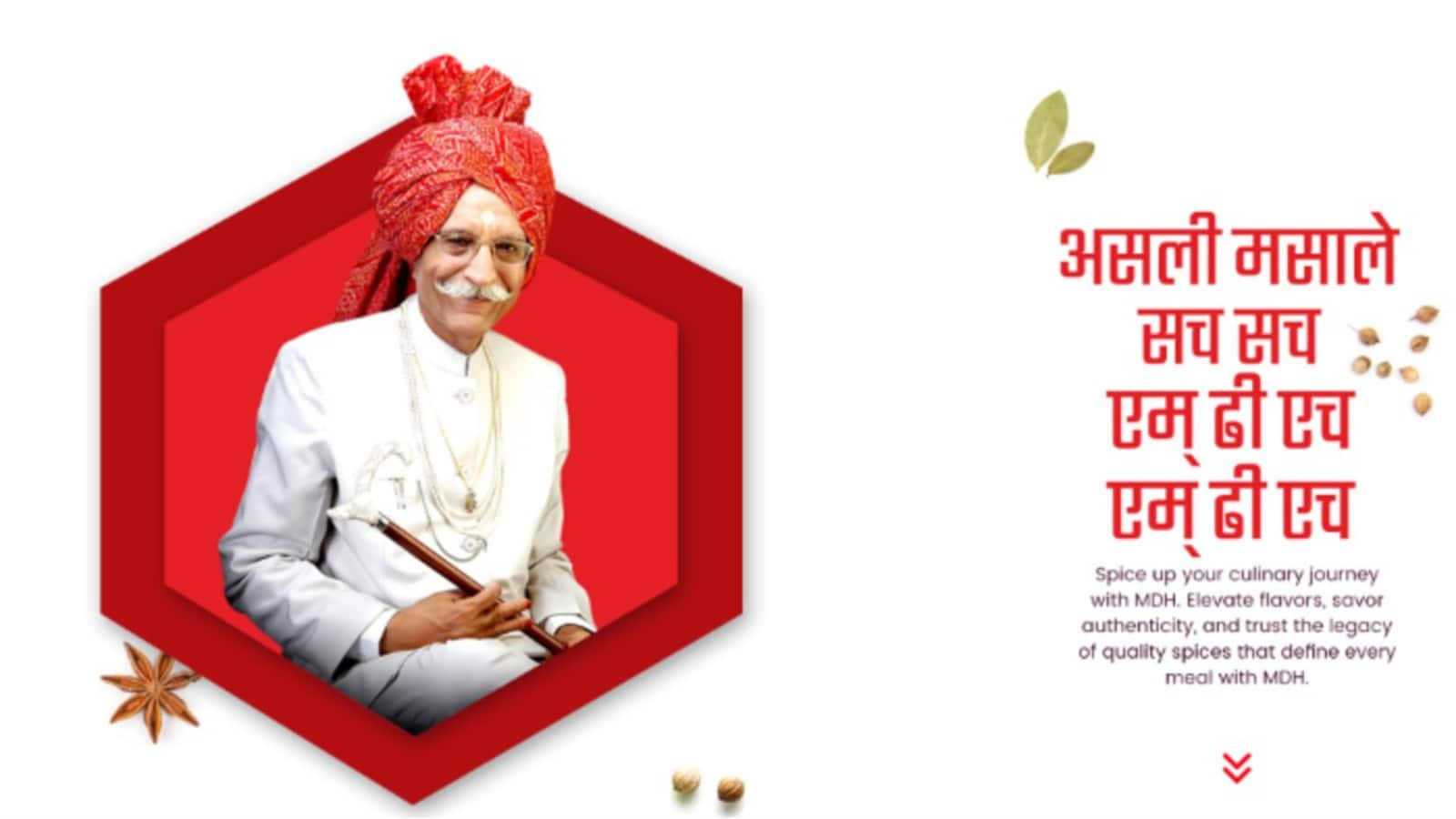
The face of an elderly man with a white beard and red turban was once familiar in almost every Indian household. He appeared on MDH spice packets and television commercials. But behind that familiar face was a story of struggle and business success. Mahashay Dharampal Gulati, who built the MDH brand, started his journey with just Rs 1,500 after Partition forced his family to leave its business in Sialkot, now in Pakistan.
From driving a tonga in Delhi to building one of India’s biggest spice companies, Gulati’s journey was far from easy. Today, MDH has an annual revenue of around Rs 2,700 crore and sells its products in more than 100 countries.
In 1919, Gulati’s father, Mahashay Chunnilal Gulati, started a spice shop in Sialkot. It was called Mahashian Di Hatti, which later became known as MDH.
Born on March 27, 1923, Dharampal Gulati left school at the age of 10. He tried several jobs, including carpentry, rice trading and selling hardware, before joining his father’s spice business. The business gradually grew, with shops opening in Lahore, Shekhupura, Nankana Sahib, Lyallpur and Multan.
Also Read | Can Microwaving A Lemon Really Help You Get More Juice? I Tried It To Find Out
After the partition in 1947, the family had to leave Sialkot and move to India. They lost their home and business and took shelter in a refugee camp in Amritsar. They arrived in India with just Rs 1,500.
After moving to Delhi, Gulati stayed at his niece’s house in Karol Bagh. The house did not have electricity, water supply or a toilet. He used Rs 650 to buy a tonga and started ferrying passengers in Delhi. He charged two annas per passenger and travelled between New Delhi Railway Station, Qutab Road, Karol Bagh and Bara Hindu Rao, according to The Weekend Leader.
The work did not earn him enough money. He eventually decided to return to the spice business. Gulati sold his tonga and bought a small wooden shop on Ajmal Khan Road in Karol Bagh. The shop measured just 14 feet by 9 feet.
He started selling ground spices under his father’s business name, Mahashian Di Hatti. In 1953, he rented another shop in Chandni Chowk.
At the time, most Indian households bought whole spices and ground them at home. In 1959, he set up a manufacturing facility in Kirti Nagar, Delhi, to produce ready-to-use ground spices. The company was officially registered as MDH in 1965. The name was taken from Mahashian Di Hatti under the banner “Deggi Mirch Wale”.
Gulati also started Roopak Stores in Karol Bagh in 1954. It was described as Delhi’s first modern spice store at the time. He later handed over the business to his younger brother, Satpal Gulati.
Gulati appeared in MDH advertisements himself. His white beard, red turban and smile soon became familiar to people across India. The brand’s jingle, “Asli Masale Sach Sach, MDH MDH”, also became popular.
In 2017, he was reported to be India’s highest-paid CEO in the fast-moving consumer goods (FMCG) sector. He also founded 20 schools to support primary and secondary education. These included MDH International School and Mahashay Dharampal Vidya Mandir.
Also Read | Video: This Is What Cardamom Looks Like Before It Reaches Your Kitchen
In 1984, he established Mata Chanan Devi Hospital in Janakpuri, Delhi, in memory of his mother. The hospital later became a 300-bed super-specialty facility. He also supported a 200-bed hospital for poor people and a mobile hospital for those living in slums.
The company had 18 manufacturing facilities and reported revenue of Rs 10.95 billion in 2018. Its annual revenue reached around Rs 2,700 crore as of March 31, 2024.
In 2019, Gulati received the Padma Bhushan, India’s third-highest civilian award, for his contribution to business and society. He died on December 3, 2020, at the age of 97, at Mata Chanan Devi Hospital in Delhi.


