

Want to bookmark your favourite articles and stories to read or reference later? Start your Independent Membership today.
Already a member?
Log in
For most students, the first taste of independence comes with a few unpleasant discoveries. Washing does not do itself. Milk has a surprisingly short shelf life. And the weekly food shop, which looked so manageable when someone else was paying for it, has a habit of swallowing rather more of the student loan than anticipated.
Learning to feed yourself on a budget is practically a university module in its own right. There is only so much pesto pasta a person can eat, however convincing the argument that switching between green and red constitutes variety. And while the occasional takeaway is hardly a crime, living on meal deals and instant noodles is neither particularly cheap nor a great long-term nutritional strategy.
Money is, unsurprisingly, a concern. A survey of student ambassadors by university comparison website Whatuni found that 30 per cent were worried or anxious about budgeting and managing their finances. Meanwhile, searches for “student meals” have reportedly risen by 91 per cent in a month, suggesting plenty of young people are looking for something more ambitious than beans on toast, without the accompanying expense.
Fortunately, eating well needn’t involve obscure ingredients, elaborate equipment or spending your entire maintenance loan in the supermarket. The trick is learning a handful of dependable recipes, making good use of store-cupboard staples and, crucially, cooking enough to feed yourself more than once.
With that in mind, chef Jason Shaw, founder of Elevated Food for Life, has put together a selection of affordable recipes costing an estimated £1.75 or less per portion. From a hearty Mexican lentil soup that makes eight servings to a fragrant chickpea and aubergine curry and thyme-roasted sweet potatoes that can form the basis of several meals, these are dishes designed to make limited budgets go further.
Because the real achievement of student cooking isn’t producing something worthy of a dinner party. It’s getting to the end of the week with something decent to eat and enough money left for a pint.
Mexican lentil soup
A hearty, flavourful soup packed with protein-rich lentils and a Mexican twist, perfect for a satisfying and healthy meal.
This Mexican lentil soup recipe is a powerhouse of nutrition and taste. Lentils are an excellent plant-based protein source, rich in fibre, anti-inflammatory polyphenols, and essential vitamins and minerals. They support heart health, stabilise blood sugar, and help manage blood pressure.
Serves: 8
Time: 40 minutes
Ingredients:
1 tbsp olive oil
1 small white onion, chopped
2 stalks celery, chopped
2 carrots, chopped
3 cloves garlic, minced
1.8 litres (8 cups) bone marrow broth (shop-bought or homemade)
3 medium sweet potatoes, peeled and diced
450g salsa verde (shop-bought or homemade)
400g (2 cups) lentils
80g (½ cup) frozen sweetcorn
115g (4-oz) can diced green chiles
2 tsp chili powder
To taste:
Pink Himalayan salt and freshly ground black pepper
Optional toppings:
Grated cheese
Diced avocado
Lime juice
Method:
1. Heat the olive oil in a large soup pot over medium-high heat.
2. Add the onion, celery, and carrots, sauteing for 5-6 minutes until the onions start to soften.
3. Stir in the garlic and cook for 30 seconds, ensuring it doesn’t burn.
4. Add the bone marrow broth, sweet potatoes, salsa verde, lentils, corn, green chillies, and chilli powder. Stir well to combine.
5. Bring the soup to a simmer, then cover and reduce the heat to medium-low.
6. Cook for 25-30 minutes, until the lentils and sweet potatoes are tender.
7. Taste and adjust the seasoning with salt and black pepper.
8. Serve hot as-is or with your favourite toppings.
Chickpea and aubergine dopiaza
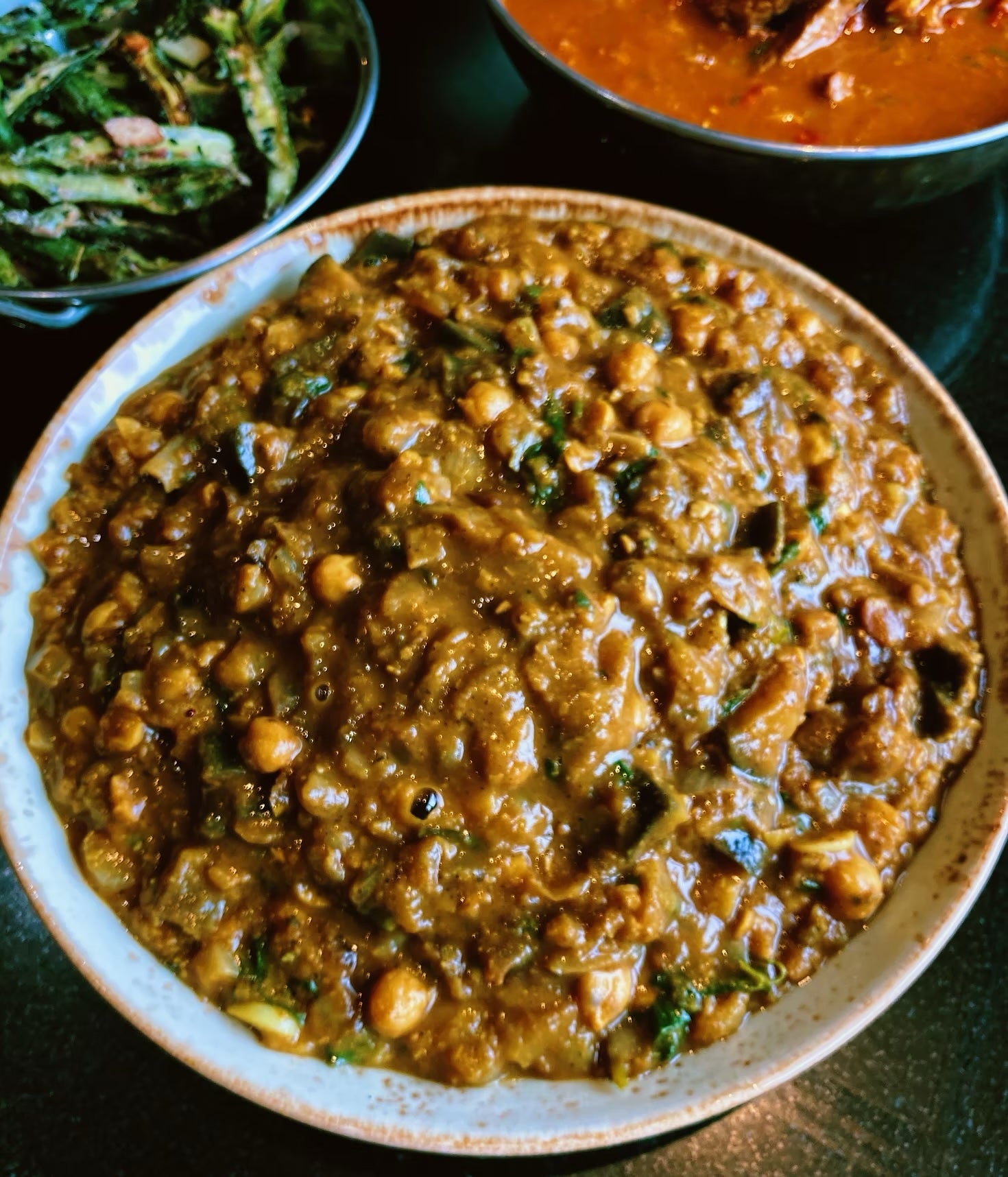
This healthy dopiaza recipe is a powerhouse of nutrients, offering a perfect blend of fibre, protein, and healthy fats.
Chickpeas are a great plant-based protein source while also being rich in soluble fibre, which helps support gut health, regulate blood sugar, and promote heart health by reducing cholesterol levels.
Aubergines, on the other hand, provide a variety of vitamins, minerals, and antioxidants, particularly nasunin, which supports brain health.
The warming spices in the dish not only enhance flavour but also offer anti-inflammatory benefits that may aid digestion and overall wellbeing. The coconut oil adds healthy fats, contributing to satiety and energy levels, while the fresh coriander provides a burst of micronutrients.
This is a naturally thickened curry thanks to the starches released from the chickpeas, making it an excellent choice for a nutrient-dense, satisfying meal that also happens to be freezer-friendly for up to three months.
Serves: 2
Time: 30 minutes
Ingredients:
240g chickpeas, drained, skins rubbed off
160g aquafaba (reserved chickpea juice)
2 medium onions, diced
1 medium aubergine, diced into 1.5cm cubes
300g Indian gravy (or substitute with the same quantity of shop-bought mild curry sauce, adding a splash of vegetable stock to loosen if needed)
½ tsp ground coriander seeds
3-4 garlic cloves, sliced
20g coconut oil
Handful fresh coriander, chopped
1 tsp dried tarragon
Sea salt and black pepper, to taste
Method:
1. Heat a heavy-bottomed pan (with a fitted lid) over medium heat and melt the coconut oil.
2. Dice the onions and aubergine into 1.5cm cubes and add them to the pan with a generous pinch of sea salt.
3. Fry until golden and reduced by 50 per cent, stirring frequently.
4. Crush the chickpeas with a fork and add them to the pan along with the ground coriander and sliced garlic.
5. Continue cooking over medium heat, stirring to distribute the flavours.
6. Add the dried tarragon and aquafaba, stirring to deglaze and release the caramelised onions from the bottom of the pan.
7. Pour in the Indian gravy, bring the mixture to a gentle boil, then reduce the heat to a simmer.
8. Cover and cook for 2-3 minutes.
9. Adjust seasoning with sea salt and black pepper to taste.
10. Just before serving, stir through the freshly chopped coriander.
Thyme-roasted sweet potatoes
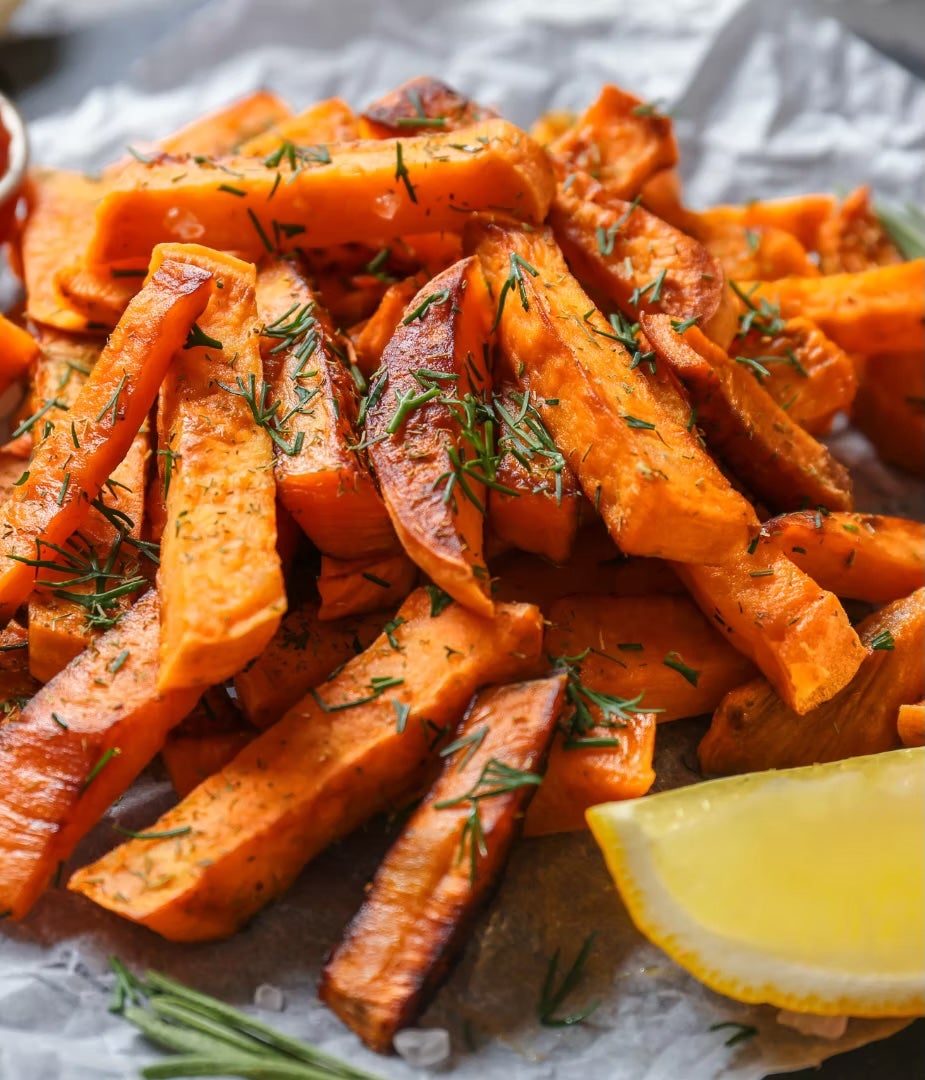
Healthy, crispy, and delicious, these roasted sweet potatoes are going to be a favourite. They go with just about any meal – from chicken recipes and steak to sandwiches and wraps. Sweet potatoes are packed with fibre, vitamins, and minerals, making them a great choice for a nutrient-dense side dish.
They are particularly rich in beta-carotene, an antioxidant that converts to vitamin A in the body, supporting eye health, immune function, and skin health. The olive oil in this recipe adds heart-healthy monounsaturated fats, while thyme and garlic powder bring extra antioxidants and anti-inflammatory properties.
This dish is not only easy to make but also highly versatile. It pairs well with lean proteins, works as a base for grain bowls, or can even be mashed into a hearty spread. Plus, the natural sweetness of the potatoes caramelises beautifully in the oven, enhancing their depth of flavour without the need for added sugars. Double the recipe and store leftovers for easy meal prep during the week.
Serves: 6
Time: 40 minutes
Ingredients:
900g sweet potatoes, cut into 1cm cubes
3 tbsp olive oil
1 tsp kosher salt
1 tsp freshly ground black pepper
2 tsp garlic powder
1 tbsp dried thyme
Method:
1. Preheat the oven to 230C/450F.
2. Line a rimmed baking sheet with foil.
3. In a large bowl, toss together all the ingredients, making sure the potatoes are well coated to ensure they crisp up properly.
4. Spread the potatoes evenly on the baking sheet and place them in the oven.
5. Bake for about 20 minutes, then remove from the oven and turn the potatoes over using a spatula.
6. Return the baking sheet to the oven and bake for another 15 to 20 minutes, or until the potatoes are crispy on the outside and tender on the inside.
7. Serve hot as a side dish or store leftovers for later.
Recipes courtesy of Elevated Food for Life, in collaboration with university comparison website Whatuni.


