

Want to bookmark your favourite articles and stories to read or reference later? Start your Independent Membership today.
Already a member?
Log in
Scientists have long known that excess fat is tied to chronic conditions with life-threatening outcomes, but recent research has revealed the importance of age when considering health.
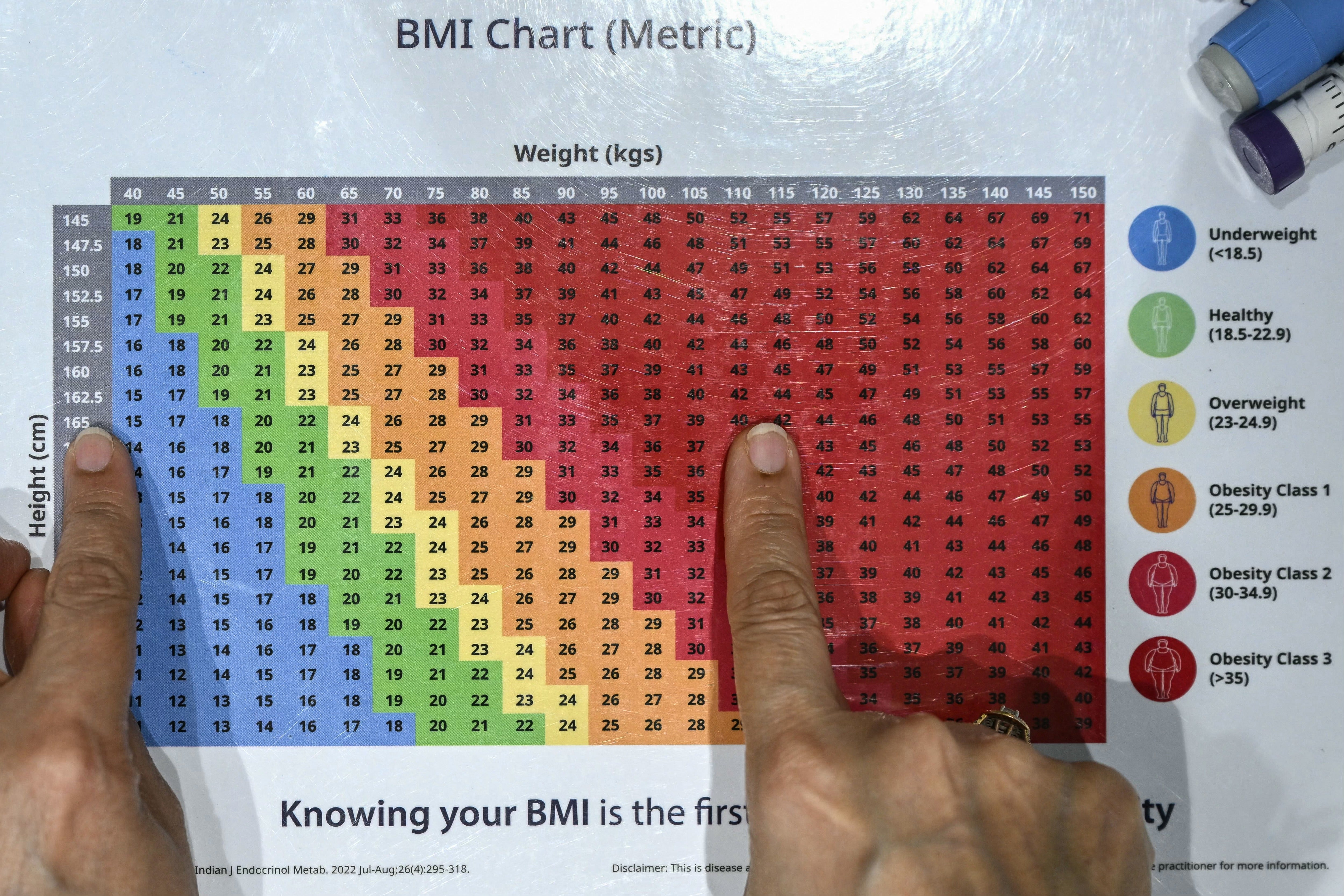
Older adults with a higher body mass index or “BMI” – a measure of a person’s body weight divided by their height to determine obesity – may actually live longer, researchers say.
“Past age 65, a higher BMI is linked to greater longevity,” Bryan Blissmer, a health researcher at the University of Rhode Island, told The New York Times this weekend.
Though where people carry that weight matters.
Fat in the abdomen has a greater tie to inflammation, high cholesterol levels and Type 2 diabetes, said Blissmer. Other fat in the hips, chest or butt is less “biologically active.”

The research
The reason for this inverse relationship isn’t fully clear yet, but BMI doesn’t measure much.
First introduced in the 19th century, the measurement can’t distinguish muscle from fat or show where fat is located.
Olympic athletes, such as bronze medalist rugby star Ilona Maher, are listed as overweight due to this framing.
So, a higher BMI in seniors may not just indicate excess abdominal fat, and his August research suggests seniors with a high BMI may have muscle and other lean mass that helps them handle illness or injury.

The researchers examined 14 years of national data from 6,905 U.S. seniors.
“These findings, therefore, should not be interpreted as evidence that excess adiposity is biologically protective, but rather reflecting the limitations of BMI and the heterogeneity of body composition in later life,” the study said.
The study also showed people with a normal BMI, but a higher waist circumference – the measurement around your waist – had a greater risk of death than those with a normal BMI and a smaller waist.
That challenges the assumption that a normal BMI means people are at a lower risk of death, Blissmer told his university in September.
The findings follow years of previous research showing similar results, including from Dr. Kamyar Kalantar-Zadeh, a nephrologist and epidemiologist at Harbor-UCLA Medical Center.
“When we face hardship, including people with kidney disease who need dialysis to survive, being overweight or obese can help,” he told the Times.
His research in the early 2000s found similarly reduced death risk for heavier seniors with heart disease and failure.
The takeaway
Everyone’s body and activity levels differ, but those with the lowest risk of earlier death have a body mass of 27-27.9, according to World Health Organization standards.
The scale ranges from underweight at 18.5 to severely obese at over 40, which includes 9.2 percent of American adults. Close to 43 percent of those 60 and older are considered obese, according to federal data.
Still, the recommendation for seniors who are carrying extra weight is to just maintain weight stability.
“No great gains and no great losses — that’s what I recommend,” Katie Dodd, a geriatric dietitian who writes a blog about nutrition, told Scientific American in 2023.


