
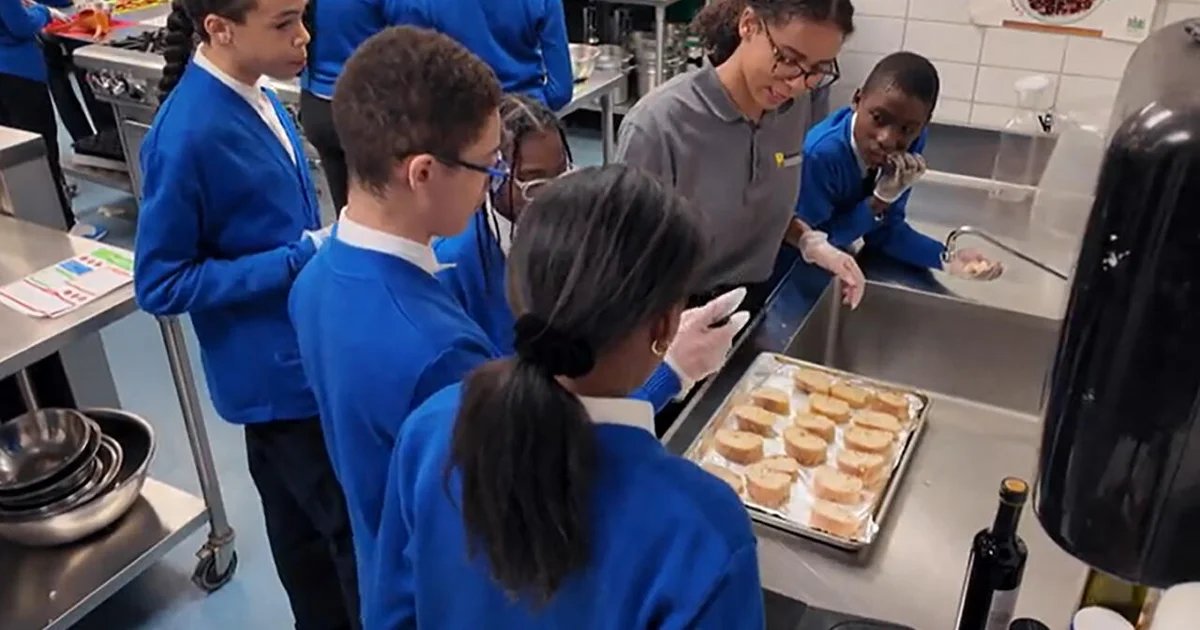
If fast-food jingles were multiplication tables, perhaps we’d all be good at math. In the meantime, those ads sure are stuck in the brains of kids. The marketing of ultra-processed food, which accounts for more than 60 percent of calories for children, has coincided with a dramatic increase in childhood obesity across the United States. In 1970, about 1 in 20 children were affected by obesity; today, it’s 1 in 5, according to the Centers for Disease Control and Prevention.
CDC
To be clear, there are multiple causes for the rise, including socioeconomic, environmental and lifestyle factors. But when it comes to diet, figuring out what’s healthy and what is not can be daunting.
“You look at the back of the label and you’re like, ‘Yeah, that’s no good, that’s no good …’ And it’s like, so then, what do you eat some days? It’s scary,” said Heather Wolfe. She and her daughter, Grace, are enrolled in the YMCA’s “Healthy Weight and Your Child” program in Harrisburg, Pa. The program preaches getting healthy the old-fashioned way – eating right and exercising – and focuses on changing the environment and habits of the entire family.
Grace says one thing she’s learned: “Highly-hydrogenated oils, that’s bad for you.”
In an age of powerful new weight loss drugs, including GLP-1s (not yet approved for children under 12), a crucial question remains: how do we prevent future generations from becoming obese in the first place?
In April, FDA Commissioner Dr. Marty Makary (who has since left the agency) said he would like to see Americans eating diets that emphasize protein, fruit and vegetables, healthy fats, and whole grains, and reduce highly-processed foods. “This is not a willpower problem with our nation’s kids,” he said. “This is a problem with us putting highly-addictive, highly-chemicalized food in front of them.”
While he agrees marketers are part of the problem, Makary said, “We’d like to see more information, even on the front of the package of food. We’d like to see schools buying real food instead of ultra-processed food.”
Shayla Mitchell’s daughter, Miracle, began gaining weight during the COVID pandemic. “Pastas and carbs are her thing,” Shayla said. “And she drinks a lot of her calories, too.”
Now, six years later, the YMCA program is helping Miracle’s family work on improving her health.
CBS News 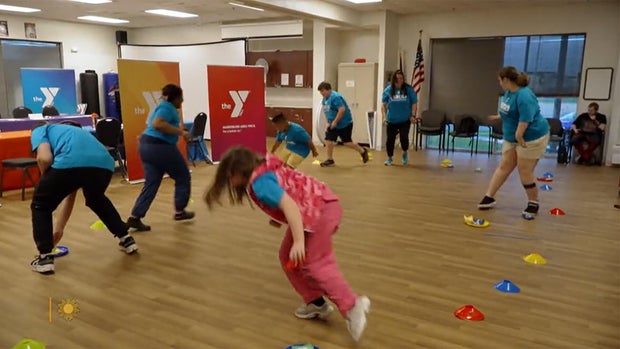
Miracle says she recognizes the program’s importance: “Healthy foods is for me to lose weight and for me not to lose my life a little bit more faster than I’m supposed to.”
“She wants to be able to eat what her friends are eating,” said Shayla. “She wants to be able to share snacks and share lunch. We really wanted to find a program where she was going to really learn why you can have it, but in moderation.”
Childhood obesity increases the risk of problems later in life, such as diabetes, heart disease, and even cancer.
Harlem Children’s Zone CEP Kwame Owusu-Kesse heads up the “Healthy Harlem” program, which focuses on prevention. “Childhood obesity is one of the most daunting challenges that young people face from a health and wellness perspective,” he said. “What good is this investment in quality education, enrichments and exposures, if there’s a health ticking time bomb awaiting our young people?
“This is about wrapping our arms around a community. That is the secret sauce of the Harlem Children’s Zone. We were designed to be able to hit a critical mass of young people so that you shift culture.”
To address childhood obesity, Owusu-Kesse said, “We’re making sure that our young people are moving. We want to make sure our young people have nutrition knowledge and awareness. And every year we distribute somewhere between 50,000 to 70,000 pounds of fresh produce throughout our Harlem community. So, it’s this marriage of nutrition knowledge, cooking, physical activity for the young person, and the community, that helps change the culture.”
CBS News 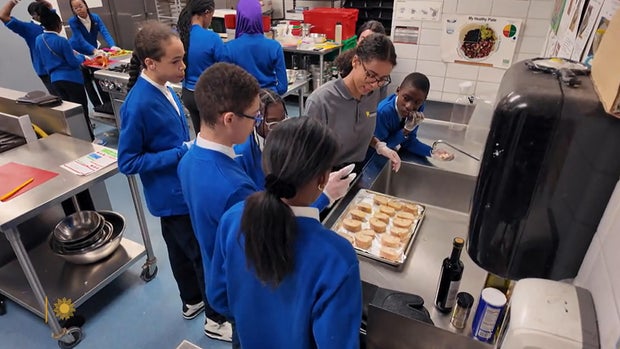
Both the YMCA and Harlem programs focus on involving the family, schools, friends, and even neighbors.
Twelve-year-old Luqman told us, “I don’t like the french fries, because it has too much salt on it.”
And who taught him about avoiding salt? “My mom. She says if I eat a lot of salt, I can get a heart attack. And I don’t want that to happen.”
Both programs also rely on children becoming agents of their own progress.
Miracle’s mother, Shayla, said, “Portion control is the hardest thing, but it’s one of the things that she knows is super-important. Every now and again I’ll catch her grabbing a measuring cup when she’s making herself cereal in the morning. She’ll pour it into the measuring cup, and then pour it into her bowl.”
All the kids know exactly what they’re supposed to eat – vegetables, salad, fruit – and why. “So I can, like, lose weight and, like, feel better about myself,” said Cameron.
Hassan noted, “I can be getting more stronger, getting more athletic.”
But creating a supportive environment at the home can be tricky. Shayla said, “Getting my husband to kind of go in with that, ’cause that’s Daddy’s little girl. So, anything she asks for, ‘Okay, yeah. You can have it.’ ‘No, honey, she can’t!’ It’s so easy to say yes. It is harder to say no and see the disappointment. But we know that we’re doing it for the overall benefit of her and the entire family.”
And that means family is also there for the triumphs. Shayla said when Miracle was going through her clothes and trying them on, “She was like, ‘Before, I couldn’t fit these jeans.’ I’m like, ‘See? These are the small wins we’re talking about.’ When she doesn’t see it immediately, it’s kind of like a downer for her. But I keep, you know, reassuring her, ‘It’s working. I promise you, it’s working.'”
And for kids like Grace, weight loss is about so much more than the pounds.
“It makes me really feel healthy, and happy,” she said. “You can be more active and, like, go outside and actually play with your friends if you go over to their house, and not just, like, sit on, like, their couch and watching a movie or something. You can actually jump on their trampoline or, like, go outside, play with their dogs and stuff. So, that’s really nice!”
For more info:
Story produced by Mary Raffalli. Editor: Jason Schmidt.
See more:

