
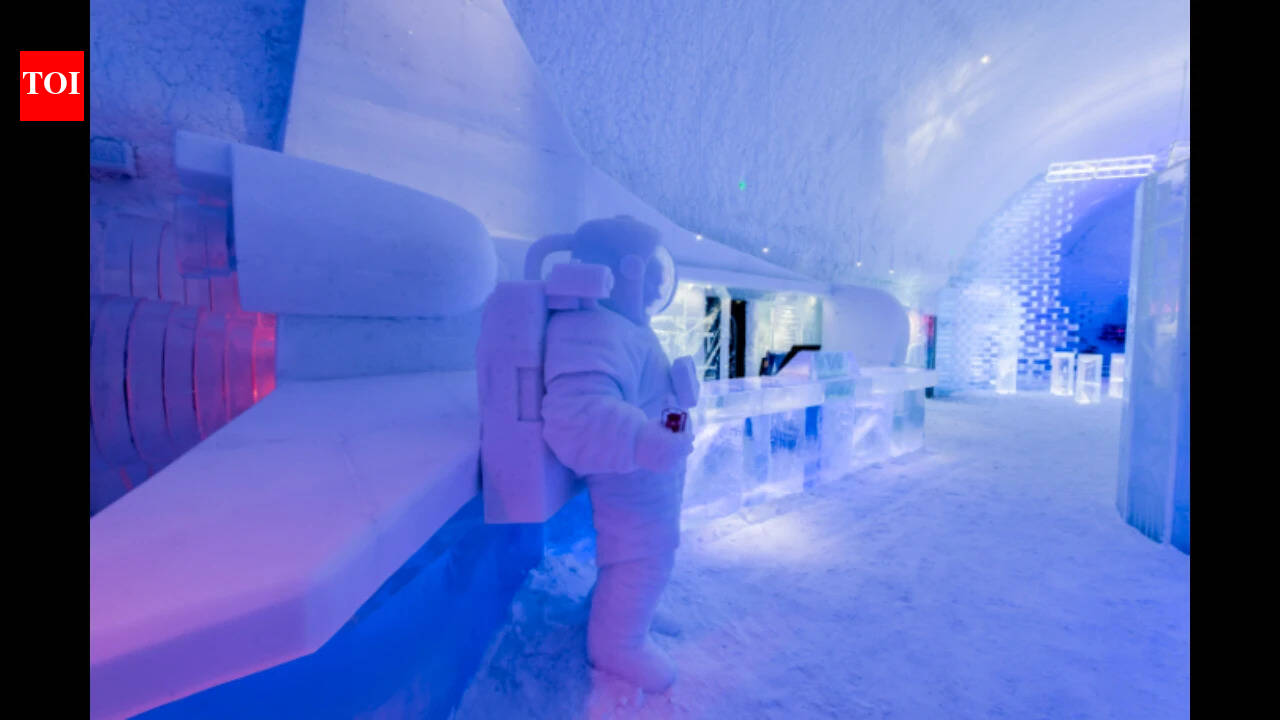
Have you wondered what it would be like to live in an igloo? Well this hotel in Sweden is not a traditional igloo but it is made entirely out of natural ice and you get to sleep on ice beds. Among the most unique forms of architecture, this artwork in ice has to make the list. The peculiar thing is that they are not permanent, they melt every spring and are rebuilt every year. Yet, the investment is worth the spectacle.As the sun sets in autumn, it doesn’t rise in the horizon till spring. This is because Sweden and other nordic countries experience polar nights where the sun doesn’t rise for six months during the winter. At Kiruna, this leads to freezing waters of the Torne river. The Torne river is one of Sweden’s four national rivers which has been a lifeline for the people living on its shores. This 520-kilometer-long river has ancient mountains to its west and the Gulf of Bothnia to the east.Jukkasjärvi is the site of this magnificent hotel, where snow covers the landscape for eight months of the year. Northern lights are not rare here, rather they become a regular occurrence during winters. The name itself means “meeting place by the water” in Sámi and has held importance.
A happy accident
The story behind the origins of this hotel is fascinating with inclusion of culture, art and innovation amid adversity. In 1989, artist Yngve Bergqvist held an art gallery built from ice and snow in the Arctic Hall. The exhibit was successful with all the cabins being fully booked. The possibility of a hotel could appear when a group of visitors needed a place to stay. Yngve, instead of denying them help, offered them to sleep inside with Arctic Hall.
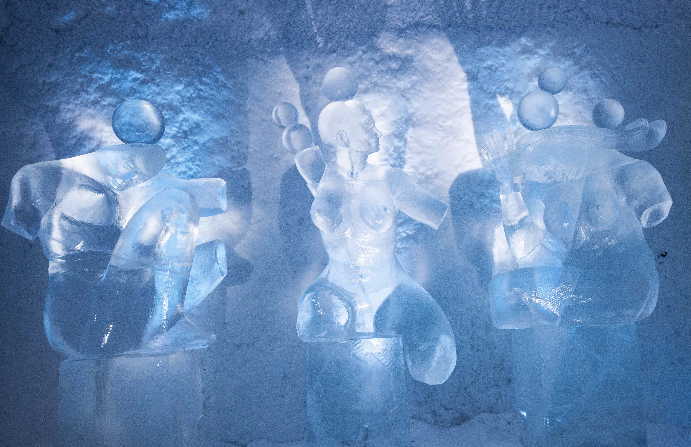
ICEHOTEL (Image Credit: icehotel.com)
The people staying were given very specific instructions, warm sleeping bags and a guide on how to sleep in the cold. Surprisingly, the guests were able to spend the night with ease and everyone woke up with a fascination towards the experience. And hence, ICEHOTEL came into the picture in Jukkasjärv.
An entire hotel made of ice
The creative process is as fascinating as the finished hotel. The preparations for a new edition begins even before the previous one melts. At the beginning of every year, around 150 proposals are submitted for each new edition, with approximately 15 selected. The proposals are also considered based on their diversity to balance gender, origin, age and experience. Artists, architects, designers and engineers then gather in November at Jukkasjärvi to bring their ideas to life. These ideas are also legally protected under trademark law which makes the experience valuable for the artists too.
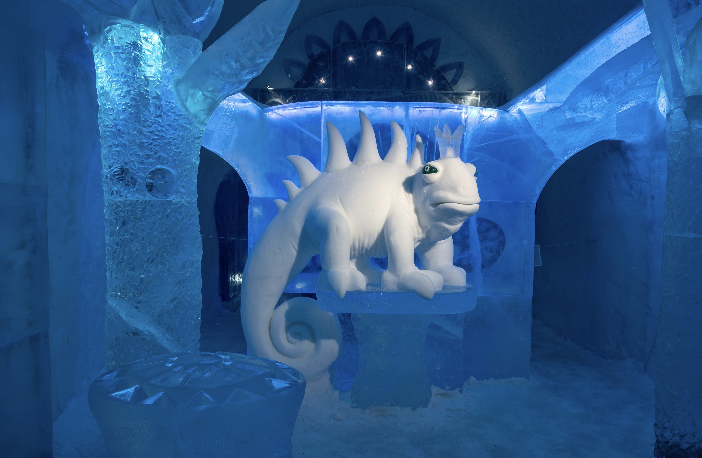
ICEHOTEL (Image Credit: icehotel.com)
Construction begins with enormous blocks of ice harvested from the Torne River, some weighing up to two tonnes. Snow and ice are also combined to create a sturdy building material known as snice. The structure takes roughly six weeks to build, before the artists add their final touches.The experience of designs remains incomplete without proper illumination. Rather, for some of the designs, light plays the main star. Light adds an extra dimension that provides each sculpture its own character. The light is planned carefully alongside the artists to enhance the designs in each of the rooms.
What is it like to sleep in a frozen hotel?
However artistic the designs might be, visitors would be most concerned if they will actually be able to sleep at night in these freezing conditions. The secret is preparation.
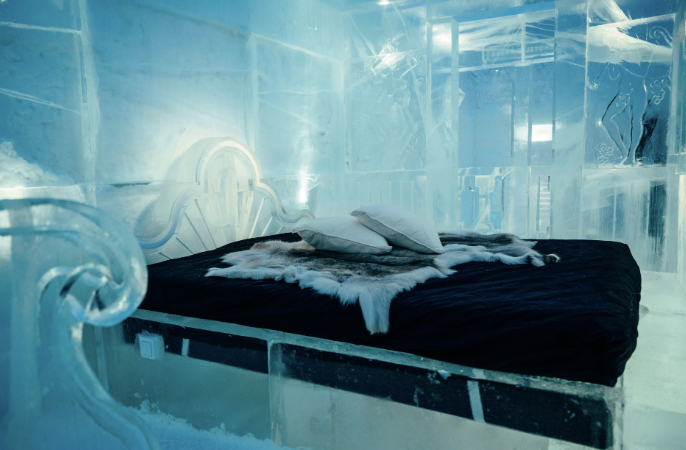
ICEHOTEL (Image Credit: icehotel.com)
Guests staying in the ice rooms are provided with specialist sleeping arrangements designed for sub-zero conditions, and the hotel offers guidance on how to dress and sleep comfortably. Warm clothing, appropriate thermal layers and following the staff’s instructions are essential parts of the experience. And if sleeping on ice sounds like a little too much excitement, there are warmer accommodation options on the property, too.
How to reach
ICEHOTEL is located in Jukkasjärvi, Swedish Lapland, around 17 km from Kiruna. The easiest way to reach it is to fly from Stockholm Arlanda Airport to Kiruna Airport, a journey of approximately 90 minutes, followed by a 15-20-minute taxi or pre-booked transfer to the hotel. Alternatively, take a train from Stockholm to Kiruna, which takes around 14-18 hours depending on the service. Local buses and rental cars are also options for the final leg.


