

Television presenter Davina McCall has revealed she has cardiovascular disease (CVD) in a health update following her battles with breast cancer and a brain tumour.
The former Big Brother presenter has faced a number of health setbacks in recent years; in 2024, she received brain surgery to remove a rare 14mm benign tumour, shortly after which she was diagnosed with breast cancer.
“I wanted to let you know, I also have cardiovascular disease, and this is a very important conversation to have,” she said on her podcast, Begin Again.
The 59-year-old spoke with heart attack survivor Louise McGill to highlight the vital importance of women’s cardiovascular health.
But what actually is cardiovascular disease (CVD)? Here, The Independent takes a look at the conditions’ main symptoms and risk factors.
What is cardiovascular disease (CVD)?
According to the NHS, CVD refers to the “group of conditions that affect your heart and blood vessels”.
It notes there are different types of cardiovascular disease (CVD), including coronary heart disease, peripheral arterial disease (PAD), aortic disease and strokes.
The NHS says CVD is often caused by a build-up of fat in the arteries, making it hard for blood to flow through the body. It can be prevented through a healthy lifestyle or medication if required.
Who is most at risk?
Different lifestyle and biological factors can lead to an increased risk of CVD, according to the NHS.
For example, those who smoke, consume excessive amounts of alcohol, are overweight or not active may be more likely to get CVD.
The condition also “mainly affects people over 50 years old”, while “men are more likely to get CVD than women” and “you may be more likely to get CVD if you’re from a South Asian, Black African or African Caribbean ethnic background”.
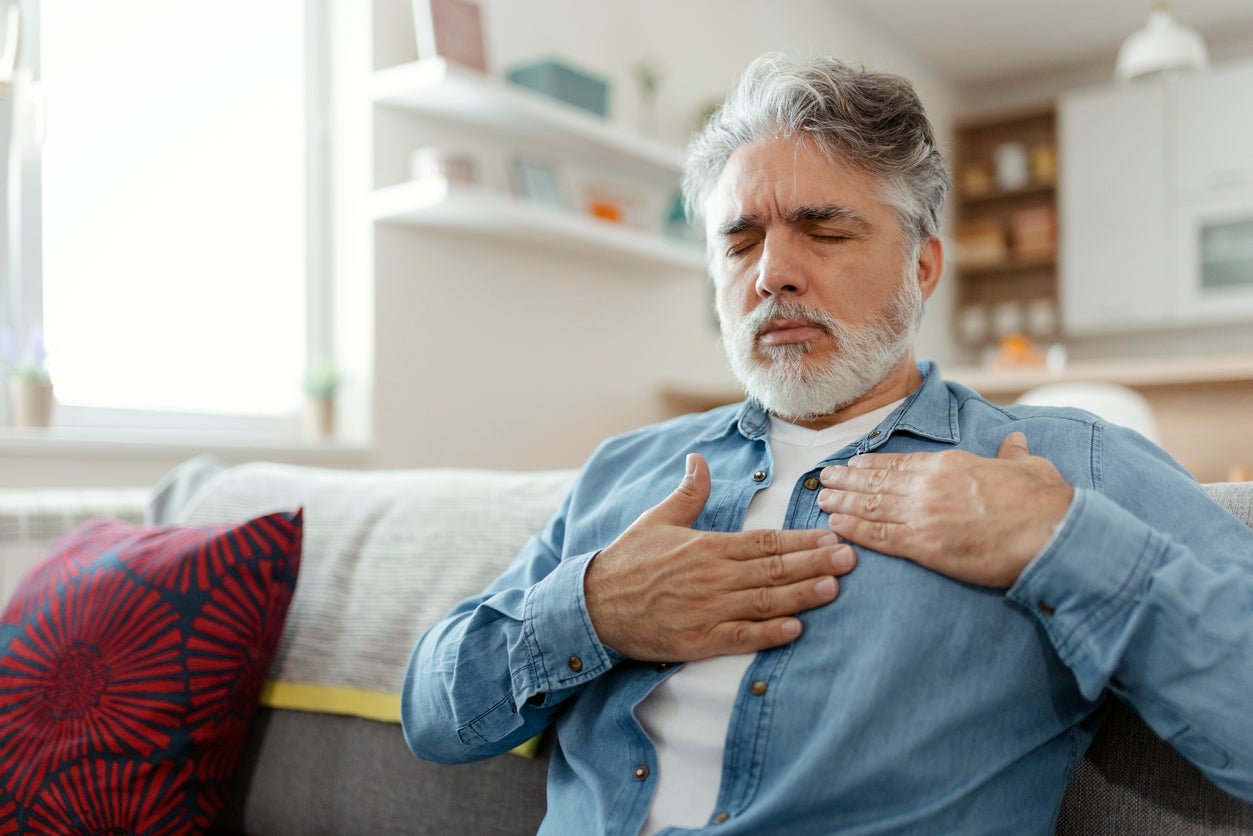
Meanwhile, those who have relatives diagnosed with CVD could face a heightened risk, alongside patients with conditions like high cholesterol or high blood pressure.
What are the main symptoms of cardiovascular disease?
The NHS says the “symptoms of cardiovascular disease (CVD) will depend on the condition you have”, while patients might not experience any symptoms for “some conditions”.
It notes that the first signs of CVD for some may include chest pain, stroke or a heart attack.
Specifically, for coronary heart disease (CHD), patients may experience symptoms such as angina (chest pain) alongside feelings of faintness or nausea.
Symptoms of coronary heart disease (CHD)
NHS
The main symptoms of coronary heart disease are:
- Chest pain (angina)
- Shortness of breath
- Pain in your neck, shoulders, jaw or arms
- Feeling faint
- Feeling sick (nausea)
What can I do to help prevent CVD?
According to the NHS, cardiovascular disease (CVD) is one of the leading causes of death in Britain.
Those with an elevated chance of CVD might be told to take statins, which help to lower cholesterol levels in the blood.
However, the NHS says there are also a number of “lifestyle changes” that could help lower the risk of CVD, or prevent it from worsening.
These include having a balanced diet, minimising the consumption of fatty foods, participating in regular exercise, maintaining a health weight, quitting smoking and reducing alcohol intake.


