

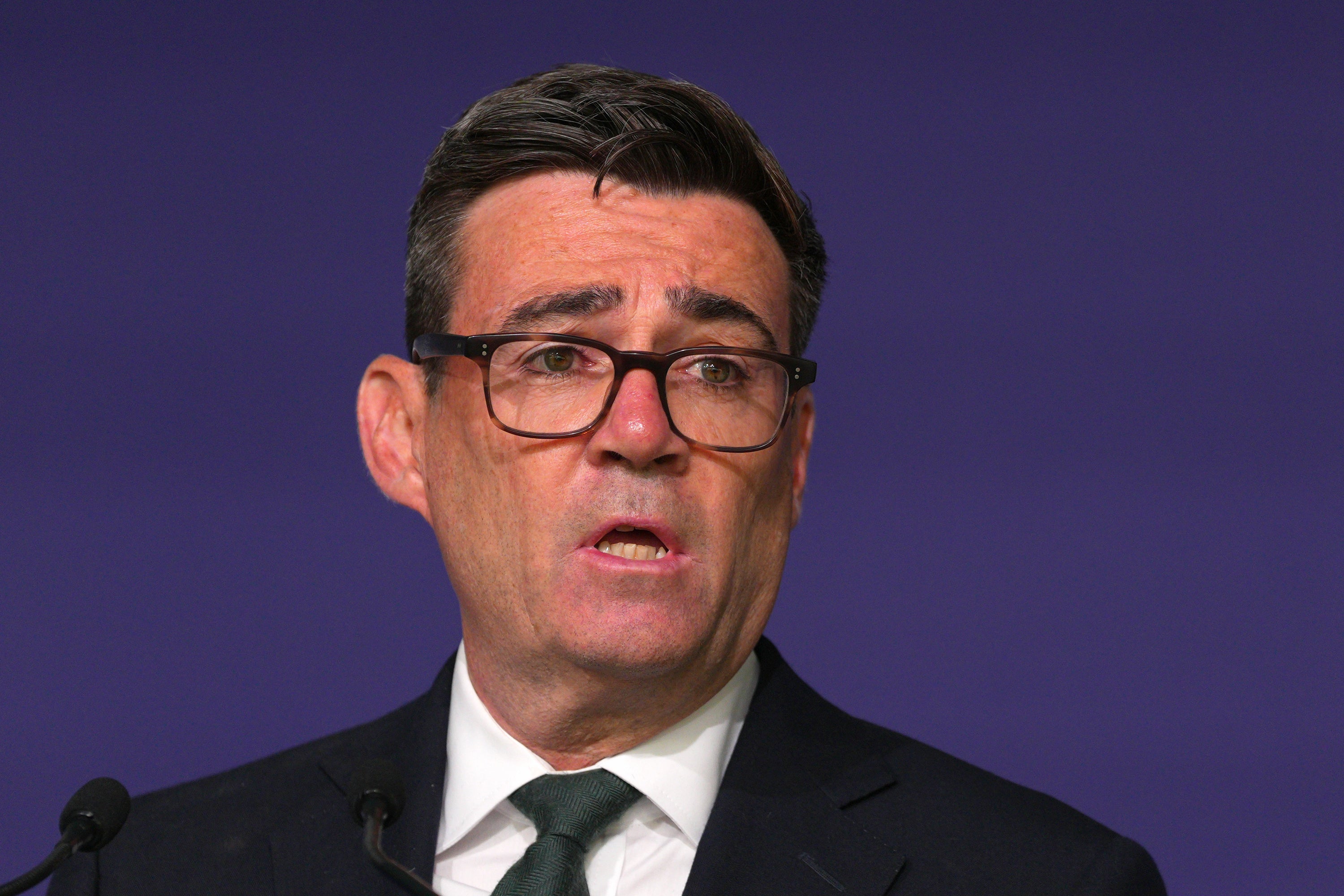
Andy Burnham will call for more public control over water, energy and transport in his first appearance in the House of Commons since becoming Prime Minister.
Mr Burnham will use his Commons debut as Prime Minister on Tuesday, his first appearance at the despatch box in 16 years, to argue that stronger public control over many of the country’s services can be an engine for economic growth.
The Prime Minister is expected to set out his belief that essential services have not been run in the public interest, and that they have become neither reliable nor affordable, holding back households and the wider economy.
The Guardian, which first reported details of the Commons statement, said Mr Burnham will make public control over important services a priority for the Government over coming months.
A No 10 source said: “Andy is optimistic about our country’s future.
“He has a clear plan for how we turn things round.
“He is determined we make this the moment we bring back hope.”
Tuesday’s statement to Parliament will also be a chance for MPs across the House to probe the Prime Minister on the slew of policies he announced over the summer.
This includes a run of proposals to help families and businesses deal with rising living costs, such as the cut to VAT on energy bills which comes into force in October, and slashing business rates for pubs and clubs.
Mr Burnham is expected to face a two-hour grilling from MPs when he stands up in the Commons on Tuesday, and he will undergo further scrutiny in the chamber on Wednesday when he faces off against Conservative leader Kemi Badenoch for his first Prime Minister’s Questions.
Mrs Badenoch on Bank Holiday Monday reshuffled her shadow cabinet, sacking Tory big beasts such as Sir Mel Stride and Dame Priti Patel, ahead of Parliament’s return.
As well as a reforged senior opposition team, Mr Burnham faces a host of political challenges as MPs return to Westminster for the autumn.
These include whether to bring struggling utilities such as Thames Water under Government ownership, and the future of two major fossil fuel operations in the North Sea: the Rosebank and Jackdaw fields.
Crunch decisions on a flagship Bill to tighten immigration law, and calls for MPs to change electoral law are also on the horizon.
Mr Burnham is also expected to face tough questions about how he will fill a £4.7 billion funding hole in the defence investment plan, left to him by his predecessor Sir Keir Starmer.
Chancellor John Healey has vowed defence will be central to his plans at the Treasury, after last week being unable to commit to a 2030 deadline for when Britain will meet a target to spend 3% of its economy on defence.
Mr Healey’s resignation as Sir Keir’s defence secretary over a dispute about a shortfall in funding was a pivotal moment in the former prime minister’s downfall earlier this year.
He told The Times: “For the first time at the spending review, we will set out a clear path about how we meet that Nato commitment in 2035, of 2.5% of GDP.”
The Chancellor added: “And as part of setting out that clear path, we will set that target date for 3%.”
Elsewhere on Tuesday, Mr Burnham’s Justice Secretary Alex Norris will announce to the Commons the Government’s plans for an early release scheme to deal with prison overcrowding.
Over the weekend, the Prime Minister said the killers of Thames Valley Police officer Andrew Harper will not be eligible for the scheme, following a backlash.
Mr Burnham initially resisted calls to limit the scheme further after it emerged that Albert Bowers and Jessie Cole, who were convicted of Pc Harper’s manslaughter in 2020, would be eligible from next year.
Ministers also plan to create capacity in prisons by building hundreds of new places with a £110 million investment, by deporting foreign prisoners and releasing inmates who are serving indefinite sentences under imprisonment for public protection sentences (IPPs).

