
Marlon James’s “The Disappearers,” the Jamaican writer’s first non-fantasy novel since he won the 2015 Booker Prize for “A Brief History of Seven Killings,” is already one of the year’s most anticipated literary releases.
Now the novel, about an anti-gay hate crime in 1980s Jamaica, is likely to be even more so. On Tuesday, it was nominated for the Booker Prize along with a dozen other books, including fellow Booker winner Douglas Stuart’s “John of John” and “The Things We Never Say” by the Pulitzer Prize-winning author Elizabeth Strout.
The Booker, a distinguished British literary award, is given out each year to a title originally written in English and published in Britain or Ireland. The judging panel, led this year by the classicist Mary Beard, will announce a six-book shortlist on Sept. 22. The winner will be named at a ceremony in London on Nov. 9. Its author will receive 50,000 pounds, about $66,500.
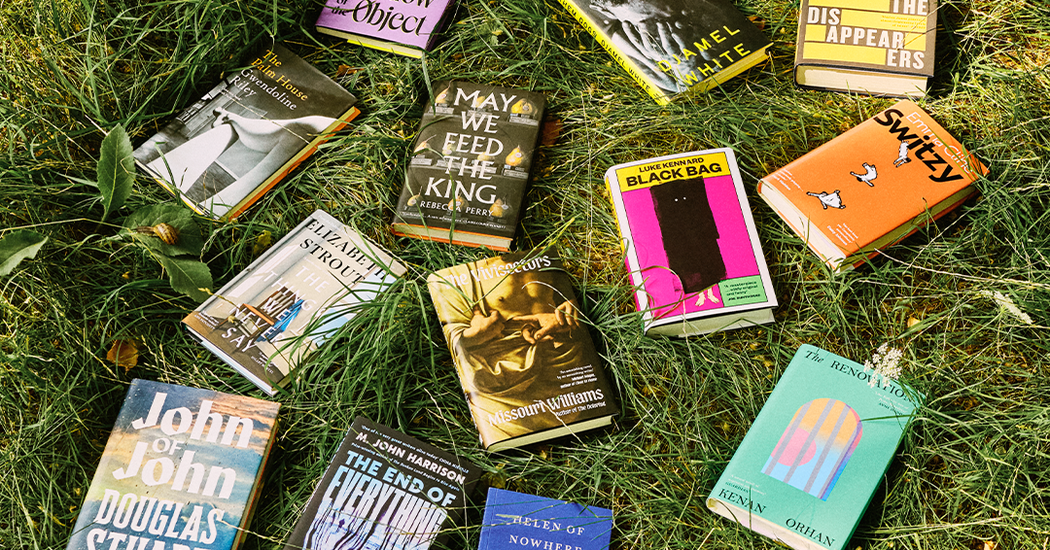
Here are the nominees.
The Shadow of the Object
by Chloe Aridjis
In this dreamlike tale, a woman who is hospitalized after being bitten by a dog must return a magic lantern to another patient’s son. John Self, writing in The Financial Times, said that the book had “an intense flavour that can only come from an author’s deep investment in their material.”
Switzy
by Emma Cline
Set for an Sept. 8 release, Cline’s third novel follows a retired business executive with a degenerative neurological disease as he visits friends and family before his medically assisted death in Zurich.
Helen of Nowhere
by Makenna Goodman
The author’s second novel centers on a professor who, after losing his job and partner, heads to the countryside, where he hopes to live a bucolic existence he’s not ready for. Jo Hamya, in The Guardian, called it “a perfect fairy tale for our tales.”
The End of Everything
by M. John Harrison
A beachcomber pulls a mysterious being from the sand in this science fiction novel set in a coastal town. John Self, in The Times of London, said that Harrison, 81, “has been writing confounding, brilliant books for more than 50 years,” and that this was another one.
The Disappearers
by Marlon James
James’s latest, which is scheduled for a Sept. 1 release, revolves around eight men in 1980s Jamaica who respond to a casting call for a play with openly L.G.B.T.Q. themes and are then met with bigotry and violence.
The Renovation
by Kenan Orhan
A Turkish exile living in Italy hires builders to remodel her bathroom — and discovers that they’ve built a prison cell instead. MJ Franklin, in The New York Times, said that learning its premise was sufficient to make him think, “Enough, I’m in!”
May We Feed the King
by Rebecca Perry
Perry’s debut novel begins with a curator transforming a former palace to make it look historically accurate, then darts hundreds of years backward into the world of a medieval king. Melissa Harrison in The Guardian called it a “highly wrought puzzle-box of a book.”
The Palm House
by Gwendoline Riley
Riley’s latest book recounts the travails of an editor and a contributor to a highbrow magazine after a new executive arrives to shake it up. Christian Lorentzen, in The New York Times, described Riley as a novelist who’s “as thoroughly unsentimental as J.M. Coetzee or Michel Houellebecq.” Read our review.
The Things We Never Say
by Elizabeth Strout
A depressed high school history teacher discovers a long-hidden family secret in this story by an author who has been nominated for the Booker twice before, for “Oh William!” and “My Name is Lucy Barton.” Maggie Shipstead, writing in The New York Times, said this latest work “rewards rereading.” Read our review.
John of John
by Douglas Stuart
A gay man returns to his abusive father’s farm on a Scottish island in the latest work from the author of “Shuggie Bain.” In The New York Times, Mark Harris called Stuart’s latest work a “moving, suspenseful, completely worth-your-time” book. Read our review.
All Them Dogs
by Djamel White
White’s debut novel is about a Dublin gangster who flees from a feud and then tries to return to a life of crime five years later. Elizabeth Mannion, in The Irish Times, said the novel was “beautifully audacious” and filled with “street lyricism.”
The Vivisectors
by Missouri Williams
An academic befriends a student involved in a culture war controversy in this experimental novel. Ann Manov, in The New York Times, said “the novel promises a dangerous critique of contemporary sexual and cultural politics, and a narrator who sympathizes with the collective enemy; instead, it retreats into metaphor and meteorology.” Read our review.

