
BMW said Tuesday it would begin producing electric vehicles in the United States by the end of the year, a contrarian move when many automakers are slowing investment in the technology.
The iX5, a midsize electric sport utility vehicle, will be the first new electric vehicle to roll off the assembly line at the German automaker’s factory in Spartanburg, S.C. By 2030, the company plans to produce six electric models at the plant, one of its most important and largest outside Germany.
Other automakers have delayed or canceled electric vehicle projects in recent months and recorded multibillion-dollar losses as a result. They have been responding to weak U.S. sales after Congress eliminated subsidies for electric car purchases.
BMW exports about half of the vehicles it makes in Spartanburg, where it produced more than 400,000 vehicles last year. The South Carolina complex is the company’s main hub for producing the X5 and other sport utility vehicles.
Exports allow BMW to benefit from strong demand for electric vehicles in Europe, where they account for 20 percent of new vehicle sales. That compares with about 6 percent in the United States.
BMW is moving in the opposite direction of many of its competitors.
In March, Honda scrapped plans to build three electric models in the United States. The change led to $9 billion in restructuring charges and write downs.
Last year, Ford stopped producing its F-150 Lightning, closed a factory in Kentucky that made batteries for that pickup last year and booked a $19.5 billion hit to profit.
General Motors and Stellantis, the maker of Jeep and Ram vehicles, also revised their plans and booked losses on electric vehicles.
Unlike BMW, Ford, G.M. and Honda do not have a large enough presence in Europe to benefit much from demand for electric vehicles there. Ford has less than 3 percent of the European car market while Honda has less than 1 percent. G.M. sells a small number of Cadillac electric vehicles in Europe.
But BMW is also hedging its bets in case demand for electric vehicles, which has been erratic, falls short of expectations.
The iX5 is an electric version of a the popular X5 series of vehicles will also be available in gasoline, diesel and plug-in hybrid versions. BMW will produce all the variants on the same assembly line, allowing it to adjust production according to demand. Eventually BMW plans to also offer a version that runs on hydrogen.
BMW unveiled the latest version of the X5, its best-selling model in the United States, at an event in Spartanburg that the company said was the culmination of $1.7 billion in investment to expand the plant and to construct a battery factory in nearby Woodruff, S.C.
The investment is an expression of “our confidence in the United States and reinforces South Carolina’s role at the center of BMW Group’s global operations,” Milan Nedeljković, the company’s chief executive, said in a statement.
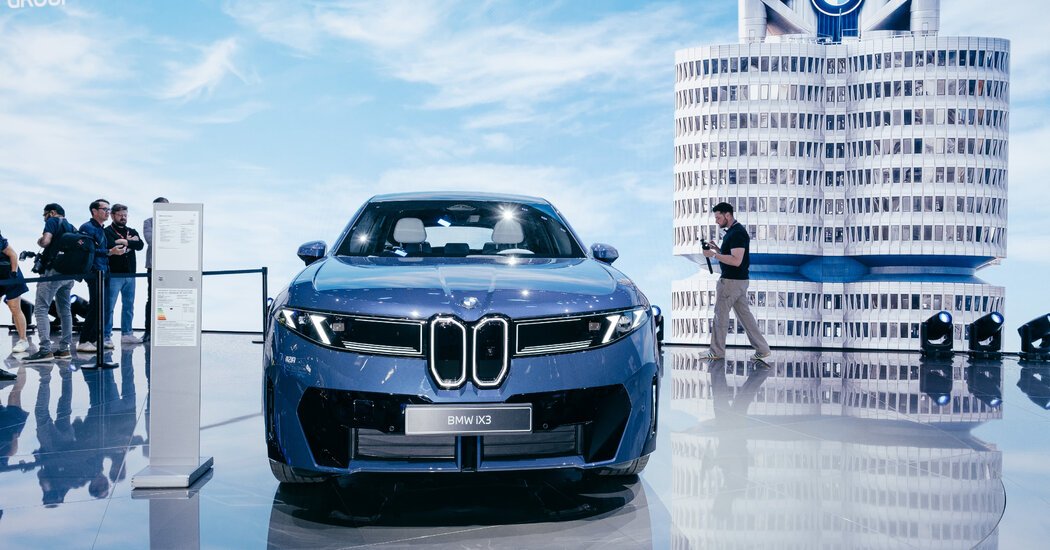
In the fall, the automaker will begin selling a smaller electric S.UV., the iX3, in the United States. That model is the first of several revised electric cars that BMW is rolling out over the next couple of years.

