On Wednesday, Bayern Munich released their financial report, an annual ritual that normally results in everyone praising them as one of the best-run clubs in the world, capable of great success on the pitch and on the balance sheet.
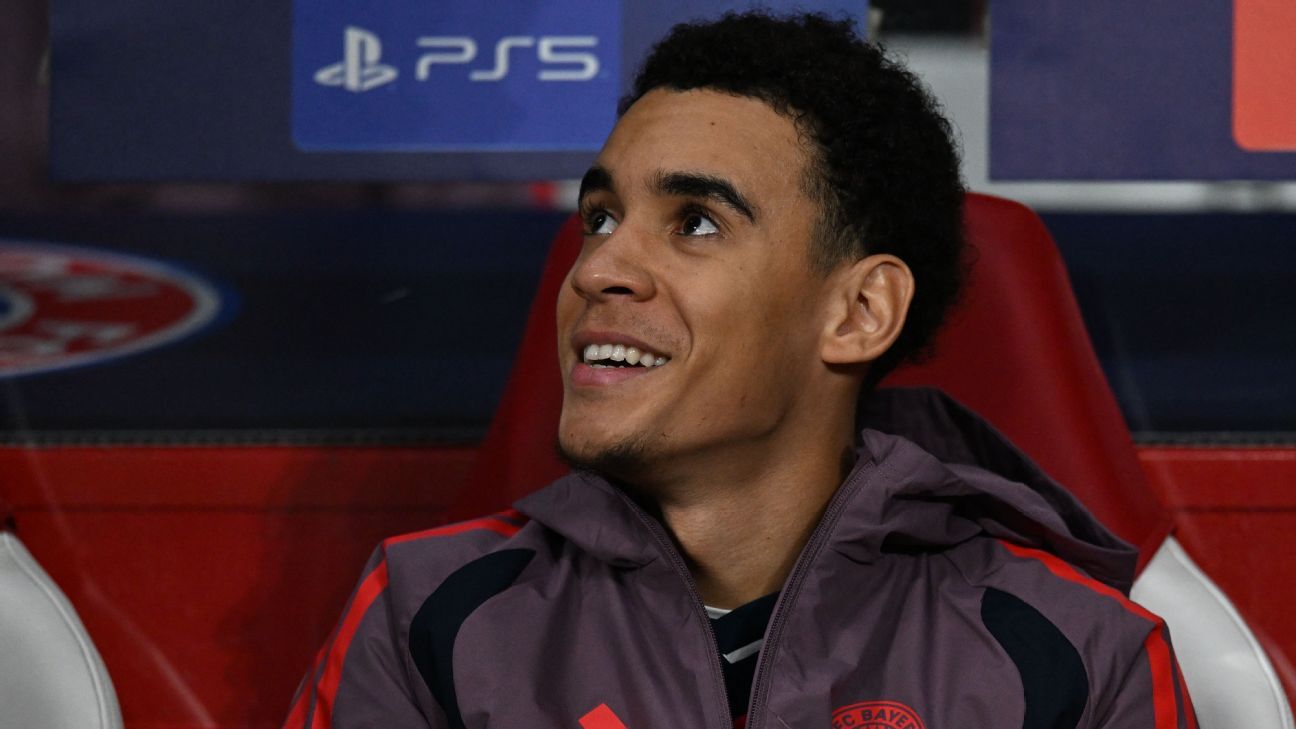
The numbers were there: nearly a billion euros in revenue and €22.8 million in net profit, marking 34 consecutive years of making money, which is virtually unheard of in the modern game. The praise? Not so much, because the past week has seen them embroiled in a needless and embarrassing dispute with Jamal Musiala, who signed a monster deal through 2030.
It’s the sort of behavior that is driving a wedge not just between the club and the player, but the squad, coaching staff and most of the fanbase. And despite clear-the-air talks on the eve of Bayern’s Champions League match at Lille — which they lost 2-1 on Wednesday night — we’re no further forward.
Bayern Munich go public about Musiala’s health issues
When Musiala, who had been at Bayern since the age of 16, signed his deal on Valentine’s Day 2025, it looked like eternal love. He was 21 and in his third season as a starter. He was a creative dribbler and passer who could also score — and he’d average more than 16 goals a season in his three full seasons as a regular, a considerable return for an attacking midfielder — and the sense was that he’d only get better.
Well on his way to becoming a world-beater, Musiala secured a deal worth in excess of a reported €25m a season, making him one of the highest-paid players in the world. But then came the physical injuries.
In April, he tore a hamstring and missed the rest of the 2025-26 European season. He returned in time for the Club World Cup in the summer of 2025, but collided with Gianluigi Donnarumma, breaking his leg in Bayern’s quarterfinal defeat to Paris Saint-Germain. That kept him out until January of this year, but the fallout from the injury lingered, and he had a lackluster second half of the 2025-26 season coupled with a pedestrian World Cup.
Worse was to come. In August, he collapsed twice during preseason friendlies and revealed he had a neurological dysfunction that caused him to suffer occasional “absence seizures,” which are short (typically lasting 3-15 seconds) periods of “blanking out” caused by abnormal electrical activity in the brain.
Musiala revealed they were “currently part of [his] everyday life,” but that there were no long-term health risks and he was receiving excellent treatment. He did miss eight weeks of the current season, but that was for a hamstring injury; otherwise, he has been available to play.
However, a week ago, Bayern Munich honorary president Uli Hoeness and chief executive Jan-Christian Dreesen started suggesting that perhaps Musiala should revisit his contract given his health issues. Club legend and Bayern board member Karl-Heinz Rummenigge doubled down Friday, saying “Jamal has a health-related issue and everyone knows that. It’s also well known that he has a contract involving very substantial sums of money. As a club, we have to consider how to deal with that situation.”
Rummenigge added that if Musiala didn’t return to top form, the club would “have to think about the finances, because frankly speaking, those kinds of sums [would] no longer [be] sustainable.”
The pushback was immediate. The following day at the club’s annual general meeting, members criticized the board for casting doubt on Musiala’s health, with one — a neurologist — saying that this sort of speculation could actually harm his recovery.
Sporting director Max Eberl and manager Vincent Kompany said they were convinced Musiala would return to top form. The fact that Kompany himself had only just returned from a four-week medical absence only underscored how tone-deaf Rummenigge’s comments had been. FIFPRO, the international players’ union, weighed in with a harsh statement as well.
“A club of Bayern’s standing should know better,” said the statement in part. “Bayern has a duty of care to Musiala. Across professional football, uncertainty about a player’s future can take a toll on their mental health, particularly when they are recovering from injury.
“Making Musiala’s health and future a matter of public debate adds to that pressure.”
Bayern Munich’s stance is practical, but heartless
Going back to their “FC Hollywood” days, Bayern have a history of outspoken officials, players and coaches, but the Musiala affair takes things to a new level of self-harm. Sure, the club has a fiduciary duty to run a business and ensure its assets — because that’s what Musiala is from an accounting perspective — maintain a level of productivity in line with what they’re costing the company. A pizza joint that leases a fancy oven only to find that it malfunctions on a regular basis might go back to the manufacturer and ask for a discount. Fair enough.
Musiala, however, is not a piece of machinery; he is a human being with an employment contract, which is why this story resonates the way it does.
Do we want our employer to call us out in public and try to compel us into a pay cut if we suffer an injury or a previously undiagnosed medical condition at work? In Germany, with its strong history of unions and labor protections, this is simply unacceptable behavior.
And while it may not be unreasonable — if his condition somehow negatively impacts his contribution — to speak to him and his agents privately, what you don’t do is go public with it straight away. Indeed, Rummenigge and the club lost a ton of credibility when they admitted that they had not yet had any conversation about the issue with Musiala or his representatives, only meeting with them for “constructive” talks on Tuesday.
There are also obvious issues of medical privacy — Musiala is entitled to share whatever he deems appropriate, and it’s not for others to talk about his condition without his approval — and the timeline of events. He collapsed in August and he’s missed eight weeks through an unrelated injury; what need is there to speculate about his long-term health and potential pay cuts when you don’t know how this is going to affect him?
Like all clubs, Bayern have safeguards in place. Presumably, there are also presumably insurance clauses that might apply in case injury forces him into retirement, all of which makes the whole situation so absurdly unnecessary.
Bayern’s boardroom may be the “smartest in the room” when it comes to financial results and on-pitch success. When it comes to empathy and communication however, there’s a ways to go.