

Want to bookmark your favourite articles and stories to read or reference later? Start your Independent Membership today.
Already a member?
Log in
If there’s one thing that Brits are uncomfortable talking about, it’s money. A hangover from a class system that branded the subject “vulgar” and “gauche”, the stigma has persisted well into the 21st century. Research from Barclays earlier this year found that 50 per cent of people regard money as a taboo subject in the UK; an estimated 2.8 million adults would rather “do anything” than talk about it.
This unhelpful notion of gentility bleeds into every area of life, including salaries – there remains a cloak-and-dagger secrecy around how much we earn, both inside and outside of the workplace. But such squeamishness about sharing our pay is about to be tested under new proposals from the Equality and Human Rights Commission (EHRC).
Following a consultation, Britain’s equality watchdog is recommending that workers should have the legal right to demand to know their colleagues’ earnings if they suspect they’re being paid more for comparable work. This goes further than simply being given a ballpark or salary band – the proposal suggests that employers should be compelled to respond to statutory salary questionnaires seeking information including colleagues’ basic salaries, working hours, overtime, bonuses and performance-related pay, as well as explanations for any differences in earnings.
An employee shouldn’t need concrete evidence of a pay discrepancy to make such a request, advises the EHRC – suspicion is enough.
Ministers are also being advised to make the return of these questionnaires (previously available under the Equality Act 2010 before being scrapped in 2014) by employers mandatory, rather than voluntary, and to include a specified timeframe to guard against companies dragging their feet.
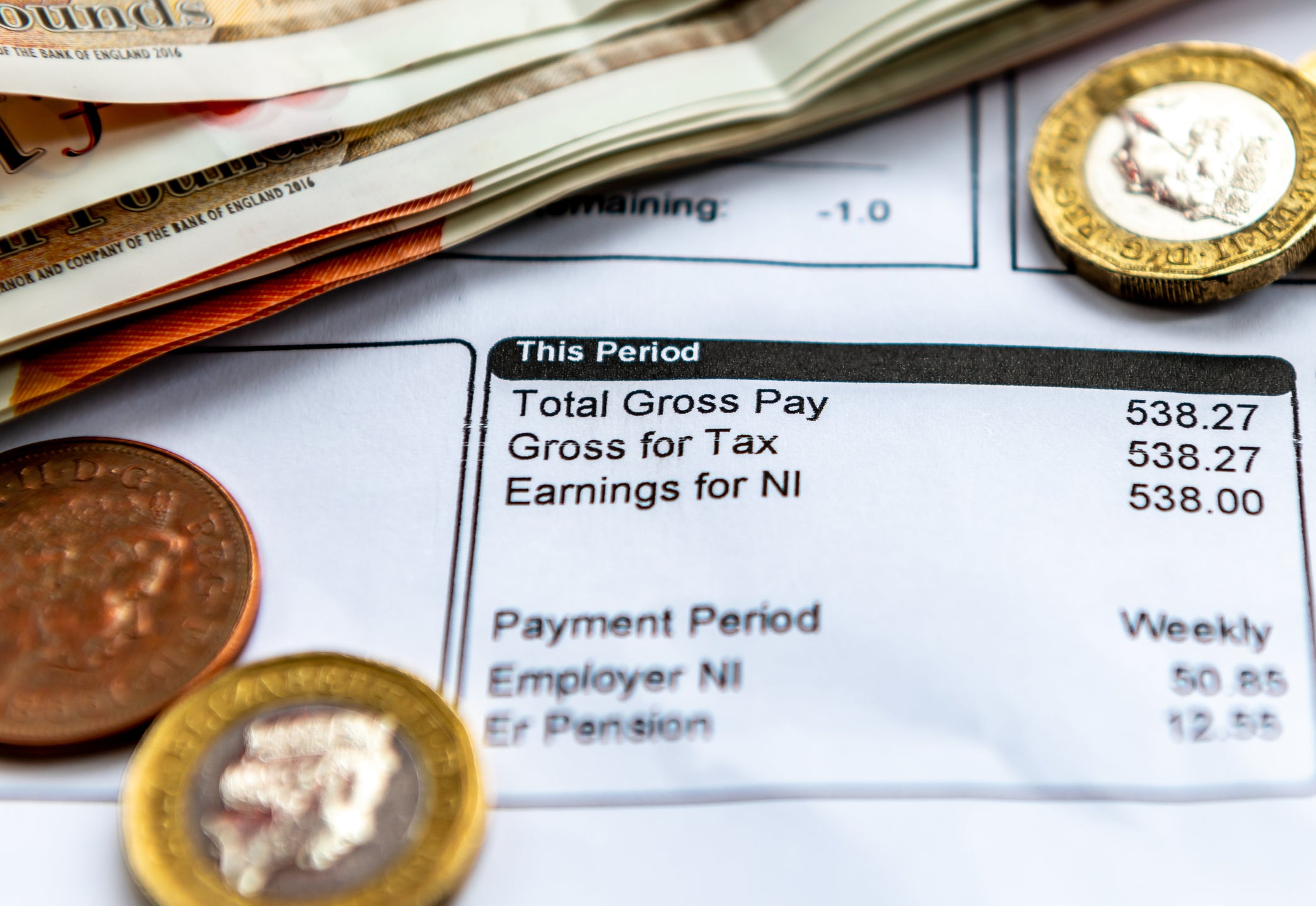
“Without such a requirement, employers may delay, provide evasive responses or avoid responding,” warns the EHRC. “We suggest this should be introduced as a mandatory measure, rather than an ‘optional’ one.”
The aim isn’t to make people uncomfortable or empower snooping – it’s to support early resolution of pay disputes, and tackle systemic inequality embedded in the workplace. The persistent gender pay gap stands at 6.8 per cent for full-time employees as of April 2026. While it’s a complex issue, a lack of transparency about what people earn, especially for undertaking similar work, undoubtedly helps perpetuate discrepancies and discrimination.
The UK proposals are distinct from measures in other countries. Norway, Sweden and Finland, for example, have tax transparency, rather than pay transparency; records on tax paid by an individual are generally searchable through government registries. However, these records don’t show a person’s exact salary, their bonus, their overtime, or why they earn what they do.
“Sweden’s real strength is that employers must carry out regular pay surveys and fix any gaps they can’t explain,” says Kate Underwood, a UK HR consultant and founder of Kate Underwood HR & Training.
The failure to publish salary parameters can have a disproportionate detrimental impact on fair pay for women in particular
EHRC
The UK’s potential measures also differ from the EU Pay Transparency Directive. Introduced in June 2023 with a deadline of June 2026, the directive has thus far only been transposed into national law by seven of 27 countries. (Most have missed the deadline and are still at the draft stage.)
The scope is much bigger than what’s being proposed here. “There are definitely some common themes but the EU pay transparency directive is broader and and it’s more detailed and more prescriptive,” says Caroline Pryce, a rewards consultant at Turning Point HR. “The EU directive will allow information requests from any employee – you don’t have to suspect discrimination, you don’t even have to say why you’re asking for it.”
However, rather than being able to see the precise salary details of another individual, workers will be provided with information on the average pay levels, broken down by sex, for categories of workers doing the same work or work of equal value.
There are other measures too, such as stricter gender pay gap reporting requirements (with publishing the gap compulsory for companies with over 100 employees) and a stipulation that employers must carry out a pay assessment if their report reveals a gap of 5 per cent or more that cannot be justified.
Perhaps most importantly, the directive seeks to end opaqueness around salaries in job adverts – stating that organisations must “inform job seekers about the starting salary or pay range in the vacancy notice or ahead of the interview” – and outlaw the practice of forcing candidates to disclose their current or expected pay during the interview and application process.

When salary parameters are ambiguous, women are less likely to negotiate starting salaries and pay rises. And, as women are also less likely to benefit from “informal” salary information-sharing – learning about potential salaries outside official channels – this “typically results in women receiving lower starting salaries”.
The UK government is being strongly urged to adopt similar measures by the EHRC. The move could be crucial in levelling the playing field; the consultation highlights that the failure to publish salary parameters “can have a disproportionate detrimental impact on fair pay for women in particular”. The Chartered Institute of Personnel and Development’s (CIPD’s) 2024 pay, performance and transparency survey reveals that not asking applicants to disclose salary history can help women and ethnic minority groups to negotiate pay on a fairer basis.
“That can definitely perpetuate the gender pay gap,” says Pryce of the practice of withholding salary details from job adverts. Publishing details, whether an exact salary or a band, meanwhile, “allows people to make clearer decisions based on firm evidence about what is going to be expected of them. It takes a little bit of the negotiation potentially out of the conversation as well, which can be helpful.”
It can also help businesses, cutting out wasted time and resources in the recruitment process if the salary is wildly below what a candidate is looking for.
Pay secrecy never protected the business. It protected the bad decisions
Kate Underwood, UK HR consultant
Is all this the key to closing the gender pay gap? “It will help, but it won’t fix it on its own,” says Underwood. “Most of the gender pay gap comes from who gets promoted, who works part-time and which jobs have always been underpaid. A disclosure right doesn’t reach those.”
However, it could make a bigger difference for ethnic minority and disabled workers, she predicts. “Current pay gap reporting only covers firms with 250 or more staff, so most people in small businesses never see any data. An individual right reaches them, provided equal pay law is extended to cover race and disability.”
Underwood sees the issue from both sides. Most small employers aren’t deliberately trying to short-change anyone. However, “pay secrecy never protected the business. It protected the bad decisions.”
Her advice to businesses is simple: write down why each person is paid what they’re paid. “If you can explain it, you’re fine. If you can’t explain a gap, you don’t have a reason, you have a habit.”


