
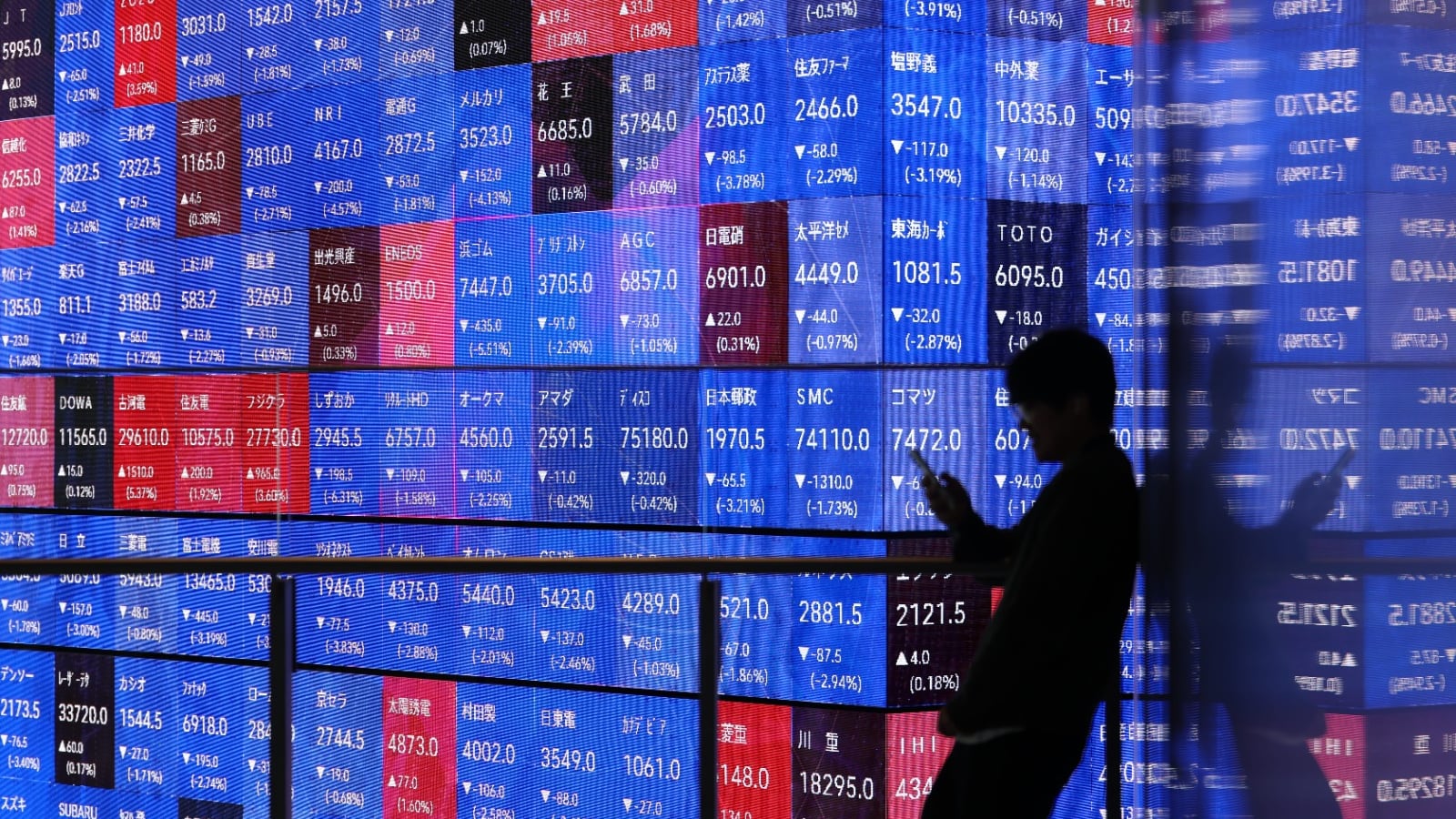
Asian markets fell on Friday, led by South Korea, as concerns over the artificial intelligence trade weighed on global technology stocks. The Kospi declined 2.42% and the Kosdaq dropped 2.6%. Japan’s Nikkei 225 fell 0.49%, while the broader Topix lost 0.86%. Australia’s S&P/ASX 200 slipped 0.21%.
US equity futures were little changed after a sharp sell-off in technology shares during the previous session. Dow Jones Industrial Average futures rose 52 points, or 0.1%, while S&P 500 futures gained 0.06%. Nasdaq-100 futures edged down 0.1%.
US stocks came under pressure on Thursday as investors reassessed the near-term outlook for artificial intelligence-related investments. The S&P 500 fell 1.2%, marking its steepest daily decline since July, while the Nasdaq Composite dropped 2.6%, its biggest fall since June. The Dow Jones Industrial Average finished marginally higher.
Also Read | Layoffs Are Rising In Tech, But These Skills Are Helping People Unlock Better Pay
Yen Strengthens
The Japanese yen extended its gains against the dollar, reaching its strongest level in more than a month as investors sought assets considered safer during periods of market volatility.
The currency rose as much as 0.4% to 156.08 per dollar in Tokyo on Friday, following a 0.9% advance on Thursday. It reached a level last seen on September 18, when the Bank of Japan raised interest rates, after trading within a narrow range against the dollar for several weeks.
Japanese government bonds also rallied, pushing yields lower across maturities as investors sought shelter from the equity sell-off. The 10-year government bond yield fell as much as 10 basis points to 2.78%, while the 20-year yield declined six basis points. Gains in US Treasuries also supported demand for Japanese government debt.
Oil Supply Risks
Brent crude was on course for a third consecutive weekly advance as escalating attacks on Saudi Arabia heightened concerns about further disruption to Middle East energy supplies. The global benchmark traded near $113 a barrel, up about 3% for the week, while West Texas Intermediate remained above $99.
Iran-backed Houthi militants claimed responsibility for recent attacks on the Saudi Red Sea port of Yanbu, following deadly strikes on an oilfield and an airport in the kingdom.
The renewed hostilities threaten to complicate efforts to maintain energy shipments through the region. Crude exports through the Strait of Hormuz have recovered to levels close to those before the war, but the conflict continues to threaten supply security.
Brent has risen more than 85% this year during the US-Iran war, which is approaching its ninth month. Prices for refined petroleum products have climbed even faster, particularly diesel.
Essential Business Intelligence,
Sharp Market Insights,
Practical Personal Finance Advice, Daily Fuel, Gold and Silver Prices and Latest Stories — On NDTV Profit.


