
Even as the number of cyclospora cases in the United States hit record levels, top health regulators insisted that consumers could still trust what they were eating.
“The U.S. food supply is safe,” Donald Prater, the acting deputy commissioner for food at the U.S. Food and Drug Administration, told attendees Monday at the annual meeting of the International Association for Food Protection.
“However, there’s a couple of challenges,” he said, referring to the cyclosporiasis outbreaks that have sickened more than 11,000 people across the country. “It will take a little time. But we do believe we’re taking action and we’re protecting public health.”
It has been a rough summer when it comes to food-borne illnesses.
Nearly 100 people have been reported ill with salmonella, leading to the recall last week of 19 million eggs linked to part of the outbreak. An E. coli infection was traced to some organic blueberries. And earlier in the summer, a listeria outbreak led to the recall of various soft cheeses.
Still, the outbreaks of cyclosporiasis sweeping the country are top of mind for the hundreds of food-safety experts gathered for their annual conference in New Orleans.
“One of the things I’m personally concerned about, we’re starting to have more and more of these outbreaks here in the United States,” German Rios, the senior director of food safety and quality at the produce manufacturer Fresh Express, said during a panel discussion. “I am concerned that we may not have really hit the peak of the outbreaks.”
Across many conference panels and in hallways between meetings, some participants expressed concern that the root causes of the ongoing multiple cyclosporiasis outbreaks may never be known. And without understanding how certain produce or other foods became contaminated in the first place, some said they feared there might not be an end to what some had deemed cyclospora season for consumers.
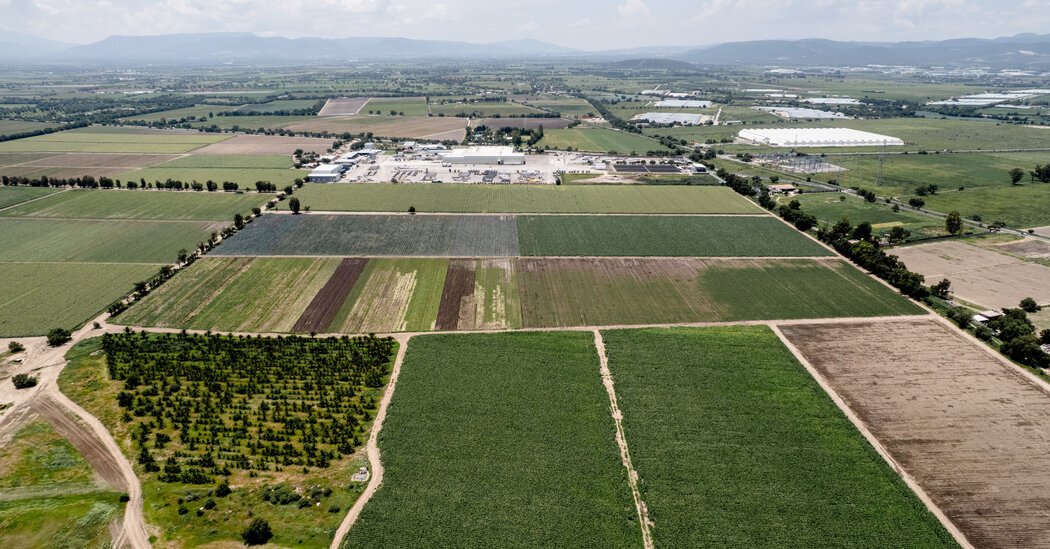
One pocket of the cyclosporiasis outbreak that has sickened 1,947 people and hospitalized 98 has been linked to iceberg lettuce grown in Mexico and served at some Taco Bell locations. That led Taylor Farms, the country’s largest produce supplier, to voluntarily recall lettuce shipped to 27 states.
The F.D.A. identified a new outbreak that has sickened at least 72 people, according to an update posted to the agency’s website last week. At the same time, health officials in North Carolina are trying to track down an outbreak that they do not believe is related to the iceberg lettuce served at Taco Bell, but that has resulted in more than 300 cases of cyclosporiasis in the state. They are eyeing parsley, cilantro and lettuce as potential culprits there.
Even though regulators have identified iceberg lettuce from Mexico as the source for one of the outbreaks and that lettuce has been recalled, the number of cases of cyclosporiasis and of unrelated outbreaks keeps climbing, Mr. Prater of the F.D.A. said.
“Once we’ve identified the contaminated product, we will, of course, work to initiate and effectuate recalls, removing the contaminated product on the market, alert consumers and conduct root-cause investigations,” he said. “We’re right in the middle of all of that.”
But if identifying the food that is the source of a cyclosporiasis outbreak is difficult, pinpointing where and how the contamination occurred is even more challenging, many scientists in attendance said. Cyclospora is a parasite that spreads through human feces, and it’s rare for investigators to locate a precise source of contamination.
Produce — whether cilantro, berries or leafy greens — is imported nearly every day from other countries.
When two separate cyclosporiasis outbreaks in 2018 and 2020 were traced back to its leafy in greens, Fresh Express took a hard look at what was happening in some fields in Mexico where some of its produce was grown. The company found that farm owners and workers needed increased education around how cyclosporiasis was spread, Mr. Rios of Fresh Express said.
“We needed to focus and emphasize training and help the employees, help the individuals, understand why it is important and what is cyclospora and how does it occur,” he said.
The company hired additional people to ensure bathrooms in the fields were being regularly used and cleaned. Employees were told to throw out gloves more frequently. Hand washing stations that featured spigots that needed to be turned by hand were reworked so that employees could turn faucets on using just their forearms.
But Fresh Express has also examined where the water that it uses to irrigate crops in the United States comes from. In the Salinas Valley in California, Mr. Rios said, there is what he called purple-valve water, which is recycled or reclaimed wastewater that has been treated and used for irrigation.
“In our case,” he said, “we try to stay away from purple-valve irrigation water.”

