
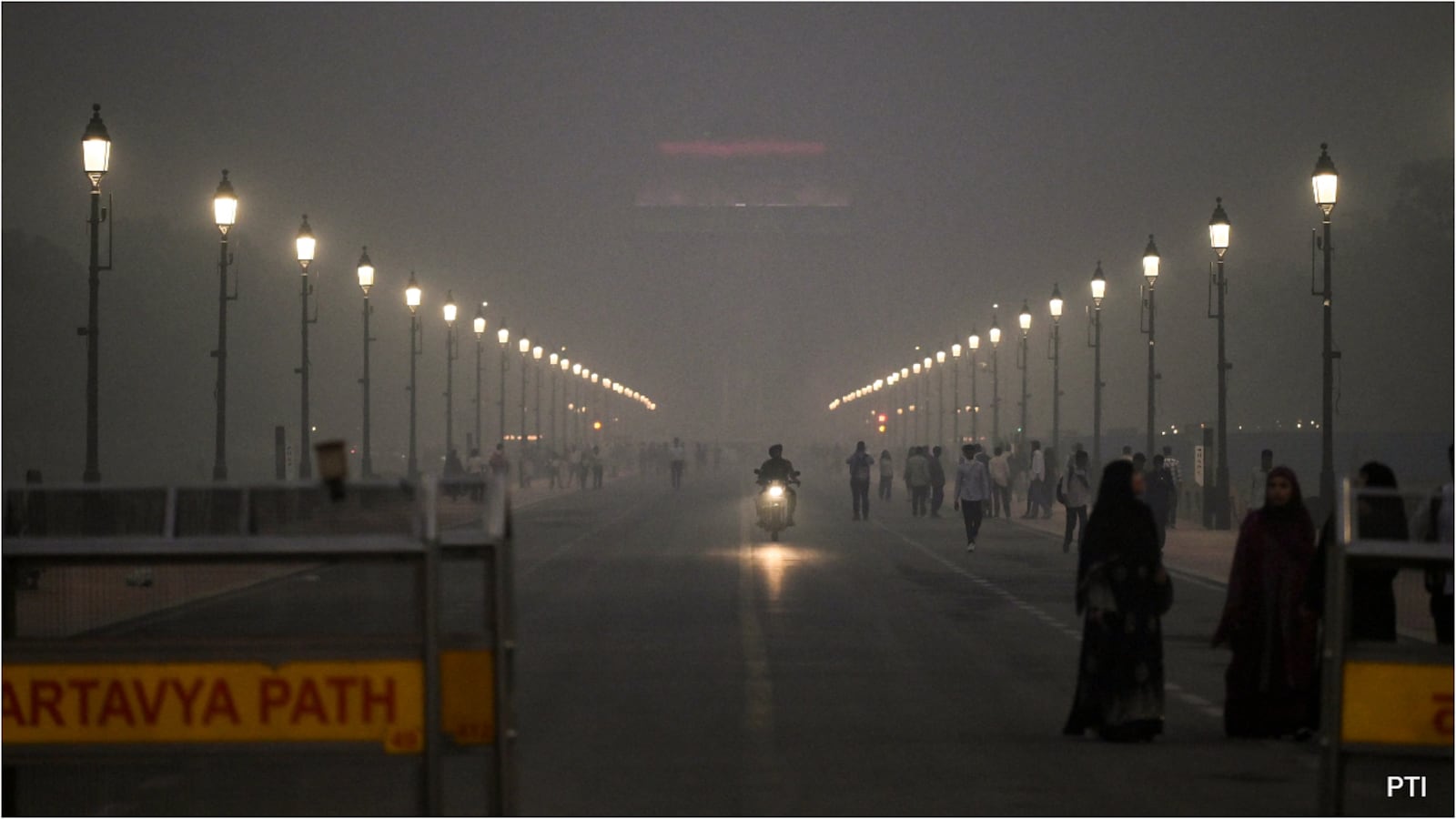
Air quality in north India slipped into the “hazardous” category on Saturday morning, with Ghaziabad recording an AQI of 517, the worst among nine major cities tracked.
Live data from around 8.30a.m. showed Delhi, Noida, Gurgaon and Lucknow also in the hazardous band, while southern and western metros reported far lower readings.
Delhi-NCR Worst Hit
Delhi recorded an AQI of 485, with PM2.5 at 361 µg/m³ and PM10 at 401 µg/m³. The city ranked 20th among the world’s most polluted cities.
Also Read | Layoffs Are Rising In Tech, But These Skills Are Helping People Unlock Better Pay
Noida logged 498 and Gurgaon 452. Ghaziabad’s PM2.5 level of 403 µg/m³ was the highest of all cities. Wind speed across the region was just 3.6 km/h, and smoky haze lingered at 23°C. Calm conditions allow pollutants to stay close to the ground.
Elsewhere In India
Lucknow matched Delhi at 485, with smoke reported and a PM10 reading of 439 µg/m³, the highest among all cities. It ranked 21st globally.
ALSO READ | Rohtak AQI At 726, Sirsa At 725: Check India’s 10 Most Polluted Cities
Kolkata (277) and Hyderabad (206) were in the “unhealthy” category. Mumbai (198) and Chennai (108) were classed as “poor”. Chennai, which had light drizzle and a 14.4 km/h breeze, had the cleanest air of the nine.
City-Wise AQI At A Glance
– Ghaziabad: 517 (Hazardous), global rank 13
– Noida: 498 (Hazardous), rank 16
– Delhi: 485 (Hazardous), rank 20
– Lucknow: 485 (Hazardous), rank 21
– Gurgaon: 452 (Hazardous), rank 27
– Kolkata: 277 (Unhealthy), rank 113
– Hyderabad: 206 (Unhealthy), rank 164
– Mumbai: 198 (Poor), rank 170
– Chennai: 108 (Poor), rank 259
Why It Matters
PM2.5 readings in the worst-hit cities ran between five and nearly seven times India’s 24-hour standard of 60 µg/m³, and far above the World Health Organization’s guideline of 15 µg/m³.
ALSO READ | Delhi Sees No Reprieve After Diwali As AQI Near 500; Mumbai, Kolkata, Hyderabad Also Record High Levels
These fine particles can enter the lungs and bloodstream. Children, older people and those with asthma or heart conditions are most at risk. Pollution typically builds across north India in the winter months as temperatures fall and winds weaken.
Health experts usually advise limiting outdoor exposure, wearing N95 masks outdoors and keeping windows closed when readings are this high.
Essential Business Intelligence,
Sharp Market Insights,
Practical Personal Finance Advice, Daily Fuel, Gold and Silver Prices and Latest Stories — On NDTV Profit.


