
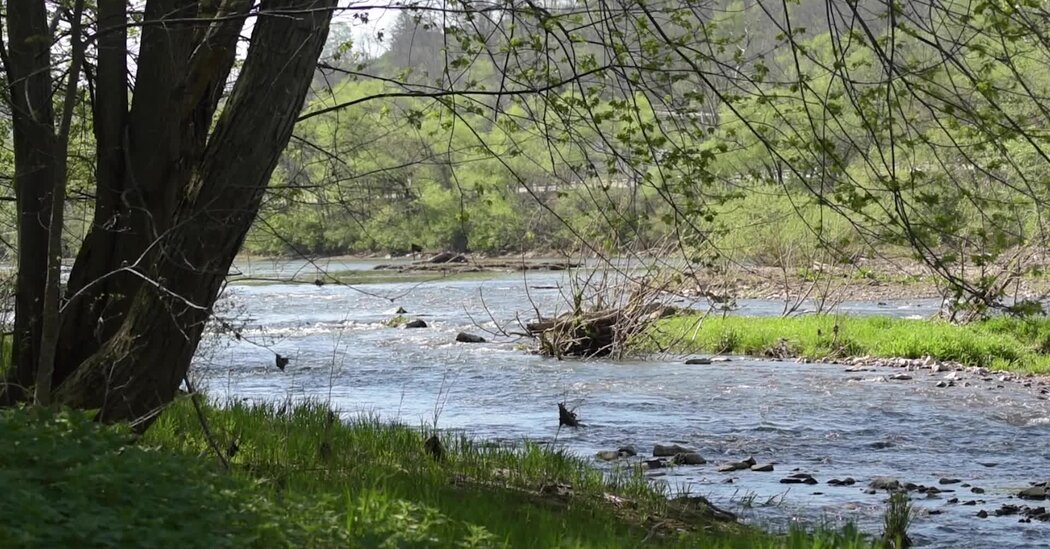
Even though the two dams spanning the river in Bedford, Pa., were old, troublesome and functionally useless, locals just couldn’t quit them.
The dams were built for swimming and fishing, but so much silt had built up that the river was mere inches deep. They trapped debris, worsened flooding and thwarted migratory fish. They were also falling apart, drawing warnings from the Environmental Protection Agency that they would have to be replaced, repaired or removed, at local taxpayer expense.
Yet the people of Bedford had grown attached to the dams, which dated back 50 years. Some also believed, wrongly, that the barriers housed important utility wires or cables. “Somebody always came forward and gave a concrete reason those dams could not possibly be removed,” said Kenny Fetterman, who sits on the Bedford Borough Council.
He was determined to find a fix, and spearheaded an effort that led to the dams’ removal last summer. “Now the river is so much cleaner,” said Mr. Fetterman, who as far as he knows is not related to Senator John Fetterman, Democrat of Pennsylvania. “The quality of water has improved drastically. There’s freshwater clams in there.”
It was part of what might be called the undamming of America.
Last year, more sections of the country’s rivers were reconnected thanks to dam removals than at any other time in history, according to the nonprofit group American Rivers. In 2025, more than 100 dams were dismantled in 30 states, reconnecting around 4,900 miles of waterways, including 156 miles of a branch of the Juniata River that are now reconnected thanks to the removal of Bedford’s two dams.
The resulting free-flowing waterways are healthier, cooler and less prone to algal blooms, and serve as vital habitat for migratory fish and other aquatic life.

