

Want to bookmark your favourite articles and stories to read or reference later? Start your Independent Membership today.
Already a member?
Log in
Brands are facing an alluring prospect in AI-generated models: the capacity to generate realistic images for online storefronts while slashing production expenses by upwards of 90 per cent compared to traditional shoots involving real people.
Yet for those working within modelling, this technology represents a fundamental threat due to a distinct absence of legal frameworks governing digital twins. Professional models now face having their likenesses replicated without remuneration or being replaced entirely by AI creations.
An investigation into how artificial intelligence is disrupting the economics of fashion modelling saw Reuters interview 15 modelling agency directors and examine more than a dozen confidential contracts. Proposed terms from major labels, including Diesel, Calvin Klein and L’Oreal, outlined intentions for AI-driven modifications and long-term image rights.
These draft agreements detailed requests to swap model faces using AI algorithms, construct digital clones without paying additional fees, and utilise body imagery to train software tools. Broad legal clauses within the unsigned documents would effectively grant fashion houses unrestricted discretion over how AI is deployed.
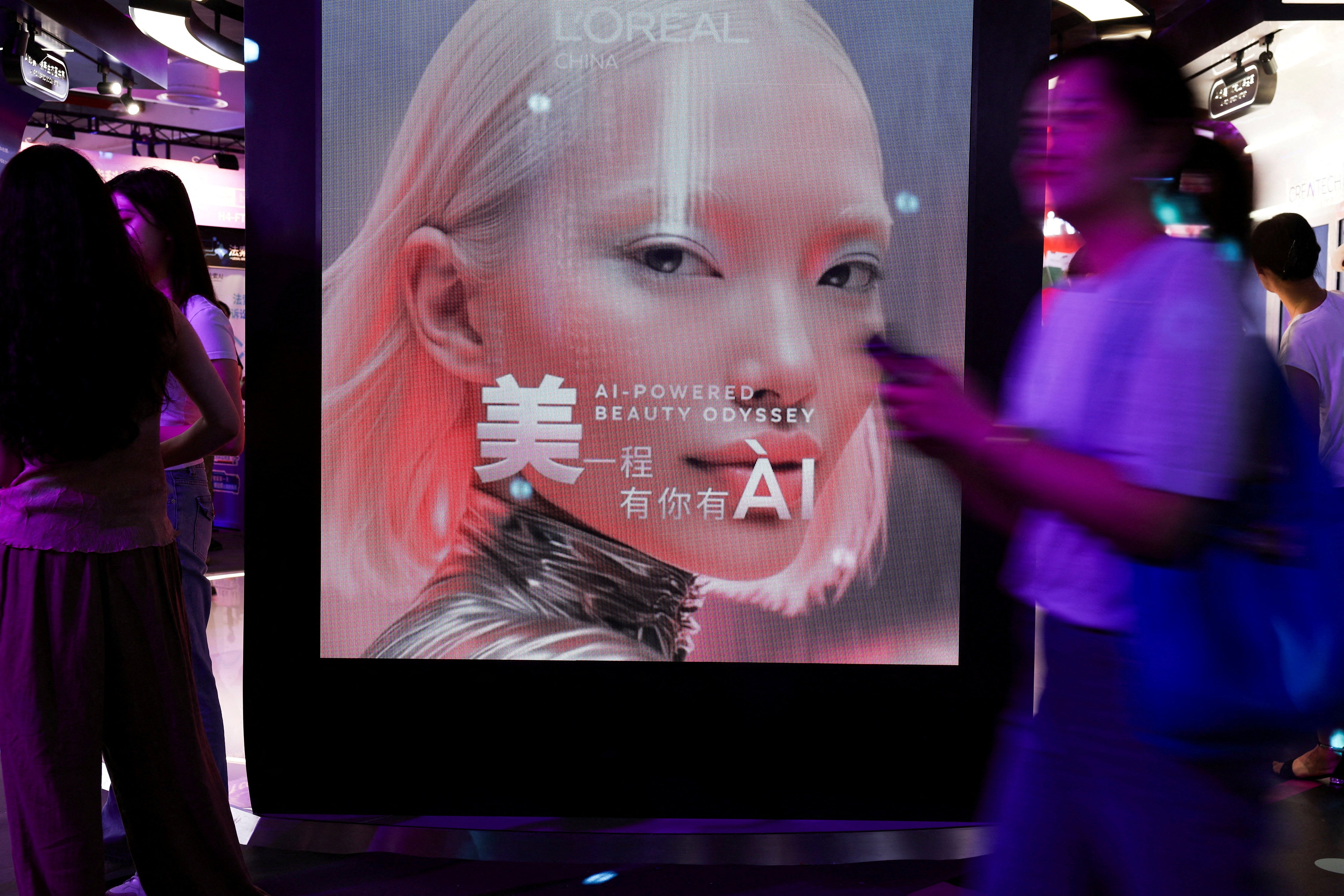
While some businesses aim to alter or repurpose photography of working models, others are turning to purely synthetic figures created entirely from scratch without human bases.
As AI adoption expands, agencies report falling booking numbers, studios are shutting down, and models risk losing a critical revenue stream: e-commerce shoots for fast-fashion platforms that require constant fresh content.
“Within a year, even the next six months, there’s going to be less jobs for models, especially our bread and butter, which is e-commerce,” said London-based model Adot Gak, who has featured on Harper’s Bazaar covers and worked for brands such as Balmain and H&M. “If we don’t speak up about this, in the next two years the whole industry will just be bots.”
Although fast-fashion giants such as Spain’s Mango have already adopted computer-generated models across their operations, luxury houses are acting with greater restraint. Moncler experimented early on with an AI campaign in 2023, while Gucci provoked controversy across the industry after sharing AI-generated posts on Instagram this year.
Moncler stated that it does not currently deploy AI-generated models across its website or promotional material. Gucci did not respond when approached for comment.
“The scariest part is that now people cannot differentiate between a real model and an AI model,” Gak added.
AI systems allow retailers to continually reconfigure and re-use a model’s likeness across various outfits at a fraction of the price of booking a new shoot.
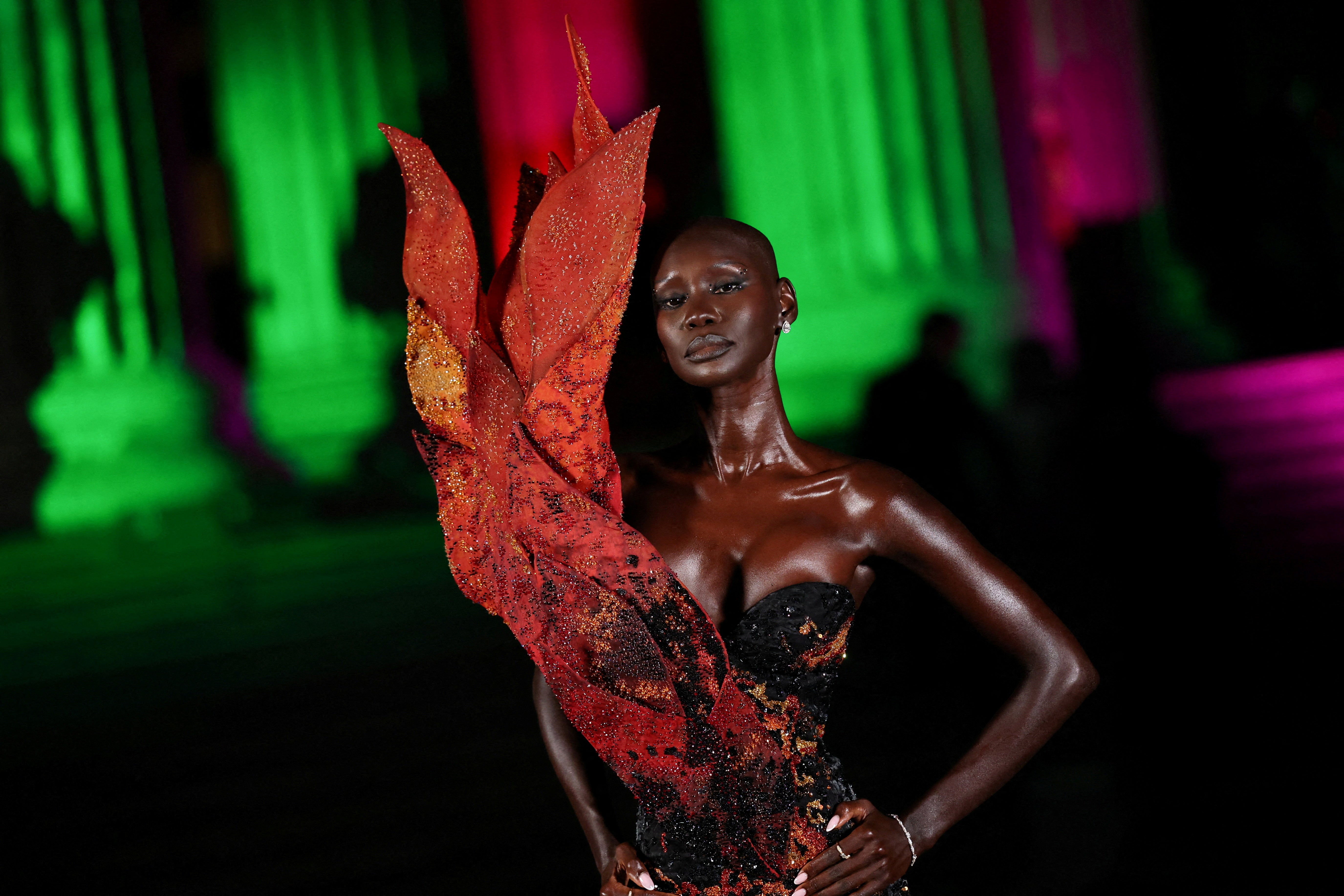
“Some brands ask to modify faces, bodies, skin, age or expressions after shoots using AI. Others are asking about creating ‘digital twins’ of models that they can reuse later without needing another production,” explained Patrick Staal, owner of Uniko Models agency in Barcelona.
In one casting sheet, Italian fashion label Diesel requested that models agree to “alteration or reconstruction of facial features and body proportions,” alongside “swapping of faces among the participating models,” and “superimposition of the Participant’s face onto another person’s body.”
Diesel’s parent company, OTB, informed Reuters that this particular document was created for a single campaign and does not reflect its standard contracts, adding that it does not systematically modify talent using AI.
Skincare line Reale Actives – founded this year by social media creator Alix Earle – uses the tagline: “Reale you is perfect you.”
However, contractual terms reviewed by Reuters revealed the brand sought rights to manufacture AI replicas of models and maintain “ownership” to use those duplicates for a year without further payment.
Reale Actives said in a statement that it hires real talent and has not replicated any model using AI. It attributed the contractual text to an unnamed third-party production partner.
In several instances, models are effectively helping build the technology intended to replace them, with fine print in agreements permitting their images to be used to train AI systems.
A draft contract from Calvin Klein asked a model to consent, without extra payment, to the condition that the brand “may use reasonably unrecognisable images of model (no identifying features such as model’s face, scars, tattoos or otherwise) to train and fine-tune AI tools for learning general model attributes.”
A spokesperson for Calvin Klein said: “Like many others, we are testing and learning in this fast-moving space,” adding that its application of AI aligns with regulations, industry standards, and respect for rights.
Contracts frequently feature phrases such as “including” or “not limited to”, which legal representatives regularly employ to secure unstated permissions.
Melanie Howard, partner and chair of luxury brands at Los Angeles law firm Loeb & Loeb, who represents both brands and talent, remarked that such wide-ranging phrasing “is dangerous in its ambiguity” and makes challenging unauthorised usage exceptionally difficult for models.
A photoshoot contract from French cosmetics giant L’Oreal requested “the right to use artificial intelligence (AI) technologies… including for the purpose of modifying, enhancing, or adapting the appearance of cosmetic products, packaging, or shades, as well as for retouching purposes.”
L’Oreal did not comment directly on that clause, but noted that it uses standard AI tools during post-production processes that leave model likenesses unaffected.
Other businesses are unreservedly leaning into AI model replacement to reduce expenditure.
Zalando, Europe’s largest online fashion store, has rapidly implemented AI imagery in its marketing material and shut down its two Berlin photo studios last year. Fast-fashion retailer About You, which Zalando acquired in July last year, similarly closed its studio facilities. Overall, Zalando eliminated more than 340 jobs, though it noted some workers were redeployed within the business.
About You is currently rolling out its Scayle Studios service, which generates digital assets for external retailers using AI models, promising cost reductions of over 90 per cent. Scayle serves 130 brand clients and produced 190,000 outfits in the past month alone, according to a spokesperson.
“We are saving so much money,” said Julian Jansen, vice president of marketing at About You. “You’ve always had this super fast world of ecommerce, and this super slow traditional world of photo shoots, it didn’t fit together in any way – and now with AI, it’s a completely different scale.”
Worldwide legislation has struggled to keep pace with the growing risk to models’ careers, though the New York State Fashion Workers Act marks a notable exception. From June 2025, that law makes it illegal for companies to generate or modify model replicas without explicit consent.
“The misuse of models’ images is not new, but with AI that problem is accelerated tenfold,” noted Sara Ziff, founder and executive director of the New York-based non-profit Model Alliance, which championed the legislation.
Ziff, a former model herself, is advocating for comparable statutory protections across other US states and at a federal level.
The British Fashion Model Agents Association has created an AI code of practice specifying that AI requires explicit model consent, with ownership of any digital twin remaining with the model. However, BFMA head John Horner warned that without legally binding regulations in Britain or Europe, models remain exposed to exploitation by predatory agencies.
“A lot of young talents don’t fully understand the long-term consequences yet,” said Staal of Barcelona’s Uniko Models. “Signing away AI rights at 20 years old could still affect someone ten years later.”


