
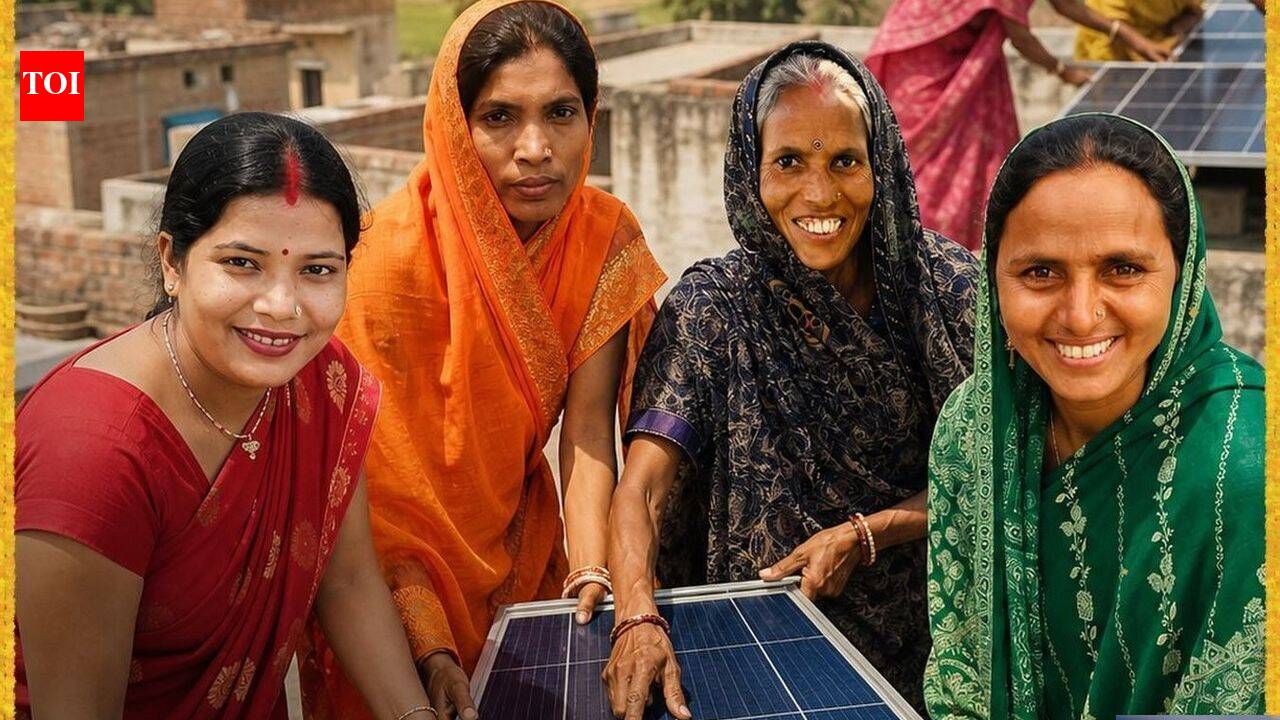
In Bahwanpur, Ghoncha village in Bihar’s Muzaffarpur district, Ladli Khatoon has turned a personal tragedy into an opportunity to build a more secure future for her family. After losing her son to an electric shock while he was helping irrigate their crops, she became acutely aware of the dangers farmers can face while working in the fields. Today, she runs a solar-powered irrigation business, supplying water to 35 to 38 farmers and earning around Rs 1 lakh.Her journey is part of a growing initiative in Bihar that is helping rural women become solar entrepreneurs. By using sunlight to power irrigation pumps, these women are not only helping farmers access water but also building independent sources of income in communities where women have traditionally faced barriers to running businesses.
From personal tragedy to a new beginning
Ladli’s family once depended largely on her husband’s earnings as an autorickshaw driver. With six family members to support and 1.5 acres of agricultural land, managing household expenses was not easy. The death of her son during irrigation brought an unimaginable loss to the family. The incident also highlighted the risks associated with conventional irrigation methods and the importance of exploring alternatives. Ladli later learned about the solar irrigation initiative at a meeting organised through JEEViKA, Bihar’s rural livelihoods programme. She was associated with the Muskan Self-Help Group (SHG), the Dharti Mata Village Organisation and the Phoolmala Cluster Level Federation.The programme offered her a chance to establish an irrigation enterprise of her own. However, setting it up required a substantial financial commitment. The solar irrigation system cost Rs 4,92,275, of which Ladli invested Rs 1,79,420. She also took a loan of Rs 1,25,000 from Rang De, a social lending organisation. For a family already managing financial difficulties, investing such a significant amount was a major decision. Yet, Ladli moved forward, hoping the venture would give her a more reliable source of income. Her decision has since changed the way she sees herself and her future.“A lot has changed in my life. There used to be financial anxiety because we were entirely reliant on one source of income. I am also learning new things. I didn’t know solar energy could be used for irrigation. I am making money now, too. I feel self-assured. I am respected by the villagers,” she says.
How solar irrigation is creating rural entrepreneurs
Ladli’s business is part of a broader model developed through a partnership involving JEEViKA, the Aga Khan Rural Support Programme (India) and the Gates Foundation. Under this initiative, women farmers are selected through Cluster Level Federations and receive support to establish solar-powered irrigation systems. The setup includes a five-horsepower solar pump, solar panels, a borewell, a pipeline and a pump house. Self-help groups and village organisations can also help women access loans when they need financial assistance.The women then supply irrigation water to other farmers, creating a business around an essential agricultural service. Unlike systems that depend on conventional electricity or diesel, solar-powered pumps use sunlight as their energy source, potentially reducing running costs and dependence on unreliable power supplies. According to a YourStory report on the initiative, 189 women across 12 panchayats were running solar-powered irrigation enterprises. Together, they had brought irrigation to 1,410 acres, benefited more than 3,200 farmers and earned over Rs 1.28 crore.The model is also supported by the wider work of the Aga Khan Rural Support Programme in Bihar, which focuses on areas including agriculture, irrigation, renewable energy and rural livelihoods. For women like Ladli, the initiative offers more than access to technology. It provides an opportunity to manage an enterprise, earn money and become a recognised service provider in their villages.
Other women are building their own livelihoods
Ladli is not alone in taking this step. In nearby villages, other women have also overcome financial and social barriers to establish solar irrigation businesses. Anu Devi, from Saraffudinpur village, had to arrange money through self-help group loans, savings, family support and credit from a local shop before her pump was installed on June 14, 2023. She now provides irrigation services to around 30 farmers and has earned more than Rs 2.25 lakh. Her income helps pay for her children’s education and household expenses.Sita Devi, from Mirzapur village, initially doubted whether she could manage the technology and financial responsibilities involved. After learning about the initiative from another solar entrepreneur, she decided to take the risk. Her solar irrigation system was installed in December 2023, and she has since earned more than Rs 1.5 lakh.Indu Devi’s experience reflects another side of the change. After her husband died, she became the sole breadwinner for her four children. Although some people questioned whether irrigation work was suitable for a woman, she went ahead with the business. She now supplies water to 12 farmers and has earned more than Rs 1.5 lakh. Their experiences show how access to finance, training and community support can help women take on work they may previously have considered beyond their reach.
A source of income, confidence and respect
For Ladli, the significance of her solar irrigation business goes beyond the money she has earned. After a devastating loss, she has found a way to contribute to her family’s financial stability while providing a useful service to fellow farmers. Her story also highlights the potential of women-led rural enterprises. When women receive access to technology, financial support and opportunities to make decisions, they can become important contributors to local economies.Solar irrigation cannot erase Ladli’s loss, but it has helped her build a new path forward. Today, as farmers turn to her for water for their fields, she is earning an income, learning new skills and gaining respect within her community. In villages where access to irrigation can determine a farmer’s ability to grow crops, Ladli’s enterprise serves a practical need. At the same time, it demonstrates how an opportunity to earn can help rural women move towards greater financial independence and a stronger voice in their own lives.


