
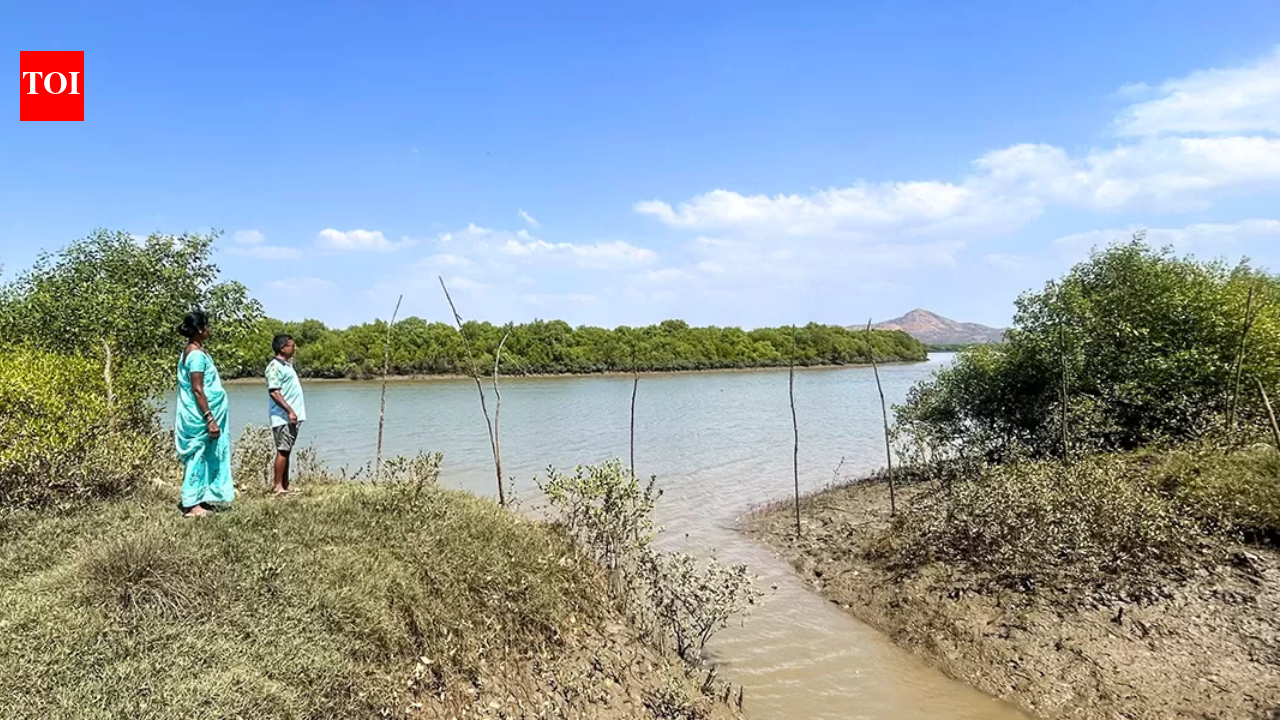
For three years, Devyani Gharat has spent her time nurturing young mangrove trees on a 20-hectare restoration site in Khardi village, in Maharashtra’s Palghar district. She has helped care for more than 80,000 newly planted trees. Her husband, Santosh Gharat, has taken on the responsibility of watching over the growing forest, which the village began rebuilding in 2021.The couple’s work is part of a community-led effort to restore mangroves that once played an important role in protecting the village’s farms and supporting livelihoods linked to fishing and shellfish collection.According to a report by the United Nations Development Programme (UNDP) India in April, Khardi’s mangroves had gradually disappeared, allowing saltwater to move further inland. On nearby Jhow Island, the intrusion turned farmland infertile, affecting the wider community. The report, titled ‘Restoring the Roots: How a village in Maharashtra revived its mangroves,’ was written by Vikram Yadav, State Project Manager of the ECRICC project in Maharashtra, and Vikas Gaikwad, District Coordination Associate for Palghar district.
How Khardi began restoring its mangroves
In 2021, Khardi became part of the Enhancing Climate Resilience of India’s Coastal Communities (ECRICC) project. The Mangrove Cell of the Maharashtra Forest Department led the restoration work, with support from the Green Climate Fund and UNDP India. More than 20 hectares of degraded land were selected for the effort.The restoration team first used geographical information system (GIS) mapping and physical surveys to identify areas where mangroves could grow. It then carved feeder channels to allow tidal water to reach the degraded sites.Three mangrove species were planted: Ceriops tagal, Rhizophora mucronata and Bruguiera cylindrica. The saplings were placed 1.5 metres apart to give them room to grow. According to the UNDP report, the work also generated employment for 45 people, most of them from nearby tribal communities.Forest Department officials held meetings with farmers living close to the site, explained the restoration process and sought their help in keeping cattle away from the young plants. This cooperation gradually brought local residents into the effort to protect the forest.
Devyani and Santosh take responsibility for the forest
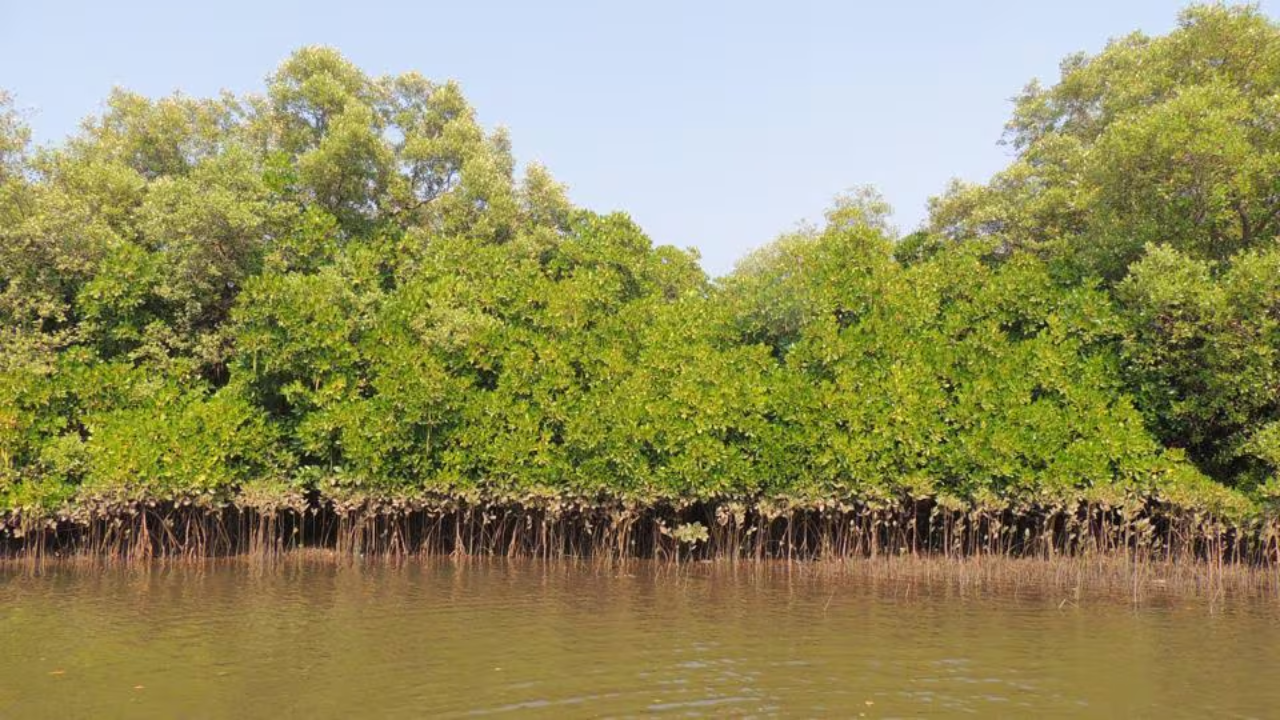
In 2021, Khardi became part of the Enhancing Climate Resilience of India’s Coastal Communities (ECRICC) project.
Santosh and Devyani Gharat were among the neighbouring farmers who stepped forward to help. Santosh had learnt about the importance of forests from his father, who worked as a forester. He remembers a time when the surrounding land was so open that people could see villages nearly 30 kilometres away. Now, he climbs a palm tree every morning to keep watch over the restored area.Devyani took up the work after her children got married. Having managed household and farming responsibilities, she decided to begin a new phase of life by caring for the young mangroves. Over the past three years, she has nurtured more than 80,000 newly planted trees.Their role goes beyond planting trees. The young saplings need protection while they establish themselves, and the couple helps monitor the site and keep it safe.
Why mangroves matter to the village
Khardi’s connection with mangroves goes back generations. The village was earlier known as Datiware before it became a separate gram panchayat. For the Agri community, these coastal forests have long been linked to local identity and livelihoods. Their roots help hold the soil, while the forests provide habitats for fish and other aquatic life. They also act as natural buffers along the coast.The importance of mangroves is recognised in Maharashtra’s wider conservation efforts. According to the Maharashtra government’s Mangrove Cell, the state had 304 square kilometres of mangrove cover in the Forest Survey of India’s 2017 assessment. The government also lists 2,908 hectares of mangroves in Palghar district as notified reserved forests.
Women explore livelihoods linked to the restored forest
The restoration effort has also opened up livelihood opportunities for women in Khardi. According to the UNDP report, women have started extracting and selling meswak oil, which comes from a mangrove species and has been used in household care for generations. They are also exploring crab farming and value-added fish products, particularly those made from crabs and sea bass.The work in Khardi is part of a larger programme. As per the official website of UNDP, the initiative is being implemented by the Ministry of Environment, Forest and Climate Change with support from UNDP and the Green Climate Fund. It focuses on restoring coastal ecosystems and helping communities develop livelihoods that can withstand climate-related risks.For Devyani and Santosh, the change is closer to home. The young trees they have cared for are growing across land that the village set out to restore in 2021. Their daily work is helping protect that effort and keep the mangroves growing.


