Want to bookmark your favourite articles and stories to read or reference later? Start your Independent Membership today.
Already a member?
Log in
“If you want to hug a young lady, and she says no — what do you do?”
Utah father Alan Gilliam poses the question to his sons, aged nine and 11, in a video that has been making the rounds on social media in the wake of the Cornell 7 case.
“Take ‘no’ for an answer,” his older son replies. “Don’t keep pushing and pushing her – move on.”
Gilliam then asks them another question in direct reference to the alleged 2024 gang rape by seven members of the Chi Phi fraternity at Cornell University in Ithaca, New York, that has sparked nationwide outrage.
What would his sons do if they were in a group chat with “a bunch of other guys who said they wanted to do something wrong to a young lady” and nobody said anything?
“Tell them to stop right now,” says the nine-year-old. “Tell someone of higher authority and maybe someone with higher power who can stop what they are doing,” says the older son.
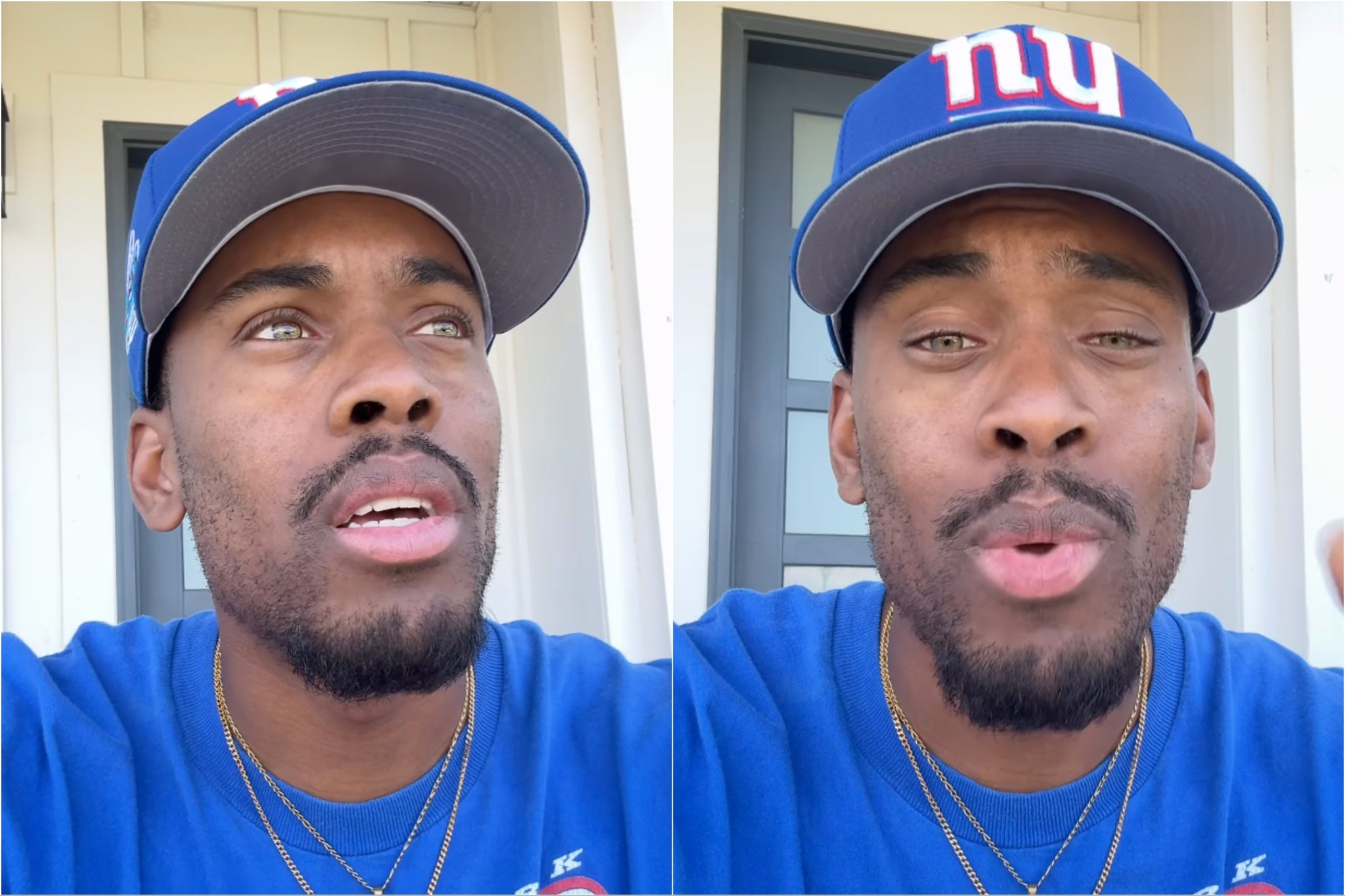
After watching Gilliam’s video of this conversation, which has gone viral on Instagram in the past week with more than 1.6 million likes, I had two thoughts. First, it shows just how easy it can be to talk to children about consent. The conversation is neither awkward nor inappropriate for their age. Gilliam simply presents them with an age-appropriate scenario — an unwanted hug — and gives them the space to make their own judgments and articulate them. He speaks to his sons like adults, without patronizing or talking down to them.
My second was: if a nine-year-old can grasp the simple concept that “no means no,” then why can’t grown men?
Public debate about consent, women’s safety and frat boy culture has been reignited in the aftermath of the Chi Phi case, in which the complainant, Jane Doe, alleges that in 2024, her friend, a member of the fraternity, and other members plied her with alcohol, marijuana and ketamine, and sexually assaulted her in the fraternity house for several hours after she became incapacitated.

Last week, evidence emerged that showed 57 men were in a fraternity group chat when a message was sent at about 1:42 a.m., saying there was a woman upstairs available for sex. CBS News obtained a screenshot of a group chat involving several of the fraternity members reportedly saying: “free p**** upstairs.” A fraternity member then asked, “Shop still open?” Earlier in the conversation, another wrote “I f***in love Chi Phi”, followed by “Like you can walk in and whip it out.” It has been reported that none of these men thought to raise the alarm on the dangerous situation Jane Doe was allegedly in.
Those in the Cornell 7 have not yet been charged with a crime. The Tompkins County district attorney, who originally declined to pursue the case as a criminal investigation, has now reopened it. Two of the men involved in the case were expelled from the university and their fraternity was permanently banned. The majority of those men, however, went on to graduate and many of them secured impressive graduate jobs (one of them was fired by Wells Fargo last month). Jane Doe, meanwhile, dropped out of the college after she reported the assault.
This is not an isolated incident. The Rape, Abuse & Incest National Network (RAINN) — the U.S.’s largest anti-sexual violence organization — reported that one in four undergraduate women are raped or sexually assaulted after enrolling in college. Outside of fraternity culture, 81 percent of American women experience some form of sexual harassment or assault in their lifetime, while one in five women in the U.S. have experienced rape or attempted rape in their lifetime, according to the National Sexual Violence Resource Center.
I applaud Gilliam for making the video because so few men are speaking openly about this subject. The Cornell 7 case has become a major national talking point in the US, yet it has been striking to see how few high-profile men have raised the alarm. Actor Florence Pugh has written about it on Instagram (and then accused the platform of censoring her post) and Alexandria Ocasio-Cortez has spoken about it in Ithaca. But the only man with a public profile who I have seen speak out is former South Park writer Toby Morton, who has taken the internet vigilante approach and launched a website called TheCornell7.org. He intends to load the site with information about the men involved in the case, to “build a record that can withstand scrutiny” and lead to “accountability.”
If I have learnt anything from Gilliam’s video, it is that these conversations do not need to be complex. Parents should be having these hard discussions with their children. Nuance is not needed, since the rules of consent are pretty black and white: no means no and consent cannot be provided if the person is intoxicated by alcohol or drugs.

This feels like stating the obvious, but men need to talk about rape; it cannot be left solely to women. I was never taught about consent growing up. Instead, I was taught how to prevent predators — by not walking alone at night, not wearing revealing clothes, not getting too intoxicated, and carrying my house keys in my hands on the way home — because my behavior apparently changed or provoked theirs. I would get catcalled and touched by men when I walked home wearing my school uniform, consisting of a knee-length school skirt and a blazer, as young as 11. I spent so much of my childhood (and my adult life now) preventing people from attacking or harming me that I always felt like I was in the wrong. Looking back, I wish I had known what we now know about consent: that wearing a short skirt or being intoxicated does not make a woman responsible if she is the victim of sexual assault.
This should be taught in schools, too. Sex education classes are often an awkward regurgitation of the science of reproduction mixed in with fear-mongering talks about protection and abstinence. A 2018 study conducted by the Center for American Progress, a nonpartisan policy institute, found that only eight states require mention of consent or sexual assault in sex education classes.
But these lessons must start at home. In the clip, Gilliam pointed out how easy it was for his sons to grasp the basic foundations of consent. At one point, he asked his sons whether it would be recognized as consent if the girl in the scenario changed her answer to yes after being pressured into the hug. “No, it’s not consent,” says the older son. The nine-year-old adds: “She only said yes because she wanted you to stop bothering her.”
“The fact that an 11- and a nine-year-old son would know what to do in a certain situation like this, it bugs me. As men, we are supposed to be protecting women… Women can protect themselves and do just fine if men just left them alone,” Gilliam tells the camera.
“Fathers, please teach your boys, please teach them,” he continues. “The fact that men can’t take no for an answer and nobody wants to stand up against other men and say anything is a huge problem.”
Of course, teaching children about consent is no guarantee that they will grow up to make the right choices. I do not know whether the 57 men who allegedly stood by as Snapchat messages advertising “free p****” were taught about consent at home or at school. Perhaps some of them were.
Whatever lessons they were taught, they could all use a reminder from Gilliam’s nine-year-old: silence is not consent, and the absence of a no is not a yes.