
Over the years, they have steadily improved in their accuracy, said Dr. Jagim, especially in tracking sleep-time spent in deep sleep, or REM, versus light sleep. A decade ago, Dr. Jagim said, he would have “totally discarded that data.” Not anymore.
Many paths
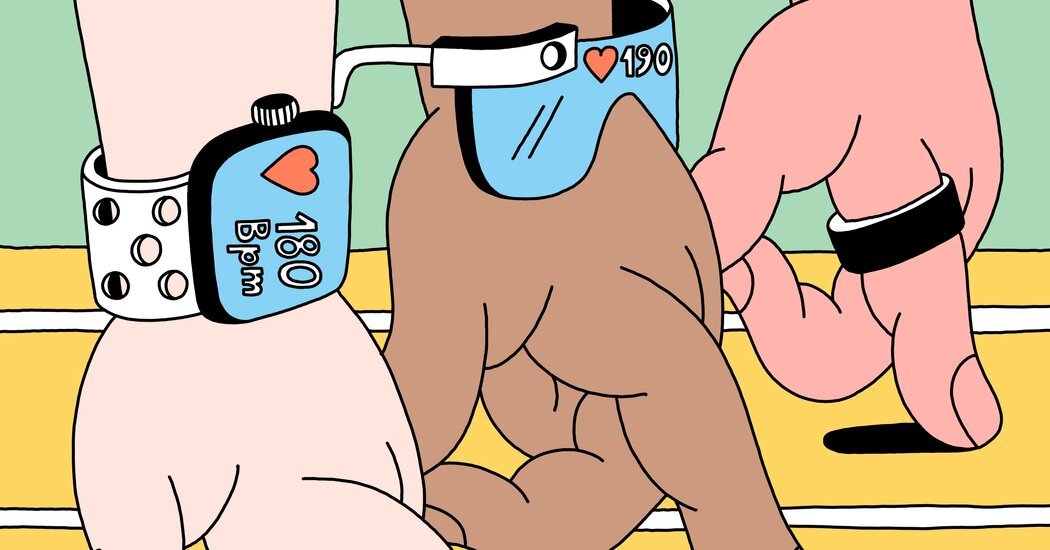
As brands work toward integration with the health care industry, they are building their customer bases in varying ways. Whoop, a subscription wristband that costs as much as $359 per year, attracts a wealthier fitness-focused consumer (their bands are often worn alongside expensive watches or luxury handbags, notes Ubrani.) But the brand has also earned the loyalty of many athletes who value its recovery and strain scores, which translate heart rate variability and sleep data into a daily readiness number.
Apple Watch and Fitbit, which provide users with less hyper-detailed health metrics, tend to appeal to a more “general wellness crowd,” said Dr. Jagim. Garmin smart watches, infused with advanced GPS capabilities and even altitude readings in some models, appeal to extreme athletes (the company recently released a screenless smart band). Oura, whose newest iteration is as thin as any normal ring, has leaned into its popularity with women by trumpeting features that predict menstrual cycles and ovulation windows.
Wearables are becoming more proactive, too. Rather than just tracking health fitness data, they now offer recommendations on what to do with it: when to work out and how; when to sleep and how much to eat. This is where more established brands like Apple and Google, which can pull information from other products in their universe, may have a leg up, said Ben Arnold, an industry analyst with Circana.
“Gemini, for instance, knows me in other venues, so those recommendations are even more drilled into me as a user,” Arnold said. “That’s a big differentiation factor.”

