
Last Updated:
Platelet-rich plasma therapy uses the patient’s own blood in order to start the healing process.



Earlier, the treatment options for knee issues were limited to pain medicines, physiotherapy, or surgery in severe cases.
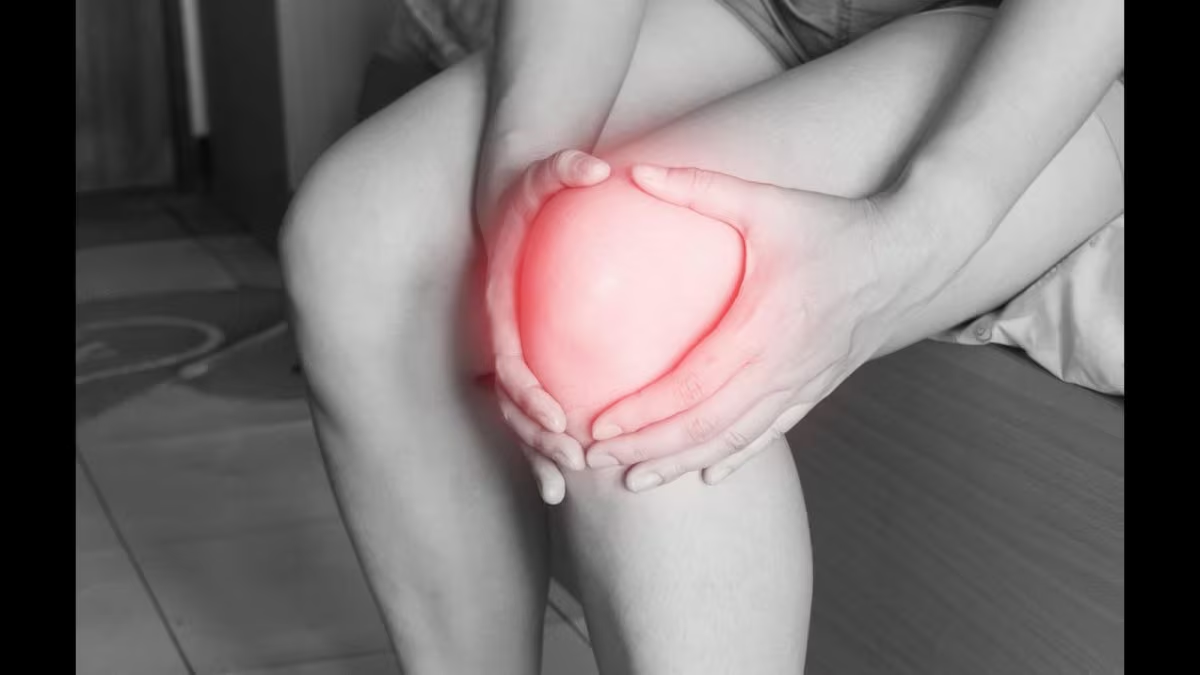
Knee pain is common in people of all age groups and can steal their peace of mind as it interferes with the daily routine. It is necessary to manage pain. Did you know? Platelet Rich Plasma Therapy can help people to get that much-needed relief from the constant knee pain.
We speak to Dr Anup Gadekar, Orthopedia & Joint Replacement Surgeon, Apollo Spectra Hospital, Pune, to understand what platelet-rich plasma therapy is and how it can help to manage knee pain and improve the quality of life.
Knee pain is especially seen among people with osteoarthritis, sports injuries, excess weight, or age-related wear and tear of the knee joint. For many years, treatment options were limited to pain medicines, physiotherapy, or surgery in severe cases. However, currently, due to advanced technology, a minimally invasive option called Platelet Rich Plasma (PRP) Therapy helps reduce pain and supports healing. It is safer and more effective when it comes to tackling knee pain.
Understanding the PRP procedure
PRP can be recommended for people with early to moderate knee osteoarthritis, sports-related knee injuries, tendon or ligament problems, and persistent knee pain that has not improved with medicines or physiotherapy.
Platelet-rich plasma therapy uses the patient’s own blood in order to start the healing process. A small amount of blood is drawn and processed in a special machine to separate platelets. Platelets are rich in growth factors that tend to repair damaged tissue, reduce inflammation, and make you feel better. This concentrated plasma is then injected into the painful knee joint under sterile conditions and takes around 30 minutes. Since the patient’s own blood is used, there is minimal risk of allergies and infections.
PRP for knee pain
In conditions like osteoarthritis or ligament and cartilage injury, the knee joint becomes inflamed and damaged over time. PRP injections help by reducing inflammation, improving joint lubrication, and supporting tissue repair. The growth factors in PRP encourage the body’s natural healing process, which can lead to reduced pain and better joint movement.
The Advantages of PRP
It is possible for patients to return to normal activities within a day or two after the procedure. Pain relief and improvement in knee function will be seen after 2-3 weeks. PRP does not cure arthritis, but it can help you deal with pain, improve mobility and quality of life. PRP therapy is a safe, natural, and effective option when it comes to dealing with knee pain. PRP can be taken with physiotherapy and weight management and can help to delay surgery.
January 29, 2026, 15:39 IST

