

Want to bookmark your favourite articles and stories to read or reference later? Start your Independent Membership today.
Already a member?
Log in
On a particularly hard day, being added to another group chat is enough to make you drop to your knees in exasperation: They range from the good (solid birthday plans, where only the host has the power to post), to the bad (a neighbourhood argument about the bins), and the ugly (a £500 hen do with people you don’t even like).
On average, people in Britain are involved in a whopping 151 group chats per year; It’s where many plans are conceived, and many more go to die. In fact, almost half of the UK (47 per cent) has a social plan stuck in its infancy online, with staycations (27 per cent), pub catch-ups (25 per cent) and birthdays (20 per cent) among the most likely events to be discussed but never booked, according to new data commissioned by Sky Mobile.

A digital decline of in-person invites and organisation has landed the social scene in this graveyard. Everything shifted in 2005, when Facebook leaned into the platform’s aptitude for party planning. As the years went on and using social media became something of social suicide, correspondence moved to WhatsApp. Now, aside from analogue wedding invitations, few party plans come via post – and you need to fire up a group chat just to go to the pub.
In each group chat, there are generally eight different archetypes: The organiser, the “I’m easy” nonchalant friend, the ghoster, the last-minute responder, the meme-sender, the flake, the unfocused yapper, and the instigator, who suggests plans without doing any of the admin required.

Of the 2,000 people surveyed in the latest study, over a third (36 per cent) said never committing to plans in the first place is the most irritating attribute. If you relate to the ghoster archetype, this means you.
How, dear God, is anyone meant to make any kind of plan if certain individuals don’t let them know if they’re in or they’re out? While this might well be anxiety over telling people “no”, the kind thing is to cut the cord early on and leave everyone else to commit or quit, without weeks of waiting. Surprisingly, the people who’re doing nothing are the worst of all.
Next up are the instigators, with 22 per cent of people left pissed off by those who throw ideas for a plan out there, then leave everyone else to organise them. It’s obnoxious, as it turns friends and family into the chat creator’s travel agents and PAs. It’s like telling your nearest and dearest you’re hungry and expecting someone else to cook; acceptable from children and guests – but if you propositioned the plan, it’s your house.
As a society, we are increasingly lonely, with young people in the UK five times more likely to have no close friends than 10 years ago. Gen Z, simultaneously, are significantly dependent on group chats for social connection, with 81 per cent relying on messages, polls, and quick-fire replies to create plans. Seemingly then, e-invite etiquette is more important than ever when it comes to maintaining relationships.
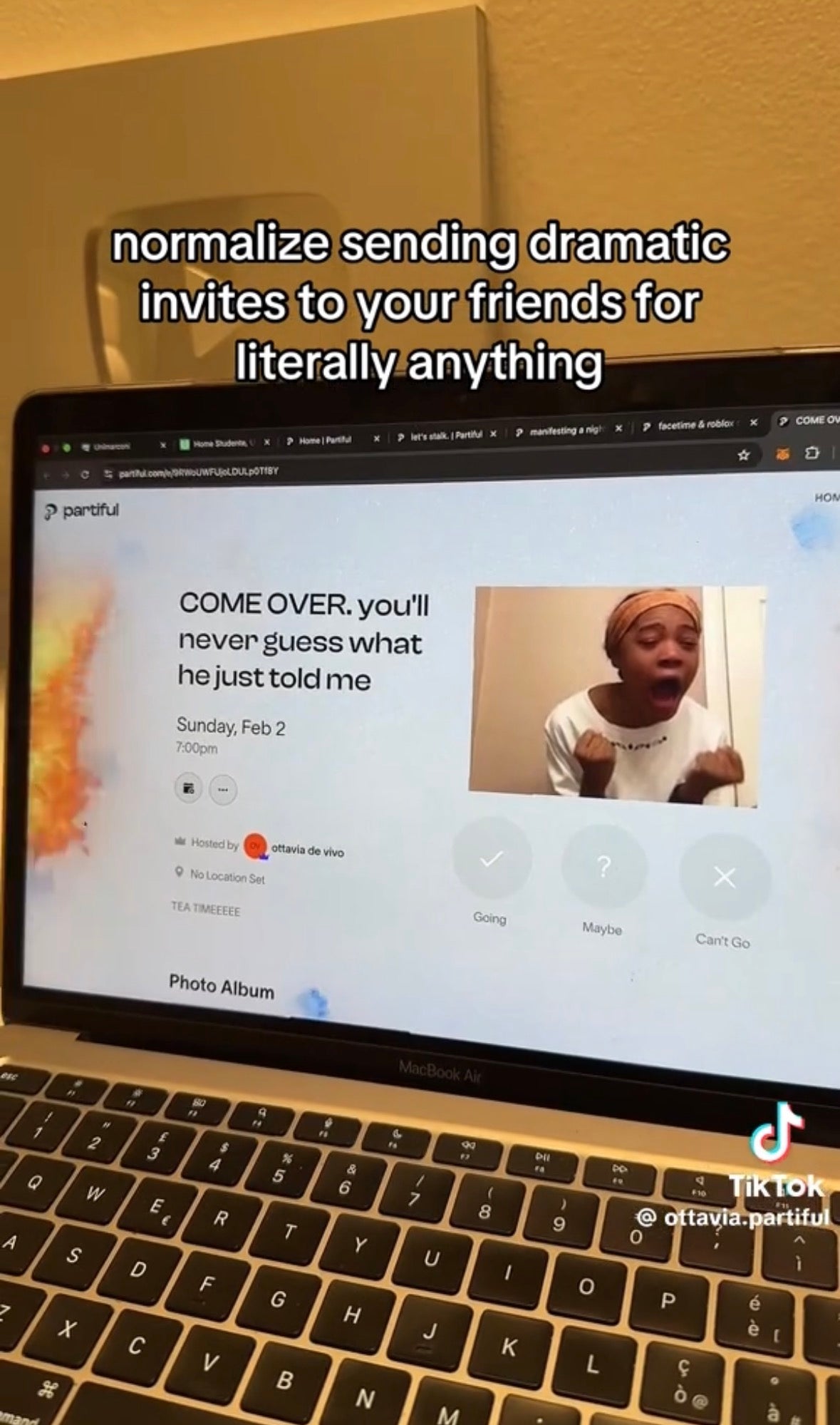
Online organisation is still shifting as younger users attempt to navigate the hell of getting people to commit. E-invitation and RSVP tracking service Partiful is increasing in popularity for those who want to revert to fun event pages, with Gen-Z and Alpha even sending out e-vites for the most casual of hangs: “HE BROKE NO CONTACT. Meet me at my house”, “Depressed era over: let’s go out tonight”, and “Got paid, let’s go to the mall?” to name a few of the funniest to go viral when shared online.
For those adapting their line of WhatsApp attack, broadcast messages have also become useful. Rather than an easily ignorable group text, broadcasts allow the sender to invite people into their one-to-one chat chains, which often increase the likelihood of their reply. Or, if it is an attempt at planning a trip, it’s smart to get individuals on board first, before opening up to the wider group, so that you have backup.
Whatever it is you’re trying to organise, from an after-work happy hour to a big friend-group holiday, you’ve got a slim shot at making it a reality. But remember, academics have found that the more people there are, the more mess there is over coordination and consensus. So, keep your core people closest, and worry about the flakes and the ghosts later. And maybe not at all.
And if you’re sat there silently thinking everything will fall into place without you — know that everyone else is sick of picking up your social slack. It’s time to pull your organisational socks up and give those working overtime to maintain your relationships a well-earned rest.


