
Last Updated:
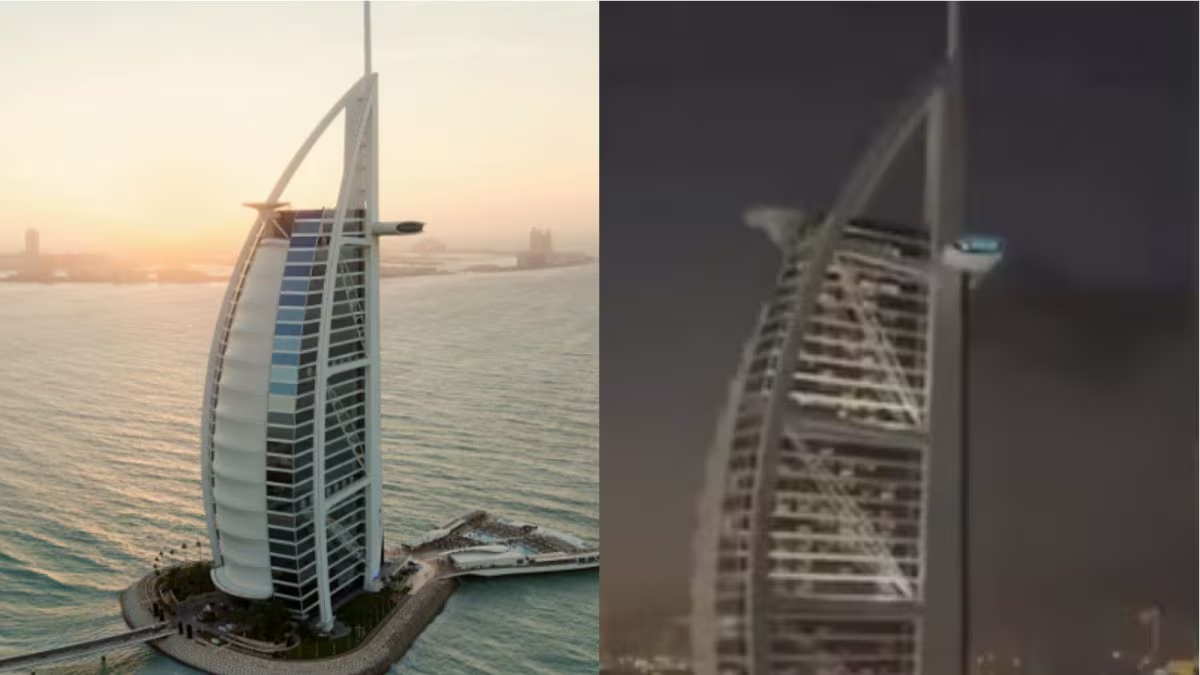
Iran–Israel war hits Dubai as Burj Al Arab gets damaged in drone strike, becoming a symbol of the world caught in Middle East conflict




Iran-Israel War: Why The World’s Most Iconic Luxury Hotel In Dubai Is Suddenly In The Spotlight
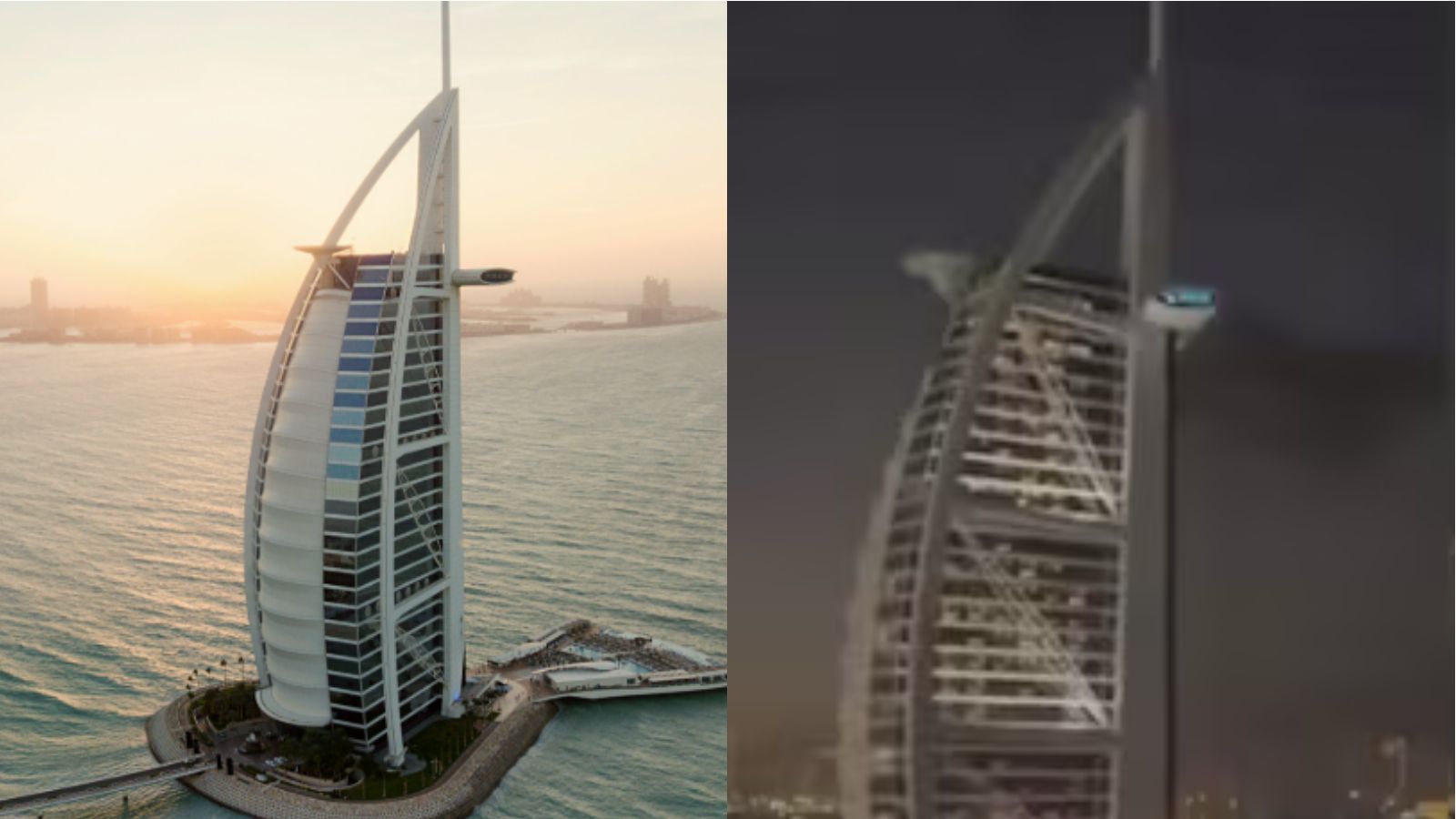
Dubai’s sail‑shaped icon, the Burj Al Arab, has long been a poster child for engineered fantasy: a luxury fortress built on a man‑made island, its gleaming façade designed to look untouchable against the sea. Now, that image has been fractured, quite literally, by the latest flare‑up in the Iran–Israel war. In late February 2026, during a series of Iranian retaliatory strikes aimed at the Gulf after Israel’s pre‑emptive strike on Tehran, debris from an intercepted drone struck the hotel’s outer shell, sparking a minor fire on its upper exterior. The incident caused mainly cosmetic damage; no major injuries were reported, and operations continued, but the news turned the Burj Al Arab into an instant symbol of how even the Middle East’s most polished façades can’t outrun geopolitics.
All About Dubai’s Burj Al Arab Hotel
The Burj Al Arab’s “7‑star” label was never an official rating but rather a piece of travel‑journalism hyperbole that became a global brand. Back in 1999, a British journalist visiting the hotel during its pre‑opening press tour was so overwhelmed by its gold‑leafed interiors, monumental atrium, and theatrical service that she described it as “more than anything she has ever seen” and called it a “7‑star hotel” in her review. Dubai’s marketers seized the phrase, letting it spread through guidebooks, social media, and travel blogs long after the original line had faded from memory. The hotel’s management now tends to downplay the term, insisting it was never part of their own official publicity, but the 7‑star myth has stuck harder than the marble cladding.
Who Built The Hotel?
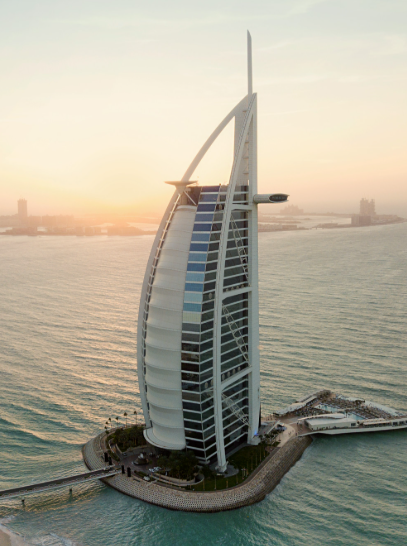
In the early 1990s, Sheikh Mohammed bin Rashid Al Maktoum wanted a landmark that would do for Dubai what the Eiffel Tower did for Paris or the Sydney Opera House for Australia. Architect Tom Wright, then working with Atkins, sketched the shape of a dhow—a traditional Arabian sailing vessel—on a napkin at a bar, and that napkin sketch became the blueprint for the Burj Al Arab’s sail‑like silhouette. The structure was meant to reflect Dubai’s seafaring heritage while pointing toward an oil‑rich, post‑oil future. When it opened in 1999, the hotel redefined the city’s skyline, planting a single, soaring sail in the Persian Gulf that became shorthand for “new Dubai” everywhere from ad campaigns to airline routes.
Physically, the Burj Al Arab is a feat of engineering as much as hospitality. It rises 280 metres offshore on a reclaimed island, connected to the mainland by a private curving bridge. A massive external steel exoskeleton braces the building against the region’s heat and wind, while inside the hotel is an all‑suite palace, with 199–202 duplex suites layered in Statuario marble and 24‑carat gold‑leaf detailing. Rooms come with personalised butler service, gold‑plated iPads and Hermes toiletries, and the Royal Suite—a 8,100 AED (about ₹2,00,000) per‑night two‑floor suite—is a self‑contained world of its own, with a private elevator, rotating canopy bed, private cinema, library and a small army of dedicated staff.
The hotel’s nine restaurants and bars stretch from Al Muntaha, a Michelin‑style dining room cantilevered 200 metres above the sea, to an underwater‑themed venue anchored around a 990,000‑litre seawater aquarium. The outdoor deck lays out a saltwater infinity pool, a freshwater pool with a swim‑up bar, 32 luxury cabanas, plus access to the Talise Spa, private beach and the nearby Wild Wadi Waterpark. With an estimated construction cost of around $1 billion, the Burj Al Arab was meant to be the ultimate statement of financial ambition masquerading as architectural art.
Now, the image of that same building with a scorched or patched section of its façade—visible in security‑cam footage and social‑media clips of the drone debris strike—has become a darker kind of branding. The Burj Al Arab, for decades Dubai’s “7‑star” dream, has entered a new narrative: a luxury hotel whose façade bears the visible mark of the Iran–Israel–UAE axis of escalation.
March 01, 2026, 12:47 IST

