





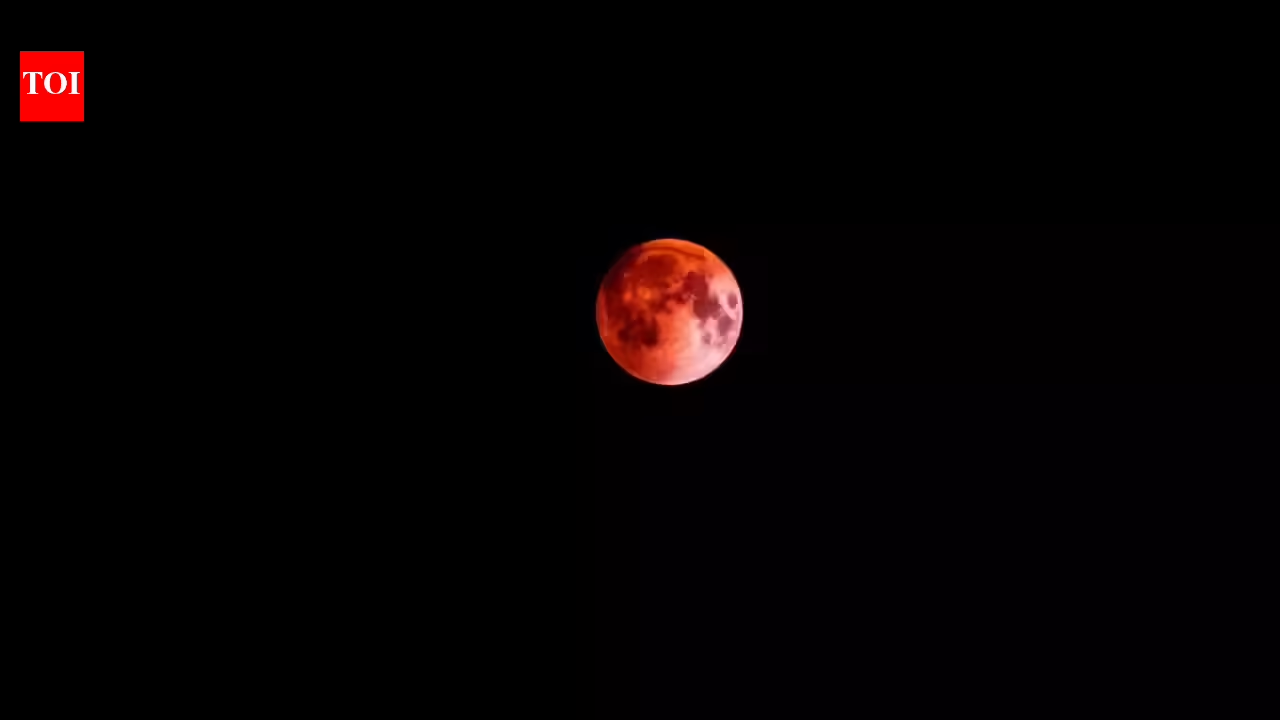
The Worm Moon is one of those quiet wonders of early spring. It rises around March, just when the nights are still long but the days are hinting at warmth. The name comes from earthworms, which start appearing as the ground thaws. It’s the third full Moon of 2026, set to rise on 3 March. In the Northern Hemisphere, the Worm Moon marks the transition from winter to spring. Native Americans reportedly called it the Worm Moon because of the trails that appeared in the thawing soil. Others named it differently: Chaste Moon, Death Moon, Crust Moon, or Sap Moon, tied to maple tree tapping.
Total lunar eclipse 2026: Viewing times and locations to watch the ‘Worm Moon’
The total lunar eclipse ‘Worm Moon’ will unfold on March 2–3, 2026. It reaches its full, reddish phase on March 3 during the early hours of the morning. According to Timeanddate.com, the Worm Moon will peak at 6:30 am EST (5:08 pm IST). This eclipse happens when Earth passes between the Sun and the Moon, casting its shadow and giving the Moon that deep red hue often called a ‘Blood Moon.’ People living in Asia, Australia, and much of North America will be able to see at least part of the eclipse, as per Timeanddate.com. As reported, regions seeing at least some parts of the eclipse: East in Europe, Asia, Australia, North America, South America, Pacific, Atlantic, Indian Ocean, Arctic, Antarctica.
Worm Moon 2026 : What is the meaning behind its name
Experts say the Worm Moon appears when earthworms come back to the surface. The soil softens and the ground warms. There are other names, too:
- The Full Crow Moon, for instance, comes from the cawing of crows marking winter’s end.
- The Full Crust Moon comes from the crusted snow, thawed by day, frozen at night.
- The Full Sap Moon reflects the maple trees, tapped for syrup. Each name tells a story about observation, survival, and life’s rhythm.
- This Worm Moon in 2026 isn’t just about worms. There’s a total lunar eclipse, too.
In the eastern US, the Moon sets while fully eclipsed, disappearing into Earth’s shadow near the horizon. The Moon takes on a reddish glow, and some call it a ‘blood Moon.’ Scientists explain it’s light refracted through Earth’s atmosphere. Still, watching it feels almost magical. The Worm Moon is more than a lunar event, a signal of seasonal change.
Worm Moon: Why does this full moon happen every March
The Worm Moon is the full Moon that occurs in March, typically the third full Moon of the year. Its timing follows the lunar cycle, which lasts about 29.5 days. A full Moon occurs when Earth is positioned between the Sun and the Moon, causing the Sun to fully illuminate the lunar surface visible from Earth. The term ‘worm’ refers to seasonal changes on Earth, not the Moon itself. In the Northern Hemisphere, March marks the transition from winter to spring. The Worm Moon occurs because:
- The Moon completes its orbit and reaches full illumination.
- Its full phase coincides with early spring, when thawing soil and emerging worms signal seasonal change.
Visibility tips for best viewing
You don’t need any special glasses to watch a lunar eclipse, unlike solar events; this one is safe to view with the naked eye.Tips for better viewing:
- Find a spot with open sky and low buildings or trees so you can see moonrise and later phases.
- Binoculars or a telescope are optional.
- Prepare for early hours or late night, depending on your time zone.