
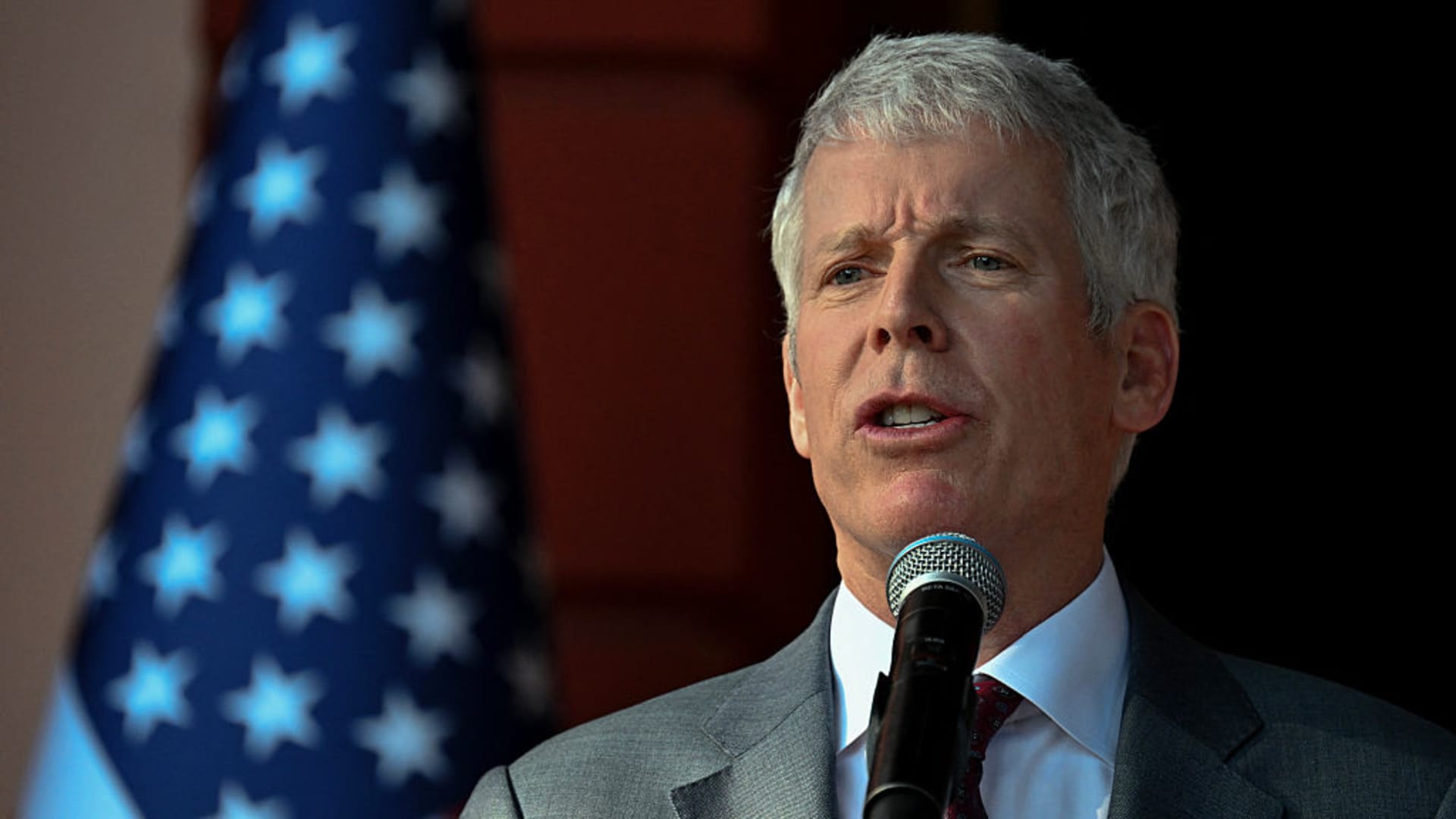
The International Energy Agency (IEA) 2026 Ministerial Meeting and Energy Innovation Forum in the OCDE in Paris, France, on February 18 and 19, 2026.
Nurphoto | Nurphoto | Getty Images
U.S. Energy Secretary Chris Wright said on Thursday that the U.S. would “pressure” the International Energy Agency to move away from net zero — and quit from the global watchdog if it failed to do this.
Wright was speaking on the last day of an IEA ministerial meeting in Paris and shortly after he said the agency would need to reform for the U.S. to remain a long-term member.
“There has been such a group mentality, 10 years invested in a destructive illusion of net zero by 2050, that the U.S. will use all the pressure we have to get the IEA to eventually, in the next year or so, move away from this agenda,” Wright said, according to Reuters.
The 2015 Paris Agreement committed nations to “net zero”, the balancing of carbon emitted into the atmosphere and removed from it. The U.S., India and the European Union were among the polluters that ratified the accord.
Wright added that it was not Washington’s intention to leave the IEA, as there’s “always a risk” China could gain dominance in the agency if it did.
CNBC has reached out to the U.S. Department of Energy and the IEA for comment.
A long-running war of words
The IEA, which was established in 1974 to ensure the security of oil supplies, faced criticism from the Trump administration last year when it projected that “peak oil”, when global crude production will reach its highest point before entering an irreversible decline, will take place around 2030.
OPEC, the influential group of oil-exporting countries, accused the energy agency of fearmongering and risking the destabilization of the global economy. Wright called the IEA’s forecast “nonsensical.”
The energy watchdog later watered down its forecast, signaling in a major tonal shift that oil demand could keep growing through to the middle of the century.
An aerial view of construction of new ski trails and a ski lift on Feb. 8, 2026 in Park City, Utah. A snow drought and warmer weather across Utah and much of the Western United States has resulted in Utah receiving only around one-third of its normal early February snowpack.
Mario Tama | Getty Images
Scientists have warned that global average temperatures must not increase by more than 1.5 degrees Celsius, if the worst of the climate crisis is to be avoided.
This threshold is recognized as a crucial long-term target because tipping points become more likely beyond this level. Tipping points can lead to dramatic shifts or potentially irreversible changes to some of Earth’s largest systems.
