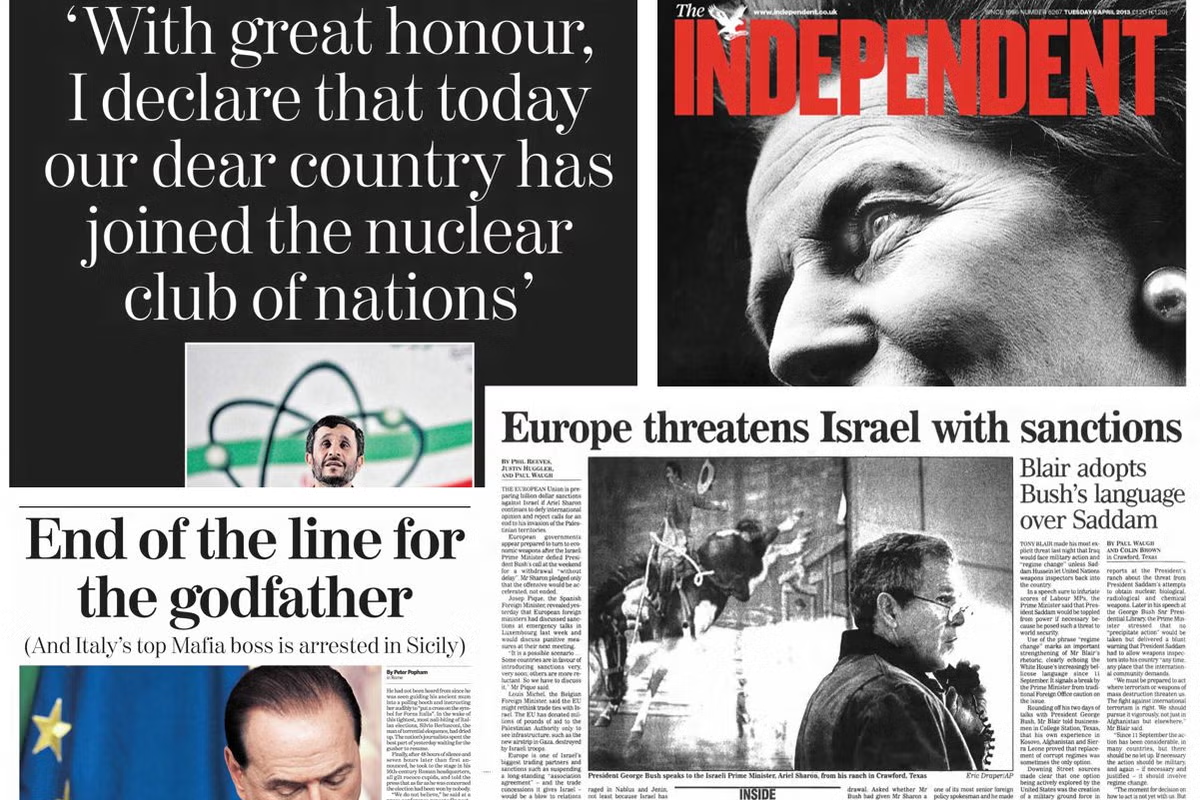
The Middle East continues to take centre stage this week, with the European Union threatening Israel with severe economic sanctions and Iran declaring its entry into the “nuclear club of nations”. But it is also a week driven by larger-than-life personalities. In London, Princess Diana challenges the stigma of the Aids epidemic with a single, historic handshake, while in Italy, an election defeat for Silvio Berlusconi coincides with the cinematic arrest of Sicily’s most notorious Mafia godfather. From fierce debates over the legacy of Margaret Thatcher to the fall of Baghdad, history unfolds across the front pages of The Independent.
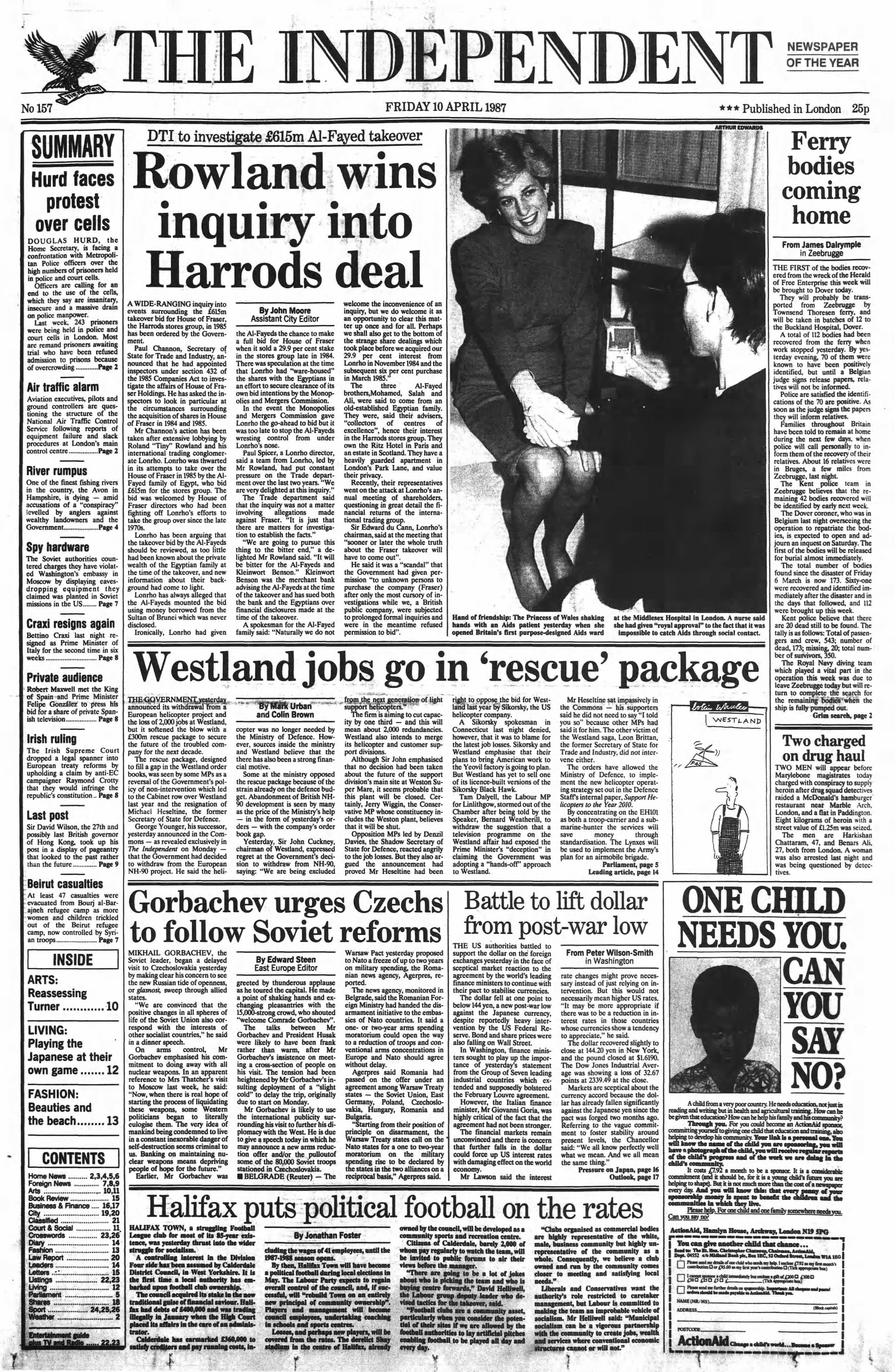
10 April 1987 – Princess Diana’s historic handshake
The Princess of Wales officially opens Britain’s first purpose-designed Aids ward at the Middlesex Hospital in London. During her visit, she deliberately shakes hands with an Aids patient without wearing gloves. This simple gesture makes global headlines, serving as a public statement that the virus cannot be transmitted through casual social contact.
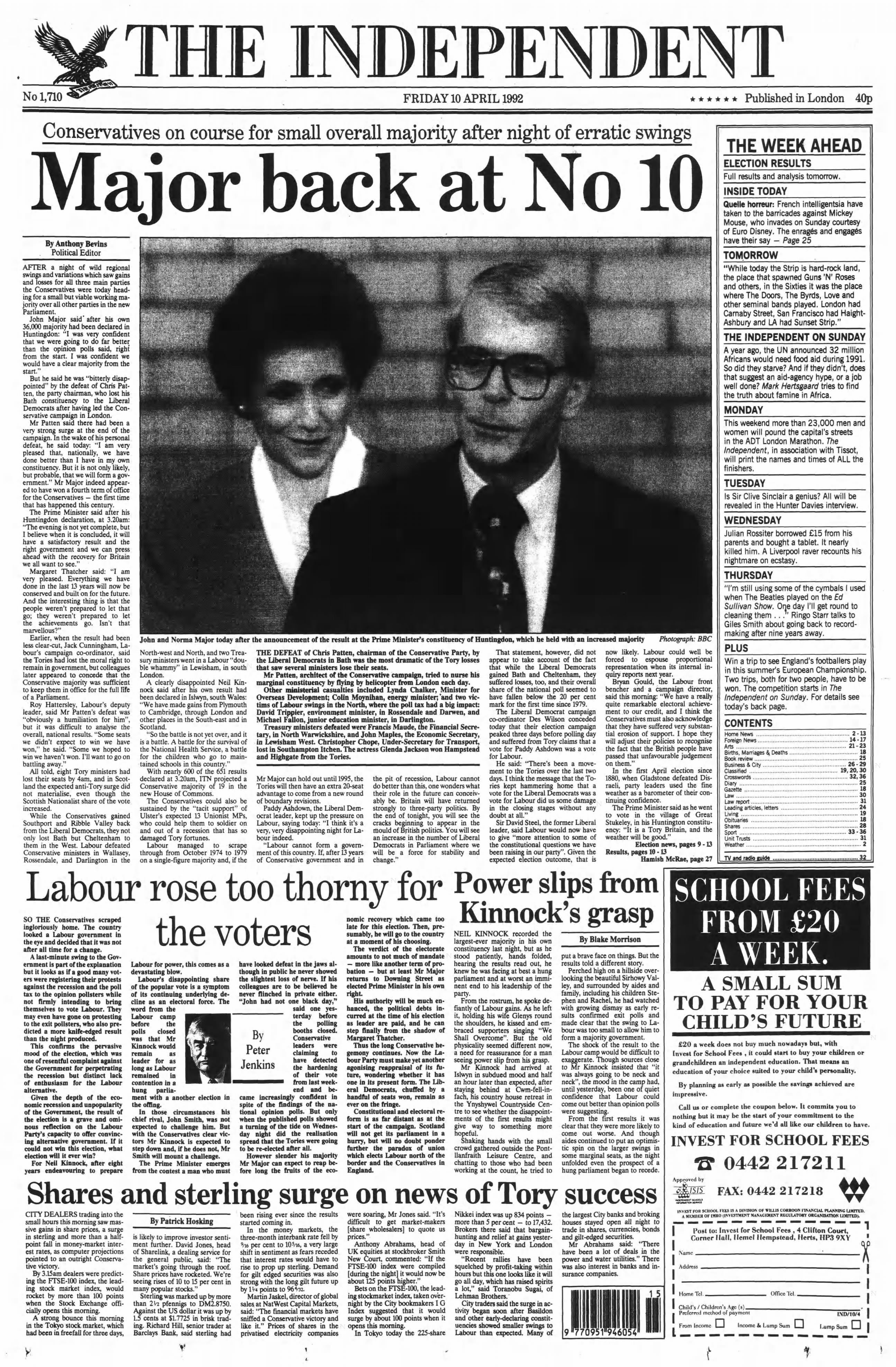
10 April 1992 – Major secures narrow election victory
Defying expectations after a night of erratic regional swings, John Major leads the Conservatives to a small but viable parliamentary majority. However, this narrow hold on power would erode over the next five years, ultimately culminating in a landslide defeat to Labour in the 1997 general election.
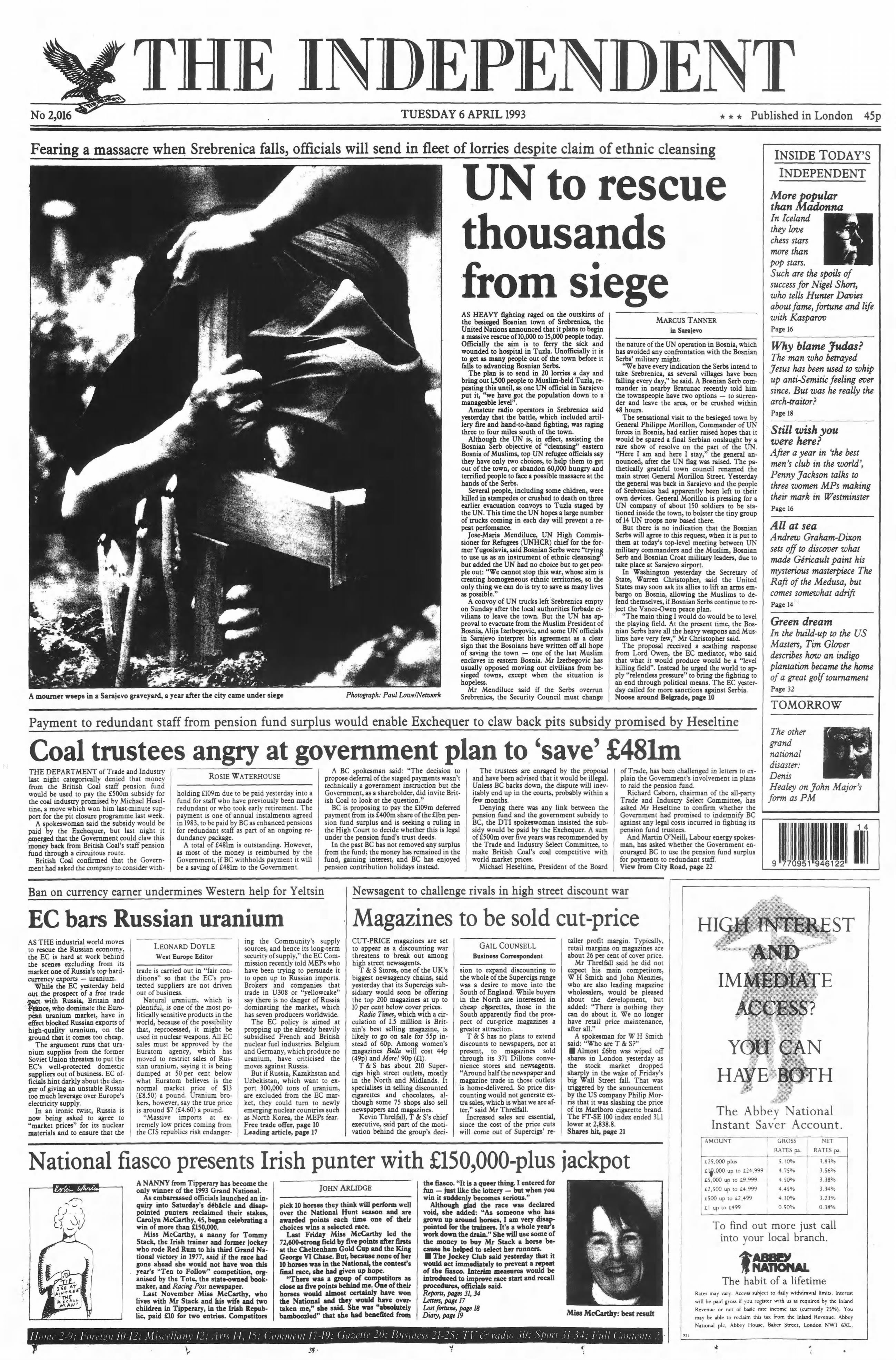
6 April 1993 – UN launches Srebrenica rescue mission
Amid heavy fighting, the United Nations announces a massive operation to evacuate up to 15,000 people from the besieged Bosnian town of Srebrenica to prevent a feared massacre. Tragically, despite these early rescue efforts and the town’s subsequent designation as a UN “safe area,” Srebrenica ultimately falls to Bosnian Serb forces in July 1995, resulting in the genocidal massacre of more than 8,000 Bosniak men and boys.
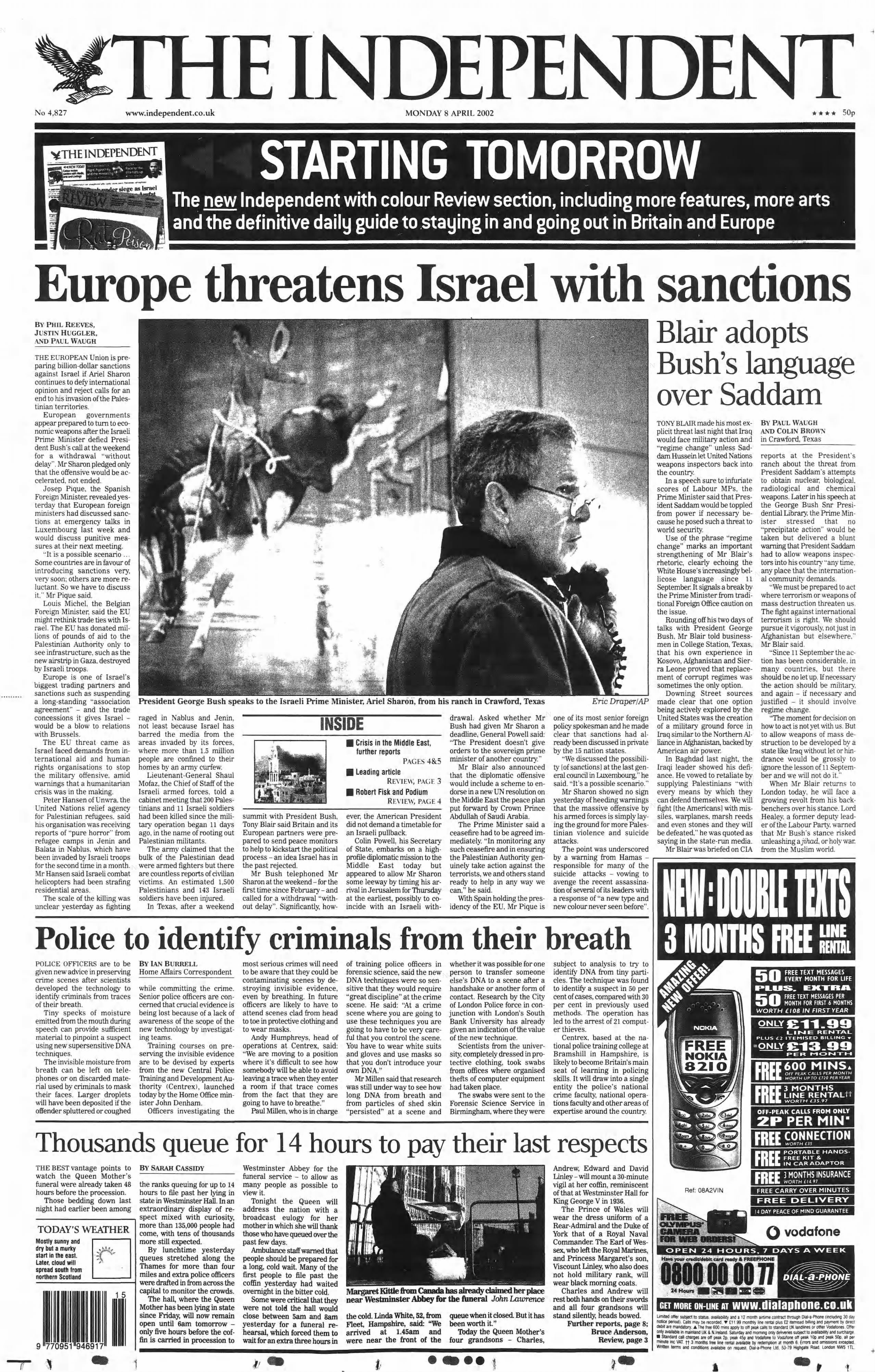
8 April 2002 – EU threatens Israel with billion-dollar sanctions
The European Union prepares severe economic sanctions against Israel if Prime Minister Ariel Sharon refuses to halt his military offensive in the Palestinian territories. Concurrently, following a summit with US President George W. Bush, Tony Blair proposes sending European peace monitors to the region, a measure Israel has historically rejected.
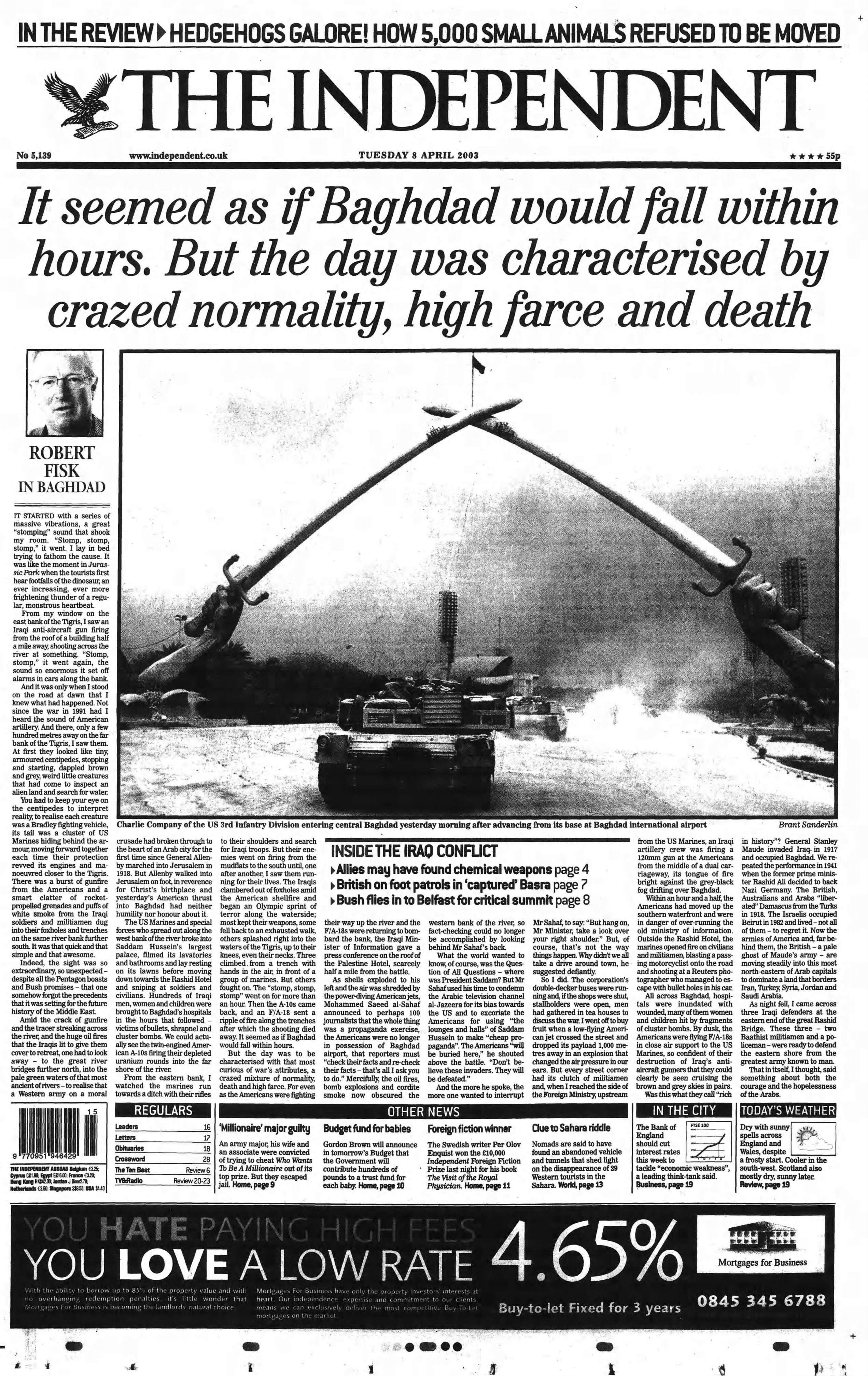
8 April 2003 – Coalition forces battle for Baghdad
As the US-led coalition advances into the Iraqi capital to oust Saddam Hussein over his alleged possession of weapons of mass destruction, The Independent’s Robert Fisk describes surreal scenes of “crazed normality, high farce and death.” Despite chaotic resistance, the city definitively falls just one day later, an event famously symbolised by the toppling of Hussein’s statue in Firdos Square.
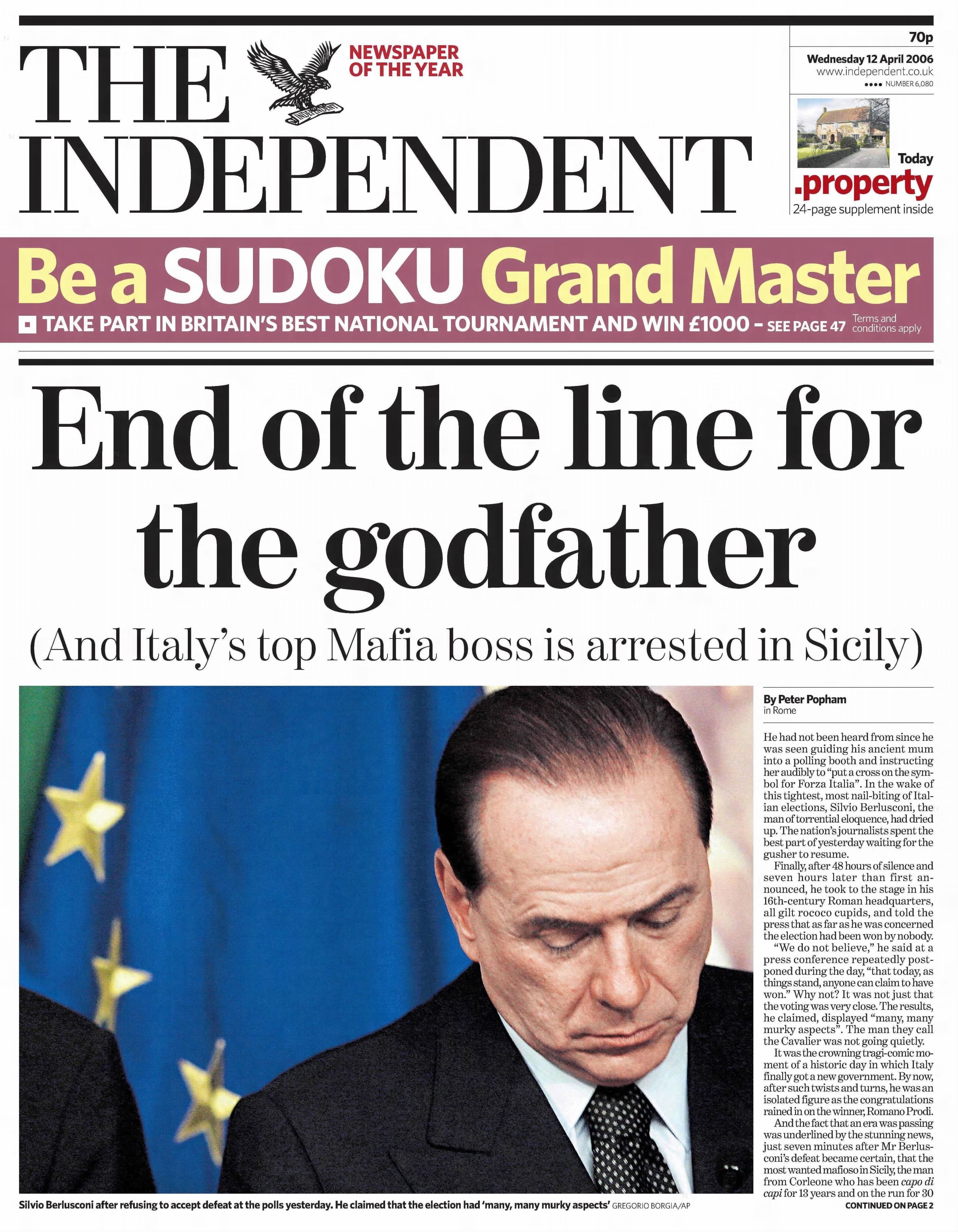
12 April 2006 – Berlusconi defeated as top Mafia boss falls
After a closely fought general election, an isolated Silvio Berlusconi initially refuses to concede defeat to Romano Prodi, claiming the vote was won by nobody. As this political era draws to a dramatic close, Italy’s most wanted Mafia godfather, Bernardo Provenzano, is arrested in Sicily after decades on the run – caught just minutes after Berlusconi’s loss is confirmed.
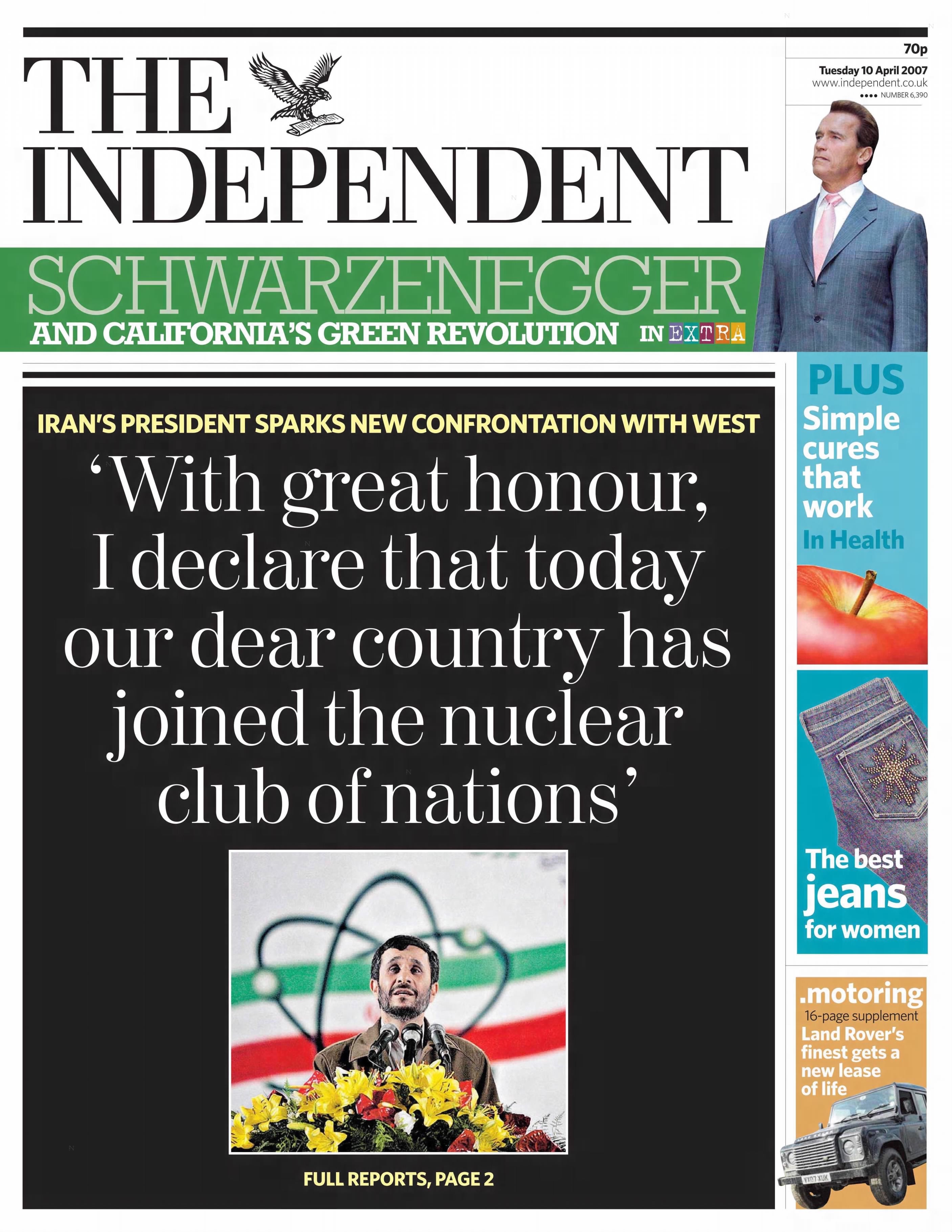
10 April 2007 – Iran joins ‘nuclear club of nations’
Tensions with the West escalate significantly as Iranian President Mahmoud Ahmadinejad declares that Iran has begun enriching uranium on an industrial scale. His announcement that the country has “joined the nuclear club of nations” deepens the ongoing geopolitical standoff and paves the way for years of international sanctions.
9 April 2013 – Margaret Thatcher dies at 87
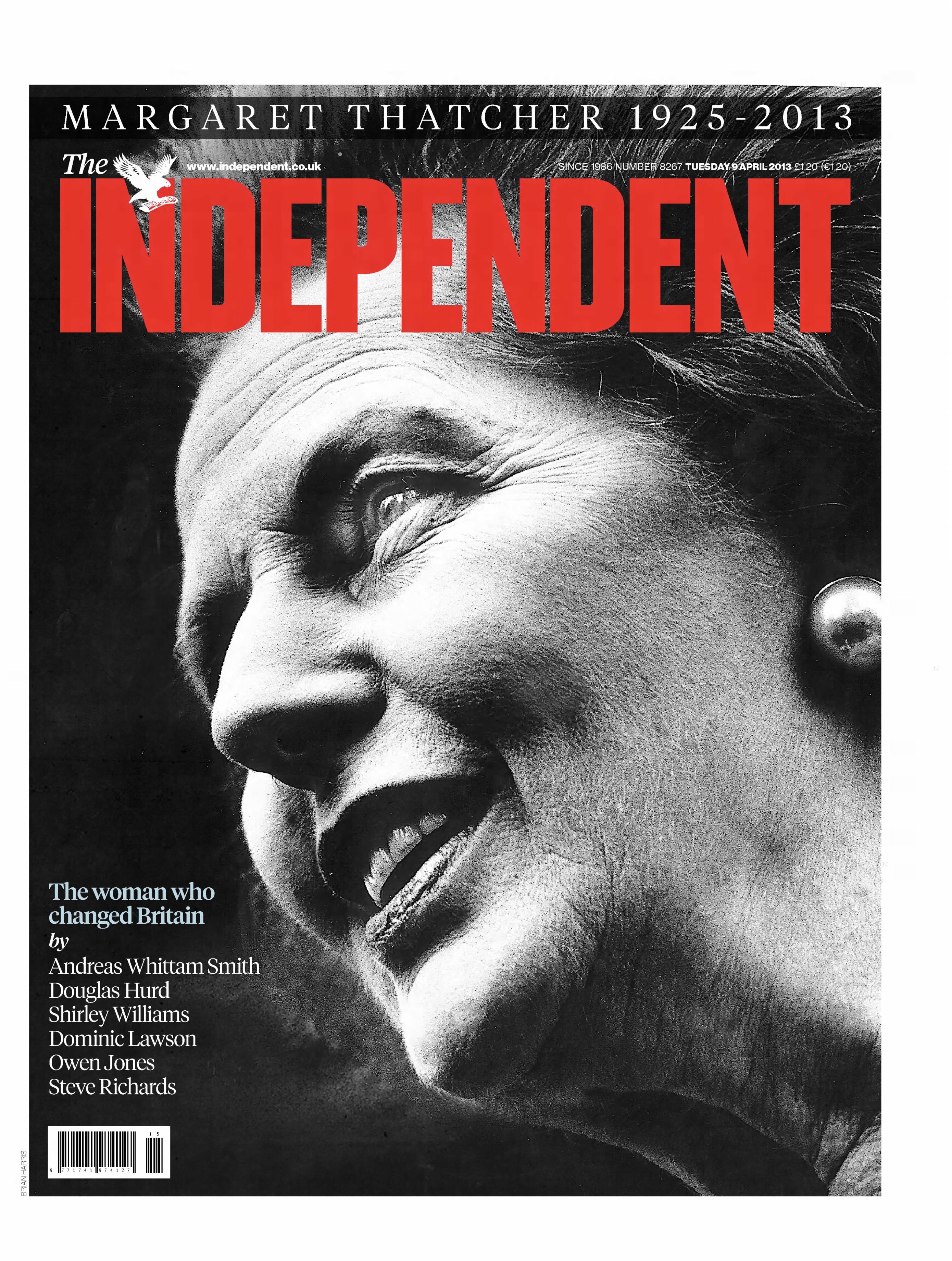
Following the death of former Prime Minister Margaret Thatcher, The Independent dedicates its front page to “The woman who changed Britain.” The extensive coverage captures the deeply polarized nature of her political legacy, balancing effusive praise from Conservative loyalists against left-wing critiques of the industrial and social cost of Thatcherism.