
Last Updated:
What happened to India’s royal and temple jewels during British colonial rule and invasions



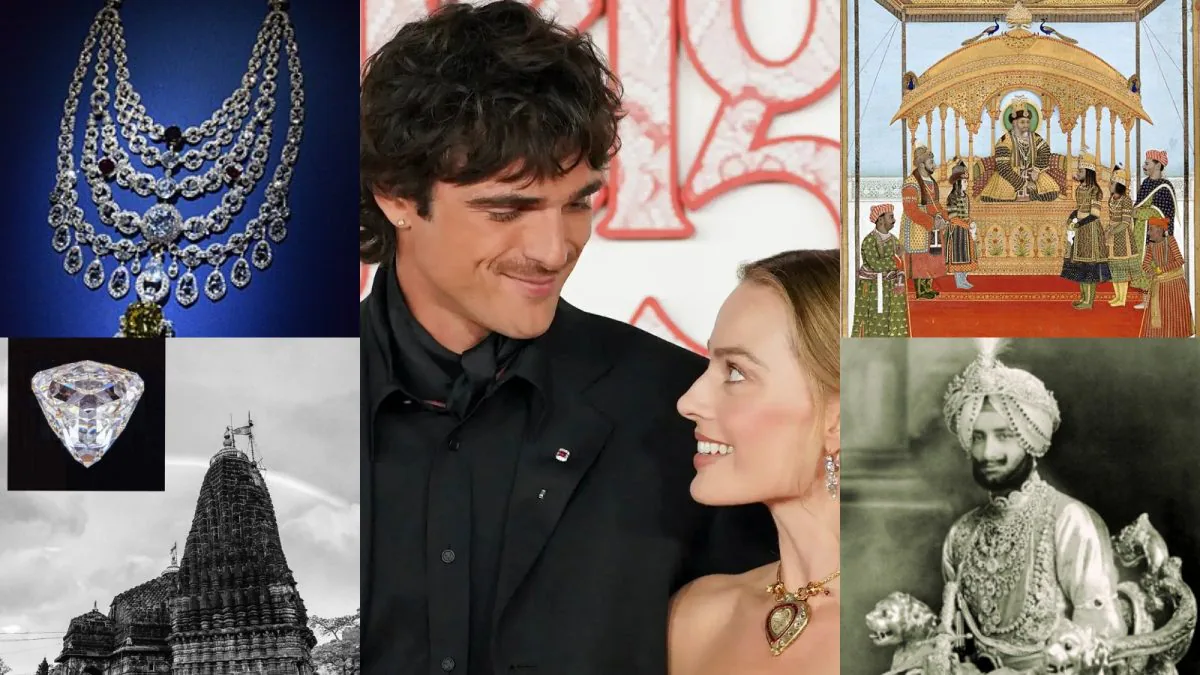
The Peacock Throne, Koh-i-Noor And Now Margot Robbie’s ‘Taj Mahal’ Diamond: How India Lost Many Of Its Most Iconic Jewels. Credit: Wikimedia Commons/X
From glittering turban stones and temple “eyes” to Cartier showpieces and the British Crown Jewels, many of South Asia’s most famous gems crossed continents during the 18th–19th centuries. Some were war booty, others diplomatic “gifts” made under duress; a few were sold in London diamond markets. The headlines keep coming, most recently when Margot Robbie wore a vintage Cartier “Taj Mahal” necklace with Mughal provenance to a film premiere, prompting renewed talk about provenance, empire and the ethics of wearing historic jewels today.

Margot Robbie In Elizabeth Taylor’s Taj Mahal Diamond – From Mughal Legacy To Across The Seas
The heart-shaped diamond, which belongs to Elizabeth Taylor’s vast jewellery collection, is engraved with the words “Love is Everlasting,” along with the name Nur Jahan. Historians believe the gem was gifted by Mughal Emperor Jahangir to his wife Nur Jahan, and later passed to their son, Emperor Shah Jahan, who gave the diamond to his beloved wife, Mumtaz Mahal. When she died during childbirth in 1631, he was devastated and built the Taj Mahal in her memory.
In 1971, Cartier acquired the gem and created a necklace inspired by traditional Indian design, which found its way to Elizabeth Taylor and now Margot Robbie.
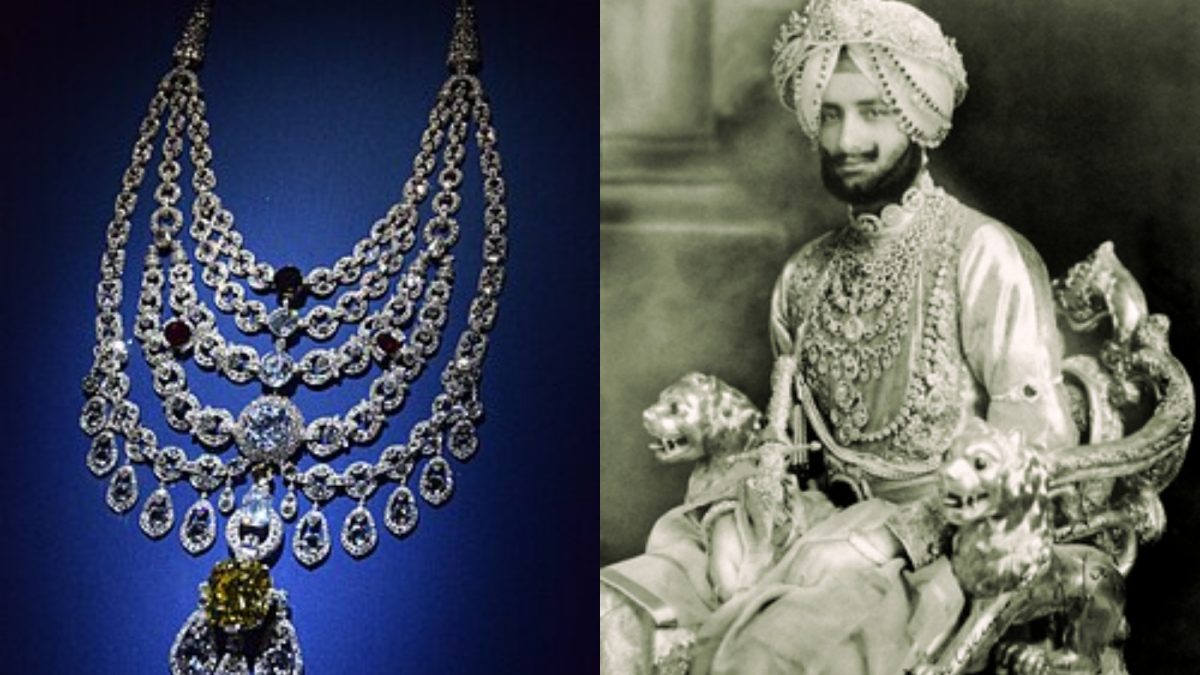
Patiala Necklace: Maharaja Bhupinder Singh’s Cartier showpiece
The Patiala Necklace began life as a 1925 Cartier commission from Maharaja Bhupinder Singh of Patiala: a decadent order that included thousands of diamonds and large coloured stones assembled into a multi-strand collar. After India’s princely order collapsed and royal treasuries were dispersed, parts of the necklace vanished, some stones appearing later at auctions and in private hands. In the late 20th century Cartier reconstructed the surviving mountings (using replicas where stones were missing) and the recreated piece became an emblem of both princely splendour and the messy afterlife of colonial-era jewel dispersal.
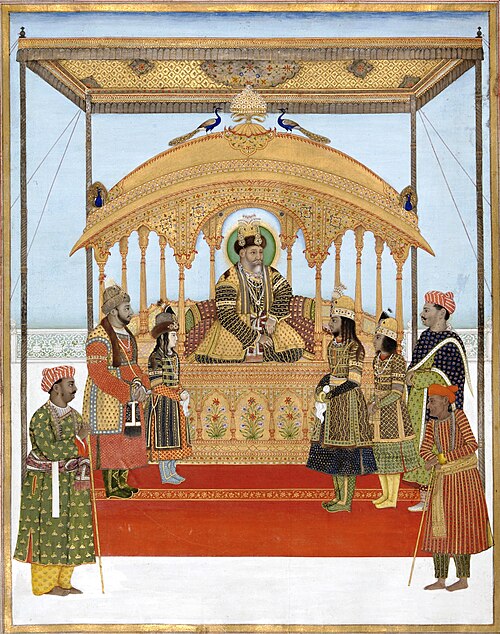
The Peacock Throne: Mughal Majesty And The First Great Dispersal Of Jewels
The legendary Peacock Throne of Shah Jahan was the apogee of Mughal court opulence: an ivory-and-gold structure set with dozens of famous gems that symbolised imperial power. When Nader Shah of Persia sacked Delhi in 1739 the throne’s treasures were taken to Persia; many individual stones from that hoard later surfaced in other royal treasuries across Asia and Europe. The sack of Delhi shattered Mughal wealth and set a pattern: once-centralised Mughal gems became dispersed spoils, later moving again as empires expanded and traded hands.
Koh-i-Noor: From Mughal Turban To The British Crown Jewels
The Koh-i-Noor is perhaps the single most contested stone connected to India’s imperial past. It passed through Delhi Sultanate and Mughal treasuries before reaching the Sikh court. After the Second Anglo-Sikh War (1849) the young Maharaja Duleep Singh was compelled under treaty terms to part with the diamond; it was presented to Queen Victoria and later recut and set into British royal jewellery. The Koh-i-Noor’s story is as much about geology as it is about power: its modern home in the Tower of London remains a focal point for claims and calls for repatriation from India, Pakistan and Afghanistan.
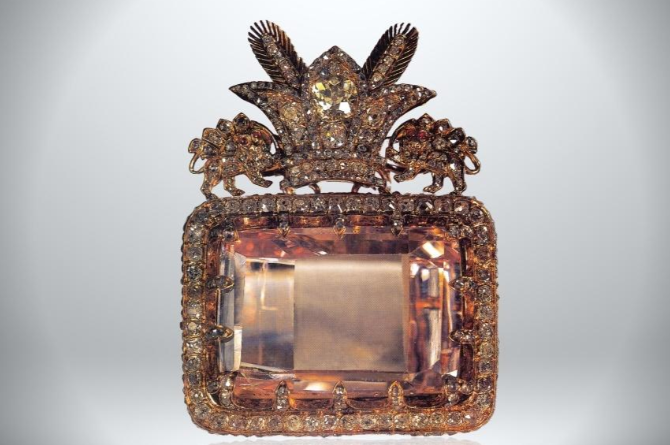
Darya-i-Noor: The Pale Pink Giant
The Darya-i-Noor (Darya-ye Nur) is a rare pale-pink diamond, one of the world’s largest of its colour, that today sits in Iran’s national treasure trove. Scholars trace its origins to the same legendary Golconda mines that produced many famous Indian diamonds. The Darya-i-Noor entered Persian collections after Nader Shah’s invasions and later Qajar monarchs set elaborate frames around it; it remains displayed in Tehran as part of Iran’s imperial jewels. Its history illustrates how stones looted from India in the 18th century became embedded in other nations’ crown collections.
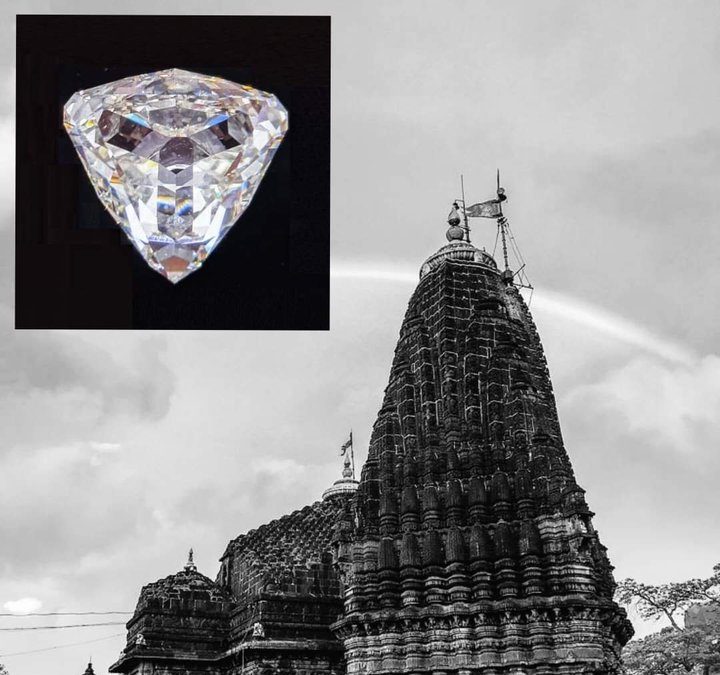
The Nashik Diamond And Other Temple Stones
Stories of temple-set gems, eyes and crown-stones on idols, feature repeatedly in gem lore. It is widely known that many temple jewels were appropriated during colonial wars and market sales, then recut and sold through London and Paris. The Nassak (Nashik) diamond, taken from the Trimbakeshwar Shiva temple during the early 19th century and sold into the London market, is one of the examples of a temple gem’s long migration.
February 04, 2026, 20:57 IST
