
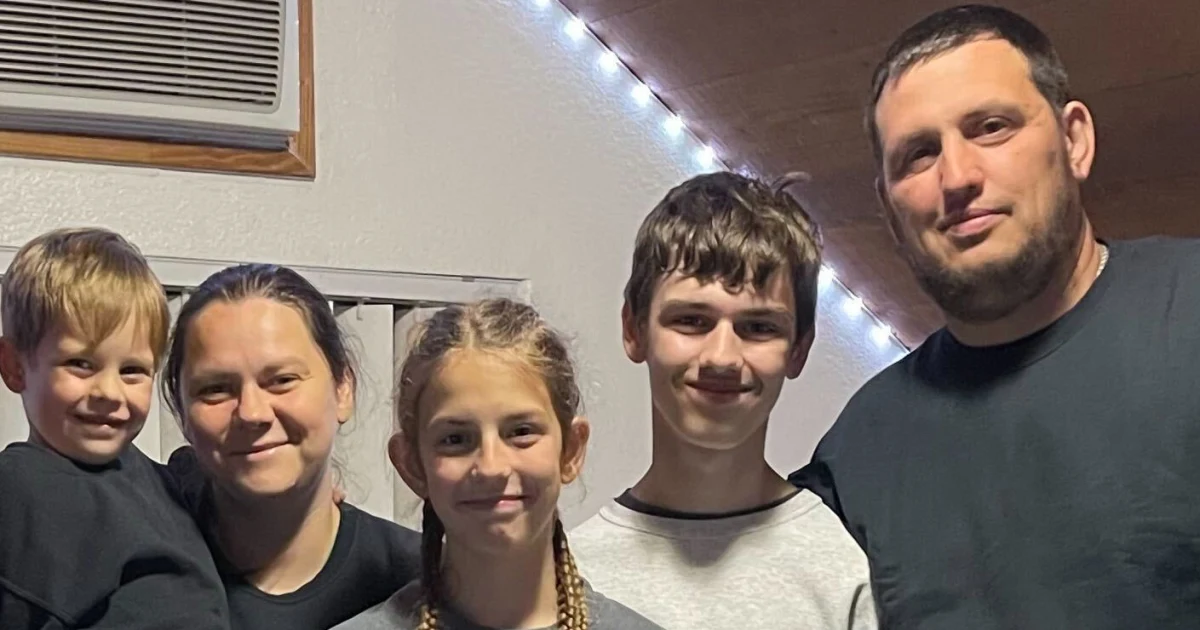
Oksana said she looked forward to being able to flip off the lights at night — to cry alone with her family and begin to heal from what they endured in detention.
The Dilley facility was thrust into the national spotlight in recent months as the Trump administration expanded family immigrant detention, sending hundreds of parents and children to the sprawling, remote center while advocates warned of potential human rights violations.
DHS has denied the claims of poor conditions, saying the facility is equipped to house families and that children receive appropriate medical care, food and schooling. CoreCivic, which operates Dilley under a federal contract, has said detainees’ health and safety are its top priorities.
Under a decades-old federal court settlement governing the detention of immigrant children, minors generally are not supposed to be held in custody for longer than 20 days. But lawyers representing families say many have remained detained for weeks or months beyond that limit.
DHS previously defended holding the Russian family while their asylum case was pending and slammed the legal settlement setting the 20-day limit as “a tool of the left that is antithetical to the law and wastes valuable U.S. taxpayer funded resources.”
Nikita and Oksana’s lawyer, Elora Mukherjee, a Columbia Law School professor and director of its Immigrants’ Rights Clinic, said her clients’ monthslong confinement and abrupt release reflects what she described as a broader pattern: minors held well past the 20-day threshold and released only after sustained legal pressure or media scrutiny.
The administration’s goal, Mukherjee said, seems to be “making conditions in detention so miserable and unbearable that children and adults alike give up on their immigration cases.”
“My clients from New Jersey to Texas have given up on valid immigration cases, valid applications for visas, because they cannot stand to be in detention any longer,” she said.
For Nikita and Oksana, giving up was never an option. Returning to Russia would be perilous, they said, because of Nikita’s outspoken opposition to President Vladimir Putin’s government.
The terms of their release weren’t immediately clear, Mukherjee said. She said they plan to stay with a sponsor family in California and likely will be required to attend regular check-ins with Immigration and Customs Enforcement as their case moves forward — a supervision process routinely used by past administrations before DHS began detaining parents and children in large numbers last year.
The family’s path to detention began more than a year ago, when they fled Russia for Mexico. After a year trying to determine the best path to safety, they crossed the U.S. border and requested asylum, hoping America would be a refuge.
Instead, they were transferred to Dilley.
In an interview with NBC News last week, the family described days that blurred together as the children grew listless, with little to do and few familiar comforts. Meals were repetitive, greasy and sometimes inedible, they said, and schooling was nonexistent.
Kamilla suffered a recurring ear infection that was complicated by what her parents described as lax medical care and hourslong waits outside in bitter cold or rain for each dose of medication, resulting in what they described as partial hearing loss and lingering pain. In an earlier statement, DHS defended the girl’s treatment, saying that children at Dilley receive “comprehensive medical care.”
When an immigration officer told them on Monday — their 135th day in federal custody — that they would soon be released, they felt both goosebumps and hesitation. Other families, they said, had been told they were leaving “tomorrow,” only to remain for weeks.
“Let’s rejoice when we get out,” Oksana said they told each other.
Once word of their pending release spread, other detainees didn’t wait to celebrate, the couple said. The dining hall erupted as parents and children clapped and shouted — a roar so loud, Kamilla said, that she felt pain shoot through her injured right ear.
Some families approached in tears. Others said they had been praying for them.
Life in detention was a harsh introduction to a country Nikita and Oksana had hoped would offer their children safety.
But they haven’t lost hope.
They recalled a conversation with a detainee who had lived in the U.S. for years before being arrested with his family and brought to Dilley. The man told Nikita not to judge America by what they experienced at the facility.
“This is not America,” the man told him. “When you go beyond the fence, you will change your mind in a minute. People out there want to help.”
At first, Nikita said, they didn’t believe it, but after Mukherjee and others stepped forward in recent weeks, their perspective began to shift.
“Somehow,” Nikita said on the video call, “you restored our faith in people.”
