
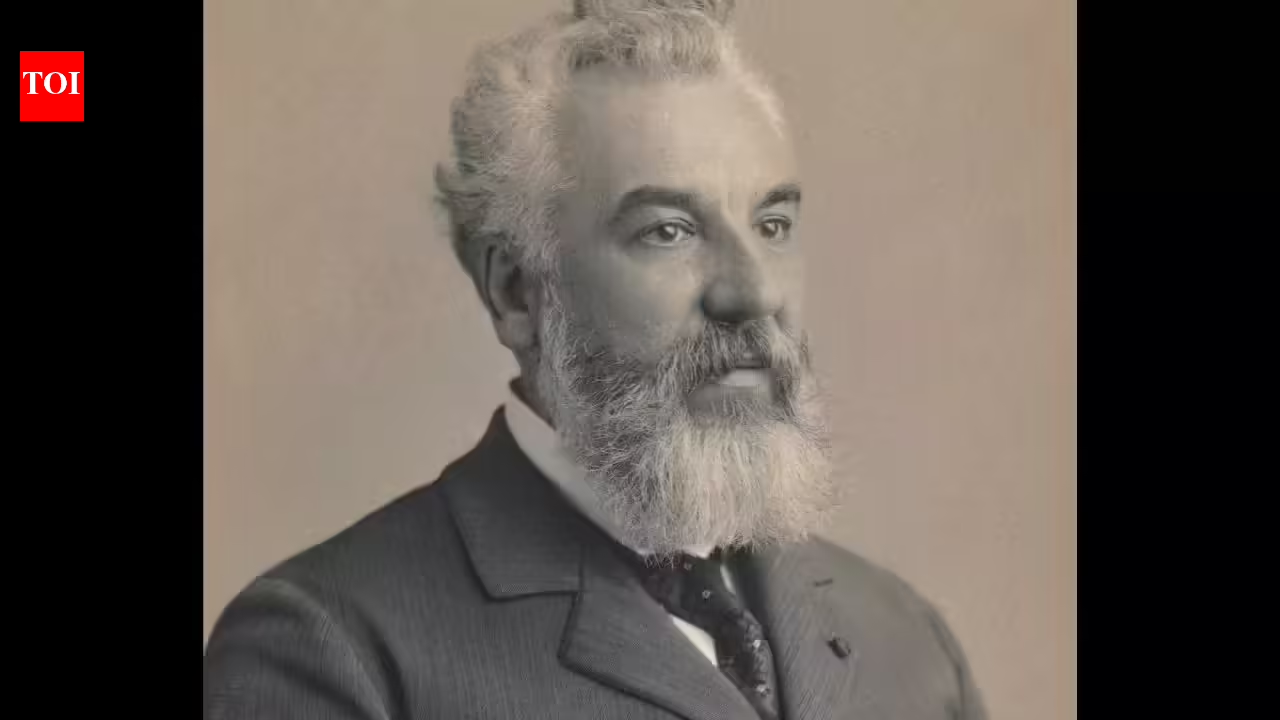
People know Alexander Graham Bell as the man who invented the phone. But he also thought a lot about what work and success mean. Bell was born in Scotland in 1847. He spent most of his life working on communication technology, teaching, and doing experiments. His work changed how people interact with each other. But Bell didn’t just talk about how to do things; he also talked about how people should think about the tasks in front of them. One of his most famous ideas is about how important it is to be able to concentrate, or to be able to focus all of your attention on one task without being distracted. This idea is still important more than a hundred years after Bell first said it. The quote says, “Concentrate all your thoughts upon the work at hand. The sun’s rays do not burn until brought to a focus” is a simple way to explain a complicated idea. It compares attention to sunlight. A mind that is scattered makes little progress, just like sunlight that spreads out and warms very little. When the sun’s rays are focused through a magnifying glass, they can start a fire. People also do their best work when they are focused on one goal and not being pulled in many different directions.Bell’s point of view is especially relevant in today’s world of digital distractions, where a worker might have to deal with emails, social media, phone alerts, and constant interruptions. His words remind readers that concentrating on one thing at a time can lead to better results than splitting your attention. Bell says that concentration is not a luxury but a disciplined practice that makes you more productive and clear.
Quote of the day by Alexander Graham Bell
“Concentrate all your thoughts upon the work at hand. The sun’s rays do not burn until brought to a focus.”
Understanding the quote by Alexander Graham Bell
Alexander Graham Bell says in this quote that it’s important to focus all of your mental energy on one thing at a time. He compares it to the sun’s rays, which are safe until they are focused through a lens. He also says that scattered thoughts lead to weak effort and little results. When someone puts all of their mental energy into one important task, they not only do it better, but they also get a better result.Bell’s message isn’t just for scientists or inventors. It applies to a lot of people, like students, professionals, and anyone doing something important. The main idea is easy: focusing makes you more productive.
Why this quote by Alexander Graham Bell still matters
Alexander Graham Bell’s focus on concentration seems especially important now that smartphones, email, and constant interruptions are the norm. Technology has come a long way since Bell’s time, but it’s still hard to stay focused on a task. His words remind us that using our mental energy wisely can make a big difference.Bell’s advice says to stay focused on one thing instead of doing a lot of different things at once. This practice helps you understand things better, come up with creative solutions to problems, and do better in school.
How to apply this quote by Alexander Graham Bell in daily life
Bell’s concept of focus can be applied across various aspects of life:
- Focus on one thing at a time: Instead of doing a lot of things at once, finish one task before moving on to the next.
- Make your workspace free of distractions: When you’re working on something important, turn off notifications, close apps you don’t need, and set clear time blocks.
- Set clear goals: Before you start, be clear about what you want to happen. This helps you focus your mental energy in a certain way.
- Use focused time techniques: The Pomodoro Technique, which involves working in short, timed intervals with breaks, is one way to stay focused.
- Don’t switch tasks: Switching tasks too often wastes time and makes it harder to think clearly. Bell’s advice encourages people to stay focused on the task at hand.
Other famous quotes by Alexander Graham Bell
- “Before anything else, preparation is the key to success.”
- “Great discoveries and improvements invariably involve the cooperation of many minds.”
- “When one door closes, another opens; but we often look so long and regretfully upon the closed door that we do not see the one which has opened for us.”
