




Owning a pet can help to improve the health and well-being of older Americans, according to a new national poll.
More than half of nearly 2,700 adults between the ages of 50 and 93 reported that having a pet improved their daily lives, with 44 percent saying that it helped them to be more physically active and 63 percent saying it also led to reduced stress. Stress can often make health issues worse.
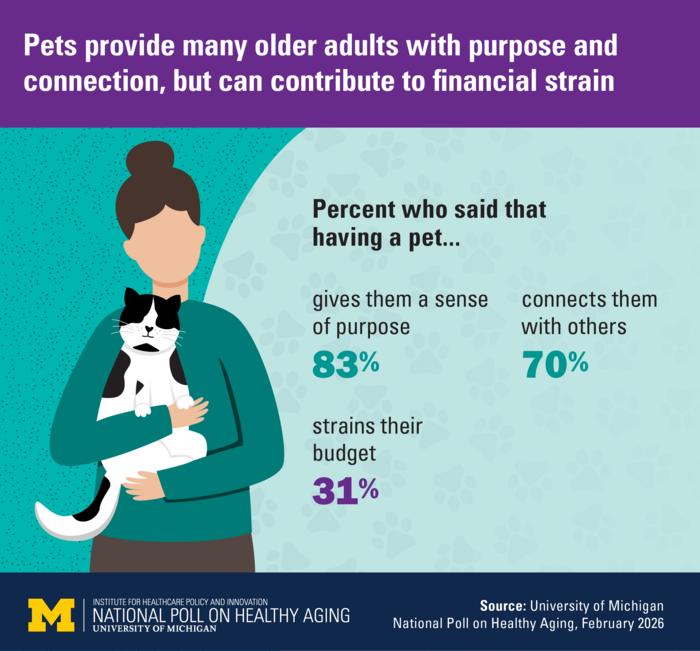
Having a pet also helped to improve mental health, and 83 percent of respondents said owning a pet gives them a sense of purpose, 63 percent said it makes them feel loved and 35 percent said it helped them to cope with physical or emotional symptoms.
A whopping 70 percent said that they were more connected with others – a beneficial factor that can help stave off disease and extend your life, according to the Centers for Disease Control and Prevention.
The results “clearly show that animals can play a key role in the lives of older adults, and bring many benefits that can contribute to healthy aging,” Dr. Preeti Malani, a dog owner and a professor at the University of Michigan Medical School, explained in a statement.
Pets fur purpose
Malani and the researchers compared their poll results to another national poll of 2,051 adults between the ages of 50 and 80 that the school conducted in 2018.
They found that while the percentage of older adults who have pets hasn’t significantly changed, the percentage of adults who say having a pet gives them a purpose has grown by 10 percent.
Although the percentage of adults who said their pet helped them cope with physical or mental symptoms fell from 60 percent in 2018 to 34 percent last year.
There was a 20 percent drop in people who reported their pet helped them to be physically active and a 16 percent dip in those who said their pet helped to reduce their stress.
The cost of man’s best friend
While 94 million American households have at least one pet, according to the American Pet Products Association, the poll showed that more people are choosing not to have pets due to financial costs.
The percentage of people who cited cost as a reason they did not have pets rose from 21 percent in 2018 to 33 percent in 2025.
The percentage of people who said they did not have time to take care of a pet or were healthy enough to do so also rose by five and four percent, respectively.
The poll also revealed that the costs of caring for pets strain the budget of more than 30 percent of pet owners who are over the age of 50.
“Yet some of the people who could potentially get the most benefit from having a pet may also be the ones who have cost-related challenges to pet ownership,” noted Malani.