
In the month since the US and Israel launched attacks targeting Iran, a mounting fallout on the economic front with global consequences has hit countries hard, including Pakistan.
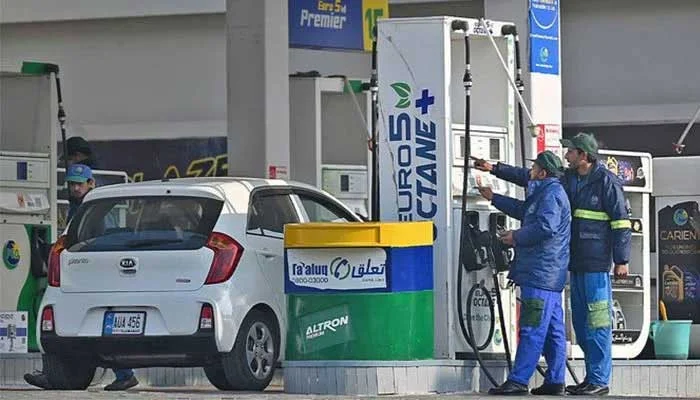
The latest hit for Pakistani consumers came just this week, with a sharp increase in the domestic price of high-octane fuel used in luxury vehicles. This was ostensibly to force the relatively rich to bear a higher cost from the national burden, now overwhelming oil-importing countries worldwide.
Yet this latest measure again shows the government relying more on tokenism than on substantive action. Across Pakistan, many areas require urgent action to meet the mounting economic challenge posed by the Iran war.
For long, Pakistan has remained a country where the relatively few well-endowed elite have remained immune from sharing the national burden. It is hardly surprising that just about three per cent of Pakistan’s population of 250 million are registered as tax filers, with even fewer contributing to this cause in any meaningful way.
Meanwhile, a history of largesse showered upon the rich and the mighty only reinforces a tragic trend: in daily life, Pakistan remains a country where privileges are showered upon the privileged few. This history is well illuminated by examples from the ruling elite over time, who head to prized overseas destinations for medical treatment while similar-quality treatments are available in Pakistan.
In another relevant example, Pakistan’s government provides institutions of higher learning, including many that remain neglected and in disrepair. Pakistan’s educational system has visibly slid downwards over time, as the country’s elite have ignored this area while sending their own children to high-profile educational destinations worldwide. Similar examples are found across sectors, reinforcing the powerful reality that Pakistan’s well-endowed elite remains practically aloof from the rest of the country.
As the future of the war on Iran remains impossible to predict, Pakistan’s ruling structure must decisively prepare for the worst. Though Pakistan remains afloat today, helped by an IMF loan, it is important to remember that Pakistan returned from the brink of default on its foreign debt repayments just a few years ago.
While today Pakistan remains solvent with the IMF’s support, this, at best, cannot be the solution to a deeper challenge. In brief, Pakistan needs to rebuild confidence in its future, remain independently solvent through a significant improvement in its balance of payments, and last but not least, lift prospects for future economic growth.
For now, Pakistan remains trapped in a low-growth cycle, which at best matches the country’s annual population growth. In other words, the size of Pakistan’s economic pie is growing annually by the same margin as the growth of its population. Arguably, this may be seen as a no-growth or marginal-growth cycle.
Going forward, Pakistan must undertake three interrelated reforms to prepare for the future. First, amidst the mounting global fallout from the war on Iran, it is important to force Pakistan’s elite to tighten their belts as never before. For example, the luxuries showered on elected representatives in the past must be suspended immediately for Pakistan to enforce long-overdue expenditure cuts.
Furthermore, high-net-worth individuals across the country must be forced to meet their genuine tax obligations, rather than contribute only token amounts. In past years, other classes, such as visibly well-endowed traders, have successfully resisted budgetary measures to contribute more to the national tax collection.
As Pakistan faces one of the toughest moments in its history, no one can be allowed to avoid their tax obligations. This is essential to avoid placing future burden across the board, notably through further reliance on indirect taxes.
Second, as Pakistan faces a formidable war-related challenge, the country also faces another major challenge that must not be ignored. The powerful reality of climate change and its subsequent destruction was witnessed across Pakistan just last year, when unexpectedly powerful rainfall caused widespread destruction and human displacement across the country.
Even ahead of this year’s cycle of expected rainfall, Pakistan’s disaster management officials have already warned of a coming spell that could exceed last year’s spell by at least 20 per cent. This requires the country to redouble its efforts for a fresh focus on the agricultural and forestry sectors, as it responds to the terrible consequences of climate change.
Beyond the climate-related challenge, targeting agriculture may be the quickest way to revive economic growth while addressing the growing food insecurity of recent years.
Finally, Pakistanis are known to be generous donors to causes within their own country. But harnessing this spirit for a greater cause requires urgent action to intensify the non-profit sector’s work across Pakistan.
Together, the road to change must be embraced immediately as Pakistan tackles the fallout from a formidable global challenge.
The writer is an Islamabad-based journalist who writes on political and economic affairs. He can be reached at: [email protected]
Disclaimer: The viewpoints expressed in this piece are the writer’s own and don’t necessarily reflect Geo.tv’s editorial policy.
Originally published in The News
