Home Blog Page 94

What in the World – PMDD: How it’s affecting women around the world – BBC Sounds

0
What in the World - PMDD: How it's affecting women around the world - BBC Sounds

Available for over a year

For some women, the two-week luteal phase of their menstrual cycle can be extremely disruptive and life altering. PMDD or Premenstrual Dysphoric Disorder is mental health disorder directly linked to regular hormonal fluctuations that take place during a cycle. People living with PMDD can experience anger, anxiety, severe depression, and even suicidal thoughts which then stops shortly after menstruation begins. Two women, Shariya in the US and Janna in Germany tell us how PMDD has impacted them.

There’s very little scientific research about why PMDD happens and the signs or symptoms can be missed by doctors. We hear from BBC Health Reporter Ruth Clegg, who’s been reporting on how social media has shifted perceptions of the disorder, and led to changes around how doctors screen for symptoms.

If you are affected by any of the issues in this episode, or suffering distress or despair and need support, you could speak to a health professional, or an organisation that offers support. Details of help available in many countries can be found at Befrienders Worldwide. www.befrienders.org

Instagram: @bbcwhatintheworld
Email: whatintheworld@bbc.co.uk
WhatsApp: +44 330 12 33 22 6
Presenter: Hannah Gelbart
Producers: Benita Barden, Ash Mohamed and Adam Chowdhury
Video Journalist: Baldeep Chahal
Editor: Verity Wilde

Programme Website

U.S. giving topped $600 billion for the first time last year. Megadonors and bequests are to thank

0
U.S. giving topped $600 billion for the first time last year. Megadonors and bequests are to thank

Violetastoimenova | E+ | Getty Images

A version of this article first appeared in CNBC’s Inside Wealth newsletter with Robert Frank, a weekly guide to the high-net-worth investor and consumer. Sign up to receive future editions, straight to your inbox.

Donors gave an estimated $617.2 billion to U.S. charities last year, up 5.7% from the year prior on a blistering stock market rally, according to a Giving USA report released this week. 

The findings mark the first time yearly giving has topped $600 billion in the 60-year history of the annual philanthropy report, which is published by the Giving USA Foundation. Adjusted for inflation, giving was up 3% year over year. 

The effect of the stock market boom, however, was more pronounced with deep-pocketed donors. Individual donors still made up the highest share of contributions at $394.2 billion, but that sum grew just 1.4% in inflation-adjusted dollars, while charitable bequests – gifts made after death – surged by 16.6% to an estimated $62.19 billion. 

The rise in bequests could be the latest signal of the Great Wealth Transfer. Cerulli Associates estimates more than $124 trillion in assets will pass down by 2048, with about $18 trillion allocated to charity. 

Jon Bergdoll, the report’s lead analyst, said it’s too early to tell how much of the increase in bequeathed gifts is due to the massive handover of wealth.

What’s clearer, according to Bergdoll, is that wealthy Americans who are most likely to leave large sums to charity are the biggest beneficiaries of the stock market boom.

“There’s always a pretty tight connection between bequest and overall net worth, which in turn, is pretty connected to the market,” said Bergdoll, interim director of data and research partnerships at the Lilly Family School of Philanthropy at Indiana University, which researches and writes the report. 

The stock market’s impact on overall giving, which includes gifts by foundations and corporations, is slower and more muted. That said, Bergdoll said he expected a bigger uptick in giving considering the past few years of strong market growth. Between 2024 and 2025, the S&P 500 jumped 13.4% in inflation-adjusted dollars, roughly four times the rate of growth in total giving, per the report. 

He attributed much of the gap between paper wealth and total giving to tepid growth in gross domestic product and record-low consumer sentiment. 

“This is a somewhat strange economy for that stock market growth,” he said. “While the market’s doing well, and GDP is doing OK, it does seem like there is a lot of unease. We know that giving comes from a place of financial security for people, and so that could be dragging things down a little bit on the individual end.”

Bergdoll added that it would be detrimental for the nonprofit sector if charitable giving followed stock fluctuations too closely.  

“We wouldn’t want it to be a one-for-one relationship,” he said. “As much as we might want giving to go up 20% when the market goes up 20%, we really don’t want giving to go down by 20% when the market goes down by 20%.”

Get Inside Wealth directly to your inbox

Many top earners were expected to pull forward donations in 2025 to take advantage of tax benefits set to decline due to the One Big Beautiful Bill Act. Bergdoll said the uptick was significant but small relative to overall contributions. The report estimated donors gave an additional $1.71 billion in 2025 to take fuller advantage of expiring tax incentives.

While U.S. charities are receiving more dollars, they have become increasingly reliant on the ultra-wealthy as economic pressures squeeze middle-class donors. The report estimated that nine donors accounted for a whopping $22.32 billion of last year’s total philanthropy. MacKenzie Scott, philanthropist and ex-wife of Amazon founder Jeff Bezos, contributed the largest share at $6.65 billion.

These donors’ megagifts, or contributions of at least 0.1% of total giving, can reshape philanthropy year to year. Nearly a third of the increase in bequest giving came from the estate of late Microsoft cofounder Paul Allen, which established a $3.1 billion fund for science and technology research.

Gabe Cooper, vice chair of the Giving USA Foundation, told CNBC he had mixed feelings about megagifts.

“Do I love when the Paul Allens and MacKenzie Scotts of the world commit to giving away a lot of their wealth? Yes, 100%, and I wish more billionaires would do the same,” said Cooper, who is also the CEO of fundraising platform Virtuous. “On the flip side of that, I actually don’t want that number to grow too big. I don’t want a growing dependence on the megawealthy, whose giving patterns might be more volatile year to year.”

While the rise in bequests is a boon for philanthropy, Cooper has his eye on the bigger prize: heirs.

“If a billionaire passes away, and they give $200 million to charity, the other $800 million is probably going to their kiddos, and so I want those kiddos to make really good decisions in terms of philanthropy,” he said.


Choose CNBC as your preferred source on Google and never miss a moment from the most trusted name in business news.

Death of the convertible? Choice of new models sinks to lowest in decades

0
Death of the convertible? Choice of new models sinks to lowest in decades

Drivers seeking a new convertible car now face the fewest options in decades, as manufacturers prioritise SUVs and electric vehicles, according to analysis. Online marketplace CarGurus described open-top cars as an “increasingly rare sight”.

The study found the 30 UK car makers offer just 11 new convertible models collectively, a sharp drop from 29 models six years ago and the 37 available at the segment’s 2005 peak.

Recent cuts include BMW reducing its range from five to two models, Porsche dropping the 718, and Jeep ceasing to offer any. Despite the industry’s shift to electrification, fully electric convertibles remain rare, with only two models on sale in the UK.

Conversely, demand for used convertibles is increasing, with average prices up 10% year-on-year to around £18,000, CarGurus reported.

The company’s UK editorial director Chris Knapman said: “For years, convertibles were a core part of many manufacturer line-ups, and they brought character and desirability to a brand’s range.

“Today, they’re becoming an increasingly rare sight as carmakers focus investment on SUVs and electrification.

“Demand for open-top motoring clearly hasn’t disappeared.

“Used convertible prices are rising, and there’s still strong enthusiasm for cars that get the wind in your hair as part of a more evocative driving experience.”

Steve Gooding, director of motoring research charity the RAC Foundation, said: “Brits have a long-established love affair with convertibles.

“The fact that prices for these models in the used car market are staying strong suggests that it’s not drivers but the auto companies who are changing tack, perhaps because they are playing to the global market and see soft top vehicles as too much of a GB niche.

“Perhaps drivers craving a wind-in-the-hair experience will have to switch to cars with a panoramic sunroof, while convertible devotees continue to seek out the sportier models still being produced by small volume companies.”

Essential American songs of the last 250 years

0
Essential American songs of the last 250 years

For the United States’ 250th birthday, Sunday Morning asked dozens of notable Americans, from Jason Alexander and Ken Burns to Misty Copeland, what they considered to be our country’s essential songs. This is the Essential American Songbook: 90 contributors and 250 songs. Here’s a sample.

Mumbai vs Navi Mumbai: Where does your ₹2 crore buy a better home?

0
Mumbai vs Navi Mumbai: Where does your ₹2 crore buy a better home?

Mumbai vs Navi Mumbai is one of the biggest confusion faced by homebuyers these days. For many in the Mumbai Metropolitan Region (MMR), ₹2 crore is a budget that means a lot. Now the answer completely depends on your priority. Whether you prioritise location, lifestyle, or living space, the choice is yours. But recent industry reports suggest that while Mumbai continues to command a premium infrastructure and limited land availability, Navi Mumbai is increasingly emerging as a value-driven alternative because of better infrastructure and expanding employment opportunities.Let’s try to find a logical solution to the confusion:What ₹2 crore buys in MumbaiIn Mumbai, ₹2 crore translates into a small 1.5 or 2 BHK apartment in many suburbs. In fact a smaller apartment in premium micro-markets. In prime areas like Lower Parel, Powai, Bandra or Andheri West, buyers may have to compromise on carpet area or choose older resale properties in the given budget.According to Knight Frank’s Wealth Report 2026, US$1 million buys only around 96 square metres of prime residential space in Mumbai, which makes the city one of the costliest housing markets worldwide. The city continues to witness strong buyer activity, with residential registrations touching new highs in 2026.What ₹2 crore buys in Navi Mumbai In Navi Mumbai, a ₹2 crore budget means a spacious 2 or 3 BHK apartment in premium developments like Kharghar, Seawoods and Ulwe. These societies offer modern amenities such as clubhouses, gardens and parking facilities. So affordability remains the biggest advantage and one of the region’s biggest selling points. JLL’s latest residential market analysis states that growth clusters in suburbs and satellite cities—including Navi Mumbai—are attracting buyers. In Q1 2026, Navi Mumbai accounted for the largest share of residential sales within the MMR market.Infrastructure; the game changer

NavI mumbai

One of the strongest features of Navi Mumbai is future-ready infrastructure. The inauguration of Navi Mumbai International Airport in January 2026 played an important role in boosting the real estate sector in Navi Mumbai. As per data by industry insiders, average apartment prices across Navi Mumbai increased by over 22% between 2021 and 2025. The data reflects growing demand in the real estate market especially in areas such as Ulwe and Panvel. These areas have benefited from airport-led developments.Lifestyle vs Location

Mumbai

canva

Once again, choosing between Mumbai and Navi Mumbai comes down to priorities.For professionals working in offices in South Mumbai, living in Mumbai can significantly reduce commute times and travelling stress. Navi Mumbai is attractive to those seeking planned development, wider roads and greener surroundings. Investment perspectiveFrom an investment point of view, Mumbai remains a relatively stable market. Navi Mumbai, on the other hand, offers stronger growth potential with continued improvements in transport connectivity and commercial development.The verdict

Mumbai vs Navi Mumbai

AI-Generated

Again it all depends on what’s your goal. If you want maximum living space with modern amenities, ₹2 crore will get a better home in Navi Mumbai. But if your priorities include a prestigious Mumbai address, closer to workplaces, spending the same ₹2 crore in Mumbai may still make sense, even if it means a smaller home.

Fortnite officially unveils Olivia Rodrigo skin after fans slam early reveal

0

Fortnite officially unveils Olivia Rodrigo skin after fans slam early reveal

Olivia Rodrigo and Fortnite have finally confirmed their collaboration, with fans still holding the same disapproval that came with initial images.

The 23-year-old singer and Fortnite announced the collaboration through a joint Instagram post on Wednesday.

The teaser, heavily inspired by Rodrigo’s recently released third album You Seem Pretty Sad for a Girl So in Love, shows an animated version of the singer enjoying a swing in a garden while wearing a pink dress similar to the one featured in the album’s artwork.

She then falls, gets up and discovers a dollhouse, inside which another Olivia-inspired character is seen lying on a bed listening to music before getting up, putting on her black gloves and setting fire to the dollhouse before leaving.

The caption read, “I think we might go really nice together. Olivia Rodrigo officially joins Fortnite tonight!”

Fortnite officially unveils Olivia Rodrigo skin after fans slam early reveal

Fans quickly flooded the comments section with intrigue.

“the way I’m gonna be downloading fortnite just for Olivia,” one person wrote.

“My poor wallet (i’m getting her either way),” another joked.

However, others were less impressed by the character design.

“i love her but this skin is horrible omg,” one fan commented.

“She doesn’t look like her if you know what I mean,” another added.

Meanwhile, another name kept appearing throughout the comments: Conan Gray.

Fans repeatedly joked that Gray, one of Rodrigo’s closest friends, would be jealous of the collaboration.

“I know Conan is mad somewhere,” one user wrote.

“Somebody go check on Conan,” another commented.

Fortnite officially unveils Olivia Rodrigo skin after fans slam early reveal

The jokes stem from the pair’s well-known friendship, which has become a fan-favourite part of both artists’ online presence over the years.

On the other hand, Fortnite’s announcement comes after images of the alleged skin started making rounds online earlier this week.

Rumours of the Fortnite crossover had been building for weeks after players spotted in-game clues linked to Rodrigo’s new album, including a pink swing and a knife in a tree that matched imagery from the record’s artwork.

Fortnite has previously partnered with major music stars including Billie Eilish, Sabrina Carpenter and Laufey.

How Australians taught themselves to stay safe in the sun

0
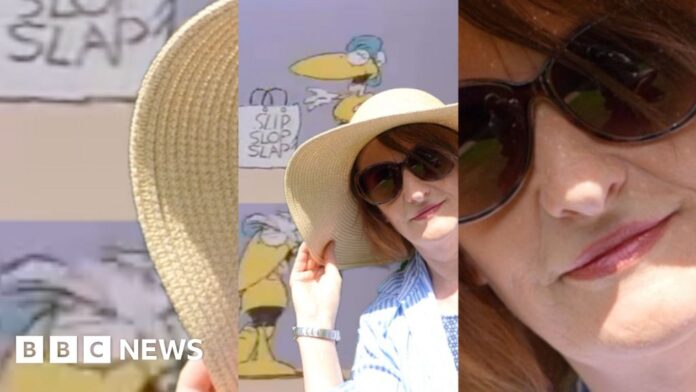
BBC Presenter Jane Wilkinson to the right of screen wearing sunglasses and a large summer hat.

In 1981, Australia launched a fight against skin cancer with help from a yellow cartoon seagull and a catchy jingle.

Astronomers find 2 gigantic planets lighter than cotton candy:

0
Astronomers find 2 gigantic planets lighter than cotton candy:

Astronomers have uncovered a pair of giant planets that are lighter than cotton candy — super-puffs the size of Jupiter.

The featherweight pair — orbiting a star 1,110 light-years away — are the biggest exoplanets found to have less density than cotton candy.

That makes them the lightest known planets of their size, said the University of Oxford’s George Dransfield.

“These two planets have densities comparable to a nice blob of shaving foam, fresh from the can,” Dransfield said in an email. She and her team reported their findings Wednesday in Monthly Notices of the Royal Astronomical Society.

Dransfield suspects these fluffy, wispy worlds are probably white or blue, depending on whether the skies there are cloudy — not shades of cotton-candy pink. The planets are probably mostly hydrogen and helium, although it will take follow-up observations by NASA’s Webb Space Telescope to confirm their chemical makeup.

Detected by NASA’s Tess satellite over the past decade, these two especially puffy puffs orbit a star in the southern constellation Volans, known as the flying fish. The researchers studied the planets’ orbits using telescopes on Earth to determine their density, from 1,110 light-years away. A light-year is nearly 6 trillion miles.

This illustration provided by NASA depicts the Sun-like star TOI-791, background left, and two giant planets that NASA’s TESS space telescope discovered in its orbit. 

Daniel Rutter/NASA via AP


In 2024, researchers found a super-puff planet 1,200 light years from Earth, calling it a “cosmic mystery.”

Jupiter, by comparison, is as much as 35 times denser than these two lightweights.

The newly found planets also have unusually long orbits, with one taking 139 days and the other taking 232 days to circle the host star, NASA said in a news release.

Considered rare in the cosmos, super-puffs are thought to form around the disk of gas and dust around a newborn star where there is more gas than dust. They shed much of the material over time, stripping down even more.

“The main reason these planets are interesting to study is that we didn’t expect to see them at all,” said Jon Jenkins, the science lead for the Science Processing Operations Center at NASA’s Ames Research Center in California’s Silicon Valley. “They represent a puzzle for us to solve about how giant planets like Jupiter and the super-puffs form.”

NASA’s tally of worlds outside our solar system currently stands at nearly 6,300 confirmed. Fewer than 40 are super-puffs, according to Dransfield.

“Ultimately, by studying exotic systems containing rare planet types, we add further pieces to the puzzle of planet formation and learn more about our place in the cosmos,” she said.

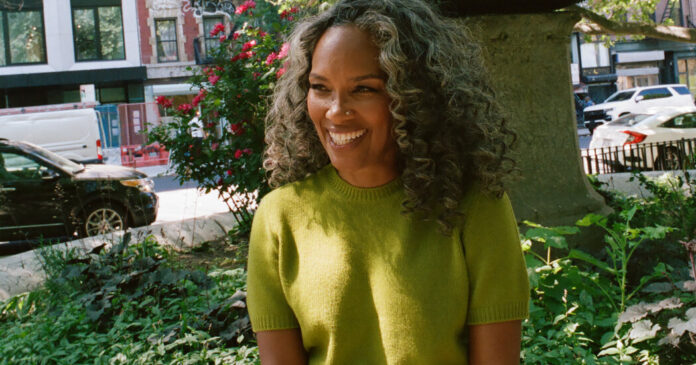
Mara Brock Akil Finds a New ‘Muse’ in ‘The Revelation of Dionne Daphne’

0
Mara Brock Akil Finds a New ‘Muse’ in ‘The Revelation of Dionne Daphne’

“I remember being stunned,” she said. “I was like, ‘But you do have sex, right?’”

Brock Akil has consistently defended the need to tell the stories of Black women who reject the demands of respectability politics that tell them how they should behave, especially in romantic relationships.

“I’m very proud of carving out space for Black women’s sexuality,” she said. Thinking ahead to how she would be like to be remembered, she said she hoped to be recognized for liberating Black women “from the asexual trope or the ho trope.”

“We are somewhere in between — we are at the spectrum,” she said. “We are not the polar opposites.”

As younger audiences have discovered her work via streaming services, many have called out the women on “Girlfriends” for being toxic friends, or described the romance on “The Game,” in which a young woman gives up medical school for her football star boyfriend, as a horrific cautionary tale.

Brock Akil doesn’t feel affronted. That was the point, she said: to hold up a mirror.

“I wrote the truth,” she said. “And the truth is, if you think about a gem, it has different facets, you see different things depending on how the sun hits it and what you’re looking at, and we are all of it. Joan is amazing as she is toxic.”

In this new era, Brock Akil hopes that her vulnerability through Dionne’s story will give readers a new muse to resonate with.

“Dionne, I think, is my way of hugging that version of myself that’s brave,” she said. “Who went through something harrowing to get to this moment, to use her pen to say hey, maybe we should pay attention.”

Euclid space telescope captures 60 million Milky Way stars in stunning image that could transform astronomy for decades

0
Euclid space telescope captures 60 million Milky Way stars in stunning image that could transform astronomy for decades

The European Space Agency’s Euclid space telescope has delivered one of the most detailed views ever captured of our galaxy’s crowded heart, revealing more than 60 million stars in a single extraordinary image. The observation offers astronomers an unprecedented look into the densely populated central regions of the Milky Way, a part of the galaxy that has long remained difficult to study because of thick clouds of dust and overlapping stellar populations. Beyond its visual impact, the image represents a scientific treasure trove that researchers expect to analyse for years, if not decades. By mapping stars, star clusters and hidden galactic structures on an enormous scale, Euclid is providing fresh clues about how the Milky Way formed, evolved and continues to shape the cosmic environment around us.

How Euclid captured 60 million stars in the crowded heart of the Milky Way

Launched in 2023, Euclid was designed primarily to investigate the mysterious dark universe, including dark matter and dark energy. However, its powerful instruments are also proving exceptionally valuable for studying our own galaxy.The newly released image focuses on the Milky Way’s central bulge, a densely packed region containing vast numbers of stars concentrated around the galactic centre. According to the European Space Agency, Euclid observed an area covering approximately 500 square degrees of the sky and detected more than 60 million stars, many of which had never been studied in such detail before. “With a single observation, Euclid has captured millions of stars, demonstrating its extraordinary ability to survey vast regions of the sky in remarkable detail,” ESA stated.The telescope’s visible and near-infrared instruments allow it to peer through dust that often obscures observations from Earth, revealing stellar populations hidden deep within the galaxy.

Why astronomers believe the Euclid image will fuel discoveries for decades

The significance of the image extends far beyond its sheer scale. Researchers expect the dataset to help identify previously unknown star clusters, trace the structure of the galactic bulge and improve understanding of stellar evolution.ESA scientists note that the immense catalogue will provide opportunities to investigate how stars are distributed throughout the Milky Way and how different populations formed over billions of years. Because the image contains tens of millions of objects, researchers anticipate years of detailed analysis and follow-up studies.The mission’s advanced imaging capabilities are particularly valuable for detecting faint objects that might otherwise remain hidden among brighter neighbouring stars. This could lead to discoveries ranging from previously overlooked stellar nurseries to rare astronomical phenomena.According to Euclid science team at the European Space Agency: “These observations provide an unprecedented view of the Milky Way’s central regions and will support a wide range of future scientific investigations.”

What Euclid’s Milky Way map reveals about the future of space research

Although Euclid’s primary objective remains understanding the large-scale structure of the universe, its observations are increasingly demonstrating their value for galactic astronomy.By combining visible and infrared observations, the telescope can build detailed maps of stellar distributions, helping scientists reconstruct the history of our galaxy. Researchers hope these observations will shed light on how the Milky Way assembled over cosmic time and how interactions with smaller galaxies influenced its development. The image also highlights Euclid’s ability to produce datasets on a scale rarely achieved in astronomy. As additional observations are collected throughout the mission, scientists expect even larger catalogues and more comprehensive maps of the universe.For astronomers, the release marks more than a striking snapshot of the cosmos. It is the beginning of a long-term scientific resource that could reveal new insights into the Milky Way for decades to come, helping answer some of the most fundamental questions about our place in the universe.