
Home Blog Page 3191

10 ways to protect seniors from email scams

0
10 ways to protect seniors from email scams

NEWYou can now listen to Fox News articles!

Email scams have become one of the fastest ways scammers steal money from older adults. A single click can expose bank accounts, personal data and retirement savings built over a lifetime. That growing risk is what prompted Bob to write to us with a question many families are now facing:

“My friend’s father is 95 and absolutely lives through his phone/laptop. He refuses to give up either and often clicks on email links. A few years ago, he got caught up in a gift card scam that almost cost him his life savings. It’s not taking away the car keys anymore; it is taking away the email and access to online banking! What do you recommend that his daughter do to protect his online presence?”

Bob is right. For many seniors, email and online banking have replaced car keys as the most dangerous access point. The goal is not to take devices away. It is to quietly put guardrails in place so one bad click does not turn into a financial disaster.

Here is a practical plan families can actually use.

HACKERS ABUSE GOOGLE CLOUD TO SEND TRUSTED PHISHING EMAILS

Sign up for my FREE CyberGuy Report
Get my best tech tips, urgent security alerts and exclusive deals delivered straight to your inbox. Plus, you’ll get instant access to my Ultimate Scam Survival Guide – free when you join my CYBERGUY.COM newsletter.

 1) Separate money from daily email use

Start by limiting how much damage a single click can cause. If possible, remove online banking access from the devices used for email. When that is not realistic, open a second checking account with only everyday spending money and link it to a debit card for routine purchases.

Keep primary savings accounts offline or set to view-only access. If available, require in-branch or phone verification for transfers above a set amount. This way, even if credentials are compromised, the largest accounts remain protected. 

2) Lock down email to stop scams targeting seniors

Email is the number one entry point for scams targeting seniors. Strong filtering matters. Use an email provider with advanced spam protection, such as Gmail or Outlook.com. In the email settings:

  • Turn off automatic image loading
  • Disable link previews
  • Block or auto-quarantine attachments from unknown senders
  • Automatically move messages from unknown senders to a Review folder

If available, enable warnings for emails that use familiar display names but come from unfamiliar addresses. This helps stop impersonation scams that pretend to be family, banks or service providers. These steps slow scammers down and reduce impulse clicks before damage happens.

Email is dominant, but voicemail and callback scams are also growing fast among seniors, often as a follow-up to phishing emails. If possible, silence unknown callers and block voicemail-to-email transcription for unfamiliar numbers, since many scams now start with urgent callback messages rather than links.

Email scams often start with messages that look routine but hide urgent threats designed to trigger quick clicks. (Kurt “CyberGuy” Knutsson)

3) Add a trusted second set of eyes

Next, add safety nets that notify family members when something looks wrong. Enable banking alerts for large withdrawals, new payees, password changes, unusual logins and new device sign-ins. Add his daughter as a trusted contact wherever the bank allows it. If available, enable delays or approval requirements for first-time transfers to new payees. This creates a cooling period that can stop scam-driven transactions. For email accounts, set up a recovery contact so that his daughter is notified immediately if someone attempts to access or reset the account.

Enable two-factor authentication (2FA) on email and banking accounts, but pair it with device and transfer alerts, since many scams now succeed even when 2FA is enabled.

4) Harden devices so clicks do not equal catastrophe

Devices should be set up to fail safely. Keep operating systems and browsers updated. Make sure the laptop uses a standard user account instead of an administrator account. This prevents software from installing without approval. Install real-time protection that blocks scam sites before they load. Strong antivirus software helps block malicious links and fake login pages automatically.

The best way to safeguard yourself from malicious links that install malware, potentially accessing your private information, is to have strong antivirus software installed on all your devices. This protection can also alert you to phishing emails and ransomware scams, keeping your personal information and digital assets safe.

Get my picks for the best 2026 antivirus protection winners for your Windows, Mac, Android and iOS devices at Cyberguy.com.

5) Use a password manager to block fake logins

Password reuse makes scams far more dangerous. Fake pop-ups and lookalike websites are designed to trick people into typing usernames and passwords by hand. A password manager removes that risk by storing credentials securely and autofilling them only on legitimate websites. If a page is fake or malicious, the password manager will not fill anything. That simple refusal often prevents account takeovers before they start. Password managers also reduce frustration by eliminating the need to remember or reuse passwords across email, banking and shopping accounts. When set up correctly, this protection works quietly in the background on both phones and laptops.

Many phishing scams no longer rely on obvious fake emails. They rely on realistic login pages. Autofill protection is one of the most effective ways to stop these attacks without changing daily habits.

Next, see if your email has been exposed in past breaches. Our No. 1 password manager pick includes a built-in breach scanner that checks whether your email address or passwords have appeared in known leaks. If you discover a match, immediately change any reused passwords and secure those accounts with new, unique credentials.

Check out the best expert-reviewed password managers of 2026 at Cyberguy.com.

MALICIOUS CHROME EXTENSIONS CAUGHT STEALING SENSITIVE DATA

6) Freeze credit and monitor identity exposure

If scammers already have personal information, prevention alone is not enough. Freeze credit with Experian, TransUnion and Equifax to prevent new accounts from being opened. Also, place freezes with ChexSystems and the National Consumer Telecom and Utilities Exchange to stop criminals from opening bank accounts, phone lines, or utility services in his name.

If possible, request an IRS Identity Protection PIN to prevent tax-related identity theft.

Add ongoing identity monitoring so suspicious activity triggers alerts quickly. Identity Theft companies can monitor personal information like your Social Security number (SSN), phone number and email address, and alert you if it is being sold on the dark web or being used to open an account. They can also assist you in freezing your bank and credit card accounts to prevent further unauthorized use by criminals.

See my tips and best picks on how to protect yourself from identity theft at Cyberguy.com.

7) Set clear rules around scams and payments

Technology helps, but expectations matter. Have one calm conversation and agree on simple rules:

  • No gift cards for urgent emails or texts
  • No sending money through unfamiliar apps or cryptocurrency
  • Always call a trusted family member before acting on urgency

Post these rules near the computer or phone. Visual reminders reduce panic decisions. Also, before setting rules, choose one primary trusted contact. Multiple helpers can slow response during urgent scams and create confusion when fast decisions matter. That person should be the default call for anything urgent involving money, account access, or unexpected requests.
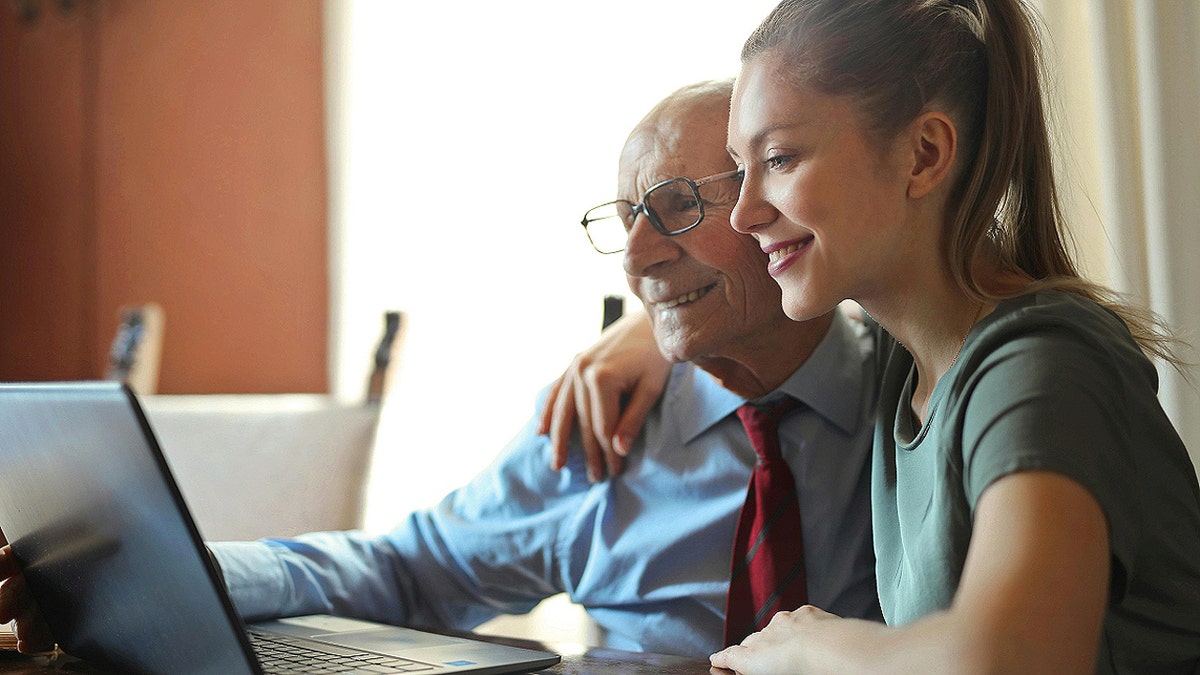
Old man and adult look at a computer

Adult children increasingly step in to help parents spot red flags before a simple mistake turns into a financial loss. (Kurt “CyberGuy” Knutsson)

8) Reduce exposure with a data removal service

Scammers often find seniors by pulling personal details from public data broker websites. These sites publish phone numbers, addresses, relatives and age information that make targeting easier. A data removal service works behind the scenes to opt seniors out of these databases and reduce how much personal information is publicly available online. Fewer exposed details means fewer scam calls, fewer phishing emails and fewer impersonation attempts. This step does not stop every scam, but it significantly lowers how often seniors are targeted in the first place.

Check out my top picks for data removal services and get a free scan to find out if your personal information is already out on the web by visiting Cyberguy.com.

Get a free scan to find out if your personal information is already out on the web: Cyberguy.com.

9) Use senior-friendly monitoring tools the right way

Many tools designed for child safety also work well for seniors when used thoughtfully. When configured correctly, they add protection without interfering with daily routines.

Below are device-specific steps families can use today.

iPhone and iPad

Apple’s built-in Screen Time tools provide strong protection without installing extra apps.

What to set up:

  • Open Settings and tap Screen Time
  • Turn on Screen Time for the device
  • Tap Content & Privacy Restrictions and turn it on
  • Under App Store Purchases, set app installs to Don’t Allow
  • Tap Web Content and limit access to approved or safe websites
  • Set a Screen Time passcode known only to the caregiver

If the caregiver wants remote visibility or control, add the device to Family Sharing and manage Screen Time from the caregiver’s Apple ID.

BROWSER EXTENSION MALWARE INFECTED 8.8M USERS IN DARKSPECTRE ATTACK

Why this helps: It blocks many scam sites, prevents accidental app installs and stops fake update prompts from causing damage.

Android phones and tablets

Android offers built-in protections and optional supervised controls.

What to set up:

Settings may vary depending on your Android phone’s manufacturer

  • Open Settings and go to Digital Wellbeing & parental controls
  • Turn on parental controls for the device
  • Restrict app installs and require approval for new downloads
  • Enable Safe Browsing and website filtering
  • Turn on alerts for new app installs and account changes

For families who want shared oversight, Google Family Link can be used to supervise app installs and receive alerts, as long as both parties agree.

Why this helps: Many Android scams rely on fake app installs. These settings block that path.

Windows computers

Windows protection works best when user accounts are set correctly.

What to set up:

  • Create a standard user account for daily use
  • Keep the caregiver account as the only administrator
  • Turn on Microsoft Family Safety if available
  • Enable SmartScreen and browser phishing protection
  • Block software installs without administrator approval

Why this helps: Malware often installs silently on admin accounts. This setup prevents that.

Mac computers

macOS includes built-in controls similar to those on iPhone and iPad.

What to set up:

  • Create a standard user account for the senior
  • Limit administrator access to a trusted caregiver
  • Open System Settings and enable Screen Time
  • Restrict app installs and system changes
  • Keep built-in malware and phishing protections enabled

Two people look at a computer together

Simple digital guardrails can reduce risk while allowing seniors to keep their devices and independence. (Kurt “CyberGuy” Knutsson)

Why this helps: It prevents fake software updates and malicious downloads from installing.

10) Best practices for all devices

  • Use alert-only or limited-control settings whenever possible
  • Review settings together so expectations are clear
  • Avoid tools that feel invasive or confusing
  • Focus on blocking harm, not monitoring behavior

This is not about spying. It is about adding digital seatbelts while preserving independence. When used respectfully, these tools reduce risk without changing daily habits.

Pro Tip: Use a secure email service for added privacy

For families looking to go a step further, switching to a secure email service can significantly reduce scam exposure. Privacy-focused email providers are designed to limit tracking, block hidden tracking pixels, and reduce how much data advertisers or scammers can collect from inbox activity. Many secure email services also offer disposable or alias email addresses for one-time signups. If an alias starts receiving spam or scam messages, it can be disabled without affecting the main email account. This makes it easier to keep a primary email address private and limit long-term exposure. Secure email platforms typically include features like encrypted messages, no advertising and stronger privacy controls. While switching email providers is optional, it can be a useful upgrade for seniors who receive large volumes of spam or have been repeatedly targeted by scams.

Why it matters: Less tracking means fewer scam attempts. Aliases reduce how often personal email addresses are exposed, without changing daily habits.

For recommendations on private and secure email providers that offer alias addresses, visit Cyberguy.com.

CLICK HERE TO DOWNLOAD THE FOX NEWS APP

Kurt’s key takeaways

Protecting seniors online is not about control. It is about prevention. Email scams are designed to exploit trust and urgency, especially in people who did not grow up with digital threats. Smart guardrails protect independence while preventing irreversible mistakes. If email and banking are today’s car keys, families need modern safety features to go with them.

If your parent clicked a scam email right now, would you know before the money was gone? Let us know by writing to us at Cyberguy.com.

Sign up for my FREE CyberGuy Report
Get my best tech tips, urgent security alerts and exclusive deals delivered straight to your inbox. Plus, you’ll get instant access to my Ultimate Scam Survival Guide – free when you join my CYBERGUY.COM newsletter.
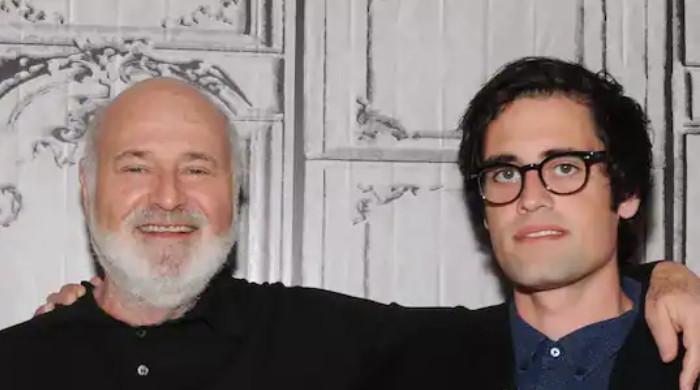
Nick Reiner’s new documentary drops unheard clues about Rob, Michele murder

0
Nick Reiner's new documentary drops unheard clues about Rob, Michele murder

Rob Reiner and wife Michele’s son Nick is under arrest for their murder

Nick Reiner has not yet directly addressed the charges against him for the murder of his parents, Rob and Michele Reiner, but a newly released documentary looks at some clues leading up to the tragedy.

The documentary, The Reiner Murders: What Really Happened, analyses the 32-year-old filmmaker’s life before the tragedy struck their family.

It explores Nick’s 2020 diagnosis of schizophrenia and a recent change in his medication, which arguably contributed to the erratic behaviour and subsequent murders.

The medication made him “erratic and dangerous,” according to TMZ, and his behaviour got increasingly alarming a month before the murders.

The Being Charlie writer had reportedly been in a Los Angeles rehabilitation centre a few weeks before Rob and Michele were found stabbed to death in their home.

The outlet reported that due to the weight gain as a side effect of his medications, the psychiatric facility changed the prescription and that made him even more erratic.

The now-deceased parents were allegedly aware of the mental health crisis but helpless regarding a course of action to take.

Companies flag location spoofing among hybrid, gig workers – The Times of India

0
Companies flag location spoofing among hybrid, gig workers - The Times of India

BENGALURU: Background verification firms and corporate forensic teams are flagging cases of location spoofing, particularly among hybrid employees and gig workers. In several instances, employees have been pulled up after allegedly misrepresenting their actual work location, with such discrepancies surfacing during random audits, compliance checks, or client reviews. Investigations found that some used travel routers or similar devices to make it appear they were working from their designated base locations while actually operating from elsewhere.An employee at an MNC firm was terminated after being flagged for location spoofing while working remotely, according to a post shared on the social media platform Reddit. The individual said he was with the company for a couple of years and travelled to his home country in South Asia last month due to a family emergency. To avoid drawing attention, the employee said they used a travel router configured with a cloud-based server to make it appear as though they were working from the US. According to the Reddit post, the employee was subsequently interviewed by an internal investigator and was terminated for violating the company’s business conduct guidelines by masking his actual work location. Amit Rahane, partner at EY’s Forensic and Integrity Services, said location spoofing is no longer theoretical. “Companies are detecting such cases through compliance audits, security reviews, and client checks rather than active surveillance. Many employees underestimate how much data is captured. Several controls were introduced during Covid to monitor moonlighting—such as IP tracking and login analytics—and these systems remain in place. As a result, location inconsistencies are often detected even without targeted monitoring,” he said.Ashok Hariharan, cofounder and CEO of identity verification platform Idfy, said companies want to verify whether a gig worker went to a specific location—for instance, whether a delivery was genuinely attempted at a customer’s residence. “Second, there are cases where a gig worker hands over their phone to another person. To prevent this, companies rely on face-matching tools alongside location data. Third, some apps are used to mask delivery attempts. In such cases, a phone may remain stationary while the app falsely indicates that the worker travelled and attempted the delivery. Since gig workers are sometimes paid even for attempted deliveries, this creates a potential fraud risk.” Hariharan said location spoofing can be identified by combining IP and VPN intelligence with GPS-based checks. “Monitoring these geographic and temporal signals enables authorities to anticipate where financial crime is likely to emerge next and intervene proactively. The same approach, correlating IP/VPN detection with GPS validation, can also be applied to identify location spoofing across a wide range of other use cases.”Idfy’s Hariharan said the process also involves validating GPS and sensor data, detecting rogue apps manipulating location, identifying VPN usage through latency and traffic patterns, and using device biometrics and behavioural signals, much of which is data science-driven.Rahane said most companies avoid active surveillance due to privacy concerns, with detection typically occurring through security audits, compliance checks, or client reviews. Forensic teams analyse controls such as geo-fencing, two-factor authentication, attendance logs, IP geolocation, Wi-Fi SSIDs, frequent location jumps, and unusual login times during routine audits. “VPN tools have become more sophisticated, but corporate systems still capture patterns beyond just IP masking, login behaviour, device fingerprints, and usage anomalies can still expose spoofing. It’s not as foolproof as employees assume,” he added.

Alexander Skarsgård reveals harsh views on fame

0
Alexander Skarsgård reveals harsh views on fame

 Alexander Skarsgård gets honest about fame

Alexander Skarsgård, the son of Swedish actor Stellan Skarsgård, who is himself an actor, has seen fame from an early age.

He was raised as a child actor, but now, looking back, he sees his views on fame were definitely not good.

Explaining his reasons, Alexander said he wanted a normal family life away from the spotlight, where his father worked a normal 9-to-5 office job.

“Hated the fact that my family wasn’t normal. I wanted to blend in. My biggest dream was for my dad to work in an office, a cubicle, wear a gray suit, drive a Saab to work, and have a briefcase,” he told W Magazine.

Amid this, the 49-year-old also said he initially did not want to be an actor. “My father’s an actor, but I didn’t want to be an actor at all, actually.”

But a chance to perform on screen came to him through his father’s friend, a director who needed a child actor.

“When I was 7, my dad’s friend, who is a director, needed a 7-year-old kid for his movie, and I happened to be around. When I was 13, I did a small movie made for television, but it got a little bit of attention and it made me very uncomfortable.”

Alexander said at the time he realized the acting was not his cup of tea after the attention he received for his performances, which made him uneasy. So, he quit the profession for a while.

However, his views regarding the art changed when he entered his early twenties. “When I was 20, 21, I remembered that I quite enjoyed being on set,” he continued. 

“I went to theater college in New York and, after a few years, I got my first job in the States. It was Zoolander.”

Alexander’s latest movie, Pillion, will debut in the United States on Feb. 6.

Iman honours David Bowie with tattoo on his death anniversary | The Express Tribune

0
david bowie photo file

David Bowie. Photo: file

Iman has paid a moving tribute to her late husband David Bowie on the 10th anniversary of his death, revealing a new tattoo inspired by the legendary artist’s final album, Blackstar.

The supermodel and fashion icon shared a video on Instagram showing the intimate moment she received the tattoo, marking a decade since Bowie passed away in January 2016 at the age of 69.

The minimalist tattoo is based on the distinctive Blackstar artwork associated with Bowie’s final studio album, which was released just days before his death following a private battle with cancer.

The design features simple black shapes that subtly reference Bowie’s name, serving as a quiet but powerful symbol of his artistic legacy and lasting influence on music and culture.

Alongside the video, Iman shared a heartfelt message reflecting on love, loss, and remembrance. She wrote that while the pain of losing Bowie has not disappeared, it has transformed into something permanent and loving, echoing the meaning behind the tattoo.

The post was set to Bowie’s haunting track “Subterraneans” and included the hashtag #BowieForever, resonating deeply with fans around the world.

Iman and David Bowie were married for 24 years after meeting on a blind date in 1990. Their relationship was widely admired for its strength and privacy, and they shared a daughter, Alexandria “Lexi” Zahra Jones.

Since Bowie’s death, Iman has continued to honor his memory through thoughtful tributes on significant dates, celebrating both his personal impact on her life and his enduring global legacy.

Fans flooded the comments with messages of love and support, praising Iman’s tribute and remembering Bowie as one of the most influential artists in modern music history.

BLACKPINK’s Jennie dominates 40th Golden Disc Awards | The Express Tribune

0
jennie photo file

Jennie. Photo: file

BLACKPINK member Jennie emerged as one of the most talked-about artists at the 40th Golden Disc Awards, earning widespread attention after repeatedly returning to the stage to accept multiple honors in a single night.

According to Xportsnews, the awards ceremony took place on January 10 at Taipei Dome, marking the event’s 40th anniversary and making history as the first Korean music awards show held at the venue. Hosted by singer Sung Si-kyung and actor Moon Ga-young, the night celebrated both current achievements and long-term influence in K-pop.

Jennie first appeared onstage after winning the Digital Song Bonsang for her solo track “Like Jennie.” During her acceptance speech, she expressed nervous excitement and thanked fans, her agency, and the team behind her album Ruby. She noted that it had been some time since she last attended the Golden Disc Awards and said she was grateful to reconnect with fans.

Shortly after leaving the stage, Jennie was called back to accept another Digital Song Bonsang on behalf of BLACKPINK for the group’s hit “Run,” which performed strongly on domestic and international charts in 2025. Representing the group alone, she acknowledged fellow members Jisoo, Rosé, and Lisa, and thanked producer Teddy for his continued support.

Jennie later returned a third time to receive the Global Impact Award, bringing her total wins for the night to three. BLACKPINK was also named to the Golden Disc Powerhouse 40 list, which recognizes artists who have significantly influenced Korean pop music over the past four decades.

Although she attended the ceremony without her bandmates, Jennie said she felt proud to represent the group and emphasized her desire to continue growing as an artist with a positive influence. Images of her repeatedly accepting awards quickly circulated online, fueling fan discussions and cementing the night as one of the most memorable moments of the awards show.

‘Grateful Dead’ co-founder, guitarist Bob Weir dies aged 78 | The Express Tribune

0
bob weir photo file

Bob Weir. Photo: file


LOS ANGELES:

American guitarist and songwriter Bob Weir, a founding member of the revolutionary, psychedelic jam band Grateful Dead, has died aged 78, his family announced Saturday.

Weir was diagnosed with cancer in July and had beaten the disease, but “succumbed to underlying lung issues,” his family said in a statement on his personal website, without specifying where or when he died.

“For over sixty years, Bobby took to the road,” the statement said. “Bobby will forever be a guiding force whose unique artistry reshaped American music.”

“His work did more than fill rooms with music; it was warm sunlight that filled the soul, building a community, a language, and a feeling of family that generations of fans carry with them.”

Founded in San Francisco by Weir, Jerry Garcia, Ron “Pigpen” McKernan, Phil Lesh, and Bill Kreutzmann, the Grateful Dead became one of the leading music groups to emerge from the 1960s counterculture movement.

With its trademark improvisational, genre-blending style, the band became known for never performing the same show twice, winning an avid and diverse legion of fans, and selling millions of records.

The group revolutionized fan engagement, as followers — famously known as “Deadheads” — recorded and swapped bootleg tapes of the concerts in a communal, drug-addled camp environment that traveled from stadium to stadium, a trend later copied by other bands’ fandoms.

The rockers disbanded in 1995, a few months after lead guitarist Garcia’s death at the age of 53, and a year after the group was inducted into the Rock & Roll Hall of Fame.

Weir would however continue to perform intermittently with other living bandmembers, more recently in the group Dead & Company, which also included guitarist and singer John Mayer.

“As we remember Bobby, it’s hard not to feel the echo of the way he lived,” the family said.

“A man driftin’ and dreamin’, never worrying if the road would lead him home. A child of countless trees. A child of boundless seas,” the family said, quoting the songs “Cassidy” and “Lost Sailor,” written by Weir and the late John Perry Barlow.

Following Weir’s death, 79-year-old drummer Kreutzmann became the last living co-founder of the Grateful Dead.

Bassist Lesh died in October 2024 at the age of 84, while keyboardist McKernan died aged 27 in 1973.

Drummer Mickey Hart, 82, joined the group in 1967.

In 2024, the final year of Joe Biden’s presidency, Weir and other living Grateful Dead members were given Kennedy Center Honors, among the highest American arts awards.

“The Grateful Dead has always been about community, creativity, and exploration in music and presentation,” Weir, Hart, Lesh and Kreutzmann had said at the time.

AI pendants, brooches make strong fashion comeback | The Express Tribune

0
ai pendants

Advanced wearable technology includes a Chinese-made Lenovo pendant that captures sound and images hands-free

AI pendants.


LAS VEGAS:

Pendants and brooches packed with artificial intelligence abounded at the Consumer Electronics show, using cameras and microphones to watch and listen through the day like a vigilant personal assistant.

The return of the wearable tech comes about a year after the discontinuation of a Humane AI Pin panned by reviewers after it was launched amid high expectations in early 2024.

It also comes as OpenAI chief Sam Altman and renowned industrial designer Jony Ive collaborate on a device for interacting with AI, expected to be ready by next year.

Not everyone is a fan of always-watching neckwear as a fashion accessory.

“Go make some real friends” became common graffiti on New York City subway ads for Friend brand AI pendants late last year to protest “surveillance capitalism.”

Nonetheless, at the CES show in Las Vegas, gadget makers have pitched AI pendants as note-takers or ways to remember beautiful or important moments of each day.

Technical advances including improved chips have helped overcome early problems with poor battery life, buggy software, and stumbling conversations that tainted early pendant models.

China-based laptop titan Lenovo unveiled a prototype pendant from its Motorola subsidiary that allows voice control of its AI assistant Qira.

The device worn around the neck will capture sound and images hands-free.

Amazon made a deal to buy wearable AI startup Bee last year, and Meta acquired AI device company Limitless.

Bee devices are worn on the wrist, belt or lapel, and primarily function as an assistant by taking notes, offering reminders and keeping calendars.

Meanwhile, Meta has made a priority of developing AI “superintelligence” and is successfully packing AI into Ray-Ban glasses.

Companies are taking an array of approaches to wearable AI.

Startup Vocci, which focuses on AI-assisted notetaking, has opted for a ring, while Plaud has a pin as well as a rectangular device barely thicker than a credit card for keeping track of what is being said.

Chinese startup iBuddi came to Las Vegas to present a prototype of a companion medallion aimed at combating screen fatigue.

“Our core philosophy is to build a body-worn AI companion that replaces some phone interactions, rather than adding another screen that absorbs attention,” iBuddi founder Yin Haitian told AFP.

The entrepreneur, who aims for a commercial launch in July, was adamant that iBuddi “is not driven by surveillance” but instead “reacts to the moments that matter instead of continuously recording everything.”

A Looki L1 AI wearable, on the other hand, continuously captures a wearer’s point of view, promising to advise when to avoid another cup of coffee, to comment on places or objects around you, and to summarize each day in a comic strip.

“Consumer expectations regarding privacy haven’t gone away entirely, but they are shifting,” said Avi Greengart, an analyst at tech research and advisory group, Techsponential.

“We’re already being surveilled by billions of smartphones, city camera networks and smart devices that we willingly placed in our homes.”

The analyst does not expect wearable AI to replace smartphones any time soon but sees them becoming common additions to personal tech ensembles along with smart watches, rings and glasses.

For those uncomfortable with idea of omnipresent surveillance, a startup at CES offered “Wearphone” — a mask with built-in earbuds and microphones designed to help keep conversations private.

In 2011, Altman became a partner at startup accelerator Y Combinator (YC), initially working on a part-time basis.In February 2014, he became president of YC. He aimed to expand YC to fund 1,000 new companies per year and sought to broaden the types of companies funded, particularly focusing on “hard technology” startups. In October 2015, Altman was involved in expanding YC’s scope. He contributed $10 million to the initial fund of Y Combinator Research, and announced YC Continuity, a fund to invest in maturing YC companies. In September 2016, Altman’s role at YC expanded to president of YC Group, which included Y Combinator and other units.

Ive has received accolades and honours for his designs and patents. In the United Kingdom, he has been appointed a Royal Designer for Industry (RDI), an Honorary Fellow of the Royal Academy of Engineering (HonFREng), and a Knight Commander of the Order of the British Empire (KBE). In 2018, he was awarded the Hawking Fellowship of the Cambridge Union Society. In a 2004 BBC poll of cultural writers, Ive was ranked the most influential person in British culture. His designs have been described as integral to the successes of Apple, one of the world’s largest information technology companies by revenue and market capitalisation.

‘Silent Hill f’ writer terms series a phenomenon | The Express Tribune

0
silent hill f photo file

Silent Hill f. Photo: file

Silent Hill f writer Ryukishi07 has said the Silent Hill series should be understood as a phenomenon rather than a physical location, reinforcing a theory previously introduced in Silent Hill: The Short Message that divided parts of the fanbase.

Speaking in an interview with Famitsu, translated by GamesRadar+, Ryukishi07 explained that the concept emerged during early discussions about setting Silent Hill f in Japan.

He said he questioned how a series named after an American town could logically exist in another country and raised the issue directly with series producer Motoi Okamoto.

High school student Shimizu Hinako[b] lives in the rural Japanese town of “Ebisugaoka” during the 1960s. She resents her parents as her mother is subservient to her abusive father, while her older sister Junko has left home after getting married. After an argument with her parents, Hinako meets up with her friends Shu, Rinko, and Sakuko, where Shu gives Hinako red capsules to help with her intense tension headaches. A monster wearing a shiromuku appears, engulfing Ebisugaoka in fog and red spider lilies, which kill Sakuko. Hinako escapes but Ebisugaoka has become overrun by monsters. While avenging Sakuko’s death, Hinako loses consciousness and awakens in the Dark Shrine, where she encounters a man called Fox Mask. Despite Fox Mask guiding and caring for her, she is continuously warned by a spirit possessing a doll from her childhood not to trust him.

After awakening in Ebisugaoka, which has become almost entirely deserted, Hinako reunites with Shu and Rinko.

As the bridge leading out of town is broken, the three plan to escape through a mountain path behind Shu’s house. Throughout their journey, Hinako travels back to the Dark Shrine whenever she loses consciousness or sleeps, and continues to follow Fox Mask while there. Fox Mask convinces Hinako to kill Shu, Rinko, and Sakuko to let go of her childhood. Additionally, Hinako participates in three rituals: her right arm is severed and replaced with a fox arm, her back is branded with a hot iron, and the top half of her face is sliced off and replaced with a fox mask. As Hinako prepares to marry Fox Mask, she transforms into the shiromuku.

“I discussed a lot of things with series producer Okamoto in a meeting after I received the request [to write Silent Hill f],” Ryukishi07 said.

“Like ‘Why is it set in Japan?’ and ‘What exactly is Silent Hill?’ In the end, we came to the conclusion that Silent Hill is not just the name of a place, it is a phenomenon.”

The idea aligns with a note found in Silent Hill: The Short Message, which refers to the “Silent Hill Phenomenon” as a recurring supernatural event named after an earlier incident in a US town. That explanation marked a shift away from the series being tied exclusively to a single location.

While the original Silent Hill games were set in and around the fictional American town, later entries have expanded the series’ scope. The focus has increasingly centred on the otherworld, a supernatural realm shaped by the psychological trauma of those who encounter it.

Fan responses to the theory have been mixed, but reactions to Silent Hill f have generally focused on interest in seeing the franchise explore new settings beyond the United States.

‘Avatar: Fire and Ash’ again tops box office, passes $1.2 billion | The Express Tribune

0
avatar fire and ash

It leads for a fourth consecutive weekend in a major success for James Cameron’s storytelling

Avatar: Fire and Ash.

‘Avatar: Fire and Ash’ has once again claimed the top spot at the weekend box office, marking its fourth consecutive weekend as the highest-grossing film in North America.

The latest installment in James Cameron’s long-running sci-fi franchise earned an additional $21.3 million domestically, pushing its North American total to $342.6 million.

On the global stage, the film has now surpassed $1.23 billion in worldwide box office revenue. While these numbers fall short of the record-breaking runs of the previous Avatar films, the performance still places Fire and Ash among the biggest theatrical releases of the year. The film’s success reinforces the continued appeal of Pandora and Cameron’s large-scale, effects-driven storytelling.

The strong showing also contributes to an impressive year for The Walt Disney Company. Avatar: Fire and Ash becomes Disney’s third billion-dollar release from 2025, following the box office success of the live-action Lilo & Stitch and Zootopia 2. Notably, Zootopia 2 continues to perform well in theaters, earning another $10.1 million domestically in its seventh weekend. The animated sequel has now reached a massive $1.65 billion worldwide, making it the highest-grossing film in Walt Disney Animation Studios history.

Recent industry speculation questioned whether future Avatar sequels would move forward if Fire and Ash underperformed. James Cameron previously acknowledged that he was prepared to step away from the franchise if the film failed to meet expectations. However, with the movie comfortably crossing the billion-dollar mark, the likelihood of the remaining planned installments reaching production appears strong.

Set once again on Pandora, Avatar: Fire and Ash follows Jake Sully, Neytiri, and their family as they face new challenges in an expanded Na’vi world. With sustained box office momentum and global interest, the franchise continues to prove its staying power in the modern theatrical landscape.

Development of Avatar began in 1994, when Cameron wrote an 80-page treatment for the film. Filming was supposed to take place after the completion of Cameron’s 1997 film Titanic, for a planned release in 1999; however, according to Cameron, the necessary technology was not yet available to achieve his vision of the film.

Work on the fictional constructed language of the Na’vi began in 2005, and Cameron began developing the screenplay and fictional universe in early 2006. Avatar was officially budgeted at $237 million, due to the groundbreaking array of new visual effects Cameron achieved in cooperation with Weta Digital in Wellington. Other estimates put the cost at between $280 million and $310 million for production and at $150 million for promotion. The film made extensive use of 3D computer graphics and new motion capture filming techniques, and was released for traditional viewing, 3D viewing (using the RealD 3D, Dolby 3D, XpanD 3D, and IMAX 3D formats), and 4D experiences (in selected South Korean theaters).The film also saw Cameron reunite with his Titanic co-producer Jon Landau, whom he would later credit for having a prominent role in the film’s production.

Avatar premiered at the Odeon Leicester Square in London on December 10, 2009, and was released in the United States on December 18.

The film received positive reviews from critics, who highly praised its groundbreaking visual effects, though the story received some criticism for being derivative.

During its theatrical run, the film broke several box office records, including becoming the highest-grossing film of all time, surpassing Cameron’s previous film, Titanic. In July 2019, this position was overtaken by Avengers: Endgame, but with a re-release in China in March 2021, it returned to becoming the highest-grossing film since then. It also became the first film to gross more than $2 billion and the best-selling video title of 2010 in the United States. Adjusted for inflation, Avatar is the second-highest-grossing movie of all time, only behind Gone with the Wind (1939), with a total of a little more than $4 billion.

Avatar was nominated for nine awards at the 82nd Academy Awards, winning three, and received numerous other accolades. The success of the film also led to electronics manufacturers releasing 3D televisions[26] and caused 3D films[27] to increase in popularity. Its success led to the Avatar franchise, which includes the sequels The Way of Water (2022), Fire and Ash (2025), Avatar 4 (2029), and Avatar 5 (2031).