In this screengrab via video, the ISRO PSLV-C62 is seen lifting off from the Satish Dhawan Space Centre on the island of Sriharikota, India, January 12, 2026. — X/@ANI
BENGALURU: An Indian rocket carrying 16 loads of equipment and experiments including an earth surveillance satellite went off track after liftoff on Monday in a fresh setback to the workhorse launch vehicle of the Indian Space Research Organisation.
It was a second disappointment for the Polar Satellite Launch Vehicle in about eight months, denting its reputation for reliability, with a more than 90% success rate over about 60 past missions.
The PSLV-C62 lifted off from the Satish Dhawan Space Centre on the island of Sriharikota at 10:18 a.m. (04488 GMT) carrying the EOS-N1 observation satellite and 15 other payloads developed by startups and academic institutions in India and abroad.
The ISRO’s mission control said the rocket performed normally for most of the flight before an unexpected disturbance and deviation from its path.
“The PSLV-C62 mission encountered an anomaly during the end of the PS3 stage. A detailed analysis has been initiated,” ISRO said in a statement, without giving further details on what had gone wrong or where the rocket ended up.
The PSLV has been central to India’s space programme, having launched missions such as Chandrayaan-1 and the Aditya-L1 solar observatory. It also underpins India’s push to open space manufacturing to private industry.
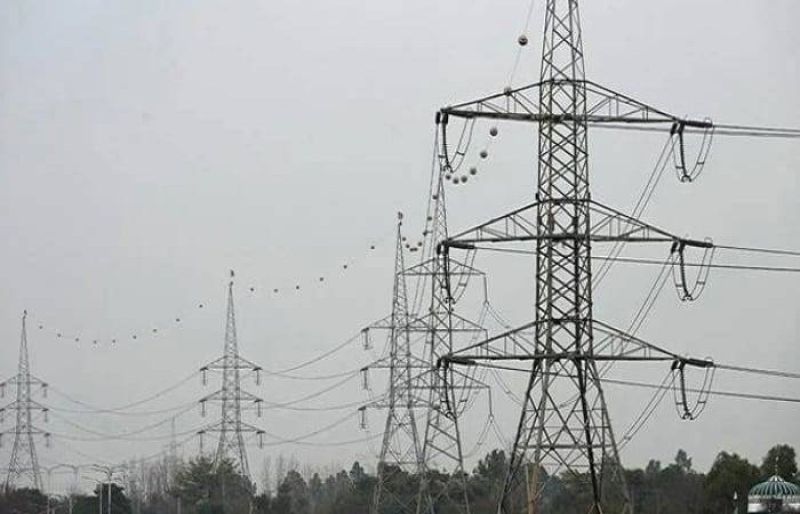
The federal government slashed electricity prices by 93 paisa under the head of fuel adjustment charges (FCA) with effect from November 2025, but kept the basic tariff unchanged.
According to details, the National Electric Power Regulatory Authority (NEPRA) also endorsed the decision of the federal government.
A notification has already been issued in this regard to LESCO and all other electricity supply companies.
The relief will be notified to consumers in the electricity bills and units used in November.
Govt decides not to change the basic tariff
The federal government decided to keep the basic tariff of electricity unchanged.
Earlier, NEPRA sent a summary to cut basis electricity tariff by 62 paisa per unit.
NEPRA fixed the basic electricity tariff for 2026 at Rs33.38 per unit. NEPRA conducted a hearing of the case regarding the imposition of an equal electricity tariff across the country.
Power Division submitted the equal electricity tariff application for 2026. NEPRA approved the cut in electricity tariff and forwarded the approval to the federal government.
NEPRA approved a reduction in the electricity tariff by 62 paisa. Power Division said that the federal government is also giving a subsidy on electricity.
The officials said that the prices of electricity is unchanged. The National grid have an installed capacity of 36,397 megawatts.
Power Division officials said that only dependency on imported fuel is only 26 percent.
The federal government is giving Rs629 billion in subsidies to electricity consumers.
China said on Monday it opposes foreign “interference” in other countries after US President Donald Trump threatened to intervene militarily if Tehran killed protesters.
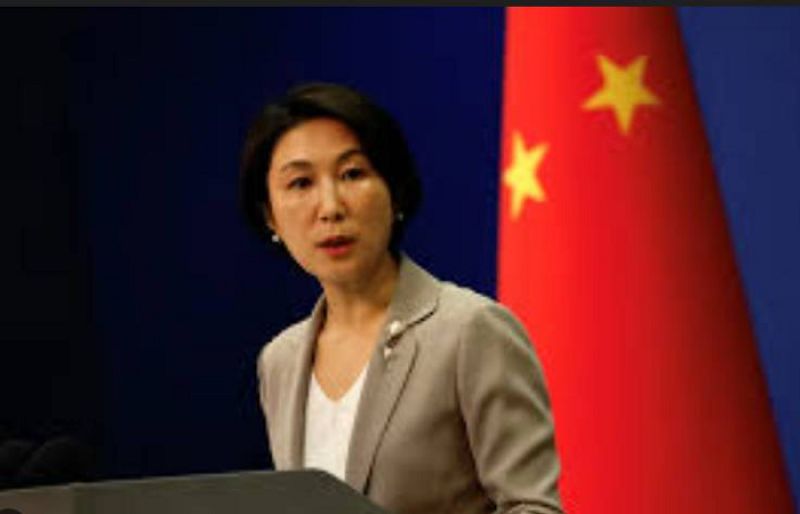
“We always oppose interference in other countries’ internal affairs,” foreign ministry spokeswoman Mao Ning told a regular news conference when asked about Trump’s comments.
“We call on all parties to do more things conducive to peace and stability in the Middle East,” she added.
Pluto takes 248 years to go around the Sun and it will complete its orbit in 2178. AI- generated
Pluto sits far out in the Solar System, small and dim, moving at a pace that barely fits human timelines. It was found in 1930, at a time when astronomy still relied on patient observation and photographic plates. For years, it carried the weighty title of ninth planet, even though it never quite behaved like the others. Its path is tilted. Its orbit is stretched. Its distance changes constantly. In 2006, that uneasy status ended when Pluto was reclassified as a dwarf planet. The decision upset many people, but it also pushed Pluto into sharper focus. Freed from labels, it became something stranger and perhaps more interesting. A cold world on the edge, still circling, still waiting.
Pluto will complete its first full orbit in 2178
The IAU Office of Astronomy for Education says Pluto lives in the Kuiper Belt, a wide region beyond Neptune filled with ice and rock. It does not follow a neat circular path. One orbit around the Sun takes 248 Earth years. Since its discovery, Pluto has not yet completed a single full loop. That will happen in 2178, long after the people who first spotted it are gone. For part of its journey, Pluto even moves closer to the Sun than Neptune. Nothing about its motion is straightforward. It drifts, pulls away, then returns, as if keeping its own time.
Pluto is different from other worlds
Pluto is small, but it is not simple. Its surface holds frozen nitrogen, methane, and carbon monoxide. One bright area, known as the Tombaugh Region, looks almost smooth compared to the rest of the planet. Pluto also has an atmosphere, though it is thin and fragile. When Pluto moves farther from the Sun, its atmosphere can freeze and fall back to the surface. It has five moons, with Charon being so large that the two bodies almost orbit each other. This pairing blurs the idea of what counts as a planet and what does not.
Pluto demoted to a dwarf planet
The change in Pluto’s status came from a new definition, not new behaviour. In 2006, astronomers agreed that a planet must clear its orbit of other objects. Pluto does not do this. It shares space with many Kuiper Belt neighbours. Other dwarf planets like Eris, Ceres, Makemake, and Haumea fit the same category. Pluto stands out mostly because it was once labelled differently, but scientifically, it is placed where it probably always belonged.
What have we learned from visiting Pluto
In 2015, NASA’s New Horizons spacecraft flew past Pluto and sent back detailed images. Mountains of ice appeared. Hazy layers filled the sky. The surface looked active, not frozen in time. These findings suggested Pluto still changes, even in deep cold. Studying Pluto helps scientists think about how the solar system formed and how distant worlds behave. Pluto does not offer clear answers. It offers clues, scattered and slow. And then it moves on, continuing its long, quiet orbit.
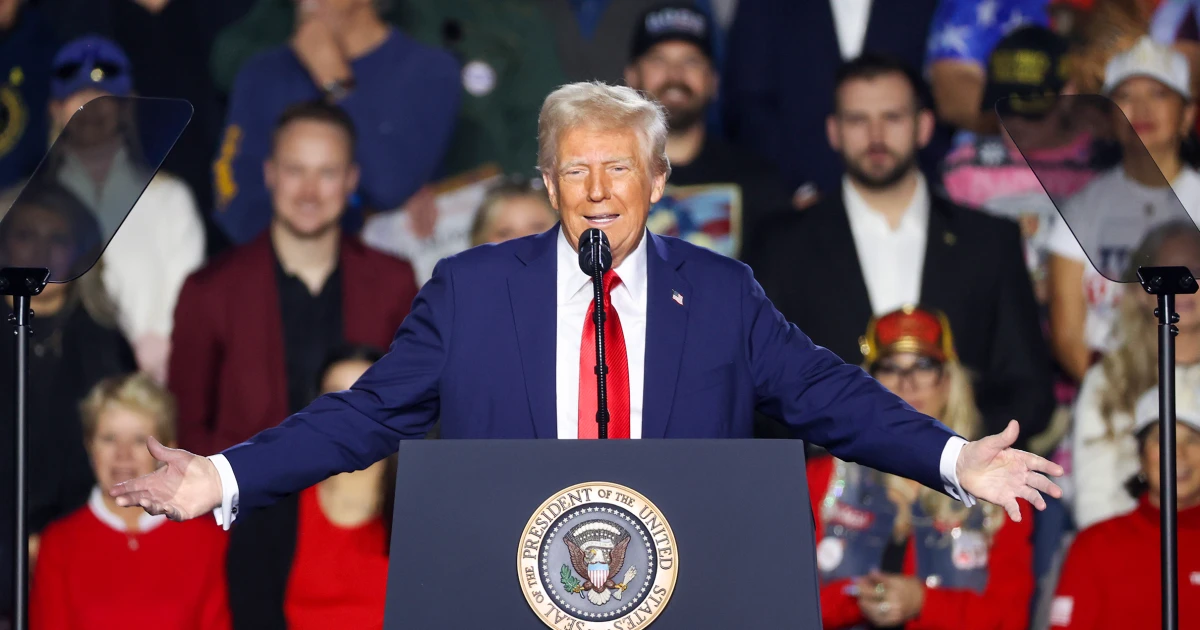
As President Donald Trump began his second decade at the center of American politics in 2025, a few wealthy donors took a step they hadn’t made in the previous 10 years: making major contributions to his super PAC, having never given such large donations before.
More than a dozen donors who gave at least $1 million to the Trump-affiliated MAGA Inc. super PAC after the president’s 2024 election win hadn’t previously given federal political donations to anyone approaching even 10% of that size, according to an NBC News analysis of Federal Election Commission records. For some, it was their first time sending a disclosed donation to any Trump-aligned political group, after he was a candidate in three straight presidential elections.
Those contributions came at a time when Trump’s super PAC wasn’t spending on elections, of course, but as Trump was governing or preparing to govern in the year-plus after he won. And while Trump maintains a large and loyal base of longtime supporters and donors, some of the brand-new financial backers have specific business interests in front of the federal government, important contracts with federal agencies or companies in sectors that could face dramatic shifts due to federal policies. Others had relatives facing years in federal prison.
It’s unclear if those people or others gave to other political groups in 2025. While MAGA Inc. filed a new report early due to its involvement in a December special election, other super PACs don’t have to detail their donors from the second half of 2025 until Jan. 31. And nonprofits and other groups give donors other avenues to contribute undisclosed amounts of money, too.
The list of people who gave $1 million or more to Trump for the first time in 2025 or late 2024 also includes a handful of America’s most prominent business leaders, including Dallas Cowboys owner Jerry Jones, Palantir CEO Alexander Karp, OpenAI President Greg Brockman and Todd Boehly, who co-owns several of the world’s most popular sports teams.
Federal campaign finance records show that Brockman, whose OpenAI is at the center of the artificial intelligence boom, gave $12.5 million to the Trump super PAC in September. His wife, Anna, appears to have also donated the same amount that same day. Brockman’s donation alone made him one of the top donors to the Trump-aligned super PAC in 2025.
The head of one of the top technology companies in the world and a Silicon Valley veteran, Brockman’s donation is a massive departure from the handful of smaller political gifts in his adult life, according to campaign finance records. Before this, FEC data shows his top donations were a handful of $2,700 contributions, to Democratic presidential nominee Hillary Clinton in 2016 and to then-Republican Rep. Patrick McHenry in 2018.
Brockman, like the other donors mentioned in this article, did not answer questions NBC News sent to his company. But he spoke about his newfound political giving in an end-of-year post on the social media platform X.
“This year, my wife Anna and I started getting involved politically, including through political contributions, reflecting support for policies that advance American innovation and constructive dialogue between government and the technology sector. These views are grounded in a belief that the United States must work closely with builders, researchers, and entrepreneurs to ensure AI is developed responsibly at home and that we remain globally competitive,” Brockman wrote.
He added that “it’s been great to see the president’s and his administration’s willingness to engage directly with the AI community and approach emerging technology with a growth-focused mindset.”
Another prominent tech CEO, Palantir’s Alexander Karp, made a $1 million donation to MAGA Inc. in December 2024, during the presidential transition. His previous largest donation in FEC records came in 2023: $90,000 to a fundraising committee affiliated with GOP Sen. John Cornyn of Texas.
While Karp has cut a slew of five-figure checks to politicians, largely Republicans, over the years, his check to MAGA Inc. (as well as his $1 million donation to Trump’s inaugural committee around the same time) were his largest disclosed political gifts by an order of magnitude.
William Ford, the New York-based CEO of the General Atlantic growth equity firm, had a similar political giving profile to Karp’s. He made a number of four- or five-figure donations over the years before sending $1.25 million to MAGA Inc. days before Trump’s inauguration in 2025.
General Atlantic’s website says Ford is on the board of ByteDance, the Chinese company that owns TikTok. A law passed by Congress and signed by then-President Joe Biden in 2024 forced ByteDance to divest its majority ownership of TikTok or be banned starting in 2025, but Trump delayed the implementation of the ban upon taking office. Last month, ByteDance agreed to sell a majority stake in the U.S. version of the app to an American joint venture.
Konstantin Sokolov, a private equity investor, went from making a handful of four-figure donations in the past to dropping more than $11 million into MAGA Inc.’s coffers in just one year.
Lynsi Snyder-Ellingson, the president of the burger chain In-N-Out, gave MAGA Inc. a $2 million contribution in April, in what appears to be her first disclosed personal political donation, according to FEC records, though In-N-Out has made political donations in the past.
And Jerry Jones, the high-profile owner of the Dallas Cowboys football team who had made one six-figure donation in 2016, made a $1 million donation to MAGA Inc. in early January, a donation that appears to be his largest on record. The Cowboys declined to elaborate on Jones’ donation.
A handful of medical executives became new Trump megadonors too, including two co-owners of Extremity Care LLC, a medical supply company in Pennsylvania, who each donated $2.5 million to MAGA Inc. In February.
There’s been a simmering debate for years over how Medicare covers wound care and special bandages, and The New York Times reported last summer that one of Extremity Care’s co-founders, Oliver Burckhardt, spoke to the president about the company at a dinner for major donors in March, a month before the administration delayed new regulations limiting coverage for those bandages.
The concept of presidential megadonors having professional or personal business in front of the administration is hardly new. And while MAGA Inc., as a super PAC, must disclose its donors, nonprofit groups that supported past presidential administrations have not needed to divulge their backers. For example, tax records show that Building Back Together, the nonprofit that supported Biden’s agenda, brought in almost $41 million in 2021 as the new administration was crafting sweeping legislation on Covid relief, taxes, infrastructure and other federal spending.
In the year-plus since Trump’s 2024 election win, two other new MAGA Inc. megadonors had family members facing significant legal jeopardy when they donated to the super PAC, and those family members eventually got leniency from the administration.
Isabela Herrera gave $2.5 million to MAGA Inc. on New Year’s Eve 2024. Months later, the Justice Department dropped the most serious charges against her father, a banker who had been accused of trying to bribe the former Puerto Rican governor, when he agreed to plead to a misdemeanor. (Alex Spiro, a lawyer for Herrera’s father, has said the plea deal was proof “the facts never supported the serious accusations.”)
Herrera donated another $1 million in late July, after that decision, according to MAGA Inc.’s most recent FEC report. She did not return a telephone call from NBC News about her donations.
Elizabeth Fago, a Republican donor from South Florida, had made a handful of five-figure political donations over the years, along with one $100,000 donation to the Republican National Committee in 2002. But her $1 million contribution to MAGA Inc. in April was her largest in FEC records.
Heineken’s chief executive, Dolf van den Brink, is stepping down from the Dutch brewing giant amid ongoing struggles with declining consumer demand and inflationary pressures.
His departure, after nearly six years at the helm of the company which also owns Amstel and Birra Moretti, is set for the end of May. The brewer stated that Mr Van den Brink and the chairman “concluded, in consultation with the Supervisory Board, that this is the right time to hand over his responsibilities”.
He will remain with the company in an advisory capacity for approximately eight months to support his successor.
The departure comes amid a weak backdrop for the firm, with softer demand for beer and tougher global economic conditions hitting sales in recent months.
In October, the group warned over profits as a result.
Heineken said sales volumes for 2025 were likely to be down on the previous year as shoppers also swallowed price inflation.
Nevertheless, the group saw some brighter performances in the UK, amid strong demand for its Cruzcampo lager and Irish stout brand Murphy’s.
Heineken’s Murphy’s Stout benefited from being sold in more pubs and bars in recent months (David Parry Media Assignments/PA) (PA Archive)
Mr Van den Brink said: “After six years as chief executive and more than 28 years at Heineken, I believe this is the right moment to transition leadership as the company prepares for the next phase of the EverGreen strategy.
“The past years have been marked by significant change as Heineken progressed through its transformation and has now reached a stage where a transition in leadership will best serve the company in further executing its long-term ambitions.
“Over the coming months, I remain fully focused on disciplined execution of our strategy and to ensure a smooth transition.”
Peter Wennink, chair of the group’s supervisory board, said: “The supervisory board is grateful to Dolf for his leadership and long-standing commitment to Heineken, including guiding the company through a demanding period of transformation, delivering on EverGreen 2025 strategy while navigating a challenging external environment.”
Dan Graziano is a senior NFL national reporter for ESPN, covering the entire league and breaking news. Dan also contributes to Get Up, NFL Live, SportsCenter, ESPN Radio, Sunday NFL Countdown and Fantasy Football Now. He is a New Jersey native who joined ESPN in 2011, and he is also the author of two published novels.
Ben Solak joined ESPN in 2024 as a national NFL analyst. He previously covered the NFL at The Ringer, Bleeding Green Nation and The Draft Network.
Jan 11, 2026, 11:40 PM ET
The NFL playoffs are officially underway. The Rams narrowly edged the Panthers, and the Bears took down the NFC North-rival Packers in a wild comeback. On Sunday, the Bills held off the Jaguars, the 49ers took down the defending champion Eagles and the Patriots won a low-scoring affair over the Chargers.
What are the main lessons and takeaways from each wild-card matchup, and what’s next for these teams? We asked national NFL reporter Dan Graziano and NFL analyst Ben Solak to help size up every matchup from the opening round and look forward from all angles. For each wild-card game, Solak is answering one big remaining question and Graziano is judging the legitimacy of one potential overreaction.
Let’s jump in, making sense of potential offensive changes for the Chargers and Eagles, the Bills’ Super Bowl window, the Jaguars’ rushing attack, Caleb Williams‘ growth and Bryce Young‘s future. And check back all weekend for more snap reactions as games happen.
‘The Patriots STILL haven’t beaten anybody good!’ Overreaction?
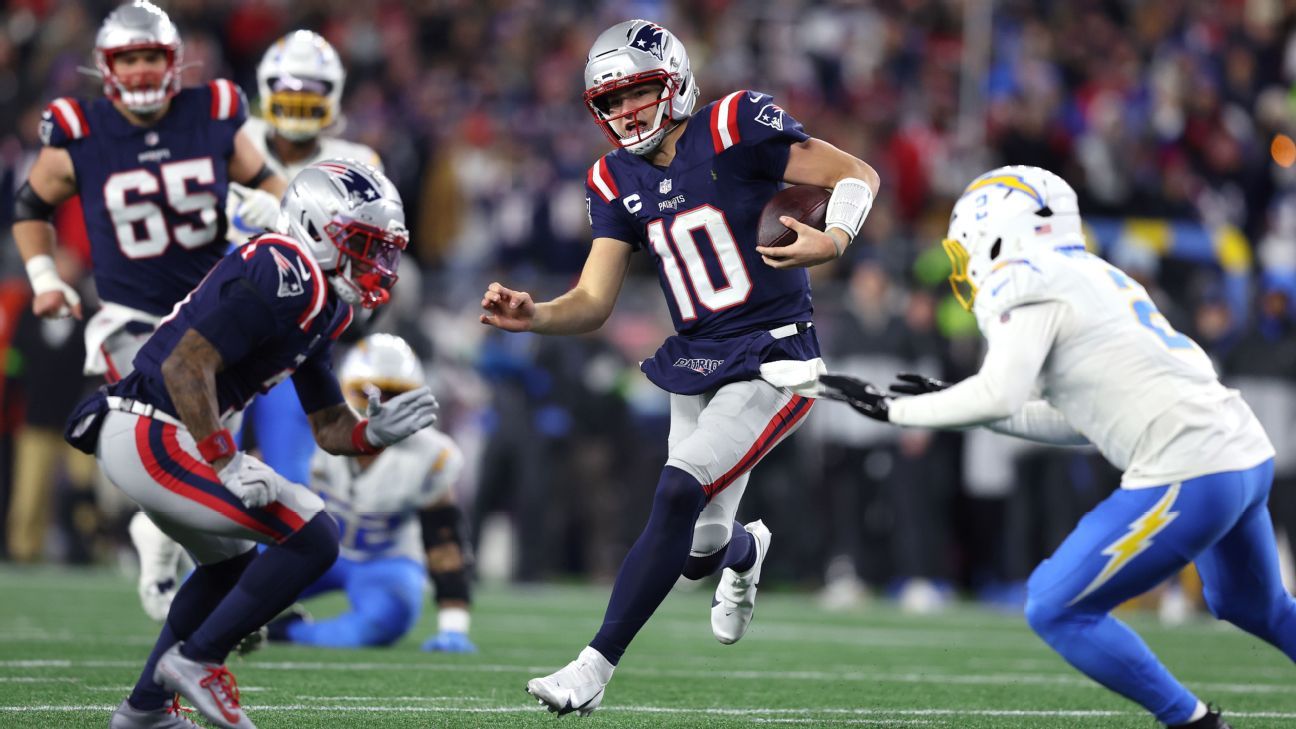
No, not an overreaction. Oh sure, they won. Which is all that matters at this point. But their performance did not scream “No. 2 seed/Super Bowl contender,” and it did little to tamp down the notion of them being an untested team that could struggle against better competition. The Chargers are now only the third team the Patriots have beaten this season that made the playoffs. One of the other two was the Panthers, who finished their season 8-10 after losing to the Rams on Saturday. And the final one was the Bills, to whom they also lost to later in the season.
The Patriots made some plays when they had to against the Chargers. They made their field goal attempts, which really matters in games that are touchdown-free until the final 10 minutes. But they were also sloppy with the ball and didn’t generate much of their usual exciting, explosive offense. The Chargers’ defense was one of the best at limiting explosive plays this season, so that might have been a part of it. But it would have been hard to watch this game and not think a team with a functional offense could have knocked out New England in the first round.
So what happens now? Did quarterback Drake Maye & Co. get their stinker out of the way early and survive it? Do they learn from this and play better next week against the Steelers or Texans? Or does this advanced level of competition do them in, the way their critics feared all season that it might?
We’ll have to wait a week for the answers. Coach Mike Vrabel has pressed every correct button in his first season as the Patriots’ coach, and MVP contender Maye has not let anything bother him. They’ll get either the Steelers and a chance to avenge a Week 3 loss in which they turned the ball over five times, or a Texans team that would be coming in on a 10-game win streak and features an even tougher defense than the Chargers.
This is the survive-and-advance time of the year, and the fact that the Patriots won ugly doesn’t disqualify them from winning it all. It just adds a little bit of strength to the arguments of those who continue to believe this team is playing over its head. — Graziano
Why haven’t the Justin Herbert-led Chargers won a playoff game?
Herbert has officially gone 0-3 in his first three postseason starts. He is only the fourth quarterback this century to go winless in his first three postseason starts, joining Andy Dalton, Matt Ryan and Matthew Stafford.
The general NFL consuming public is reasonably suspicious of Herbert among the modern quarterbacking elites, as he doesn’t have the wins that Patrick Mahomes or Josh Allen have, let alone QBs such as Jalen Hurts or Brock Purdy. Though Herbert didn’t play a great game Sunday, it’s hard to construct an argument that he lost the game for the Chargers.
The Chargers clearly need new interior offensive linemen. Though the injuries at tackle submarined the whole line, all three starters on the interior were the expected ones preseason: Bradley Bozeman at center, Zion Johnson at left guard and Mekhi Becton at right guard. Bozeman and Johnson have not been starting-caliber players for years, and Becton is only an average-level starter.
On 12 of Herbert’s 18 starts in 2025, the Chargers gave up a quick pressure rate (pressures in under 2.5 seconds) greater than 15%. The league average for quick pressure rate this season was 13.8%. The Chargers have also been consistently outschemed under coordinator Greg Roman. His usage of wonky personnel and diverse running schemes is valuable, but the Chargers haven’t delivered against playoff-caliber defenses. Though the offensive line was dreadful, few if any efforts were made to change the game around the offensive line. No screens, rollouts, trick plays. When was the last time the Chargers truly outschemed their opponent?
Of course, that doesn’t explain away the four-interception game against the Texans in the 2024 postseason, nor the collapse against the Jaguars in the 2022 postseason. Taking the collective weight of those three losses and calling Herbert a postseason disappointment is a fair assessment. But of the three quarterbacks he has joined (and, not for nothing, Peyton Manning would also qualify if we included the 1999 season), he’s clearly more of a Stafford character than a Dalton one.
Postseason success will come to Herbert when he plays for a more well-rounded team. As unsatisfying as it is to say, it’s the truth. — Solak
play
0:24
Patriots deck Herbert to force fumble
K’Lavon Chaisson drops Justin Herbert and forces a fumble.
‘The 49ers can make a legit Super Bowl run.’ Overreaction?
Yes, overreaction. The 49ers are an easy team to like and respect. They are TOUGH tough. They’ve been without their two best players on defense (linebacker Fred Warner and defensive end Nick Bosa) for months. They played more than a month without quarterback Brock Purdy. Tight end George Kittle was in and out of the lineup all season — and he’s now out for however long their season continues after tearing his Achilles in Philadelphia. It is a miracle that they’re one of the eight divisional-round teams, and they deserve admiration for the extent to which they’ve fashioned chicken salad out of … well, everything that has happened to them this year.
But the 49ers have to go play in Seattle, and we just saw that game last weekend. Playing the Seahawks at home with the division title and the NFC’s top seed on the line, the Niners put up a meager 173 yards of total offense in a 13-3 loss. Now, the Seahawks will be at home and coming off a bye, while the Niners will limp in after a physically brutal win over the defending Super Bowl champs.
Will it help that left tackle Trent Williams, who didn’t play in Week 18, is expected to play next week? Sure. But the 49ers still won’t have Kittle, and their run game isn’t very good without him. Running back Christian McCaffrey remains a playmaker for Purdy in the passing game, but they averaged 3.5 yards per rush attempt in Sunday’s win. That’s not out of character for the Niners, as they averaged 3.8 in the regular season (30th in the NFL). They’re limited in what they can do on offense, and the Seahawks have the kind of defense that can take advantage of that.
There was a point in the fourth quarter when I thought, “Whoever wins this game is getting smoked in the next round,” and I kind of stand by it. The 49ers are just about out of players, and the Eagles couldn’t do anything against a team that was just about out of players.
It was a fitting end for a 2025 Eagles team that was never as many believed it to be. Even as they marched down for the go-ahead score, it never felt like they would get it. A child born during the third quarter of this game could have figured out the Eagles were going to Dallas Goedert on the final play, and they did despite him being triple-covered. It was peak 2025 Eagles — no creativity, no juice. They weren’t a great team; they just won a lousy division. Meanwhile, the Seahawks won the only division in NFL history in which three teams won at least 12 games. Kudos to Kyle Shanahan, Robert Saleh and Co. for getting as far as they got with their roster crumbling around them. But it’s only getting tougher from here. — Graziano
play
0:28
49ers stop Eagles on 4th down to clinch victory
Eric Kendricks makes a great play on defense to stop the Eagles from scoring and secure the 49ers’ 23-19 win vs. the Eagles.
The lingering question: Is the Eagles’ offensive breakup inevitable?
There is no worse-kept secret in the NFL than the frustration internally and externally with the Eagles’ offensive coaching this season. Coordinator Kevin Patullo, promoted to replace the outgoing Kellen Moore, has been a longtime assistant for coach Nick Sirianni. But Patullo was evidently underqualified for his role. Wide receiver A.J. Brown was visibly upset to varying degrees throughout the year. Running back Saquon Barkley was not nearly as productive as he was last season. Quarterback Jalen Hurts continued to struggle with throwing to the middle of the field.
There will almost certainly be a new offensive coordinator in Philadelphia next season — the fifth in five years. But perhaps the greatest question is if anything else will be new in the Eagles’ offense? Brown, who went over 20 minutes of game clock in the second half without a target and was seen arguing with Sirianni on the sideline, was a rumored target for many teams at the trade deadline. His contract represents a substantial dead cap ($66.9 million) if he’s traded, and he would likely have to collaborate with the Eagles’ front office and finagle the finances if he demands a trade.
Other than Brown, tight end (and key red zone option) Dallas Goedert will be a free agent. At 31, he’ll want to cash in on what probably will be his final good years, and the Eagles don’t have a ton of cap space to pay him. But they also don’t have a good TE2 waiting in the wings. Right tackle Lane Johnson, a franchise mainstay for more than a decade, missed the end of the season because of a foot injury and will turn 36 this spring. How much longer does he want to play — and how effective would he be? It feels like a bigger change than a mere coordinator switch is on the horizon for Philadelphia’s offense as the Eagles look to get back on top of the NFC. — Solak
‘This really is Josh Allen‘s best chance to win the Super Bowl.’ Overreaction?
No, not an overreaction. This has been the #narrative since the preseason. The Bills were set up with one of the easiest-looking schedules. They’ve played one game all season outside of their home time zone. Patrick Mahomes missed the playoffs. Joe Burrow and Lamar Jackson missed the playoffs. Allen and the Bills, the theory went, had the road cleared for them and were in line to finally get over that postseason hump.
But a funny thing happened on the way to the coronation. This season’s Bills turned out to be … not as good as usual. The defense never really got it together and still looks very vulnerable. Jacksonville ran for over 100 yards outside the tackles in Sunday’s game, the first time a Jaguars team has done that in more than three years. Buffalo is incredibly banged-up and short-handed on both sides of the ball. It didn’t have an answer for Trevor Lawrence until the stunning tipped-ball interception that locked down Sunday’s win. The Bills will likely be a road underdog next weekend.
But what the Bills do have is guts and experience — and Allen, who plays with multiple simultaneous injuries and doesn’t have a star WR1 but somehow finds a way to do whatever it takes. Yes, even if that’s a 10-yard tush push on fourth-and-1 at the opponent’s 11-yard line with a minute left in a playoff game. The Bills have a winning culture, put in place by coach Sean McDermott and GM Brandon Beane, who both get a lot of grief for not getting over the hump. But they have built a postseason mainstay out of a team that — their critics may forget — had missed the playoffs 17 years in a row before it got there.
Jacksonville had the better team this season. Honestly, it looked very much as if it had the better team Sunday. But Allen and the Bills willed their way to a win, and they’re still going. There is still no Mahomes dragon to slay. There is no team left in the field with anywhere close to Buffalo’s postseason experience. This is the year without the dominant team. This is the NFL playoffs, where no one knows who’s supposed to win; where everyone’s favorite team is an NFC 5-seed that barely beat a sub-.500 team in the first round. There is no way we can rule out a Josh Allen Super Bowl run, even if this is far from the best team he has ever brought to the playoffs. Someone has to win this thing.
Find me a team that has been through more than the Bills. Find me a team that’s hungrier. Find me a team that’s more certain it can do what it takes to win games this time of year. Find me another team with Josh Allen. — Graziano
The lingering question: Why didn’t the Jaguars run it more?
About halfway through the third quarter, you, me and every armchair coach in America were wondering the same thing: Why weren’t the Jaguars relying on the running game? Jacksonville was gaining almost 10 yards per carry through their first seven drives, and the deficit was never greater than one score. Lawrence was not bad, but he was certainly erratic, and it felt like the Jaguars’ passing game might be one big mistake away from disaster.
Well, the Jags rolled down the field on their next two drives, scoring touchdowns on 11- and 10-play sequences that collectively took up 11 minutes of clock. The running game was sprinkled in, but it was Lawrence ripping throws with accuracy and aggression that created the scoring opportunities. During the back half of the regular season, the Jaguars had been an extremely one-dimensional offense, ranking fourth in success rate on dropbacks but 31st in success rate on designed runs. They were third in EPA per play on dropbacks but 30th in EPA per play on designed runs. It’s hard to stop dancing with the one that brought you, even when the Bills were so willing to play with light boxes and surrender ground against the run.
play
0:24
Travis Etienne Jr. shakes off a tackle attempt to put Jags back up late in 4th
Trevor Lawrence finds Travis Etienne Jr., who powers through a tackle attempt to give the Jaguars a lead with a little over four minutes remaining.
Even despite his shaky accuracy and first-quarter interception, Lawrence had a 48.5% dropback success rate (Allen was 42.1%) on the day. The Jaguars certainly could have run the ball more in an effort to shorten the game and minimize the number of second-half possessions Allen got. And I’d make a strong guess that coach Liam Coen and GM James Gladstone will invest serious offseason resources into bolstering the offensive line to ensure they have the sort of running game that they can trust all season long.
At the end of the day, the Jaguars lost a brutally close game to an excellent Bills team. As with all losing teams, there were plenty of little things they could have done better. But someone has to lose the ballgames, and Jacksonville — despite its truly excellent season and legitimate Year 1 leap under Coen — drew the shorter straw Sunday. — Solak
‘Caleb Williams is going to win the MVP award next season.’ Overreaction?
No, not an overreaction. The Bears fell behind 21-3 at halftime. Williams completed less than 50% of his passes and threw two interceptions. And despite pouring it on in the second half, the Bears were down 27-24 at the two-minute warning — at home as the No. 2 seed — to their oldest and most hated rival. It was all setting up for a massive Bears playoff letdown. Until they won.
Williams hit DJ Moore for a 25-yard go-ahead touchdown pass with 1:43 left to complete a furious comeback, and for the seventh time this season, Chicago won a game it trailed in the final two minutes of regulation. Williams can put you through the full spectrum of emotion on literally any snap. But you watched him pick up a fourth-and-8 and a third-and-10 on his way to the touchdown pass that cut the lead to three and turned the Soldier Field crowd all the way up to 11, and you probably thought something along the lines of, “Yeah, there’s something magic about this kid.” You watched him get the ball back after the Packers’ missed a field goal attempt with 2:56 to go and you thought, “Yeah, I kind of think he’s got this.”
Williams can make throws other quarterbacks can’t make, and he appears to be the kind of player whose pulse chills all the way out in the moments that send the pulses of others through the roof. That’s why even when it’s not going great, you feel as if there’s a good chance it eventually will. With Williams in his second season as an NFL quarterback and Ben Johnson in his first year as an NFL head coach, Chicago went 11-6, won a division out of which the other three teams made last season’s playoffs and still has a chance to win the whole thing. The Bears have young skill position talent all over the place around Williams. They can spend their offseason beefing up the defense, too. Is there a compelling reason to believe they’ll be worse next season than they were this season? Nope.
Williams should continue improving with this group around him and Johnson coaching him. If next season’s Bears win 12 or more, and Williams wins five or six of those in the final two minutes, he can be the darling of the MVP voting body. There are a lot of “ifs” there, sure, but this isn’t far-fetched. — Graziano
The lingering question: What’s wrong — and right — with Ben Johnson’s fourth-down decision-making?
The fourth-down haters were out in full force at the end of the first half, as Johnson’s Bears went 1-for-4 there, including a failed fourth-and-5 at their 32-yard line. This was a particularly aggressive call. The NFL Next Gen Stats model favored a punt, while the ESPN model very, very narrowly favored a “go.”
Should Johnson have gone for all those early fourth downs? I’m not sure. The defense felt as if it had no stops in it, but as evidenced by the second half, it did. It’s hard to know from the outside what goes into every decision.
What we can say confidently is that the Bears were making massive, easy mistakes on fourth down. The interception targeting Luther Burden III on fourth-and-6 came because the rookie receiver was confused at the line. The second-half fourth-and-1 failure in the red zone was a result of a blown pass protection. Even the fourth-and-5, way backed up, looked like a huge Burden catch-and-run … until the ball was tipped at the line.
play
0:27
Bears pull within 3 after TD to Zaccheaus
Caleb Williams throws a beautiful pass to Olamide Zaccheaus for the Bears touchdown, and the two-point conversion is good.
The story of the Bears’ win — and the Bears’ season — isn’t one of decisions; it’s one of execution. Chicago made a lot of sloppy mistakes on offense to start the season and improved later in the schedule. In this first playoff game for a young offense, the Bears made plenty of easy mistakes and improved as the game progressed. These cardiac Bears are living by the hair on their chinny chin chins, and its hard to win all of your playoff games that way. But they are doing exactly what a young team needs to do in the playoffs: settling down, fighting back and learning what it takes to win January football. — Solak
‘Bryce Young is going to get a top-10 QB contract this offseason.’ Overreaction?
Yes, overreaction. Look, massive respect to Young and the Panthers here. The Rams won, but Carolina made all of us who thought it could pull off an upset look good. Young was fearless and fun and everything teams want their quarterbacks to be in big moments. He was 21-for-40 for 264 yards and a touchdown pass, and he also ran for a touchdown. He hit Jalen Coker for the go-ahead TD with 2:39 to go, only to watch his defense inexplicably go into prevent mode with way too much time left, as the Rams marched down the field for the winning score. But Young did everything he could to try to keep his season — in which he threw for 3,011 yards, 23 touchdown passes and 11 interceptions for a division champion — alive. Yes, an 8-9 division champion, but still.
All of that said, it’s too soon for the Panthers to commit. If Young wants to sign a Sam Darnold or Baker Mayfield type of deal, go ahead and do that, Carolina. Well worth it, given the promise Young showed this season and the investment the team has already made in him. But if he wants Tua Tagovailoa money? Uh-uh.
Young is signed through 2026, and the Panthers have an option for 2027, which I feel extremely confident they will pick up because there’s no reason not to do so. They’ll basically have him for $30 million over the next two years if they do that. That’s a totally reasonable investment that would allow them to gather more data and decide whether he’s the franchise guy they believed him to be when they traded up to select him first in 2023. The fifth-year option (and the franchise tag, frankly, if they want to do that in 2028) afford the team the opportunity to make Young prove it again.
Young doesn’t seem like the kind of guy who needs the affirmation that would come with the long-term deal. I’m sure he knows a ton of things he can do better and looks forward to a chance to work on them. Heck, he’s better off waiting and having an even better year in 2026 and negotiating off that. Big hat tip to Young and the Panthers, but it’s still way early. — Graziano
The lingering question: What have the two games against the Panthers taught us about the Rams?
There are plenty of big differences between the Panthers’ regular-season upset of the Rams and their near postseason repeat. The connecting thread is how successfully the Panthers tested the Rams’ defensive backs in coverage. In the first matchup, it was with shot plays late in drives to score big touchdowns; in this game, the Panthers ripped off explosives to Tetairoa McMillan and Coker. The ball came out fast from Young, which helped neutralize the Rams’ pass rush, as Carolina wagered on its supersized receivers against the Rams’ smaller defensive backs. It generally worked.
Nickelback Quentin Lake returned to the starting lineup for the first time since Week 11, and the Panthers immediately tested him, too. Lake was targeted 10 times and allowed 7 receptions for 83 yards, as the big slot Coker in particular gave him trouble (5 catches on 5 targets for 62 yards). As the Rams advance, I’d expect more teams to test that secondary in 50-50 and contested situations, whether deep down the sideline or in the middle of the field. It isn’t a big group, and physical receivers give it challenges accordingly.
play
1:19
Should Rams be concerned after tight win over Panthers?
Alex Smith, Tedy Bruschi, Rex Ryan and Randy Moss discuss the Rams’ 34-31 wild-card win over the Panthers.
Of course, the Rams have struggled with turnovers against Carolina, as well: three takeaways in the first game, then one (plus the blocked punt) in the second game. In general, the Panthers do well discouraging the play-action pass and forcing Matthew Stafford to play more patiently. And when he plays patiently, he’s forced to scramble more or take more checkdowns — not his preferred style of play. — Solak
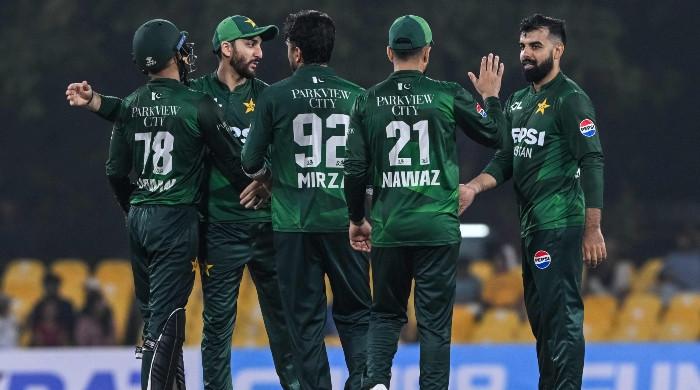
Pakistan’s Shadab Khan (R) celebrates with teammates after taking the wicket of Sri Lanka’s Dhananjaya de Silva during the first Twenty20 international cricket match between Sri Lanka and Pakistan at the Rangiri Dambulla International Stadium in Dambulla on January 7, 2026. — AFP
LAHORE: Final consultations on Pakistan’s squad for the International Cricket Council (ICC) Men’s T20 World Cup 2026 and the upcoming home T20I series against Australia are expected later this week.
Sources said white-ball head coach Mike Hesson is set to arrive in Lahore after Pakistan’s tour of Sri Lanka concludes.
Once the consultation process is completed, the squad will be announced with the approval of Pakistan Cricket Board (PCB) Chairman Mohsin Naqvi.
The PCB has already submitted a preliminary list of players to the ICC for the T20 World Cup 2026, which will be co-hosted by India and Sri Lanka.
However, it is understood that the PCB can make changes to the submitted list without ICC approval until January 31.
Members of the national T20I squad are returning home today after completing the series in Sri Lanka.
Head coach Mike Hesson and captain Salman Ali Agha are expected to hold final discussions with the selectors before the squad is finalised.
Sources say the probable players include captain Salman Ali Agha, Sahibzada Farhan, Saim Ayub, Fakhar Zaman, Shadab Khan, Babar Azam, Faheem Ashraf, Mohammad Nawaz, Usman Khan and Abrar Ahmed.
Other players under consideration are Shaheen Shah Afridi, Naseem Shah, Haris Rauf, Salman Mirza and Khawaja Nafay, while Abdul Samad, Mohammad Wasim Jr and Usman Tariq are likely to be named among the reserve players.
Meanwhile, the PCB has forwarded a proposed schedule for Australia’s T20 International tour of Pakistan to Cricket Australia. According to sources, two draft itineraries have been shared for a three-match T20I series.
The proposed plans suggest that the Australian team could arrive in Pakistan either on January 26 or 27, with departure scheduled for February 2 or 3.
The series is tentatively structured to include two back-to-back matches, followed by a one-day break before the third and final T20I.
It is understood that fixtures have been proposed for January 29 and 31, while the third and final match is expected to be played on February 1.
Pakistan, the 2009 champions, will begin their T20 World Cup 2026 campaign against the Netherlands on February 7 in Colombo.
They will face the USA on February 10, followed by clashes against arch-rivals India on February 15 and Namibia on February 18 in their final group-stage match.
It is pertinent to note that Pakistan will play all of their matches in Sri Lanka, starting with four Group A fixtures in Colombo, while Super Eight matches are scheduled to be held in Colombo and Kandy.
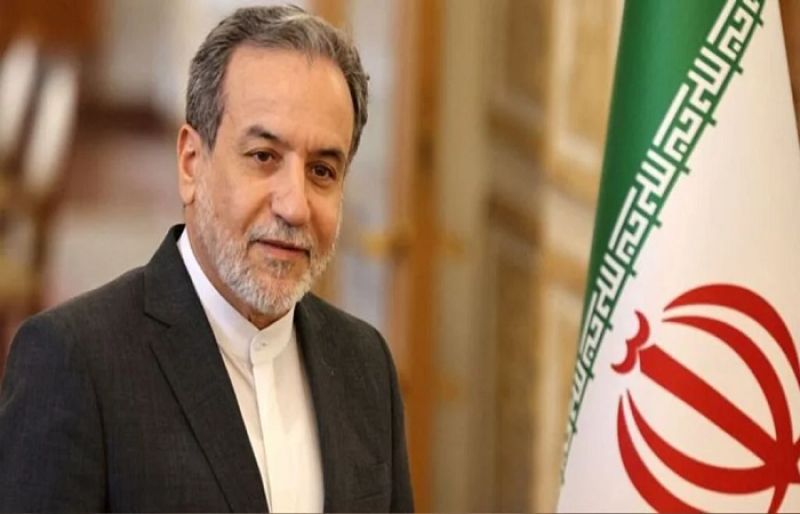
The situation in Iran is “under total control” after violence linked to protests spiked over the weekend, the country’s Foreign Minister Abbas Araqchi said on Monday via English translation.
“We are ready for war but also for dialogue,” Iranian Foreign Minister Abbas Araqchi said on Monday in a briefing to foreign ambassadors in Tehran via English translation.
He added that Trump’s warning against Tehran of action should protests turn bloody had motivated “terrorists” to target protesters and security forces in order to invite foreign intervention.
FM Araqchi’s response came after Trump said that he was considering potential military action against Iran, amid mounting mass anti-government protests in the country.
“They’re starting to, it looks like,” Trump said, when asked by reporters aboard Air Force One if Iran had crossed his previously stated red line of protesters being killed.
“We’re looking at it very seriously. The military is looking at it, and we’re looking at some very strong options. We’ll make a determination,” he said.
He also said that Iran’s leadership had called seeking “to negotiate” after his threats of military action.
“The leaders of Iran called” yesterday, Trump said, adding that “a meeting is being set up… They want to negotiate.”
However, Trump added that “we may have to act before a meeting.”
Meanwhile, China said on Monday it hopes the Iranian government and people would be able to overcome the current difficulties the country faces and maintain stability, referring to deadly protests taking place in the oil-rich Middle Eastern nation.
China opposes the use of force or the threat of it in international relations matters, a Chinese foreign ministry spokesperson said when responding to a media question about US President Donald Trump’s threat to intervene with military on behalf of the protesters.
“We have always opposed interference in other countries’ internal affairs and consistently advocated that the sovereignty and security of all nations should be fully protected by international law,” spokesperson Mao Ning said at a regular news briefing.
Trump to meet senior advisers
Trump was to meet with senior advisers on Tuesday to discuss options for Iran, a US official told Reuters on Sunday.
The Wall Street Journal had reported that options included military strikes, using secret cyber weapons, widening sanctions and providing online help to anti-government sources.
Earlier, Iranian Parliament Speaker Mohammad Baqer Qalibaf warned Washington against “a miscalculation.”
“Let us be clear: in the case of an attack on Iran, the occupied territories (Israel) as well as all US bases and ships will be our legitimate target,” said Qalibaf, a former commander in Iran’s elite Revolutionary Guards.
Iranian president calls for ‘national resistance march’
The Iranian government declared three days of national mourning for “martyrs” including members of the security forces killed in two weeks of protests, state television reported on Sunday.
The government described the fight against what it has termed “riots” as an “Iranian national resistance battle against America and the Zionist regime”, using the clerical leadership’s term for Israel, which the Islamic Republic does not recognise.
President Masoud Pezeshkian urged people to take part in a “national resistance march” of nationwide rallies on Monday to denounce the violence, which the government said was committed by “urban terrorist criminals”, state television reported.
Protests have swelled in recent days despite an internet blackout that has lasted more than 72 hours, according to monitor Netblocks.
Activists have warned that the shutdown is limiting the flow of information and that the actual toll risks being far higher.
Meanwhile, unrest in Iran has killed more than 500 people, a rights group said on Sunday.
According to its latest figures, from activists inside and outside Iran, the US-based rights group HRANA said it had verified the deaths of 490 protesters and 48 security personnel, with more than 10,600 people arrested in two weeks of unrest.
A farmer, stands beside his solar panels, installed to run a tube well, the motorised pump that tap groundwater, amid a rice field, in Muridke, Sheikhupura District on August 12, 2025. — Reuters
ABU DHABI: Pakistan has set a bold target to achieve 60% renewable energy in its power mix by 2030, as the country continues its rapid transition to cleaner, sustainable energy sources.
This was revealed by Prime Minister’s Coordinator on Climate Change Romina Khurshid Alam during her address at the 16th International Renewable Energy Agency (Irena) Assembly in Abu Dhabi.
Speaking on the occasion, Alam emphasised Pakistan’s swift rise as one of the fastest-growing solar markets globally, with 12 gigawatts of off-grid and over 6GW of net-metered solar capacity expected by the end of 2026.
She highlighted that renewable energy accounted for a record 53% of the country’s total electricity generation last fiscal year.
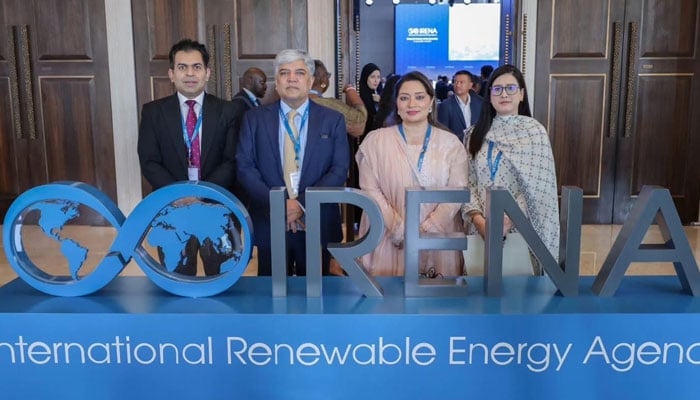
Coordinator on Climate Change Romina Khurshid Alam pictured at 16th IRENA Assembly in Abu Dhabi. — Reporter
The PM’s aide further spotlighted the country’s resilience in the face of climate challenges and said that the country’s distributed solar kits have played a pivotal role in restoring power and livelihoods in flood-affected areas, offering a model for climate-resilient recovery that could be replicated across other regions.
“Pakistan is not only committed to reducing its carbon footprint but also to creating practical solutions for climate adaptation. The distributed solar model has proven to be a lifeline for communities affected by extreme weather events,” Alam said.
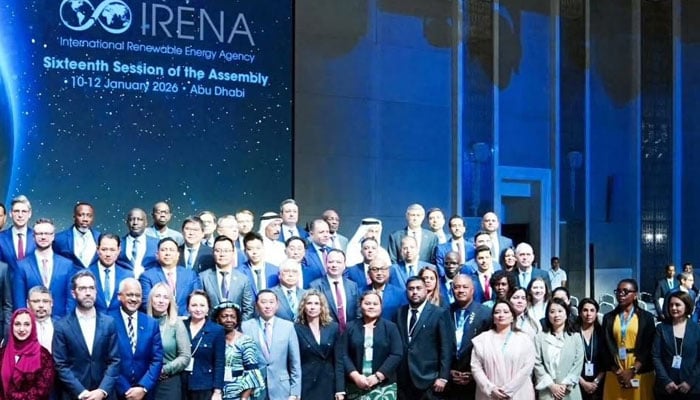
Coordinator on Climate Change Romina Khurshid Alam and other participants pose for a group picture at 16th IRENA Assembly in Abu Dhabi. — Reporter
The 16th IRENA Assembly, attended by over 1,500 delegates from 139 countries, also saw Pakistan being recognised for its progress in energy transition.
In her concluding remarks, she urged Irena and international stakeholders to increase concessional financing for developing nations, particularly for green technologies that are essential for achieving global climate goals.