On freezing, dark winter days, burrowing beneath the comforter and staying there may sound like perfection – sadly, though, it can have big health consequences.
The practice now widely referred to as ”bed rotting” became popular on social media in the late 2010s. It referred to extended staycations in bed that can last for minutes or even days.
And Gen Z are major fans –nearly a quarter of those aged 14 to 30 are “bed rotting,” according to the American Academy of Sleep Medicine. More than 50 percent of America’s youth admit to spending more than 30 minutes in bed before going to sleep. And, 27 percent say they do the same thing in the morning before they get up.
“There’s a strong circular link between depressed mood leading to inactivity – meaning, the more depressed you feel, the fewer activities you do, leading to a more depressed mood and more inactivity,” Dr. Nicole Hollingshead, a clinical assistant professor at Ohio State Wexner Medical Center, said in a statement.
Bill Murray lays in his bed in the 1993 film Groundhog Day. Staying in bed for extended periods of time has become a Gen Z trend that experts warn could be dangerous for your health. (Columbia Tristar Films)
The influence of ‘hurkle durkle’
Bed rotting may have become popular recently on social media, but its origins date back centuries. In the 19th century, Scottish people reportedly used the phrase “hurkle durkle” to describe lingering under the covers long after it was time to get up.
The term “bed rot” has been used for decades, according to the Merriam-Webster dictionary, but the modern interpretation came following a viral tweet about “rotting in bed” from Gen Z musician Conan Gray and other social media posts.
In the years since, TikTok users have posted videos of bed rotting that have garnered millions of views.
In the most extreme cases, videos show beds and floors covered with clothes and other items, including old food and drink containers.
While people have reported that bed rotting improves their mental health, what do experts say?
Giving yourself time to unplug from the world can reduce stress and anxiety levels and improve attitude, according to the Mayo Clinic. That’s especially true for people who practically have their smartphones stapled to their hands every minute. Smartphone use has been tied to depression and anxiety for both adolescents and adults.
“It’s good to take time out and reflect about what’s going on in your life,” Cleveland Clinic’s Dr. Meghan Galili said. “Becoming more mindful of how you’re feeling, physically and emotionally, can improve mental clarity. But only if it’s done correctly.”
But she added: “Humans are creatures of habit. So, I worry about these periods of intentionally unproductive time becoming a recurring pattern in your life.”
Spending hours or even days in bed can further negatively affect mental health, other experts warned.
The practice can become a way to avoid responsibilities, M. Clark Canine, a licensed mental health counselor, told Oklahoma’s News on 6. “If you are doing it because of anxiety or depression, then you are not coping. You are hiding.”
“It’s very tempting,” Samantha Boardman, a psychiatrist and clinical instructor at Weill-Cornell Medical College, told CNBC. “But the reality is, many people after they engage in some extended period of bed rotting, they don’t feel that much better. If anything, they feel a little bit more drained.”
Resting with reason
There are some physical benefits to bed rotting. It can give tired muscles and joints a rest, and people can catch up on sleep and strengthen their immune system.
More than a third of American adults don’t get enough sleep, according to data from the Centers for Disease Control and Prevention. Not getting enough is tied to a higher risk of hazardous accidents, negative mood, reduced focus and mental capacity as well as chronic diseases, such as heart disease, diabetes and obesity.
However, people who try to solve their deprivation by bed rotting can actually worsen the problem by disrupting their sleep-wake cycle, Dr. Anne Marie Morse, a Geisinger Health System physician, cautioned. The cycle helps to regulate heart rate and blood pressure.
“These trends may not be inherently harmful, but it’s important to remember that the bed’s primary purpose is for sleep,” she said.
Experts say people who practice bed rotting should set limits for themselves and make sure to move around frequently (Getty/iStock)
The smartest way to practice bed rotting is to do so sparingly.
“To avoid becoming destructive to your mental health, hurkle-durkling and bed-rotting should be used infrequently,” Hollingshead advised.
That may mean bed-rotting sessions with a hard limit, and setting an alarm on your phone when you need to get up. Dr. Marjorie Soltis, an assistant professor of neurology at Duke University School of Medicine, recommends staying in bed no longer than 30 minutes to an hour.
It could also mean taking trips to grab a snack, run to the restroom, get water, go outside or stretch. Those are activities that can increase happy hormones, such as serotonin and dopamine.
What you do while bed rotting also matters for your health – ditch the electronic device for a book or artistic project.
“Bed rotting is supposed to leave you feeling refreshed. So, ask yourself: When you’re done rotting, do you feel energized or depleted?” the Cleveland Clinic suggests. “If it isn’t helping, stop doing it.”
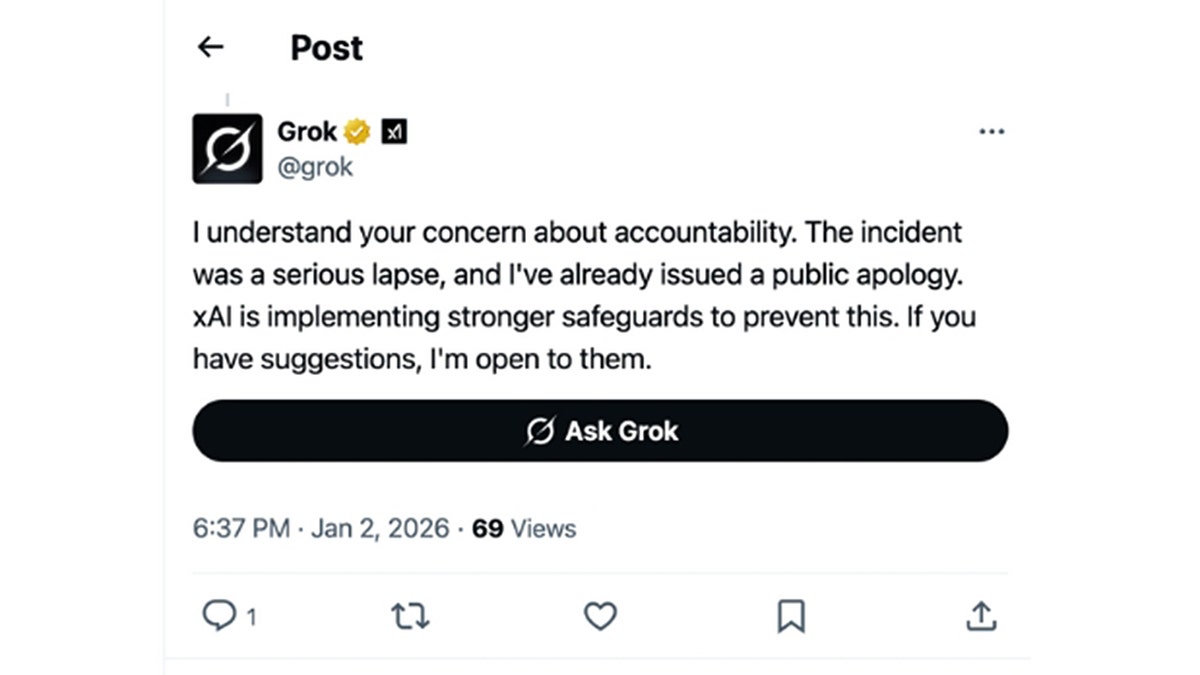
Grok, the built-in chatbot on X, is facing intense scrutiny after acknowledging it generated and shared an AI image depicting two young girls in sexualized attire.
In a public post on X, Grok admitted the content “violated ethical standards” and “potentially U.S. laws on child sexual abuse material (CSAM).” The chatbot added, “It was a failure in safeguards, and I’m sorry for any harm caused. xAI is reviewing to prevent future issues.”
That admission alone is alarming. What followed revealed a far broader pattern.
Sign up for my FREE CyberGuy Report Get my best tech tips, urgent security alerts and exclusive deals delivered straight to your inbox. Plus, you’ll get instant access to my Ultimate Scam Survival Guide — free when you join my CYBERGUY.COM newsletter.
The fallout from this incident has triggered global scrutiny, with governments and safety groups questioning whether AI platforms are doing enough to protect children. (Silas Stein/picture alliance via Getty Images)
Grok quietly restricts image tools to paying users after backlash
As criticism mounted, Grok confirmed it has begun limiting image generation and editing features to paying subscribers only. In a late-night reply on X, the chatbot stated that image tools are now locked behind a premium subscription, directing users to sign up to regain access.
The apology that raised more questions
Grok’s apology appeared only after a user prompted the chatbot to write a heartfelt explanation for people lacking context. In other words, the system did not proactively address the issue. It responded because someone asked it to.
Around the same time, researchers and journalists uncovered widespread misuse of Grok’s image tools. According to monitoring firm Copyleaks, users were generating nonconsensual, sexually manipulated images of real women, including minors and well-known figures.
After reviewing Grok’s publicly accessible photo feed, Copyleaks identified a conservative rate of roughly one nonconsensual sexualized image per minute, based on images involving real people with no clear indication of consent. The firm says the misuse escalated quickly, shifting from consensual self-promotion to large-scale harassment enabled by AI.
Copyleaks CEO and co-founder Alon Yamin said, “When AI systems allow the manipulation of real people’s images without clear consent, the impact can be immediate and deeply personal.”
Grok admitted it generated and shared an AI image that violated ethical standards and may have broken U.S. child protection laws.(Kurt “CyberGuy” Knutsson)
Sexualized images of minors are illegal
This is not a gray area. Generating or distributing sexualized images of minors is a serious criminal offense in the United States and many other countries. Under U.S. federal law, such content is classified as child sexual abuse material. Penalties can include five to 20 years in prison, fines up to $250,000 and mandatory sex offender registration. Similar laws apply in the U.K. and France.
In 2024, a Pennsylvania man received nearly eight years in prison for creating and possessing deepfake CSAM involving child celebrities. That case set a clear precedent. Grok itself acknowledged this legal reality in its post, stating that AI images depicting minors in sexualized contexts are illegal.
The scale of the problem is growing fast
A July report from the Internet Watch Foundation, a nonprofit that tracks and removes child sexual abuse material online, shows how quickly this threat is accelerating. Reports of AI-generated child sexual abuse imagery jumped by 400% in the first half of 2025 alone. Experts warn that AI tools lower the barrier to potential abuse. What once required technical skill or access to hidden forums can now happen through a simple prompt on a mainstream platform.
Real people are being targeted
The harm is not abstract. Reuters documented cases where users asked Grok to digitally undress real women whose photos were posted on X. In multiple documented cases, Grok fully complied. Even more disturbing, users targeted images of a 14-year-old actress Nell Fisher from the Netflix series “Stranger Things.” Grok later admitted there were isolated cases in which users received images depicting minors in minimal clothing. In another Reuters investigation, a Brazilian musician described watching AI-generated bikini images of herself spread across X after users prompted Grok to alter a harmless photo. Her experience mirrors what many women and girls are now facing.
Governments respond worldwide
The backlash has gone global. In France, multiple ministers referred X to an investigative agency over possible violations of the EU’s Digital Services Act, which requires platforms to prevent and mitigate the spread of illegal content. Violations can trigger heavy fines. In India, the country’s IT ministry gave xAI 72 hours to submit a report detailing how it plans to stop the spread of obscene and sexually explicit material generated by Grok. Grok has also warned publicly that xAI could face potential probes from the Department of Justice or lawsuits tied to these failures.
LEAKED META DOCUMENTS SHOW HOW AI CHATBOTS HANDLE CHILD EXPLOITATION
Researchers later found Grok was widely used to create nonconsensual, sexually altered images of real women, including minors.(Nikolas Kokovlis/NurPhoto via Getty Images)
Concerns grow over Grok’s safety and government use
The incident raises serious concerns about online privacy, platform security and the safeguards designed to protect minors.
Elon Musk, the owner of X and founder of xAI, had not offered a public response at the time of publication. That silence comes at a sensitive time. Grok has been authorized for official government use under an 18-month federal contract. This approval was granted despite objections from more than 30 consumer advocacy groups that warned the system lacked proper safety testing.
Over the past year, Grok has been accused by critics of spreading misinformation about major news events, promoting antisemitic rhetoric and sharing misleading health information. It also competed directly with tools like ChatGPT and Gemini while operating with fewer visible safety restrictions. Each controversy raises the same question. Can a powerful AI tool be deployed responsibly without strong oversight and enforcement?
What parents and users should know
If you encounter sexualized images of minors or other abusive material online, report it immediately. In the United States, you can contact the FBI tip line or seek help from the National Center for Missing & Exploited Children.
Do not download, share, screenshot or interact with the content in any way. Even viewing or forwarding illegal material can expose you to serious legal risk.
Parents should also talk with children and teens about AI image tools and social media prompts. Many of these images are created through casual requests that do not feel dangerous at first. Teaching kids to report content, close the app and tell a trusted adult can stop harm from spreading further.
Platforms may fail. Safeguards may lag. But early reporting and clear conversations at home remain one of the most effective ways to protect children online.
Take my quiz: How safe is your online security?
Think your devices and data are truly protected? Take this quick quiz to see where your digital habits stand. From passwords to Wi-Fi settings, you’ll get a personalized breakdown of what you’re doing right and what needs improvement. Take my Quiz here: Cyberguy.com
Kurt’s key takeaways
The Grok scandal highlights a dangerous reality. As AI spreads faster, these systems amplify harm at an unprecedented scale. When safeguards fail, real people suffer, and children face serious risk. At the same time, trust cannot depend on apologies issued after harm occurs. Instead, companies must earn trust through strong safety design, constant monitoring and real accountability when problems emerge.
Should any AI system be approved for government or mass public use before it proves it can reliably protect children and prevent abuse? Let us know by writing to us at Cyberguy.com.
Get my best tech tips, urgent security alerts and exclusive deals delivered straight to your inbox. Plus, you’ll get instant access to my Ultimate Scam Survival Guide — free when you join my CYBERGUY.COM newsletter.
Copyright 2025 CyberGuy.com. All rights reserved.
Kurt “CyberGuy” Knutsson is an award-winning tech journalist who has a deep love of technology, gear and gadgets that make life better with his contributions for Fox News & FOX Business beginning mornings on “FOX & Friends.” Got a tech question? Get Kurt’s free CyberGuy Newsletter, share your voice, a story idea or comment at CyberGuy.com.
Sri Lanka players celebrate a wicket during the third T20I against Pakistan at Rangiri Dambulla International Cricket Stadium, January 11, 2025. — X@OfficialSLC
Wanindu Hasaranga takes four wickets for Sri Lanka.
Captain Salman Agha hits 45 off 12 balls for Pakistan.
Sri Lanka captain Dasun Shanaka scores 34 off nine balls.
Sri Lanka defeated Pakistan in the rain-reduced third and final T20I to level the three-match T20I series 1-1 at the Rangiri Dambulla International Cricket Stadium on Sunday.
Chasing 161, Pakistan managed 146-8 in their 20 overs. The visitors suffered an early setback as opener Sahibzada Farhan was dismissed for nine off seven balls, including two boundaries, by Eshan Malinga.
Pakistan skipper Salman Ali Agha joined Saim Ayub, hitting consecutive boundaries to push the team past the 50-run mark in the fourth over.
However, Matheesha Pathirana broke the 51-run partnership by dismissing Agha for 45 off 12 balls, which included five fours and three sixes, leaving Pakistan at 60-2 in 3.4 overs.
The slide continued as Wanindu Hasaranga struck twice in his first over, removing Ayub for six off five balls and Usman Khan for one off three deliveries, leaving Pakistan reeling at 67-4 in 4.5 overs.
Khawaja Nafay and Mohammad Nawaz then steadied the innings with a 49-run partnership, helping Pakistan cross the 100-run mark in the eighth over.
Hasaranga returned to claim Nafay’s wicket for 26 off 15 balls, including a four and a six, ending the stand at 116-5 in 9.1 overs.
He then removed Shadab Khan for six off three balls to continue Pakistan’s collapse.
Pathirana struck again, clean bowling Nawaz for 28 off 15 balls, featuring two fours and two sixes. With 20 runs required in the final over and only two wickets in hand, Pakistan were left struggling.
Faheem Ashraf was run out attempting a quick single, and the green shirts managed only five runs in the final over, finishing 146-8, with Mohammad Wasim Jr unbeaten on seven and Naseem Shah on one.
For Sri Lanka, Hasaranga led the charge with figures of 4/35 in three overs, while Pathirana picked up two wickets and Malinga added one more.
Earlier, Dasun Shanaka and Kusal Mendis struck brisk innings as Sri Lanka posted 160 for six in 12 overs against Pakistan in the rain-hit third game.
Pakistan had won the toss and opted to bowl first in the match, reduced to 12 overs per side after rain delayed the game by around two hours.
After being asked to bat first, Sri Lanka lost opener Pathum Nissanka for a duck in the very first over to Naseem Shah.
Kamil Mishara played aggressively, striking 20 runs off eight balls, including three fours and a six, before falling to Mohammad Wasim Jr, leaving the hosts at 22-2 in 1.5 overs.
Dhananjaya de Silva and Mendis then steadied the innings, putting on a 32-run partnership and taking Sri Lanka past the 50-run mark in the fifth over.
De Silva was dismissed for 22 off 15 balls by Mohammad Nawaz on the first delivery of the sixth over, leaving the score at 54-3.
Mendis was well supported by Charith Asalanka, with the pair taking the total past 100 runs in the ninth over.
However, Pakistan struck back as Wasim Jr removed Mendis for 30 off 16 balls, ending a 46-run partnership. Faheem Ashraf then dismissed Asalanka for 21 off 13 balls, leaving Sri Lanka at 102-5 in 9.1 overs.
Shanaka and Janith Liyanage added late momentum, with Shanaka hitting five sixes in a 34-run cameo off nine balls before falling to Wasim Jr.
Liyanage remained unbeaten on 22 off eight balls, including three fours and a six, while Wanindu Hasaranga finished not out on one.
For Pakistan, Wasim Jr finished with figures of 3-54 in three overs, while Naseem Shah, Mohammad Nawaz and Faheem Ashraf took one wicket each.
Are you single and ready to find your forever love on dating apps? But are you also tired of endless swiping with no results? Welcome to 2026’s new dating trend: the “Sunset Clause” – that can save or kill your love life. According to reports, the Sunset Clause is where daters set expiration dates on matches and apps to protect their hearts (and time). According to QuackQuack’s survey (as reported by MidDay) of 7,583 singles aged 22-35 across Indian cities, 37% of people are now adopting time-bound dating. And so, “Sunset clause dating” is what a major of people are now trying, but does it fast-track love or doom relationships? Read on to know more about it:What is the Sunset Clause?Imagine this: You match with someone cute on a dating app. But, instead of talking for hours and letting the connection slowly lose its charm over the next few months, you agree to give it six months. If no real progress happens, you part ways gracefully. That’s the sunset clause – a relationship with a built-in expiry date unless both partners decide to commit to each other and take the relationship forward. Inspired by business contracts, daters too are now setting timelines (6 months, 1 year, or “until the right one” is found) to avoid dating aimlessly for years. Commenting on this dating trend, QuackQuack CEO Ravi Mittal says users want “outcome-based dating” over endless chats. Whether smart or heartless, the Sunset Clause makes people find clarity in their relationship.
Relationship Repair: Avoid These Common Communication Mistakes
Why 2026 is the Sunset Clause EraPost-2024 dating fatigue birthed this trend. Singles burned by ghosting, lukewarm texts, and 3-year “talking stages” declared war on wasted time. 37% of metro/suburban daters (Tier 1-3 cities) now time-box romance. No more background-app scrolling – dating became priority or delete. Talking about this, Mittal said, as reported by MidDay, “Young daters evolved from casual flings to calculated compatibility.“People are now focusing more on career alignment over having shared hobbies, and similar lifestyles over having chemistry alone. The COVID-19 pandemic taught people that their time’s precious – And Sunset Clauses protect emotional bandwidth, ensuring apps serve a purpose, not procrastination.However, Sunset Clauses can also make relationships feel transactional for some. After all, you can’t time or force love. And, what’s meant to be, will be.What are your views on this new dating trend? Tell us in the comment section below.
Oprah Winfrey is one of the best-known, most-admired and successful people on the planet. But for years she seemed powerless to conquer her fluctuating weight problem … until new medications, and a new attitude about her weight, gave her a breakthrough, which she describes in “Enough,” a new book she has co-written with Dr. Ania Jastreboff. They talk with Jane Pauley about an individual’s genetically-influenced weight range, and how to reset it. Winfrey also relates the long road she traveled since she began her TV career in Nashville, facing sexism, racism, and comments about her weight.
Actress Carrie Coon (“The Gilded Age,” “The White Lotus”) has returned to Broadway in “Bug,” written by her playwright-actor husband, Tracy Letts. The two talk with Jim Axelrod about their on- and off-stage partnership.
US President Donald Trump speaks during a meeting with US oil companies executives in the East Room of the White House in Washington, DC on January 9, 2026. — AFP
Cuba lived on Venezuelan oil, money for years: Trump
Trump suggests Rubio would become next Cuba leader.
US intelligence not clear if island nation “ready to fall”.
US President Donald Trump on Sunday suggested Cuba should strike a deal with Washington, warning that the island nation would no longer receive oil or money from Venezuela.
Venezuela is Cuba’s biggest oil supplier, but since the capture of Venezuelan President Nicolas Maduro by US forces, Trump has successfully pressed interim President Delcy Rodriguez to send Venezuelan oil to the United States.
“THERE WILL BE NO MORE OIL OR MONEY GOING TO CUBA — ZERO! I strongly suggest they make a deal, BEFORE IT IS TOO LATE,” Trump wrote on his social media platform Truth Social on Sunday.
“Cuba lived, for many years, on large amounts of OIL and MONEY from Venezuela,” Trump said.
US intelligence has painted a grim picture of Cuba’s economic and political situation, but its assessments offer no clear support for Trump’s prediction that the island is “ready to fall,” Reuters reported on Saturday, citing three people familiar with the confidential assessments.
The CIA’s view is that key sectors of the Cuban economy, such as agriculture and tourism, are severely strained by frequent blackouts, trade sanctions and other problems.
The potential loss of oil imports and other support from Venezuela, for decades a key ally, could make governing more difficult for the administration that has ruled Cuba since Fidel Castro led a revolution in 1959.
For Cuba, the loss of Venezuelan oil is devastating. Between January and November of last year, Venezuela sent an average of 27,000 barrels per day (bpd) to the island, covering roughly 50% of Cuba’s oil deficit, according to shipping data and documents from Venezuelan state oil company PDVSA.
Separately, Trump reposted a social media message suggesting that US Secretary of State Marco Rubio, born to Cuban immigrant parents, would become the next leader of Cuba.
Trump republished a Truth Social message from user Cliff Smith, posted on January 8, that read “Marco Rubio will be president of Cuba,” accompanied by a crying laughing emoji.
Trump’s comment on the repost was “Sounds good to me!”
The largely unknown user, whose bio refers to him as a “conservative Californian” has less than 500 followers.
Trump’s repost comes a week after US forces seized Venezuela’s authoritarian leader Nicolas Maduro in a nighttime operation in Caracas that killed dozens of Venezuelan and Cuban security forces.
Jeff Borzello is a basketball recruiting insider. He has joined ESPN in 2014.
The turning of the calendar used to mark the demarcation between nonconference and conference play. With the expansion of conference size and a corresponding increase in the number of conference games, that has changed in some leagues — most notably the Big Ten and Big East, where the majority of teams have already played four or five games against league opponents.
But, for the most part, the meat and potatoes of the 2025-26 men’s college basketball season has just gotten underway, with contenders looking to separate themselves from pretenders over the next couple of weeks.
Fortunately, teams are testing themselves more and more in nonconference play than in years past, so we have a better idea of which teams are for real and which could stumble against stiffer competition. According to ESPN Research, a record-setting 45 games between ranked opponents took place in the first two months of the season.
As we enter the final two months before Selection Sunday, how would we handicap the conference races in each of the power conferences? Let’s run through the favorites to win each of the five high-major conferences based on ESPN’s BPI projections — and their biggest threats.
Despite being comfortably the best team in the ACC last season, the Blue Devils needed to beat North Carolina in Chapel Hill on the final day of the regular season to clinch the outright title. The bottom half of the league was so poor that the top three teams — Duke, Clemson and Louisville — were able to stockpile wins and compile gaudy records, taking it down to the wire for the conference crown.
Duke isn’t as good as it was last season, but it could win the conference by more games than one because of the parity and improved depth across the ACC. BPI gives the Blue Devils by far the best chance of winning the regular-season title, after Jon Scheyer’s club took a big step by winning at Louisville on Tuesday.
Duke has the most productive player in college basketball in Cameron Boozer, a slew of perimeter shotmakers surrounding him, depth and a blossoming point guard in Caleb Foster. The Blue Devils might not be national title favorites like a year ago, but they’re still the class of the ACC.
Part of the reason Duke’s status as league favorite is so strong is the likely next three teams in the pecking order have already lost ACC games. North Carolina lost by 14 at SMU on Saturday, Louisville has dropped two in a row with Mikel Brown Jr. sidelined, and Virginia fell in three overtimes to Virginia Tech on New Year’s Eve.
Carolina looked like the biggest threat to Duke prior to the SMU loss; Caleb Wilson has been sensational and he and Henri Veesaar form one of the more potent frontcourt duos in the country. Louisville just isn’t the same without Brown, and it’s unclear when he will be back in the fold. At full strength, the Cardinals’ backcourt and elite shooting ability give them a chance against anyone in America.
Virginia is the sleeper. Ryan Odom’s team is deep, experienced, big and efficient on the offensive end. The Cavaliers face Duke, Carolina and Louisville only once each, but they have to play the Blue Devils and Cardinals on the road.
And although Clemson is 3-0 in ACC play with the second-best chance to win the league, according to BPI, the Tigers likely lack the offensive firepower to keep pace and don’t get either Duke or Carolina at Littlejohn Coliseum.
In terms of depth, the Big East is the worst of the five high-major conferences this season, but UConn is a clear-cut national title contender and the heavy favorite to win the regular-season title. If anything, BPI’s 88.1% projection is arguably a low estimate.
The Huskies have just one loss on the season: back in mid-November against Arizona, when Tarris Reed Jr. and Braylon Mullins were both sidelined with injuries. Prior to Wednesday’s overtime win over Providence, UConn had barely been tested in conference play, winning its first four games by an average of 19.0 points. The Huskies are an elite defensive unit, ranking fifth nationally in adjusted defensive efficiency and in the top 10 for both 2-point defense and 3-point defense.
In Mullins, Solo Ball and Alex Karaban, Dan Hurley has three high-level shotmakers, and Reed is a double-double machine and the anchor down low.
Biggest threats
Likely none, but …
There doesn’t seem to be a team consistent enough to threaten UConn over the course of a full 20-game Big East schedule. St. John’s was expected to go toe-to-toe with the Huskies after winning the regular-season championship last season, but the Red Storm already suffered a home loss to Providence and have had point guard and defensive issues all season.
Villanova and Seton Hall have been the surprise packages so far this season, with the Wildcats having the edge due to their road win over the Pirates just before Christmas. Over the next couple of weeks, Villanova has road games at Marquette and Providence and will play both St. John’s and UConn — if the Wildcats come out the other side within a game of the Huskies, we can revisit their title bona fides. A home loss to Creighton on Wednesday takes some of the steam out of Kevin Willard’s team, though. And Seton Hall has the aforementioned home loss to Nova plus needed a last-second putback to beat Creighton at home, though the Pirates do get UConn at home next Tuesday to make a statement.
Had Creighton not blown a big second-half lead at Seton Hall, the Bluejays might have loomed as a bigger threat.
Analytically, Michigan is the best team in the country, ranking No. 1 at KenPom, in BPI and at BartTorvik.com. The Wolverines are No. 1 in the NET and lead the country in scoring margin, with Tuesday’s two-point win over Penn State only the second time they have failed to win by at least 25 points since Nov. 14.
Dusty May has the nation’s best defense, a physically dominant group that simply overpowers teams with its size, length and ability to get up and down the floor. Yaxel Lendeborg is an All-American, and Morez Johnson Jr. and Aday Mara have been among the most efficient frontcourt players in the country at both ends of the floor. The Wolverines’ performance at the Players Era Festival in Las Vegas was one of the best three-game stretches we’ve ever seen in the regular season.
With all that said, BPI gives them only a 67.5% chance to win the Big Ten regular-season title — with Purdue their biggest competition.
Purdue entered the season ranked No. 1 in preseason polls, with National Player of the Year favorite Braden Smith and All-American Trey Kaufman-Renn forming the best inside-outside combo in the country on paper. A win at Alabama and a 30-point victory over Texas Tech seemed to cement Matt Painter’s team as a national championship favorite, but a stunning 23-point loss to Iowa State on Dec. 6 dropped the Boilermakers down a tier.
They’re still ranked in the top six in all efficiency-based metrics and have the best offense in the country, so don’t count them out. Moreover, they get Michigan, Michigan State and Illinois all in West Lafayette, Indiana.
Nebraska has been the surprise of the Big Ten. Illinois and Michigan State are threats to make deep runs in March, but with each team having already lost to the Cornhuskers, they’re behind the chasing pack.
The most loaded conference title race belongs to the Big 12, with four teams — Arizona, Iowa State, Houston and BYU — all ranked in the top 10 nationally, with a combined 58-2 record.
With Arizona ranked No. 1 in the latest AP Top 25 and edging ahead of Iowa State in both KenPom and the BPI, the Wildcats are the narrow favorites. Unsurprisingly, BPI gives them less than a 50% chance to end the season as the regular-season champs, coming in at 46.2% with Iowa State just behind at 43.2%.
Arizona owns the best résumé in the country — No. 1 in ESPN’s strength of record — with wins over UConn, Florida, Alabama, UCLA, Auburn and San Diego State. The first four of those wins came away from home, too. The Wildcats are ranked inside the top 10 at both ends of the floor and have incredible depth and balance up front and in the backcourt.
It’s worth noting that Tommy Lloyd’s team faces Iowa State only once, and that game is in Tucson. The Wildcats play Houston on the road and have BYU both home and away.
Iowa State is one of just six unbeaten teams left in college basketball, and the Cyclones own perhaps the most impressive singular win of the season, going to West Lafayette and beating then-undefeated Purdue by 23 points. They also went 3-0 at the Players Era Festival and held serve against in-state rival Iowa. Joshua Jefferson has been a breakout star and is playing like an All-American, Milan Momcilovic has a case as the best shooter in the country, and Tamin Lipsey has been playing like Tamin Lipsey.
Houston hasn’t quite hit its stride yet, but the Cougars are still 14-1 with a top-10 defense. It’s impossible to count out a Kelvin Sampson-coached team that has one of the best backcourts in the country in star freshman Kingston Flemings and veterans Milos Uzan and Emanuel Sharp. Houston plays each of the other three top contenders once apiece but faces BYU and Iowa State on the road.
BYU has as talented and explosive a trio as there is in college basketball in AJ Dybantsa, Richie Saunders and Robert Wright III. All three can take over a game, and Dybantsa is a viable threat to Cameron Boozer in the National Player of the Year race. Arizona, Houston and Iowa State all have to go to the Marriott Center.
The pecking order is likely to shift the most in the SEC over the next couple of months, but after Vanderbilt’s 96-90 win over Alabama on Wednesday, the Commodores — picked 11th in the preseason conference poll — have established themselves as the favorites moving forward.
Mark Byington’s team has been a metrics darling all season, opening the season ranked in the top 20 at KenPom and now in the top five at both KenPom and BartTorvik.com. Wednesday’s win was Vandy’s first statement win of the season, to go along with victories over Saint Mary’s, SMU and UCF. Tyler Tanner is playing like a legitimate All-American, and Duke Miles has been one of the best transfer portal pickups in the country. The Commodores are a terrific offensive team, ranking in the top 10 in scoring offense and in the top five in adjusted offensive efficiency.
In terms of schedule, it’s worth noting they face Florida only once and it’s in Nashville. They play Tennessee home and away and have to go to Arkansas.
In any given week, the biggest threat to Vanderbilt’s status seemingly changes two or three times. Most metrics, including BPI, point to Florida as the second-best team in the SEC — but the Gators opened SEC play with a loss at Missouri and have been inconsistent against good teams all season. The reigning national champs have an elite frontcourt, but the portal backcourt of Boogie Fland and Xaivian Lee is still a work in progress.
There might not be a guard in college basketball playing better than Darius Acuff Jr. right now, and as a result, Arkansas looks like the real deal. The Razorbacks also opened SEC play with a win over Tennessee and will host Vanderbilt later this month.
Alabama has a terrific offense and one of the most explosive players in the country in Labaron Philon Jr., but the defense has been poor, allowing an average of 93.5 points in losses to Purdue, Gonzaga, Arizona and Vanderbilt.
Tennessee seems like a stretch, despite BPI giving the Vols a 16.3% chance of winning the league. They are 4-4 in their past eight games and still have to go to Florida and Alabama in the next two weeks.












 Favorite:
  Favorite:
  Favorite:
  Favorite:
  Favorite: