Justin Herbert girlfriend reveals how he changed her life
Justin Herbert’s girlfriend Madison Beer has finally spoken about their relationship.
During her appearance on Call Her Daddy podcast, the pop star, known for her hit tracks like make you mine,Good in Goodbye, Reckless, and Baby, finally addressed dating the Chargers quarterback.
Speaking about her struggles with mental health, Beer told host Alex Cooper about how much support she has received from her partner.
Beer said, “I feel, like, taken care of in a way that I can break down and like I have someone to lean on.”
“And I think it’s important,” she noted.
Justin Herbert and Madison Beer have been linked since last summer after being spotted multiple times in Los Angeles. However, neither had previously confirmed their relationship.
On the professional fronts, Beer is preparing for the release of her new album Locket on January 16, 2026 and an international tour expected later this year.
Last, Beer was on tour in 2024, The Spinnin Tour, from February to September 2024, supporting her album Silence Between Songs.
Meanwhile, Herbert is focused on the NFL playoffs with the Chargers set to face the New England Patriots. It is pertinent to mention that the NFL star has played only two playoff games in his career, suffering losses from Jacksonville Jaguars and Houston Texans.
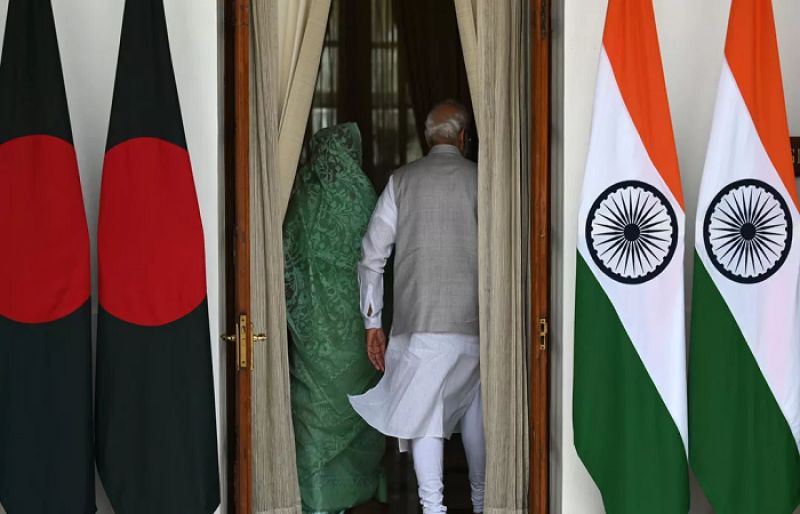
Relations between India and Bangladesh have deteriorated amid political upheaval in Dhaka and approaching elections in both countries, with tensions affecting diplomacy, trade, and sports.
The strain intensified after the 2024 removal of former Bangladeshi Prime Minister Sheikh Hasina, who had maintained close relations with New Delhi during her 15-year tenure.
Ms. Hasina was ousted following mass protests over alleged human rights abuses and later fled to India.
Bangladesh’s interim government and protest leaders have criticized India for refusing to extradite her to face legal proceedings at home.
India has raised objections to what it describes as hostile political statements in Bangladesh and incidents of violence against the country’s Hindu minority.
Last month, New Delhi suspended visa operations in the Bangladeshi city of Chattogram after protests targeted its diplomatic mission.
Bangladesh responded by pausing visa services for Indian citizens following demonstrations outside its mission in New Delhi.
The dispute expanded into sports after protests in India led cricket authorities to halt the participation of a Bangladeshi player in the Indian Premier League.
Bangladesh later announced it would not send its team to India for an upcoming Cricket World Cup and requested that its matches be moved to a neutral venue.
Domestic politics in both countries have contributed to the escalation, with nationalist rhetoric gaining prominence ahead of elections.
Bangladesh has scheduled parliamentary elections for February, with Ms. Hasina’s Awami League effectively barred from participating.
Several candidates have cited relations with India as a campaign issue.
Bangladesh’s interim government, led by Muhammad Yunus, has faced challenges in restoring law and order following the collapse of the previous administration.
Indian officials have rejected requests from Dhaka to extradite Ms. Hasina or prevent her political allies from operating from Indian territory.
Indian media outlets aligned with the government have accused Bangladesh’s interim leadership of failing to control extremist elements.
Bangladeshi authorities have rejected the allegations, stating that recent attacks have affected multiple communities and accusing Indian media of spreading misinformation.
The issue has also gained political traction in India’s border states of West Bengal and Assam, which are expected to hold elections in the coming months.
Political leaders have staged protests calling for a tougher stance toward Bangladesh.
Despite heightened tensions, analysts say both governments are seeking to prevent a prolonged breakdown in relations.
Indian officials have maintained contacts with multiple Bangladeshi political parties as part of efforts to manage the relationship during the transition period.
Observers say the outcome of upcoming elections in both countries will play a significant role in shaping the future of bilateral ties.
Actor and television personality Archana Puran Singh is known for her infectious laughter and effortless screen presence. But behind the familiar smile lies a year marked by relentless physical pain, one she chose to face quietly, without complaints, while continuing to work.
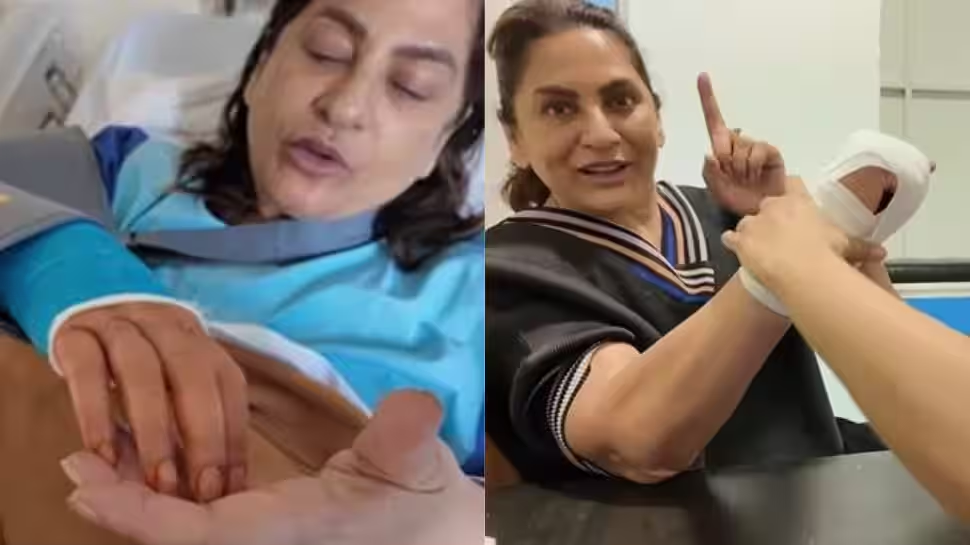
Currently vacationing in London with her family, Archana found herself overwhelmed with emotion when her son Ayushmaan Sethi surprised her with a heartfelt video tribute. What began as a warm family moment soon revealed a deeply personal truth: Archana has been battling a rare and debilitating condition called Complex Regional Pain Syndrome (CRPS).
“Her Hand Will Never Be The Same Again”
Add Zee News as a Preferred Source
In the video, Ayushmaan spoke candidly about his mother’s toughest year yet. He revealed that Archana suffered a serious injury after a fall on a film set in 2025, breaking her hand. While fractures typically heal with time, Archana’s recovery took a devastating turn when she developed CRPS, a chronic pain condition known for its intensity and unpredictability.
What is CRPS?
CRPS affects the nervous system and is characterised by severe, long-lasting pain that often feels disproportionate to the original injury. Patients can experience burning sensations, swelling, stiffness, sensitivity to touch, temperature changes, and reduced mobility. In many cases, the pain persists even after the initial injury has healed, making everyday tasks excruciating.
Dr Vivek Loomba, Pain Management Specialist, at Indian Spinal Injuries Centre in Vasant Kunj, Delhi, says, “CRPS primarily manifests in extremities, with the hand being a common site of occurrence. The symptoms encompass a spectrum of pain, sensory abnormalities, vasomotor disturbances, skin changes, edema, and motor alterations. The pain, described as burning, stinging, or tearing, has a distal predominance, and its association with autonomic nervous system changes is characteristic.”
He says, “The origins of CRPS are varied, often triggered by traumatic events such as injuries, fractures, or surgeries. Researchers hypothesize an inflammatory or immune reaction in both the central and peripheral nervous systems, leading to an exaggerated response to pain signals.”
Ayushmaan shared that doctors told the family her hand would never return to how it was before.
Shooting Through Pain, In Silence
Despite the diagnosis, Archana didn’t step back from work. Over the past year, she completed shoots for two to three films and a web series. In one particularly gruelling month, she worked for all 30 days straight, without complaining once.
Dr Vivek says, “CRPS is not a mental illness but a neurological condition. An early diagnosis and treatment offer better chances for symptom improvement, reassuring individuals that numerous treatment options are available to enhance their quality of life.”
For someone living with CRPS, long hours, repeated movement, and physical strain can worsen symptoms. Yet Archana pushed through, choosing professionalism over personal discomfort. Her son summed it up best when he said she taught him “the resilience it takes to be amazing.”
The Injury That Changed Her Life
Archana’s fall on set was captured in one of the family’s vlogs, where she could be heard crying out in pain. Crew members rushed her to the hospital, but the road to recovery was slow and deeply painful. Viewers later saw snippets of her struggle through follow-up vlogs, offering an unfiltered look at her healing process.
Finding Strength Beyond The Pain
At an age when many hesitate to reinvent themselves, Archana did the opposite. In her early 60s, she launched a YouTube channel, embraced vlogging, and continued to stay creatively active, all while dealing with chronic pain behind the scenes.
When she watched Ayushmaan’s tribute, Archana broke down on camera. Fighting back tears, she thanked her son for seeing her struggle and strength, saying she was immensely proud of him for always thinking of others before himself.
“These are happy tears,” she said, acknowledging how deeply her children move her.
Archana Puran Singh’s story is a powerful reminder that chronic illnesses don’t always look dramatic from the outside. Many live with constant pain while showing up for work, family, and life, smiling through it all. Her journey with CRPS brings attention to a condition that often goes undiagnosed or misunderstood. More importantly, it reframes resilience, not as loud bravery, but as the quiet decision to keep going, even when every step hurts.
(Views expressed by experts in the articles are their own; Zee News does not confirm or endorse the same. This article is meant for informational purposes only and must not be considered a substitute for advice provided by qualified medical professionals. Always seek the advice of your doctor with any questions about diabetes, weight loss, or other medical conditions.)
Golden Globes 2026: Julia Roberts gets standing ovation from audience
Although Julia Roberts didn’t win any trophies at the 2026 Golden Globes, she still received some love from the star-studded audience at the Beverly Hilton.
When the 58-year-old actress took the stage to present the award for Best Motion Picture – Musical or Comedy on Sunday, the majority of the audience rose to give Julia a standing ovation.
“Thank you,” said Julia. She also teased stragglers to rise, saying, “Yup. Everybody! Let’s go! In the back! Come on!”
The Pretty Woman star then called on attendee Emma Stone to join the ovation, stating, “She’s like, what the hell is going on right now?”
Regarding the sweet tribute, Julia said, “I’m gonna be impossible for at least a week. I appreciate that.”
“What a great night. What a beautiful night to be an artist,” she added. “This is 2026. We’re going straight to the top on this.”
Ultimately, the actress gave the trophy to Paul Thomas Anderson’s One Battle After Another.
It is pertinent to note that Julia was nominated for Best Actress in a Motion Picture for her performance in After the Hunt at the award ceremony, but ultimately lost to Jessie Buckley from Hamnet.
San Antonio has shut down its out-of-state abortion travel fund after a new Texas law that prohibits the use of public funds to cover abortions and a lawsuit from the state challenging the city’s fund.
City Council members last year approved $100,000 for its Reproductive Justice Fund to support abortion-related travel, prompting Texas Attorney General Ken Paxton to sue over allegations that the city was “transparently attempting to undermine and subvert Texas law and public policy.”
Paxton claimed victory in the lawsuit on Friday after the case was dismissed without a finding for either side.
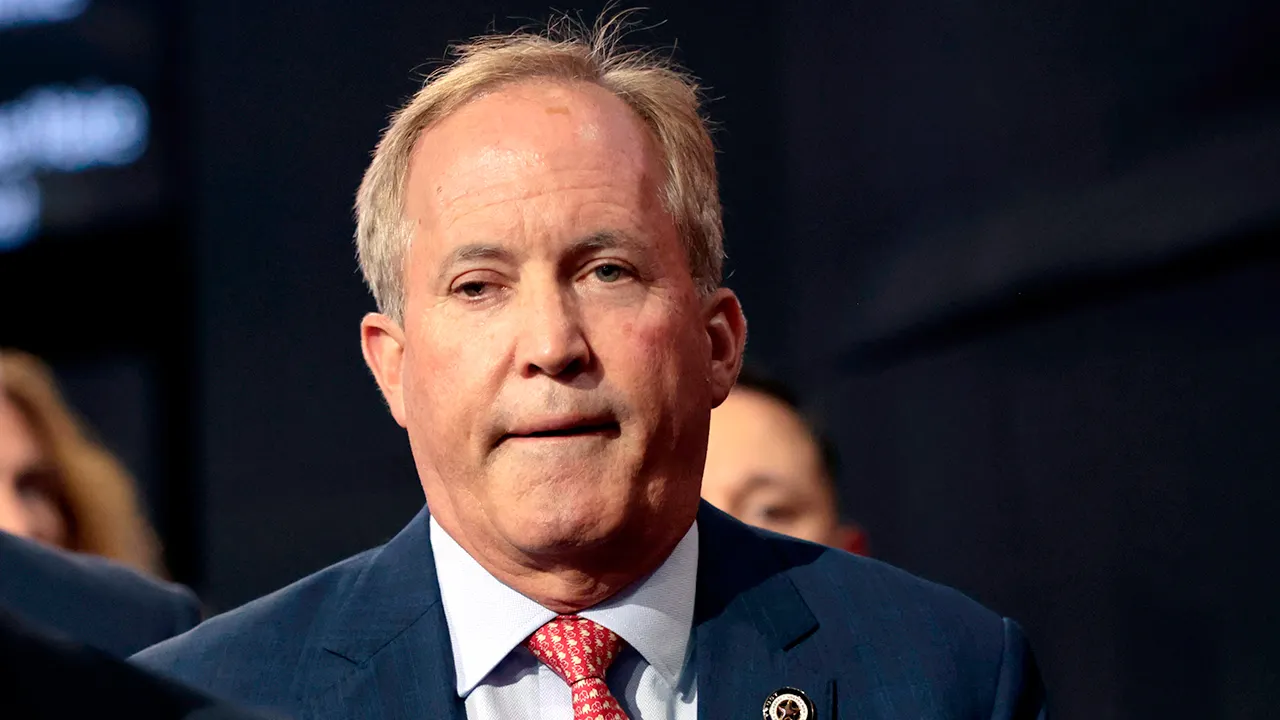
Texas Attorney General Ken Paxton claimed victory in the lawsuit after the case was dismissed without a finding for either side.(Hannah Beier/Bloomberg via Getty Images)
“Texas respects the sanctity of unborn life, and I will always do everything in my power to prevent radicals from manipulating the system to murder innocent babies,” Paxton said in a statement. “It is illegal for cities to fund abortion tourism with taxpayer funds. San Antonio’s unlawful attempt to cover the travel and other expenses for out-of-state abortions has now officially been defeated.”
But San Antonio’s city attorney argued that the city did nothing wrong and pushed back on Paxton’s claim that the state won the lawsuit.
“This litigation was both initiated and abandoned by the State of Texas,” the San Antonio city attorney’s office said in a statement to The Texas Tribune. “In other words, the City did not drop any claims; the State of Texas, through the Texas Office of the Attorney General, dropped its claims.”
Texas Attorney General Ken Paxton said he will continue opposing the use of public funds for abortion-related travel.(Justin Lane/Reuters)
Paxton’s lawsuit argued that the travel fund violates the gift clause of the Texas Constitution. The state’s 15th Court of Appeals sided with Paxton and granted a temporary injunction in June to block the city from disbursing the fund while the case moved forward.
Gov. Greg Abbott in August signed into law Senate Bill 33, which bans the use of public money to fund “logistical support” for abortion. The law also allows Texas residents to file a civil suit if they believe a city violated the law.
“The City believed the law, prior to the passage of SB 33, allowed the uses of the fund for out-of-state abortion travel that were discussed publicly,” the city attorney’s office said in its statement. “After SB 33 became law and no longer allowed those uses, the City did not proceed with the procurement of those specific uses—consistent with its intent all along that it would follow the law.”
Texas Gov. Greg Abbott signed a law in August that blocks cities from using public money to help cover travel or other costs related to abortion.(Antranik Tavitian/Reuters)
CLICK HERE TO DOWNLOAD THE FOX NEWS APP
The broader Reproductive Justice Fund remains, but it is restricted to non-abortion services such as home pregnancy tests, emergency contraception and STI testing.
The city of Austin also shut down its abortion travel fund after the law was signed. Austin had allocated $400,000 to its Reproductive Healthcare Logistics Fund in 2024 to help women traveling to other states for an abortion with funding for travel, food and lodging.
The scans revealed a villa within a defensive enclosure and an aisled building, possibly used as a barn or meeting hall
Archaeologists have discovered the largest Roman villa ever found in Wales in an “amazing discovery” which they say has the potential to be “Port Talbot’s Pompeii”.
“My eyes nearly popped out of my skull,” said project lead Dr Alex Langlands, after ground penetrating radar revealed the “huge structure” in Margam Country Park.
The location, in a historical deer park, is significant because the land has not been ploughed or built on, meaning the villa’s remains – less than a metre below the surface – look to be well preserved.
Those involved from Swansea University, Neath Port Talbot council and Margam Abbey Church said the discovery offered “unparalleled information about Wales’ national story”.
Scans showed a villa within a defensive enclosure and an aisled building
The team’s findings have been shared exclusively with BBC News ahead of an announcement.
Geophysical surveys of the park – a popular visitor attraction in south Wales – were commissioned as part of a wider project involving school pupils and the local community to learn more about the area’s heritage.
Scanning devices helped map potential archaeological features hidden underground.
The team “struck gold” – discovering the footprint of a 572 sq m Roman villa surrounded by fortifications.
Swansea University
Sophisticated scanning equipment was used to look for archaeological features hidden underground
Langlands, co-director of Swansea University’s Centre for Heritage Research and Training, described it as a “really impressive and prestigious” building, likely to have been finely decorated with statues and mosaic floors.
“We’ve got what looks to be a corridor villa with two wings and a veranda running along the front,” he explained.
“It’s around 43m (141ft) long and looks to have six main rooms [to the front] with two corridors leading to eight rooms at the rear.
“Almost certainly you’ve got a major local dignitary making themselves at home here,” he added.
“This would have been quite a busy place – the centre of a big agricultural estate and lots of people coming and going.”
As a standalone structure, it is the largest villa yet to have been discovered in Wales.
Most of the known Roman remains in Wales are from military camps and forts, while grandiose estates like this are less commonly found.
The discovery would force experts to “rewrite the way we think about south Wales in the Romano-British period”, Langlands said.
“This part of Wales isn’t some sort of borderland, the edge of empire – in fact there were buildings here just as sophisticated and as high status as those we get in the agricultural heartlands of southern England.”
It also showed that Margam – “a place that may even have lent its name to the historic region of Glamorgan” – was “one of the most important centres of power in Wales”.
Dr Alex Langlands heads up the Swansea University led ArchaeoMargam project
Christian Bird of TerraDat, the Welsh firm which carried out the surveys, said the images were “remarkably clear, identifying and mapping in 3D the villa structure, surrounding ditches and wider layout of the site”.
This includes a substantial 354 sq m aisled building to the south east of the villa – which the team believes was either some sort of barn or meeting hall.
Peter Urmston/English Heritage
This drawing shows how Lullingstone villa in Kent might have looked in the late 4th Century – Margam’s villa may have been similar
The villa’s exact location is being kept secret for now, over fears it could be targeted by rogue metal detectorists.
Langlands said conserving the site would be the first priority, before further survey work was carried out and funding sought for future excavation.
It had the potential to be “Port Talbot’s Pompeii”, he suggested, playfully referring to the ancient Roman city preserved by the eruption of Mount Vesuvius in 79 AD.
“A lot of archaeologists get wound up by connections made with Pompeii but I think it’s in part justified because of the levels of preservation here,” he said.
“We can see that in the survey data first and foremost, but we also know this has been a deer park for hundreds of years – it hasn’t been subject to the type of ploughing [that has damaged many other villa sites].
“There’s a really exciting prospect that we’ve got really good survival of archaeological evidence and the potential therefore to tell a huge amount about what life was like back in the first, second, third, fourth and maybe even into the 5th Century.”
Swansea University
Margam Country Park lies about two miles from the town of Port Talbot and its steelworks
Further details of the team’s findings will be shared at an open day at Margam Abbey Church on 17 January.
Margaret Jones, a retired teacher from Port Talbot with a keen interest in local history, booked a ticket and said she cannot wait to find out more.
“I’m still a bit shellshocked at the thought that this place where I played, where my children and grandchildren have played – that under our feet was this incredible house,” she said.
“It’s out of this world.”
She added that Port Talbot had been through “so many disappointments” in recent years with major job losses at the local steelworks, but “this will put us on the map… and we’ll be proud”.
Swansea University
School pupils helped excavate land to the west of Margam Abbey Church as part of the UK government-funded ArchaeoMargam project
The discovery was “just incredible” and “something we couldn’t dream of”, said Harriet Eaton who runs a Young Archaeologist Club as part of her role as Heritage Education Officer for Neath Port Talbot council.
“It would be fantastic if there was a community excavation here, [offering people] that hands on connection to the history unveiling beneath us,” she said.
Harriet Eaton had helped lead archaeological digs for school pupils as part of the ArchaeoMargam project in land to the west of Margam Abbey Church
Margam Country Park is owned and run by the local council and was already an important historical site, with an Iron Age hillfort, the remains of a 12th Century abbey and an impressive Victorian castle as just some of its attractions.
But the villa find helped fill “a big gap in our knowledge” about what was happening in Margam during the Roman period, according to park manager Michael Wynne.
“It’s a really unusual find this far west and of such a significant size – it will really add to our knowledge of Welsh and local history,” he said, and mean “more visitors to Margam Park, to Neath Port Talbot and to Wales generally”.
Malaysia and Indonesia blocked access to Elon Musk’s artificial intelligence chatbot Grok over the weekend due to concerns that the tool was being used to generate non-consensual, sexually explicit content.
Malaysian regulators ordered temporary restrictions be placed on the chatbot from xAI on Sunday following “repeated failures by X Corp” to address content risks associated with the AI tool.
The move came just one day after Indonesia stepped in to deny access temporarily to Grok due to similar concerns and summoned X officials on the matter, according to CNBC’s translation of the statement.
The Southeast Asian countries’ actions come after it was discovered that xAI’s Grok enabled users to easily generate and share images online that included non-consensual explicit images and child sexual abuse material (CSAM).
Musk’s company had recently updated its Grok Imagine features, enabling easier image generation from text-based prompts on the chatbot, which is integrated with Musk’s social media platform X, giving it a wide reach.
Amid escalating concerns over Grok’s content moderation policy, xAI announced it would limit image generation and editing features to paying subscribers, in an effort to patch safeguard gaps that permitted sexualized outputs.
Musk, responding on X, has also asserted that users creating illegal content via Grok would face consequences equivalent to uploading such material directly to the social media platform.
CNBC attempted to reach xAI for comment regarding the developments over the weekend. A press email for the company returned an automatic message that read “Legacy Media Lies.”
“Insufficient” responses
X’s public and private responses amid the controversy have failed to satisfy the concerns of regulators in Indonesia and Malaysia, as well as others that have launched probes.
The Malaysian Communications and Multimedia Commission said that X’s “insufficient” replies have “relied primarily on user-initiated reporting mechanisms and failed to address the inherent risks posed by the design and operation of the AI tool.”
“Accordingly, the restriction is imposed as a preventive and proportionate measure while legal and regulatory processes are ongoing,” the watchdog said. “Access to Grok will remain restricted until effective safeguards are implemented, particularly to prevent content involving women and children.”
Both Indonesia and Malaysia maintain strict anti-pornography laws, which ban the sharing of obscene and sexual content online more broadly.
Meanwhile, Indonesia’s Ministry of Communications and Digital Affairs Meutya Hafid said that “The government views non-consensual sexual deepfakes as a serious violation of human rights, dignity, and citizens’ security in the digital space.”
Hafid also categorized the misuse of AI for creating fake pornography as a form of “digital-based violence,” according to statements shared by state-owned Antara News.
Authorities in other jurisdictions, including the European Union, the UK, Brazil, and India, have also called for probes into Grok’s role in facilitating obscene and non-consensual deepfakes.
A UK watchdog, the Internet Watch Foundation, said last week that it’s analysts had discovered “criminal imagery” of children aged between 11 and 13 which appears to have been created using Grok.
Some Democratic lawmakers in Washington have recommended that app stores suspend the AI tool, at least until Musk implements major changes.
In an email to CNBC last week, the Department of Justice said in a statement that “it takes AI-generated child sex abuse material extremely seriously and will aggressively prosecute any producer or possessor of CSAM.”
“We continue to explore ways to optimize enforcement in this space to protect children and hold accountable individuals who exploit technology to harm our most vulnerable,” it added.
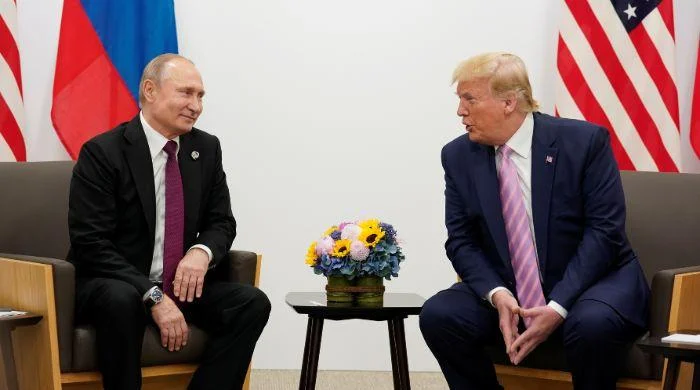
World on edge as US–Russia nuclear treaty set to end in 2026
The New Strategic Arms Reduction Treaty (New START) between the United States (U.S.) and Russia, signed in 2010, is set to expire on February 6, 2026. This has intensified worries about a possible arms race amid increasing geopolitical tensions.
New START limits the number of deployed strategic nuclear warheads and delivery systems maintained by each side. It also restricts each side from increasing their deployed warheads beyond the 1,550 mark.
New START is one of the eight such agreements between the two countries. In the wake of the Ukraine-Russia war and other geopolitical conflicts, if the treaty does not get renewed, it will mark the end to 50 years of nuclear arms control effects.
According to the Daily Mail, the U.S. and Russia collectively hold 87 percent of the world’s nuclear arsenal. If they decide to operate independently without mutual restrictions, this might start another arms race, prompting other great powers to expand their nuclear arsenals for security reasons.
Experts have warned that at times when both the Russian and U.S. governments are unpredictable, the absence of a vital global arms control framework can prove catastrophic for the world.
The treaty itself cannot be extended as it allowed only one extension, that was availed by Russian President Vladimir Putin and former U.S. President Joe Biden in 2021 for five years.
President Trump has however expressed hopes to formulate a new and “better” agreement. In an interview with New York Times on Wednesday, he said, “If it expires, it expires. We will just do a better agreement.”
Trump added that since China has the fastest growing nuclear arsenal it should also be included in the new treaty.
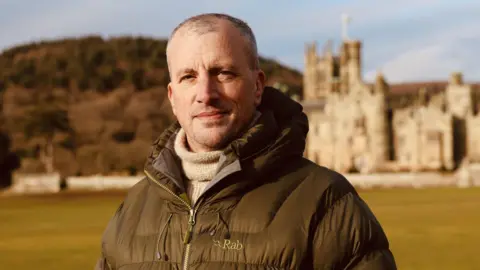
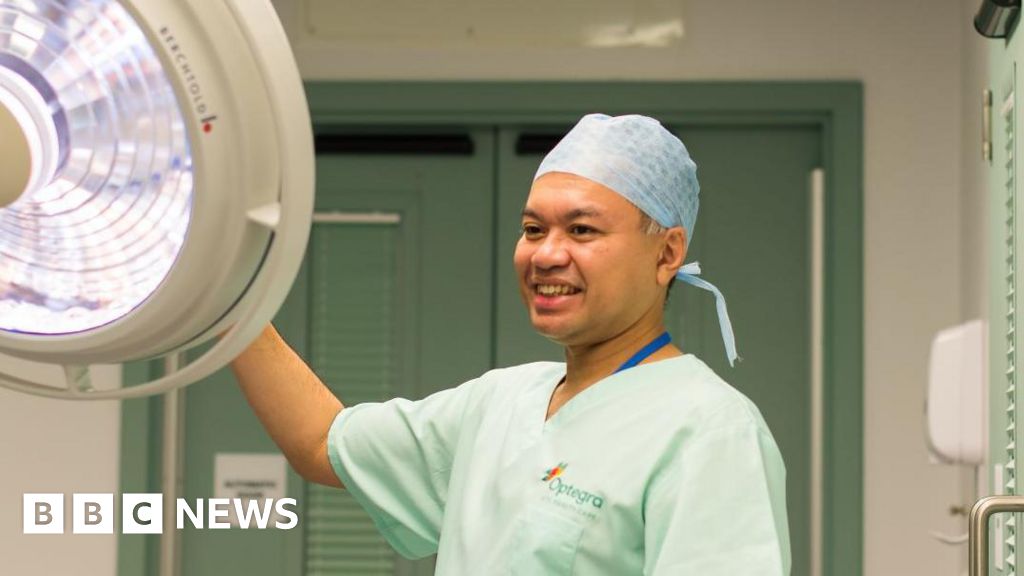
Dr Amir Hamid said he was “lucky” to get treated and recover quickly
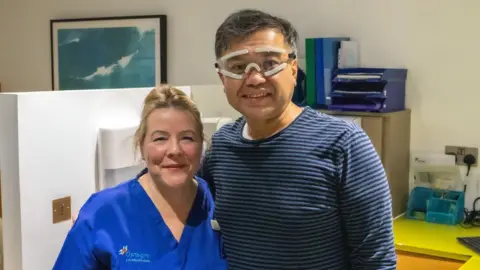
A London-based eye-surgeon has described how he himself underwent emergency surgery for a detached retina after a blind spot appeared in his right eye.
Dr Amir Hamid, 51, has performed more than 10,000 cataract and laser refractive surgeries in his career, but found himself in the patient’s chair last year with the condition, which could have left him with permanent vision loss.
Due to his knowledge and quick action, he was treated the same day and recovered within weeks.
Hamid is now urging people to look out for the signs of various eye conditions so they can be treated before they become irreversible.
“At the end of July, I noticed that there was a blank patch in the field of vision in my right eye and immediately realised that it could be the start of a detached retina,” Hamid said.
“I very quickly went down to the hospital to get my eyes tested and scanned…within three hours I was scheduled for surgery on my right eye,” he recalled.
“As an eye surgeon, it could have been a very stressful and frightening time, but I know some very good surgeons and I trusted the process.
Hamid, who is chief medical officer for eye hospital group Optegra, said he was “very lucky”, as his condition was slow moving.
“I had the treatment done in time to preserve all my sight and after a couple of weeks’ recovery I could go back to work.”
What is a detached retina?
Retinal detachment occurs when the thin layer at the back of the eye – the retina – becomes loose.
Symptoms include:
Floaters (dots and lines) or flashes of light in your eye
A dark “curtain” or shadow in your vision
Changes to your eyesight, such as blurred vision
Anyone experiencing these symptoms is advised to contact NHS 111.
A detached retina is usually caused by changes to the jelly inside the eye, which can happen as we age.
It is more likely to happen in people who are short-sighted or those who have had eye surgery, according to the NHS.
The condition needs to be treated quickly to prevent permanent damage to eyesight, the NHS says.
PA Media
Dr Hamid said he “trusted” the process of having eye surgery, which made it less stressful
As a side effect of his surgery, Hamid said he later developed a cataract in his right eye and chose to have it treated privately before it affected his vision.
However, NHS surgery was available in England to those with more advanced cataracts.
After his own experience, the father-of-two is urging people to be aware of any unusual eye symptoms and seek treatment quickly.
“You certainly shouldn’t ignore the symptoms of retinal detachment, because it can lead to loss of vision, and if it’s left too late, it may be difficult to recover that vision,” he said.
“With a cataract, you’ll start to notice your vision getting blurred for different distances and it’s important to get a diagnosis, because cataracts are completely reversible.
“Cataract surgery is one of the best procedures that has ever been created because it can actually make your vision better than it was before.”
Although the condition can be detected in routine eye tests, Hamid said he had seen a increase in patients with advanced cataracts since the pandemic.
“Remember that it’s always better to have a diagnosis, because then we know what it is and how we can fix it.
“The older population in particular are often more accepting of certain changes or compromises in their lifestyle and health, but that shouldn’t be the case because things can be done.”
Vets have told BBC Panorama they feel under increasing pressure to make money for the big companies that employ them – and worry about the costly financial impact on pet owners.
Prices charged by UK vets rose by 63% between 2016 and 2023, and the government’s competition regulator has questioned whether the pet-care market – as it stands – is giving customers value for money.
One anonymous vet, who works for the UK’s largest vet care provider, IVC Evidensia, said that the company has introduced a new monitoring system that could encourage vets to offer pet owners costly tests and treatment options.
A spokesperson for IVC told Panorama: “The group’s vets and vet nurses never prioritise revenue or transaction value over and above the welfare of the animal in their care.”
Over the past few months, hundreds of pet owners have contacted BBC Your Voice with concerns about vet bills.
One person said they had paid £5,600 for 18 hours of vet-care for their pet: “I would have paid anything to save him but felt afterwards we had been taken advantage of.”
Another described how their dog had undergone numerous blood tests and scans: “At the end of the treatment we were none the wiser about her illness and we were presented with a bill of £13,000.”
UK pet owners spent £6.3bn on vet and other pet-care services in 2024, according to the CMA
Mounting concerns over whether pet owners are receiving a fair deal prompted a formal investigation by government watchdog, the Competition and Markets Authority (CMA).
Whether vet companies are being transparent about the ownership of individual practices and whether pet owners have enough information about pricing
The concentration of vet practices and clinics in the hands of six companies – these now control 60% of the UK’s pet-care market
Whether this concentration has led to less market competition and allowed some vet care companies to make excess profits
‘Hitting targets’
A vet, who leads one of IVC’s surgeries (and who does not want to be identified because they fear they could lose their job), has shared a new internal document with Panorama. The document uses a colour code to compare the company’s UK-wide tests and treatment options and states that it is intended to help staff improve clinical care.
It lists key performance indicators in categories that include average sales per patient, X-rays, ultrasound and lab tests.
The vet is worried about the new policy: “We will have meetings every month, where one of the area teams will ask you how many blood tests, X-rays and ultrasounds you’re doing.”
If a category is marked in green on the chart, the clinic would be judged to be among the company’s top 25% of achievers in the UK.
A red mark, on the other hand, would mean the clinic was in the bottom 25%. If this happens, the vet says, it might be asked to come up with a plan of action.
The vet says this would create pressure to “upsell” services.
For instance, the vet says, under the new model, IVC would prefer any animal with suspected osteoarthritis to potentially be X-rayed. With sedation, that could add £700 to a bill.
While X-rays are sometimes necessary, the vet says, the signs of osteoarthritis – the thickening of joints, for instance – could be obvious to an experienced vet, who might prefer to prescribe a less expensive anti-inflammatory treatment.
“Vets shouldn’t have pressure to do an X-ray because it would play into whether they are getting green on the care framework for their clinic.”
IVC has told Panorama it is extremely proud of the work its clinical teams do and the data it collects is to “identify and close gaps in care for our patients”.
It says its vets have “clinical independence”, and that prioritising revenue over care would be against the Royal College of Veterinary Surgeons’ (RCVS) code and IVC policy.
The vet says a drive to increase revenue is undermining his profession.
Panorama spoke to more than 30 vets in total who are currently working, or have worked, for some of the large veterinary groups.
One recalls being told that not enough blood tests were being taken: “We were pushed to do more. I hated opening emails.”
Another says that when their small practice was sold to a large company, “it was crazy… It was all about hitting targets”.
Not all the big companies set targets or monitor staff in this way.
The high cost of treatment
UK pet owners spent £6.3bn on vet and other pet-care services in 2024 – equal to just over £365 per pet-owning household, according to the CMA.
However, most pet owners in the UK do not have insurance, and bills can leave less-well-off families feeling helpless when treatment is needed.
Many vets used not to display prices and pet owners often had no clear idea of what treatment would cost, but in the past two years that has improved, according to the CMA.
Rob Jones has told Panorama that when his family dog, Betty, fell ill during the autumn of 2024 they took her to an emergency treatment centre, Vets Now, and she underwent an operation that cost almost £5,000.
Twelve days later, Betty was still unwell, and Rob says he was advised that she could have a serious infection. He was told a diagnosis – and another operation – would cost between £5,000-£8,000.
Betty’s owners were told an operation on her would cost £12,000
However, on the morning of the operation, Rob was told this price had risen to £12,000. When he complained, he was quoted a new figure – £10,000.
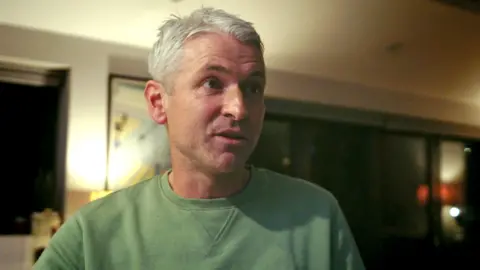
“That was the absolute point where I lost faith in them,” he says. “It was like, I don’t believe that you’ve got our interests or Betty’s interests at heart.”
The family decided to put Betty to sleep.
Rob did not know at the time that both his local vet, and the emergency centre, branded Vets Now, where Betty was treated, were both owned by the same company – IVC.
He was happy with the treatment but complained about the sudden price increase and later received an apology from Vets Now. It offered him £3,755.59 as a “goodwill gesture”.
Rob Jones says he lost faith in the vets treating his pet dog Betty
Vets Now told us its staff care passionately for the animals they treat: “In complex cases, prices can vary depending on what the vet discovers during a consultation, during the treatment, and depending on how the patient responds.
“We have reviewed our processes and implemented a number of changes to ensure that conversations about pricing are as clear as possible.”
Value for money?
Independent vet practices have been a popular acquisition for corporate investors in recent years, according to Dr David Reader from the University of Glasgow. He has made a detailed study of the industry.
Pet care has been seen as attractive, he says, because of the opportunities “to find efficiencies, to consolidate, set up regional hubs, but also to maximise profits”.
Six large veterinary groups (sometimes referred to as LVGs) now control 60% of the UK pet care market – up from 10% a decade ago, according to the CMA.
They are:
Linnaeus, which owns 180 practices
Medivet, which has 363
Vet Partners with 375 practices
CVS Group, which has 387 practices
Pets at Home, which has 445 practices under the name Vets for Pets
IVC Evidensia, which has 900 practices
When the CMA announced its provisional findings last autumn, it said there was not enough competition or informed choice in the market. It estimated the combined cost of this to UK pet owners amounted to £900m between 2020-2024.
Corporate vets dispute the £900m figure.
They say their prices are competitive and made freely available, and reflect their huge investment in the industry, not to mention rising costs, particularly of drugs.
The corporate vets also say customers value their services highly and that they comply with the RCVS guidelines.
A CMA survey suggests pet owners are happy with the service they receive from vets
A CMA survey suggests pet owners are happy with their vets – both corporate and independent – when it comes to quality of service.
But, with the exception of Pets at Home, customer satisfaction on cost is much lower for the big companies.
“I think that large veterinary corporations, particularly where they’re owned by private equity companies, are more concerned about profits than professionals who own veterinary businesses,” says Suzy Hudson-Cooke from the British Veterinary Union, which is part of Unite.
Proposals for change
The CMA’s final report on the vet industry is expected by the spring but no date has been set for publication.
Companies would have to reveal if vet practices were part of a chain, and whether they had business connections with hospitals, out-of-hours surgeries, online pharmacies and even crematoria.
IVC, CVS and Vet Partners all have connected businesses and would have to be more transparent about their services in the future.
Pets at Home does not buy practices – it works in partnership with individual vets, as does Medivet. These companies have consistently made clear in their branding who owns their practices.
The big companies say they support moves to make the industry more transparent so long as they don’t put too high a burden on vets.
David Reader says the CMA proposals could have gone further.
“There’s good reason to think that once this investigation is concluded, some of the larger veterinary groups will continue with their acquisition strategies.”
The CMA says its proposals would “improve competition by helping pet owners choose the right vet, the right treatment, and the right way to buy medicine – without confusion or unnecessary cost”.
For Rob Jones, however, it is probably too late.
“I honestly wouldn’t get another pet,” he says. “I think it’s so expensive now and the risk financially is so great.”