Home Blog Page 2959

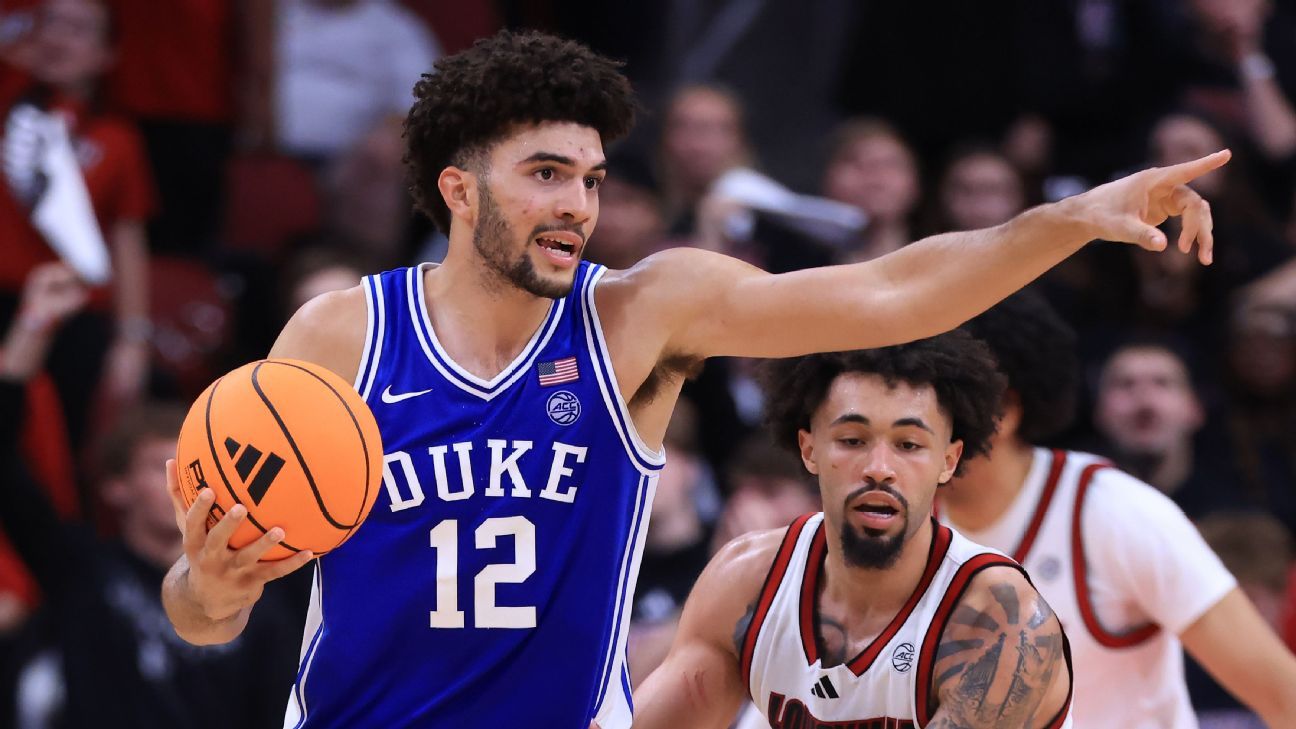
Reranking men’s college basketball Freshman of the Year contenders

0
Reranking men's college basketball Freshman of the Year contenders

The talent of this freshman class was one of the biggest storylines heading into the 2025-26 men’s college basketball season. The group has lived up to the hype so far and is showing no sign of slowing down.

According to ESPN Research, the top 10 recruits in the 2025 SC Next 100 rankings were averaging 17.8 points entering 2026 — the most since ESPN’s recruiting database started in 2007.

Most of those players will be found in our updated freshman rankings below, but there are two you won’t find in this week’s edition: Kansas’ Darryn Peterson and Louisville’s Mikel Brown Jr. Peterson still doesn’t meet our threshold of having played in 50% of his team’s games, while Brown has missed the past five games with a back injury and had been inconsistent the previous few weeks.

With conference play in full swing, some of these players could hit the “freshman wall.” But for now, we’re looking at an incredibly deep crop of newcomers that extends well beyond the 10 names below.


Previous rank: 1

Biggest performance so far: 35 points, 9 rebounds, 3 assists vs. Arkansas in Chicago on Nov. 27

Boozer remains No. 1 as he chases history with his prolific output. In 2002, Dean Oliver wrote “Basketball on Paper,” the ultimate guidebook for a generation of basketball analytics experts. Part of that manual included the offensive rating metric, which does more to identify a player’s individual contribution beyond the traditional points/rebounds/assists numbers. The average offensive rating for the last five National Player of the Year winners, a group that includes Cooper Flagg, is 125.2 — not far below Nuggets star Nikola Jokic‘s mark of 128.0. And, well, Boozer has an offensive rating of 134.3. He’s in a league of his own. — Myron Medcalf


Previous rank: 2

Biggest performance so far: 28 points, 9 rebounds, 6 assists vs. Clemson in New York City on Dec. 9

Dybantsa narrowed the gap between himself and Boozer considerably after putting together one of the most impressive stretches of basketball we’ve seen from a freshman. In December, Dybantsa averaged 27.8 points, 8.0 rebounds, 5.7 assists and 2.3 steals while shooting nearly 66% from the field. He had two 30-point efforts plus 28 points, 9 rebounds and 6 assists against Clemson, with the vast majority coming in the second half of that comeback. Dybantsa then backed that up with 24 points and eight rebounds in a win over Kansas State in his first Big 12 game this past Saturday. — Jeff Borzello


Previous rank: 3

Biggest performance so far: 24 points, 7 rebounds, 4 assists vs. Kansas on Nov. 7

North Carolina’s 97-83 loss at SMU on Saturday not only ended the Tar Heels’ seven-game winning streak, it also ended a streak for Wilson. He had scored at least 20 points and grabbed at least eight rebounds in six consecutive games. Against the Mustangs? He finished with only 13 points, 7 rebounds, 4 assists and 2 steals. That’s also a sign of the elevated expectations he faces as the young star of a North Carolina team in Hubert Davis’ bounce-back season. A near double-double is considered to be subpar based on the way the projected NBA draft lottery pick has played to date. — Medcalf


Previous rank: 4

Biggest performance so far: 29 points, 4 assists vs. Tennessee on Jan. 3

Acuff has clearly taken over the No. 4 spot, separating himself as the best guard in the rankings given the injury issues to Peterson. Acuff is up to fourth among all freshmen in scoring and second in assists, averaging 19.5 points and 6.0 assists. He took over against Ja’Kobi Gillespie and Tennessee this past Saturday, finishing with 29 points and 4 assists — yet another massive individual performance against a top opponent. In the six games Arkansas has played against ranked teams, Acuff is averaging 21.7 points and 6.7 assists. Borzello

play

0:36

Darius Acuff Jr. drills a 3 with a hand in his face

Darius Acuff Jr. sinks a 3-pointer late for Arkansas.


Previous rank: 6

Biggest performance so far: 23 points, 5 assists, 3 rebounds vs. Texas Tech on Jan. 6

After Flemings registered two single-digit performances at the Players Era Festival during Feast Week, Kelvin Sampson said Houston would “[have] to wait” on his team’s growth because he had made the rare move to tap elite freshmen or portal prospects this season. But that rocky experience in Las Vegas seems to have been a catalyst for Flemings, who is undeniably one of the best guards in the country. Since November, he has registered 35 assists and 11 turnovers for the Cougars. — Medcalf


Previous rank: 8

Biggest performance so far: 22 points, 8 rebounds, 4 assists vs. Missouri on Dec. 22

After making his debut in the last edition of these rankings on Dec. 17, Wagler continues to move up with one stellar performance after another. He went for 22 points and 8 rebounds in a blowout win over Missouri before Christmas, then had 11 points, 7 rebounds and 10 assists against Southern before opening 2026 with 16 points and 3 assists against Penn State. Wagler is now averaging 15.4 points, 5.1 rebounds and 3.8 assists while shooting nearly 41% from 3-point range. — Borzello


Previous rank: 5

Biggest performance so far: 29 points, 10 rebounds, 3 assists vs. UCLA on Dec. 3

The 6-foot-11 standout missed three games at the end of November after suffering a sprained ankle in a road win over rival Washington State on Nov. 14. He hasn’t missed a beat since his return, averaging 18.3 PPG and 11.8 RPG — and Washington has been the beneficiary. The Huskies have ranked 58th in adjusted offensive efficiency over that stretch, a steep improvement for a program that finished as a sub-100 squad in the same category a season ago. — Medcalf

play

0:18

Hannes Steinbach buries basket against Indiana Hoosiers

Hannes Steinbach buries basket against Indiana Hoosiers


Previous Rank: Unranked

Biggest performance so far: 22 points, 13 rebounds, 5 assists vs. Virginia Tech on Dec. 31

A Belgium native with multiple years of professional experience in Europe, De Ridder started off the season on a tear, scoring 20-plus points in four of his first five games. After a couple weeks of inconsistency, though, he has returned to form just in time for ACC play. In the Cavaliers’ final game before Christmas, De Ridder had 27 points and eight rebounds — and is now averaging 18.0 points, 8.5 rebounds and 3.0 assists through Virginia’s first two ACC games against Virginia Tech and NC State. Despite going 3 for 11 from 3 against Tech, the 6-foot-9 De Ridder is still shooting 40% from 3. — Borzello


Previous rank: 9

Biggest performance so far: 28 points, 7 rebounds, 2 assists vs. Alabama on Dec. 13

Burries, a 6-foot-4 guard, had the fortune of being a freshman on a deep and talented Arizona squad that didn’t need him to immediately hit his stride. Having had time to develop, he has found a rhythm and emerged as one of the best freshmen in the country. After combining for 39 points in his first five games, he has averaged 17.7 PPG in the past nine contests. He has become one of the top defenders (1.6 SPG) in the nation, too.


Previous Rank: Unranked

Biggest performance so far: 28 points, 3 assists vs. Louisville on Jan. 2

The top of the freshman scoring charts is a star-studded affair: Dybantsa is No. 1, Boozer is No. 2, Acuff is No. 4, Wilson is No. 5. And who’s at No. 3? None other than Okorie, who entered the week averaging 22.0 points. He’s also coming off arguably his best game of the season, posting 28 points, 3 rebounds and 3 assists in a win over Louisville last Friday. Kyle Smith gave him a high-usage role from day one, and Okorie has responded. He scored at least 20 points in each of his first four games and has put up at least 28 points in three of his last four games. — Borzello


Echargui eyes Grand Slam chance in Australia | The Express Tribune

0
photo reuters


SYDNEY:

For every Jannik Sinner or Carlos Alcaraz, there are hundreds of professional tennis players doing the hard yards on the lower tours, scratching out a living before calling it a day.

Tunisia’s Moez Echargui fits into that category.

This time last year he was ranked just inside the top 500 and earned $2,160 for winning an ITF tournament in Monastir.

Now Echargui stands on the cusp of a career breakthrough – at an age when many journeymen are thinking about what to do once they have hung up their rackets.

A stunning run on the ATP Challenger Tour last year has lifted him to 134th in the world and into the Australian Open qualifying tournament next week, his first taste of life at a Grand Slam.

There remains the task of winning three matches in Melbourne to reach the main draw, but for Echargui, just being in qualifying is a reward for persevering when others might have stopped chasing the dream.

“When I arrived at Melbourne Park to get my accreditation, I was like, ‘Gosh, I’ve made it here,’” Echargui, the highest‑ranked African player in the world, told Reuters by telephone. “Seeing all the signs with AO everywhere, it was an exciting moment. I felt like a little kid.”

The difference from the stages on which he usually plies his trade was striking, said the Milan‑based player, who holds a degree in mechanical engineering from the University of Nevada.

“Everything’s made easy for the players. The food is free, the laundry, the transport. There are staff available to help. It actually feels easy to be here.”

It certainly was not an easy journey to get there.

Echargui was close to a top-100 junior, but a combination of injuries and limited funding led him to focus on his studies before deciding to try his luck on the pro ranks in 2017.

He moved to Milan in 2019 to train at the MXP Academy under coach Paolo Moretti, but a serious wrist injury along with knee and hamstring problems left his career in jeopardy.

His career highlight seemed to arrive in 2024 when he qualified for the Paris Olympics via an International Tennis Federation (ITF) place after winning the African Games, earning a first‑round appearance at Roland Garros, where he lost to Britain’s Dan Evans.

What looked like a retirement story instead became a turning point. Like a fine wine, Echargui has improved with age and now, in his 30s, has a chance to establish himself on the ATP Tour.

“At 29 years old, I made the decision to go to Milan. I think a lot of people at that age would say, ‘Maybe I’m at the end of my career,’” he said. “Why go to another country, leave my parents and family?

“But I think I’ve made a good decision. Tough moments, but good moments too.”

Richard T. Lee again atop leaderboard | The Express Tribune

0
photo reuters


LONDON:

Canadian Richard T. Lee continued to have the sharpest game at the LIV Golf Promotions event, taking a two-shot lead into the final day at Black Diamond Ranch in Lecanto, Fla.

Lee, who led after the first day Thursday before scores were reset for the final 36 holes on Saturday and Sunday, shot a 6-under 64 on Saturday after rounds of 64 and 66. He birdied par-4 holes Nos. 2, 7 12, 14 and 15 as well as the par-5 No. 9 in his bogey-free round on Saturday.

“Honestly, I don’t think it would be comfortable for any player to have a two-shot lead on the last day,” said Lee, who has two eagles, 13 birdies and just one bogey in his 54 competitive holes this week that included advancing out of both the first and second rounds. “I’ll just put my hat on and just play my golf.”

Lee has carded two eagles, 13 birdies and a lone bogey in 54 holes this week.

A three-way tie for second at 4-under consists of American Anthony Kim, South Africa’s Oliver Bekker and Thailand’s Jazz Janewattananond.

Kim posted the other bogey-free round of the day, which featured birdies at Nos. 9, 13, 14 and 16.

Bekker’s round included a bogey at 14 and birdies at Nos. 3, 9, 13, 16 and 18. Janewattanond bogeyed the par-4 No. 3 as well as No. 10 but countered with birdies at No. 4, 5, 7, 9, 13 and 16.

The top three finishers at the four-round event will be awarded full-season, wild-card spots for the 2026 LIV Golf League season, and each of the top 10 finishers plus ties will be exempt for the 2026 International Series co-sponsored by the Asian Tour.

Lucas Bjerregaard of Denmark carded a 3-under 67 to be alone in fifth. A two-time winner on the DP World Tour, he said earning full-time LIV Golf status would change his career.

“Where I am in my career right now,” the 34-year-old said, “it’s probably that or retirement. Yeah, that would mean a lot for sure.”

Kim was among several players who received an exemption into the second round, while others began Thursday with a play-in round. The former wunderkind from California, now 40, returned from a 12-year hiatus from the game (2012-24) when he competed on the LIV circuit as a wild card in 2024, and again in 2025.

But no, the girl gets up. And you see, I want to be more, but I have somebody watching.

But he was relegated at the end of the 2025 season and is trying to earn his way back.

“I have an opportunity to get one of those spots,” said Kim, the only American to advance to the weekend, said on Saturday. “That’s what I asked for coming into this week and put myself in good position. Now I’ve just got to go finish.”

Kim made an 8-foot birdie putt on his final hole Friday to make the cut on the number and make the 22-player field for the weekend.

CNBC’s Becky Quick details daughter’s rare disease journey

0
CNBC's Becky Quick details daughter's rare disease journey

I’ve spent the last 25 years in front of the camera here at CNBC, and people have gotten to know a lot about me.

What they don’t know, though, is probably the most important part: My family. And our family is a happy one. But we are also unique, and we have our struggles.

Our 9-year-old daughter Kaylie, our youngest child, has a rare genetic disease. Her journey and her battles have changed me in so many ways, all for the better.

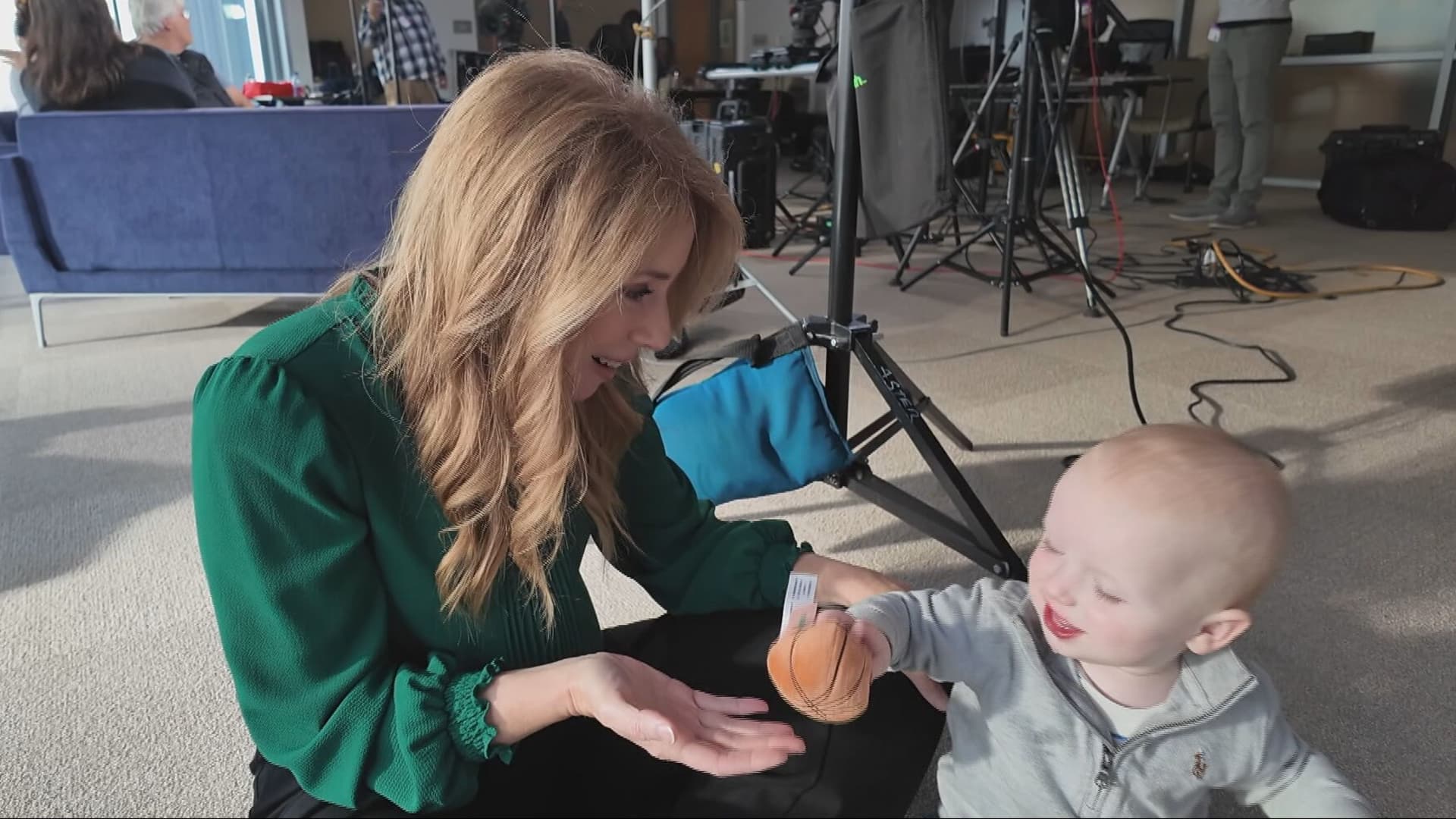
Kaylie with her parents, Matt and Becky.

Lori and Seth Horowitz, John Gomez

Kaylie is a beautiful, happy, loving girl. Those who know us say she’s a mini-me. But I know she’s better than I’ve ever been. She is full of light and life and love. And she works harder every day than anyone I know.

Kaylie has SYNGAP1, which means she only produces half of the SynGAP protein needed for brain development. Like the other 1,700 or so people around the globe with the same diagnosis, that means she has seizures, developmental delays and intellectual disabilities. And like most other Syngapians, she has autism. Kaylie’s autism is severe.

She has apraxia, which means that even though she struggles to speak, she has very high receptive language and — I think — understands most of what is going on around her. Sometimes people assume that just because Kaylie can’t talk she doesn’t understand what they are saying. Sometimes they talk about Kaylie right in front of her. Sometimes it’s unkind. I’ve heard people call her retarded, spoiled, or undisciplined. They’ve said she’s too old to be in a stroller, which is where she can feel safest when we are out in the community. Or they’ve given us disapproving looks and said she shouldn’t be allowed to have so much screen time when we let her use an iPad at a restaurant or at her brother’s basketball games. I’ve heard all of that. And so has she.

Kaylie and her brother Kyle.

Having SYNGAP1 and apraxia means that Kaylie often can’t control her body. It won’t do what she wants it to do, which, as you can imagine, is incredibly frustrating for her. Sometimes she acts out, but she’s been working with behavioral therapists for many years. She’s getting better at dealing with that.

A friend whose son had brain cancer took one look at the image of a Syngapian’s brain and said it looked just like the brain of a child who had received radiation for brain tumors. In a neurotypical brain, dendrites — the neural connections that transmit electrical impulses in a brain — look like neatly pruned trees, with clear, defined branches stemming out from a central trunk. People with SYNGAP1 have dendrites with fatter trunks and lots of branches. Those bold trunks of synapses, instead of the sleek connections most people have, mean that Kaylie can be overwhelmed by the flood of input coming her way. Sometimes she bites herself as a result as she tries to manage it all. Sometimes she bites me or her father. She doesn’t mean it. We know that. But it’s hard to process it and react with grace as it’s happening.

Moving forward after a diagnosis

When Kaylie was born, everything seemed perfect. She went full term, no problems in the pregnancy. She had 10 fingers and 10 toes. She was happy, all the time. She smiled at less than a month old. Some people said it must be gas, but it wasn’t. I took pictures on my cellphone when I held her smiling in my arms because I couldn’t believe it myself.

Becky’s daughter Kaylie smiling as a baby.

Becky Quick

She nursed beautifully. She slept better than my son had. She was content and happy. She did tummy time. Everything seemed perfect.

But when she was around 7 months or so, I started to worry. She crossed her eyes too often. She wasn’t rolling over. And sometimes, she stared into space. It seemed like she was resetting like a computer on the fritz.

By 8 months, I was worried enough to seek help from therapists and doctors. They diagnosed her with global developmental delays. They worked with her. We hoped and prayed.

Kaylie Quick with her dad (Matt), mom (Becky), and brother (Kyle).

Becky Quick

Kaylie made progress. It was just so slow relative to her peers, and to her cousins born within months of her. That made family functions tough to endure at times … to see how far she was falling behind her cousins, even though our extended family was our greatest support. It was a double-edged sword, and sometimes (often) I broke down at holiday events and family gatherings.

We consulted with a neurologist. She prescribed an EEG, which showed unusual brain activity and seizures. Kaylie started on a long and varied road of medications designed to control her seizures. Just before Kaylie turned 3, we got the results of a genetic test that showed Kaylie had SYNGAP1. The diagnosis was devastating, because we knew that even hard work, determination and years of therapies wouldn’t be enough to “fix” all her symptoms. But it also brought us an understanding of what Kaylie was dealing with, a community of other families dealing with the same issues, and hope that we could eventually find a cure.

Kaylie loves spending time at the beach with her family.

Becky Quick

Working with dedicated therapists, doctors and teachers helped tremendously. Kaylie continues to make progress, and we have learned a lot about how to best try and help her. But we have a long, long way to go. And we are some of the luckiest ones. We have resources to pay for help and access to the best care and therapists. And doctors and companies call me back because of my public position.

Most people aren’t so lucky. And that’s a big part of the reason we feel like we have to speak up now.

It’s taken me years to get to this place, emotionally, to even be able to talk about it publicly. After Kaylie’s diagnosis, I shut off this part of my life and my brain while I was at work and on air on “Squawk Box,” just so I could function and do my job.

But more importantly, it’s taken this long for us to feel like we understand enough about rare diseases — the journey and what science is now making possible — to feel like we could make a difference by speaking out.

Kaylie with her sisters Natalie (center) and Kimi (right).

Becky Quick

Navigating the path together

Every family with a rare disease diagnosis has to navigate a complex path — trying to provide the best care possible for your child on a day-to-day basis, while also seeking desperately for a cure or a therapy to try and improve their long-term diagnosis. It’s a very lonely path, and even though there are more than 10,000 rare diseases, those in the communities impacted by them often feel like they’re walking it alone.

But the truth is, many of those diagnosed with one of those 10,000 rare diseases are walking similar paths. We’ve realized that “rare disease” isn’t really all that rare when it’s looked at collectively, much like cancer is today. And when you look at the 30 million Americans who are affected by rare disease — and what could be as many as 400 million people globally —  you get a patient population that can be attractive to biotech and pharmaceutical companies. It also makes it appealing to investors who can help fund the search for cures. It’s a population in need of both legislative and regulatory attention, to make sure the unique challenges faced by people with rare diseases are addressed, and to help streamline the regulatory process for cures of “orphan” diseases.

And that’s where CNBC Cures comes in. CNBC has a unique audience with all of the constituencies that can make a huge difference in the path for rare disease. That is our goal with CNBC Cures: to bring together those constituencies, highlight what’s possible in science right now, identify roadblocks keeping that scientific progress from patients and move them out of the way as quickly as possible.

Because for patients with rare disease, time is the enemy.

Technological advances are taking place at a breakneck pace. Artificial intelligence is speeding the progress, and advances in gene therapy and ASO therapies are happening much faster than I believed possible just a couple of years ago.

Kaylie loves playing at the water park in the summer.

Becky Quick

But for patients and families with rare disease, the pace is never fast enough. Time slowly strips away the ability for some patients to breathe, or for their organs or muscles to function. And for those with chronic conditions, every year that passes without a cure closes the aperture on what quality of life is eventually possible.

And that’s why the time to act is now. Researchers and investors in this space will tell you the science has never been stronger. We have the ability to change millions of lives. Sign up for the CNBC Cures Newsletter. Attend the first-ever CNBC Cures Summit in March. Follow the stories we’ll bring you in the months ahead to see how you can make a difference. Because it’s a long journey for the millions of Americans impacted by rare diseases, and the path will be a lot less lonely if we all walk it together.

If you’d like to share your story, receive more information or discuss opportunities to get involved, please email us: CNBC.Cures@cnbc.com. Someone from our team will be in touch with you soon.

CNBC launches CNBC Cures to help 30 million Americans with rare diseases

0
CNBC launches CNBC Cures to help 30 million Americans with rare diseases

Thirty million. It’s a big number. Maybe not in the context of business news, where we usually talk about company valuations that are in the billions, or even trillions. But when we’re talking about people, 30 million is a very big number. 

Thirty million is the number of people that the National Organization of Rare Disorders estimates are living with a rare disease in the United States.

Defining a rare disease can be tricky. In the U.S., a disease is considered rare if fewer than 200,000 Americans are diagnosed with it. The Centers for Disease Control and Prevention says that works out to be less than 7 in 10,000 people. In the European Union, a disease is classified as rare if it affects no more than 5 in 10,000 people. In China, it’s 1 in 10,000. Any way you define it, patient populations within the rare disease community are smaller than those diagnosed with more well-known diseases like Alzheimer’s, which the Alzheimer’s Association estimates stood at more than 7 million in the U.S. as of last year. But when you consider that there are more than 10,000 rare diseases, and as many as 400 million people suffering from them worldwide, you start to take notice.

pictogram visualization

That’s why we’re launching CNBC Cures, a new initiative to help raise awareness of rare diseases and improve patient outcomes for people living with them. Led by “Squawk Box ” anchor Becky Quick, the initiative was inspired by her family’s own rare disease journey

Kaylie’s diagnostic odyssey

Quick’s youngest daughter, Kaylie, was just 7 months old when Becky first suspected that something wasn’t right. 

“She was not meeting some of her developmental milestones, and I was worried about it,” Quick said.

Becky and Kaylie on a merry-go-round.

Becky Quick

Kaylie visited several doctors, and at first, none of them seemed concerned. But after several months, a developmental-behavioral pediatrician diagnosed Kaylie with global developmental delay, a broad term given to a child that is significantly delayed in hitting developmental milestones, like walking and talking. But the diagnosis didn’t point to a cause. 

Her family was left grasping for answers until just before Kaylie’s third birthday, when a genetic test revealed the root cause of Kaylie’s struggles. She had SYNGAP1, a rare genetic disease that has only been diagnosed in about 1,700 people in the world.

number-ticker visualization

“Our neurologist didn’t know what it was,” said Quick. “She told us, ‘You’ll probably know more about this by the end of the weekend than I do.’ And we did.”

“We ran to Google and started googling things,” Quick explained. “There were researchers who were already doing work, and thank God they had been. That’s why we knew as much as we did about SYNGAP1.”

SynGAP is a protein crucial to brain development. It helps with learning and memory, and also with regulating communication in the synapses of the brain. Kaylie has a genetic mutation in her SYNGAP1 gene that causes her brain to get only about half the SynGAP protein it should be getting. That makes it difficult for the neurons in her brain to communicate effectively with each other.

Despite SYNGAP1’s small patient population, it is thought to be much more prevalent than it once was. Mutations in the SYNGAP1 gene are surprisingly common and are estimated to account for between 1%-2% of all intellectual disabilities. An article published by CURE SYNGAP1 indicates the figure could be as high as 76,000 in the U.S. alone. But because most doctors don’t know the symptoms of SYNGAP1, and the vast majority of newborns aren’t screened for genetic diseases at birth, it’s believed that most cases of SYNGAP1, like many rare diseases, go undiagnosed.

SYNGAP1 is a spectrum disorder, meaning not all patients are affected the same way or with the same severity. It’s common for SYNGAP1 patients to have seizure disorders, intellectual disabilities, autism, motor skill delays, difficulty forming speech, balance and coordination issues, and high pain thresholds. Kaylie has all these symptoms.

Kaylie smiling when she was younger.

Becky Quick

As Kaylie grew and became more mobile, dealing with her symptoms became more difficult.

“We have all the doors locked all the time so that she doesn’t walk out. She doesn’t know to call out if she needs help,” said Quick. “She used to fall and hurt herself and not even realize it or say anything. You’d see the blood, or you’d see the bruise,” Quick added. 

Despite her physical challenges, Quick says Kaylie is still a happy and active kid. “She can do all of these things that people thought maybe she couldn’t. She doesn’t just walk. She runs. She runs everywhere, through the house, through the outside. She jumps. She’s a daredevil. She loves roller coasters … she loves movement,” Quick added.

Kaylie on a ride at Sesame Place.

Becky Quick

There is no cure for SYNGAP1. There are several treatments in development, though none have yet progressed beyond clinical trials.

Progress has been made in identifying more individuals with SYNGAP1. A 2019 census found just 484 patients worldwide. Shortly after Kaylie’s diagnosis, that figure jumped to 1,000. It now stands at more than 1,700 globally. 

Expanded access to genetic screening for newborns, a cause nearly everyone in the rare disease community is rallying behind, could help further identify more SYNGAP1 patients. That’s key when dealing with rare diseases because a bigger patient pool can attract more research and funding for treatments. It also helps regulators better understand the scope of a disease, which can ultimately get those treatments to market more quickly.

While there is no treatment that Kaylie can take to reverse her disorder, her parents have put in place a routine anchored by her therapists, her family, and a strong support system to help her battle through the many challenges she faces. 

“She works really hard every day. Every single day Kaylie works harder than any of the rest of us, and that’s just who she is,” Quick said. 

“She loves her sisters and her brother. She loves her cousins and she loves her family. She’s got friends at school … she is just happy every single day, and I am grateful for that.”

Why CNBC?

“I’ve been amazed at how many people are going through something similar,” Quick said. “The idea that this is a universal struggle that so many people are going through … that kind of got the wheels turning for us.”

“We’re the lucky ones. We have resources,” Quick said. She and her family began to think about how they could make a difference for others navigating a rare disease diagnosis.

Rare diseases often go overlooked by investors and pharmaceutical companies. As a result, patients diagnosed with a rare disease usually go underserved by the medical community. Smaller diagnosed patient populations make it difficult to attract funding for research into rare disease treatments. And where promising research does exist, those smaller patient populations make it more difficult for potentially lifesaving treatments to clear regulatory hurdles and get to the patients that need them. 

This is where Quick saw an opportunity to make a difference. 

“We thought, you know, CNBC has a pretty unique audience. It’s got an influential audience. It’s an audience of people who know how to get things done. Why not tap into what they can bring to the table too?” she said.

CNBC Cures is teaming up with some of the nation’s top researchers, doctors, regulators and patient advocacy groups.

The initiative’s goal is to help build a community that can break down barriers that can limit treatment options and isolate those living with a rare disease. Through our storytelling and live events, we’ll work to identify the most innovative scientific developments in the rare disease space and put a spotlight on the bottlenecks preventing them from getting to the patients who need them. 

Becky Quick with KJ Muldoon. KJ, born with the rare disease CPS1, was the first known person receive a personalized CRISPR-based genome-editing therapy.

We’ll bring you moving and inspirational stories about the individuals changing the way we think about rare diseases and offer a space where you can share your own rare disease journey with us. And we’ll share perspectives from the most prominent investors in the space, highlighting where they see opportunities for healthy returns, and for transforming health care as we know it.

Here’s how we’ll do it:

  1. A new weekly newsletter bringing insights into the biggest headlines impacting the rare disease community, and the research being done today that will change the way we think about modern medicine forever.
  2. Our on-air and digital coverage highlighting the individuals, companies and institutions working to improve the lives of millions of Americans living with a rare disease.
  3. Our first-ever CNBC Cures Summit, a landmark event slated for March 3 in New York, bringing together the most influential investors, policymakers and leaders in the biotechnology space.

The truth is that the term rare disease is misleading. The odds are that almost all of us know someone who is impacted by a rare disease, and the millions who make up this community are more connected than we think. Every week scientists are finding new evidence that shows if you can figure out how to effectively treat one rare disease, there are countless others that can be treated using similar mechanisms. And advancements made in rare diseases are offering new hope for breakthroughs in everything from Alzheimer’s, to cancer, and heart disease.

These are just a few of the themes we want to explore with CNBC Cures in the coming year. It’s a journey we’re on together, and together we can make a difference. 

More information about SYNGAP1 can be found at CURE SYNGAP1, CHOP, NORD, and Global Genes.

If you’d like to share your story, receive more information or discuss opportunities to get involved, please email us: CNBC.Cures@cnbc.com. Someone from our team will be in touch with you soon.

Is Walking The Most Underrated Way To Burn Fat? Benefits, Calories Burned, And Weight Loss Tips Explained

0
Is Walking The Most Underrated Way To Burn Fat? Benefits, Calories Burned, And Weight Loss Tips Explained

When people think about fat loss, intense workouts often steal the spotlight. Running, HIIT, gym sessions, and heavy sweating are usually seen as the “real” ways to burn fat. Walking, on the other hand, feels too simple to count. But that simplicity is exactly why walking might be one of the most underrated and sustainable ways to burn fat.

Why walking actually works for fat loss

Walking burns calories, yes but more importantly, it encourages the body to use fat as a fuel source. Unlike high-intensity workouts that rely heavily on quick energy (carbs), steady walking keeps your heart rate in a zone where fat burning is more efficient. Over time, this adds up quietly, without exhausting your body.

Add Zee News as a Preferred Source


Another reason walking works is consistency. You’re far more likely to walk daily than push yourself through tough workouts every single day. Fat loss depends more on what you can do regularly, not occasionally.

Calories burned while walking

The number of calories burned while walking depends on your pace, body weight, and duration. On average, a person can burn:

120–150 calories during a 30-minute brisk walk

200–300 calories in a 45–60 minute walk

300–400+ calories if walking fast, uphill, or for longer durations

While this may seem lower than intense workouts, walking allows you to burn calories without stressing your body, making it easier to stay active every day. Over a week or month, these calories add up significantly especially when paired with healthy eating.

Low stress, high return

One of the biggest enemies of fat loss is stress. Intense workouts can increase cortisol levels, especially if you’re already tired, under-eating, or overwhelmed. Walking does the opposite. It lowers stress, improves mood, and helps regulate hormones that influence weight gain and fat storage.

This makes walking especially effective for people who struggle with stubborn fat, emotional eating, or fatigue.

Walking vs intense workouts

High-intensity workouts burn more calories in a short time, but they also demand more recovery. Walking may burn fewer calories per minute, but it allows you to move longer and more often without burnout or injury.

A 30–60 minute walk done daily can easily outperform a few intense sessions done inconsistently.

How walking supports overall fat loss

Walking does more than burn calories:

Improves digestion and blood sugar control

Reduces cravings by stabilizing insulin

Supports better sleep, which directly affects fat loss

Encourages mindful eating and healthier habits

Fat loss is not just about workouts it’s about how your whole system functions, and walking supports that balance.

Weight loss tips to combine with walking

To get the best weight loss results from walking, pair it with simple lifestyle habits:

Walk daily instead of aiming for perfection

Stay hydrated before and after walks

Avoid overeating after walks listen to hunger cues

Focus on protein and fiber-rich meals

Get enough sleep to support fat burning

Walking works best when it becomes part of your routine, not a punishment or temporary fix.

How to make walking more effective

You don’t need fancy equipment. A few small tweaks can boost results:

Walk at a brisk pace where you can talk but not sing

Add slight inclines or stairs when possible

Walk after meals to control blood sugar

Aim for 7,000–10,000 steps daily, based on your comfort

Stay consistent rather than pushing too hard

Who benefits the most from walking?

Walking is ideal for:

Beginners starting their fitness journey

People with joint issues or injuries

Busy schedules where gym time feels unrealistic

Those struggling with stress-related weight gain

Anyone looking for sustainable fat loss

The quiet truth about walking

Walking doesn’t shout. It doesn’t promise instant results. It doesn’t leave you drenched in sweat. But it works—slowly, steadily, and safely. Over weeks and months, walking builds habits, burns fat, and improves health in ways that extreme routines often fail to maintain.

Sometimes, the most effective solutions aren’t the loudest ones. Walking proves that fat loss doesn’t always need intensity sometimes, it just needs consistency.

(This article is based on information available in the public domain and on input provided by experts consulted.)

Bob Weir, founding member of the Grateful Dead, dies at 78

0
Bob Weir, founding member of the Grateful Dead, dies at 78

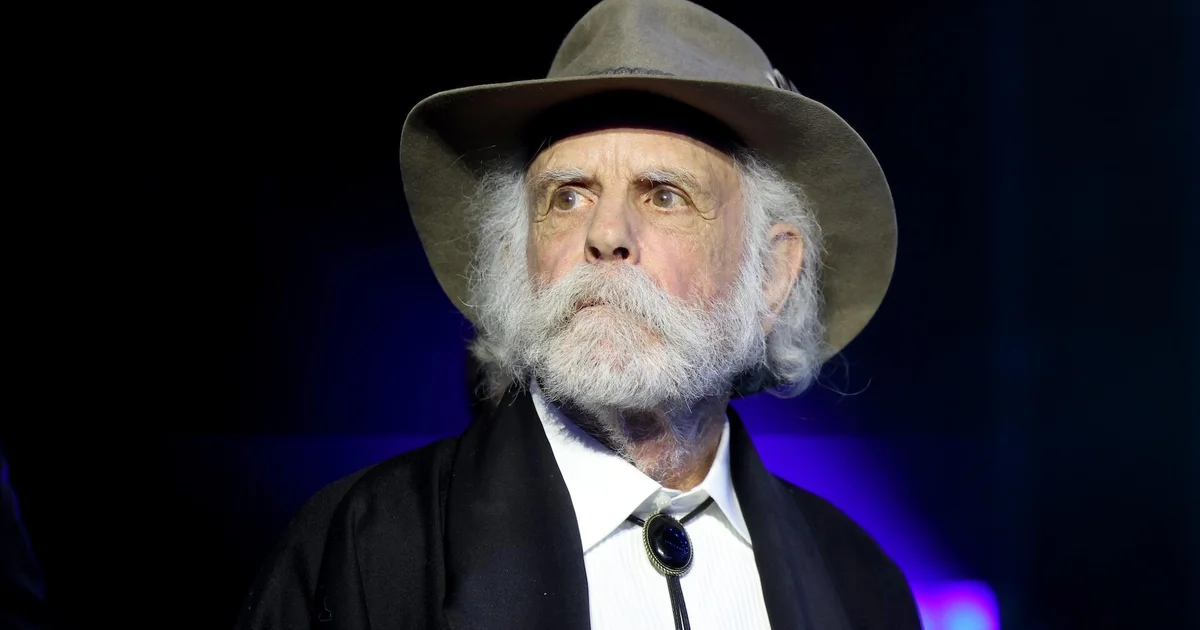
Bob Weir, a founding member of the legendary rock band the Grateful Dead, has died at the age of 78, his family announced Saturday. 

“It is with profound sadness that we share the passing of Bobby Weir,” his family wrote in a post to his Instagram page. “He transitioned peacefully, surrounded by loved ones, after courageously beating cancer as only Bobby could. Unfortunately, he succumbed to underlying lung issues.”

In the statement, the family disclosed that Weir had been diagnosed with cancer in July.

“As we remember Bobby, it’s hard not to feel the echo of the way he lived,” his family wrote. “A man driftin’ and dreamin’, never worrying if the road would lead him home. A child of countless trees. A child of boundless seas.”

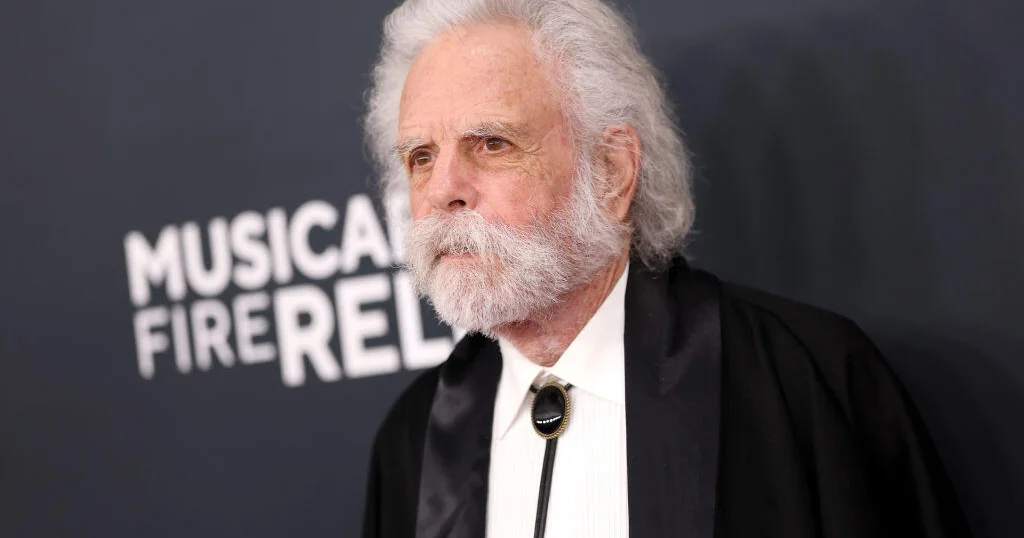
Bob Weir attends the 67th Annual Grammy Awards on Feb. 2, 2025, in Los Angeles, California.

Matt Winkelmeyer/Getty Images


Weir formed the Grateful Dead with Jerry Garcia after the two met in 1963 as teens in Palo Alto, California. The band, with its unique mix of blues, folk and jazz, became a touring powerhouse for decades until Garcia’s death in 1995. 

Weir wrote or co-wrote and sang lead vocals on Dead classics including “Sugar Magnolia,” “One More Saturday Night” and “Mexicali Blues.”  

The group eventually reformed a few years after Garcia’s death and took many iterations over the years, the latest as Dead & Company.  

Bob Weir

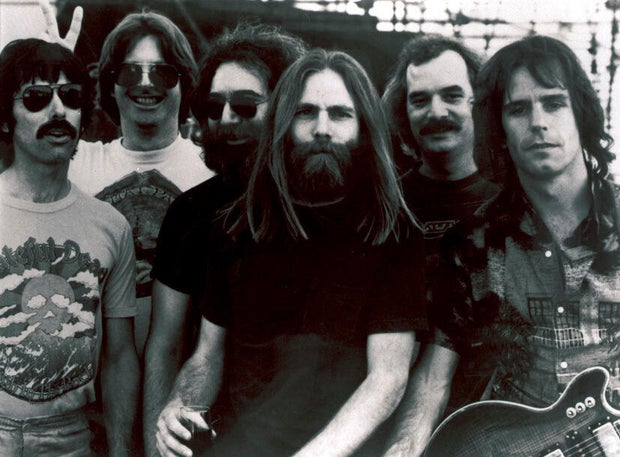
FILE – This undated file photo shows members of the Grateful Dead, from left to right, Mickey Hart, Phil Lesh, Jerry Garcia, Brent Mydland, Bill Kreutzmann, and Bob Weir.

AP


“For over sixty years, Bobby took to the road,” his family’s statement said. “A guitarist, vocalist, storyteller, and founding member of the Grateful Dead. Bobby will forever be a guiding force whose unique artistry reshaped American music. His work did more than fill rooms with music; it was warm sunlight that filled the soul, building a community, a language, and a feeling of family that generations of fans carry with them.”

Weir’s death leaves drummer Bill Kreutzmann as the only surviving original member. Founding bassist Phil Lesh died in 2024. The band’s other drummer, Mickey Hart, practically an original member since joining in 1967, is also alive at 82. The fifth founding member, Ron “Pigpen” McKernan, died in 1973.

Dead and Company played a series of concert’s for the Grateful Dead’s 60th anniversary in July at Golden Gate Park in San Francisco.

Born in San Francisco and raised in nearby Atherton, Weir was the Dead’s youngest member and looked like a fresh-faced high-schooler in its early years. He was generally less shaggy than the rest of the band, but had a long beard like Garcia’s in later years.

The band would survive long past the hippie moment of its birth, with its ultra-devoted fans known as Deadheads often following them on the road in a virtually non-stop tour that persisted despite decades of music and culture shifting around them.

“Longevity was never a major concern of ours,” Weir said when the Dead got the Grammys’ Musicares Person of the Year honor last year. “Spreading joy through the music was all we ever really had in mind and we got plenty of that done.”

Ubiquitous bumper stickers and T-shirts showed the band’s skull logo, the dancing, colored bears that served as their other symbol, and signature phrases like “ain’t no time to hate” and “not all who wander are lost.”

The Dead won few actual Grammys during their career — they were always a little too esoteric — getting only a lifetime achievement award in 2007 and the best music film award in 2018.

Just as rare were hit pop singles. “Touch of Grey,” the 1987 song that brought a big surge in the aging band’s popularity, was their only Billboard Top 10 hit.

But in 2024, they set a record for all artists with their 59th album in Billboard’s Top 40. Forty-one of those came since 2012, thanks to the popularity of the series of archival albums compiled by David Lemieux.

Their music — called acid rock at its inception — would pull in blues, jazz, country, folk and psychedelia in long improvisational jams at their concerts.

“I venture to say they are the great American band,” TV personality and devoted Deadhead Andy Cohen said as host of the MusiCares event. “What a wonder they are.”

Bob Weir, founding Grateful Dead member, dies at 78

0
Bob Weir, founding Grateful Dead member, dies at 78

Bob Weir, a co-founder of the Grateful Dead, has died. Weir was a cornerstone of the band, as a singer, songwriter and guitarist.

Iran flips ‘kill switch’ to hide alleged crimes as death toll rises amid protests

0
Iran flips ‘kill switch’ to hide alleged crimes as death toll rises amid protests

NEWYou can now listen to Fox News articles!

The Iranian regime triggered an internet “kill switch” in an apparent effort to hide alleged abuses by security forces as protests against it surged nationwide, a cybersecurity expert has claimed.

The blackout slashed internet access to a fraction of normal levels on the 13th day of the protests as rights groups, including Amnesty International, accused the regime of using lethal force against protesters.

“This is Iran’s war against its own population using digital means,” NetBlocks CEO Alp Toker told Fox News Digital.

“This was a piecemeal measure that eventually encompassed the entire country, with the government willing to use this kind of measure for an extended period of time,” he said.

“There would be an attempt by the regime to cover up crimes that it may have committed, so this blackout could potentially last for days or weeks,” Toker added.

PROTESTER SCALES IRANIAN EMBASSY IN LONDON, TEARS DOWN REGIME FLAG, HOISTS PRE-REVOLUTION SYMBOL

Protesters gather as vehicles burn, amid evolving anti-government unrest, in Tehran, Iran, in this screen grab obtained from a social media video released on Friday. (Social Media/via Reuters)

At least 65 people have been killed in the protests, according to the group Human Rights Activists in Iran, which said late Friday that the death toll had more than doubled since earlier in the week.

The group also reported that more than 2,300 people have been arrested and that demonstrations have spread to at least 180 cities nationwide. Most of those killed were protesters, the group said.

“People in Iran daring to express their anger at decades of repression and demand fundamental change are once again being met with a deadly pattern of security forces unlawfully firing at, chasing, arresting and beating protesters,” Amnesty International also said in a statement Thursday.

“The single kill switch is the censorship mechanism that is centrally controlled by the regime, so there are no legal procedures or mechanisms for people to push back,” Toker said.

“We know now that they’ve centralized all of this into a one-step operation,” he explained, calling it “very much a top-down mechanism.”

“It’s been in development since the Cold War, and it means they are able to triangulate the ground terminal in satellite transmissions. Some governments implement this kind of kill switch in their cyber operations rooms,” he said.

ARMED IRAN PROTESTERS BATTLE POLICE IN TEHRAN STREETS AS TRUMP WARNS OF FORCEFUL US RESPONSE

“We know that in 2019, for example, it used to be a painstaking measure when the government had to switch off businesses one by one, city by city.”

NetBlocks said the current blackout is among the most severe it has ever recorded in Iran.

“We are tracking near-total disconnection of internet service across Iran right now, and connectivity is below 2% of ordinary levels,” Toker said.

“This is a nationwide disruption that is impacting almost all services, all connectivity and all avenues of life, extending beyond just mobile phones and computers,” he said.

“It’s impacting banks, essential services, and there’s very little communication within the country, so people are unable to reach the outside world and nobody has the ability to communicate.”

EXILED IRANIAN CROWN PRINCE URGES TRUMP TO HELP AS PROTESTS AGAINST ISLAMIC REGIME INTENSIFY: ‘MAN OF PEACE’

Despite the sweeping restrictions, some limited communication channels remain available, Toker revealed.

“There are a few gaps, so it’s possible to communicate with those close to the borders through Wi-Fi or mobile service that crosses borders,” he said.

“It’s also occasionally possible to find a part in the service, in a fixed-line service, where they can tunnel through all those, but that is increasingly rare and no longer an option. 

“Another mechanism we’ve seen is access via satellite internet, namely the Starlink network, but the equipment is banned by the Iranian regime.”

“The technology that the Iranian regime uses to trace links is essentially anti-espionage technology,” he said.

“These measures are typically imposed by the most authoritarian regimes, the most controlling governments that seek to silence and oppress their own populations,” Toker said.

“NetBlocks tracked very similar multi-week disruption in 2019, during which thousands were killed, and this was also done in 2022 when people were protesting the killing of Mahsa Amini.”

IRANIAN MILITARY LEADER THREATENS PREEMPTIVE ATTACK AFTER TRUMP COMMENTS

Protests in Iran intensify

Iranian demonstrations have intensified in recent days with the sounds of gunfire in the streets. (National Council of Resistance of Iran)

“In past incidents, we did observe that the government attempted to keep a baseline of service available.

“In this recent case, they pulled the plug, so there’s a far more extreme measure in place here, which suggests that the regime is scared and isn’t taking risks when it comes to the possibility of information reaching the outside world.”

President Donald Trump warned Iran’s leaders Friday against using force on protesters.

Speaking to reporters at the White House, he warned Iran was in “big trouble.”

“I just hope the protesters in Iran are going to be safe, because that’s a very dangerous place right now,” Trump said. “You’d better not start shooting, because we’ll start shooting, too.”

CLICK HERE TO DOWNLOAD THE FOX NEWS APP

“The U.S. has encouraged democracy in Iran, and that’s a positive thing at this point,” Toker said.

“There’s very little that can be done from the outside, but it’s important to continue to support positive efforts.

“A free and open internet in Iran, and indeed in other countries, can encourage democracy and support basic liberties,” he added.