Multan Sultans’ Michael Bracewell (third from right) celebrates taking a wicket with teammates during their PSL 10 match against Lahore Qalandars at the Multan Cricket Stadium in Multan on April 22, 2025. — PCB
LAHORE: The Pakistan Cricket Board (PCB) has decided to auction Pakistan Super League (PSL) franchise Multan Sultans owing to a good price secured in the recent auction of two new teams, the sources said on Sunday.
The board, last month, had announced that it would be taking over the control of the Multan Sultans owing to the expiration of its ownership agreement on December 31, 2025.
The sources, back then, had said that under the proposed plan, the PCB was to manage the franchise for one year before handing over the franchise to a new owner through an auction in 2027.
If implemented, the arrangement would save the PCB around $4 million in a year, as it would not have to pay $3m from the central pool or an additional $1m in sponsorship funds. However, an audit firm’s report notes that the PCB would not receive the franchise fee for that year, which stands at $8.5m.
In November, Multan Sultans owner Ali Tareen announced via social media that he was parting ways with the PSL franchise. Sources indicate that relations between the PCB and Ali Tareen had remained strained over the past year, eventually reaching a point of no return.
Multan Sultans were originally awarded as the sixth PSL team to the Schon Group under a $5.2m agreement, making it the most expensive franchise at the time, double the price of Karachi Kings, which was acquired for $2.6m.
Sources say that the decision to auction Multan Sultans has been made as the PCB got “a good price” in the recent auction, and the inclusion of two new teams, namely Hyderabad and Sialkot, is pushing the number of teams in PSL 11 to eight.
Therefore, the board believes that there is no better time to sell Multan Sultans as well, and an open bidding will be held with an advertisement likely to be issued soon in this regard.
An official announcement will be made soon after reviewing the legal aspects, adding sources, saying that the board expects the franchise to be sold for a good price as well.
Pakistan Telecommunication Authority has warned users against fake calls and UAN numbers.
A video message released by PTA states that scammers are impersonating PTA, FIA, and banks to steal your personal and financial information. No government agency will ever ask you for OTP, PIN, identity card or biometrics over a call or message. Mobile users should be vigilant and verify only through official channels.
It should be noted that earlier, PTA had warned users in a statement that using a SIM registered in the name of another person is a violation of relevant regulations.
The PTA had stressed that the full responsibility for any misuse of the SIM will lie with the registered user, therefore, users should ensure responsible use of their SIMs and mobile connections at all times. Registered users will be held individually accountable for all calls, messages and data usage made through their SIMs or devices.
The PTA further appealed to users to abide by all relevant laws and regulations, warning that action will be taken in case of violation.
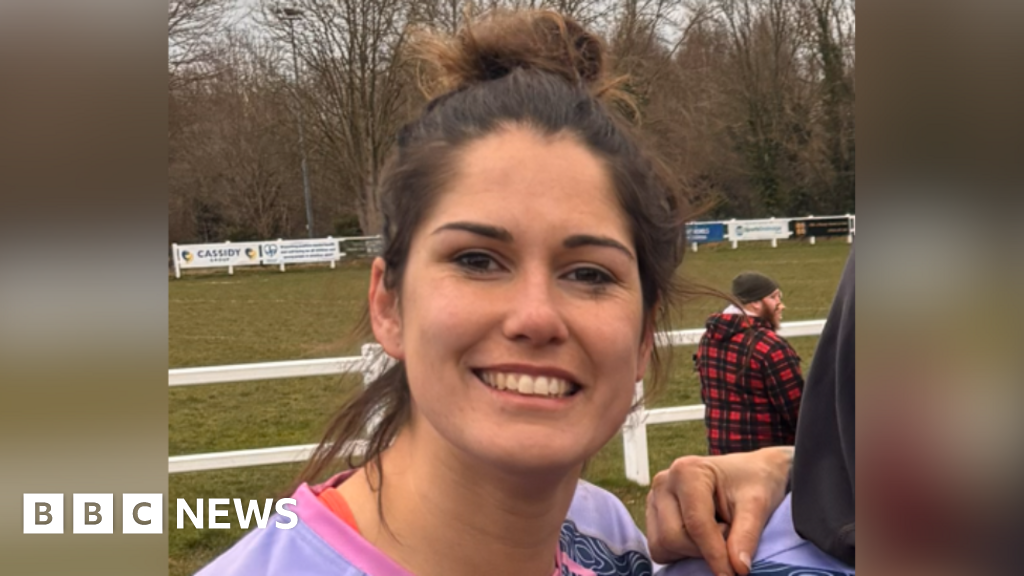
“You have to carve out that time for yourself,” she said of new mums. “You have to go and do something you enjoy, whether it’s rugby or another hobby or interest.
“I think you come back to your kids and your family a better mum having made that space for yourself.”
Getty Images
Abbie Ward was pictured carrying her daughter Hallie at Twickenham following England’s World Cup win in September
Bevan said England star and mum Abbie Ward was an inspiration after the country’s World Cup win in September.
Ward carried her daughter Hallie around the Twickenham pitch after the win against Canada.
“Mums all over the world, we’ve formed a little bit of a community,” Bevan said. “Everyone’s so helpful.
“They just want to help each other, give each other advice, share their experiences and we are united by the fact that we’ve all gone through childbirth, through pregnancy and we all want to come back and remain active.”
“I want to continue to inspire. I want to connect with other mums on my platform and even if you’re not a mum, I want to start to get women into rugby.
“This is a brilliant time to try our sport. It really is one of the best communities you could be a part of.”
Allow Instagram content?
This article contains content provided by Instagram. We ask for your permission before anything is loaded, as they may be using cookies and other technologies. You may want to read and before accepting. To view this content choose ‘accept and continue’.
The former Henley and Bracknell player, who has also turned out for Ireland, said: “The community game is where my heart is at. I always knew I wanted to carry on playing rugby after having kids.
“It’s such a big passion of mine. I think there’s always that unknown as to whether you will get back to do that physical activity.
“But showing my kids that I can continue to be physically active and can continue to do something I really love is really important to me.”
Having started her postpartumrugbymum Instagram page four years ago, she said some clubs had made “great strides” in making facilities more accessible, such as introducing breastfeeding spaces and changing tables in toilets.
“You’d think it’s something small but a lot of clubs are still behind the times with that. It’s about breaking those barriers and making sure spaces are available for mums,” she added.
Chaman flour prices have increased significantly in the past week.
The price of a 100-kilogram sack of flour has increased by Rs. 2500 in the past week.
According to the Market Association, flour has become expensive due to the cessation of flour supplies from Punjab, and the increase in flour prices has increased the concerns of the people.
Flour prices have increased dramatically in the border district, the prices of 50 kg flour sold a week ago have suddenly increased from Rs. 1,000,000 to Rs. 1,200.
Arif Habib Consortium meeting; Important decisions related to PIA
The district administration seems to be failing to control the rate, citizens say that the poor people are now unable to buy flour, the price of a 50 kg sack has been increased from Rs. 5,000 to Rs. 6,300.
Arts Council in Karachi, on Thursday, held a documentary screening of the film Ganj: The Treasures of Shah jo Risalo, honouring the poetic and philosophical legacy of Sindh’s revered Sufi poet, Shah Abdul Latif Bhittai.
The screening drew scholars, artists, students, and literary figures.
According to the organisers, the objective of the film is to preserve Bhittai’s intellectual and cultural heritage and introduce his message to younger generations, as well as to people beyond Pakistan and South Asia.
The documentary also features renditions of Bhittai’s verses in the voice of legendary Sufi singer Abida Parveen, which were warmly appreciated by the audience.
Speaking to The Express Tribune, director Shamim Ahmed Junejo said the film is “not merely a documentary, but a spiritual and intellectual journey that seeks to take Bhittai’s message and Sindh’s cultural heritage to the world.” He noted that plans are underway to send the documentary to international festivals, with hopes of achieving global screenings.
Junejo said that Shah Latif’s philosophy transcends geographical boundaries, carrying universal relevance, making it essential for it to be accessible to a young audience unfamiliar with the Sindhi language or Bhittai’s work.
Creative director Farooq Perio says Ganj is “a dream that took two years of hard work to bring to life.”
During the event, the contribution of the Endowment Fund Trust board, including Jahangir Siddiqui and Abdul Hameed Akhund, along with JS Bank, BankIslami, Habib University and others, was acknowledged for their support in the film’s creation.
In closing, the organisers expressed optimism that more such projects would help strengthen young people’s connection to Sindh’s history, culture, and spiritual traditions.
They said that films in particular are transcendent beyond time and language, making them significant in preserving heritage.
Donald Trump has ordered special forces commanders to prepare plans for an invasion of Greenland, but the proposal is facing resistance from senior military figures, The Mail on Sunday understands.Sources said policy hawks around the US President, led by political adviser Stephen Miller, feel emboldened by the reported success of the operation to detain Venezuela’s leader, Nicolás Maduro. They are said to want swift action to secure the island before Russia or China takes steps of its own.
British diplomats believe Trump is also driven by a wish to divert voters’ attention from the state of the US economy ahead of the mid-term elections later this year, after which he could lose control of Congress to the Democrats.
Such a move would place him in direct conflict with Sir Keir Starmer and would, in effect, bring about the collapse of Nato.
Sources divulged that the president asked the Joint Special Operations Command (JSOC) to prepare an invasion plan. The proposal has met opposition from the Joint Chiefs of Staff, who argue that it would be unlawful and would not receive congressional backing.
One source said efforts had been made to divert Trump’s attention towards less contentious options, including intercepting Russian “ghost ships” — a covert fleet of vessels used by Moscow to bypass Western sanctions — or considering military action against Iran.
Diplomats have conducted war games around what they describe as an “escalatory scenario”, in which Trump uses force or political pressure to break Greenland’s ties with Denmark.
One diplomatic cable terms a worst-case outcome that results in “the destruction of Nato from within”.
It adds that some European officials suspect this is the underlying objective of the hardline Maga faction around Trump. Since Congress would not permit a US withdrawal from Nato, the occupation of Greenland could compel European states to abandon the alliance.
“If Trump wants to end Nato, this may be the most convenient route,” the cable says.
Under a ‘compromise scenario’, Denmark would grant the United States full military access to Greenland while denying access to Russia and China.
Myron Medcalf covers college basketball for ESPN.com. He joined ESPN in 2011.
Jan 7, 2026, 08:30 AM ET
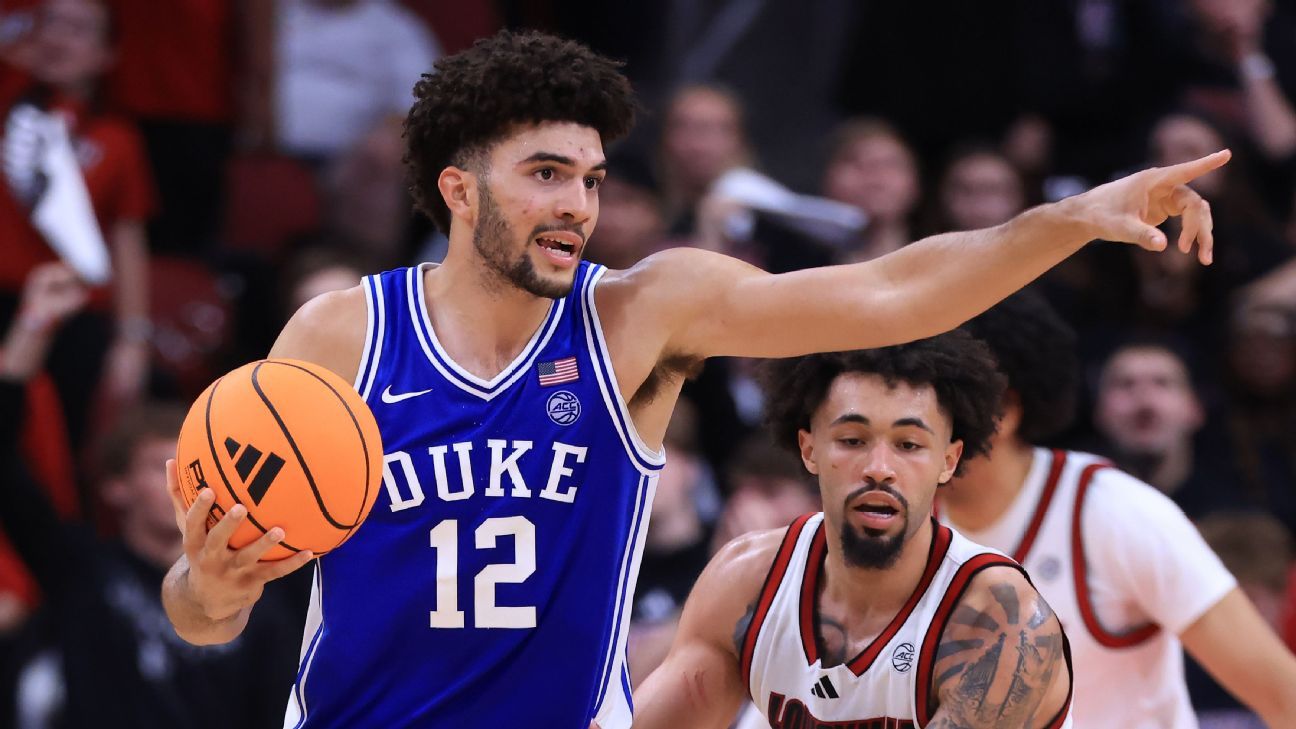
The talent of this freshman class was one of the biggest storylines heading into the 2025-26 men’s college basketball season. The group has lived up to the hype so far and is showing no sign of slowing down.
According to ESPN Research, the top 10 recruits in the 2025 SC Next 100 rankings were averaging 17.8 points entering 2026 — the most since ESPN’s recruiting database started in 2007.
Most of those players will be found in our updated freshman rankings below, but there are two you won’t find in this week’s edition: Kansas’ Darryn Peterson and Louisville’s Mikel Brown Jr. Peterson still doesn’t meet our threshold of having played in 50% of his team’s games, while Brown has missed the past five games with a back injury and had been inconsistent the previous few weeks.
With conference play in full swing, some of these players could hit the “freshman wall.” But for now, we’re looking at an incredibly deep crop of newcomers that extends well beyond the 10 names below.
Previous rank: 1
Biggest performance so far: 35 points, 9 rebounds, 3 assists vs. Arkansas in Chicago on Nov. 27
Boozer remains No. 1 as he chases history with his prolific output. In 2002, Dean Oliver wrote “Basketball on Paper,” the ultimate guidebook for a generation of basketball analytics experts. Part of that manual included the offensive rating metric, which does more to identify a player’s individual contribution beyond the traditional points/rebounds/assists numbers. The average offensive rating for the last five National Player of the Year winners, a group that includes Cooper Flagg, is 125.2 — not far below Nuggets star Nikola Jokic‘s mark of 128.0. And, well, Boozer has an offensive rating of 134.3. He’s in a league of his own. — Myron Medcalf
Previous rank: 2
Biggest performance so far: 28 points, 9 rebounds, 6 assists vs. Clemson in New York City on Dec. 9
Dybantsa narrowed the gap between himself and Boozer considerably after putting together one of the most impressive stretches of basketball we’ve seen from a freshman. In December, Dybantsa averaged 27.8 points, 8.0 rebounds, 5.7 assists and 2.3 steals while shooting nearly 66% from the field. He had two 30-point efforts plus 28 points, 9 rebounds and 6 assists against Clemson, with the vast majority coming in the second half of that comeback. Dybantsa then backed that up with 24 points and eight rebounds in a win over Kansas State in his first Big 12 game this past Saturday. — Jeff Borzello
Previous rank: 3
Biggest performance so far: 24 points, 7 rebounds, 4 assists vs. Kansas on Nov. 7
North Carolina’s 97-83 loss at SMU on Saturday not only ended the Tar Heels’ seven-game winning streak, it also ended a streak for Wilson. He had scored at least 20 points and grabbed at least eight rebounds in six consecutive games. Against the Mustangs? He finished with only 13 points, 7 rebounds, 4 assists and 2 steals. That’s also a sign of the elevated expectations he faces as the young star of a North Carolina team in Hubert Davis’ bounce-back season. A near double-double is considered to be subpar based on the way the projected NBA draft lottery pick has played to date. — Medcalf
Previous rank: 4
Biggest performance so far: 29 points, 4 assists vs. Tennessee on Jan. 3
Acuff has clearly taken over the No. 4 spot, separating himself as the best guard in the rankings given the injury issues to Peterson. Acuff is up to fourth among all freshmen in scoring and second in assists, averaging 19.5 points and 6.0 assists. He took over against Ja’Kobi Gillespie and Tennessee this past Saturday, finishing with 29 points and 4 assists — yet another massive individual performance against a top opponent. In the six games Arkansas has played against ranked teams, Acuff is averaging 21.7 points and 6.7 assists. — Borzello
play
0:36
Darius Acuff Jr. drills a 3 with a hand in his face
Darius Acuff Jr. sinks a 3-pointer late for Arkansas.
Previous rank: 6
Biggest performance so far: 23 points, 5 assists, 3 rebounds vs. Texas Tech on Jan. 6
After Flemings registered two single-digit performances at the Players Era Festival during Feast Week, Kelvin Sampson said Houston would “[have] to wait” on his team’s growth because he had made the rare move to tap elite freshmen or portal prospects this season. But that rocky experience in Las Vegas seems to have been a catalyst for Flemings, who is undeniably one of the best guards in the country. Since November, he has registered 35 assists and 11 turnovers for the Cougars. — Medcalf
Previous rank: 8
Biggest performance so far: 22 points, 8 rebounds, 4 assists vs. Missouri on Dec. 22
After making his debut in the last edition of these rankings on Dec. 17, Wagler continues to move up with one stellar performance after another. He went for 22 points and 8 rebounds in a blowout win over Missouri before Christmas, then had 11 points, 7 rebounds and 10 assists against Southern before opening 2026 with 16 points and 3 assists against Penn State. Wagler is now averaging 15.4 points, 5.1 rebounds and 3.8 assists while shooting nearly 41% from 3-point range. — Borzello
Previous rank: 5
Biggest performance so far: 29 points, 10 rebounds, 3 assists vs. UCLA on Dec. 3
The 6-foot-11 standout missed three games at the end of November after suffering a sprained ankle in a road win over rival Washington State on Nov. 14. He hasn’t missed a beat since his return, averaging 18.3 PPG and 11.8 RPG — and Washington has been the beneficiary. The Huskies have ranked 58th in adjusted offensive efficiency over that stretch, a steep improvement for a program that finished as a sub-100 squad in the same category a season ago. — Medcalf
play
0:18
Hannes Steinbach buries basket against Indiana Hoosiers
Hannes Steinbach buries basket against Indiana Hoosiers
Previous Rank: Unranked
Biggest performance so far: 22 points, 13 rebounds, 5 assists vs. Virginia Tech on Dec. 31
A Belgium native with multiple years of professional experience in Europe, De Ridder started off the season on a tear, scoring 20-plus points in four of his first five games. After a couple weeks of inconsistency, though, he has returned to form just in time for ACC play. In the Cavaliers’ final game before Christmas, De Ridder had 27 points and eight rebounds — and is now averaging 18.0 points, 8.5 rebounds and 3.0 assists through Virginia’s first two ACC games against Virginia Tech and NC State. Despite going 3 for 11 from 3 against Tech, the 6-foot-9 De Ridder is still shooting 40% from 3. — Borzello
Previous rank: 9
Biggest performance so far: 28 points, 7 rebounds, 2 assists vs. Alabama on Dec. 13
Burries, a 6-foot-4 guard, had the fortune of being a freshman on a deep and talented Arizona squad that didn’t need him to immediately hit his stride. Having had time to develop, he has found a rhythm and emerged as one of the best freshmen in the country. After combining for 39 points in his first five games, he has averaged 17.7 PPG in the past nine contests. He has become one of the top defenders (1.6 SPG) in the nation, too.
Previous Rank: Unranked
Biggest performance so far: 28 points, 3 assists vs. Louisville on Jan. 2
The top of the freshman scoring charts is a star-studded affair: Dybantsa is No. 1, Boozer is No. 2, Acuff is No. 4, Wilson is No. 5. And who’s at No. 3? None other than Okorie, who entered the week averaging 22.0 points. He’s also coming off arguably his best game of the season, posting 28 points, 3 rebounds and 3 assists in a win over Louisville last Friday. Kyle Smith gave him a high-usage role from day one, and Okorie has responded. He scored at least 20 points in each of his first four games and has put up at least 28 points in three of his last four games. — Borzello
For every Jannik Sinner or Carlos Alcaraz, there are hundreds of professional tennis players doing the hard yards on the lower tours, scratching out a living before calling it a day.
Tunisia’s Moez Echargui fits into that category.
This time last year he was ranked just inside the top 500 and earned $2,160 for winning an ITF tournament in Monastir.
Now Echargui stands on the cusp of a career breakthrough – at an age when many journeymen are thinking about what to do once they have hung up their rackets.
A stunning run on the ATP Challenger Tour last year has lifted him to 134th in the world and into the Australian Open qualifying tournament next week, his first taste of life at a Grand Slam.
There remains the task of winning three matches in Melbourne to reach the main draw, but for Echargui, just being in qualifying is a reward for persevering when others might have stopped chasing the dream.
“When I arrived at Melbourne Park to get my accreditation, I was like, ‘Gosh, I’ve made it here,’” Echargui, the highest‑ranked African player in the world, told Reuters by telephone. “Seeing all the signs with AO everywhere, it was an exciting moment. I felt like a little kid.”
The difference from the stages on which he usually plies his trade was striking, said the Milan‑based player, who holds a degree in mechanical engineering from the University of Nevada.
“Everything’s made easy for the players. The food is free, the laundry, the transport. There are staff available to help. It actually feels easy to be here.”
It certainly was not an easy journey to get there.
Echargui was close to a top-100 junior, but a combination of injuries and limited funding led him to focus on his studies before deciding to try his luck on the pro ranks in 2017.
He moved to Milan in 2019 to train at the MXP Academy under coach Paolo Moretti, but a serious wrist injury along with knee and hamstring problems left his career in jeopardy.
His career highlight seemed to arrive in 2024 when he qualified for the Paris Olympics via an International Tennis Federation (ITF) place after winning the African Games, earning a first‑round appearance at Roland Garros, where he lost to Britain’s Dan Evans.
What looked like a retirement story instead became a turning point. Like a fine wine, Echargui has improved with age and now, in his 30s, has a chance to establish himself on the ATP Tour.
“At 29 years old, I made the decision to go to Milan. I think a lot of people at that age would say, ‘Maybe I’m at the end of my career,’” he said. “Why go to another country, leave my parents and family?
“But I think I’ve made a good decision. Tough moments, but good moments too.”
Canadian Richard T. Lee continued to have the sharpest game at the LIV Golf Promotions event, taking a two-shot lead into the final day at Black Diamond Ranch in Lecanto, Fla.
Lee, who led after the first day Thursday before scores were reset for the final 36 holes on Saturday and Sunday, shot a 6-under 64 on Saturday after rounds of 64 and 66. He birdied par-4 holes Nos. 2, 7 12, 14 and 15 as well as the par-5 No. 9 in his bogey-free round on Saturday.
“Honestly, I don’t think it would be comfortable for any player to have a two-shot lead on the last day,” said Lee, who has two eagles, 13 birdies and just one bogey in his 54 competitive holes this week that included advancing out of both the first and second rounds. “I’ll just put my hat on and just play my golf.”
Lee has carded two eagles, 13 birdies and a lone bogey in 54 holes this week.
A three-way tie for second at 4-under consists of American Anthony Kim, South Africa’s Oliver Bekker and Thailand’s Jazz Janewattananond.
Kim posted the other bogey-free round of the day, which featured birdies at Nos. 9, 13, 14 and 16.
Bekker’s round included a bogey at 14 and birdies at Nos. 3, 9, 13, 16 and 18. Janewattanond bogeyed the par-4 No. 3 as well as No. 10 but countered with birdies at No. 4, 5, 7, 9, 13 and 16.
The top three finishers at the four-round event will be awarded full-season, wild-card spots for the 2026 LIV Golf League season, and each of the top 10 finishers plus ties will be exempt for the 2026 International Series co-sponsored by the Asian Tour.
Lucas Bjerregaard of Denmark carded a 3-under 67 to be alone in fifth. A two-time winner on the DP World Tour, he said earning full-time LIV Golf status would change his career.
“Where I am in my career right now,” the 34-year-old said, “it’s probably that or retirement. Yeah, that would mean a lot for sure.”
Kim was among several players who received an exemption into the second round, while others began Thursday with a play-in round. The former wunderkind from California, now 40, returned from a 12-year hiatus from the game (2012-24) when he competed on the LIV circuit as a wild card in 2024, and again in 2025.
But no, the girl gets up. And you see, I want to be more, but I have somebody watching.
But he was relegated at the end of the 2025 season and is trying to earn his way back.
“I have an opportunity to get one of those spots,” said Kim, the only American to advance to the weekend, said on Saturday. “That’s what I asked for coming into this week and put myself in good position. Now I’ve just got to go finish.”
Kim made an 8-foot birdie putt on his final hole Friday to make the cut on the number and make the 22-player field for the weekend.
I’ve spent the last 25 years in front of the camera here at CNBC, and people have gotten to know a lot about me.
What they don’t know, though, is probably the most important part: My family. And our family is a happy one. But we are also unique, and we have our struggles.
Our 9-year-old daughter Kaylie, our youngest child, has a rare genetic disease. Her journey and her battles have changed me in so many ways, all for the better.
Kaylie with her parents, Matt and Becky.
Lori and Seth Horowitz, John Gomez
Kaylie is a beautiful, happy, loving girl. Those who know us say she’s a mini-me. But I know she’s better than I’ve ever been. She is full of light and life and love. And she works harder every day than anyone I know.
Kaylie has SYNGAP1, which means she only produces half of the SynGAP protein needed for brain development. Like the other 1,700 or so people around the globe with the same diagnosis, that means she has seizures, developmental delays and intellectual disabilities. And like most other Syngapians, she has autism. Kaylie’s autism is severe.
She has apraxia, which means that even though she struggles to speak, she has very high receptive language and — I think — understands most of what is going on around her. Sometimes people assume that just because Kaylie can’t talk she doesn’t understand what they are saying. Sometimes they talk about Kaylie right in front of her. Sometimes it’s unkind. I’ve heard people call her retarded, spoiled, or undisciplined. They’ve said she’s too old to be in a stroller, which is where she can feel safest when we are out in the community. Or they’ve given us disapproving looks and said she shouldn’t be allowed to have so much screen time when we let her use an iPad at a restaurant or at her brother’s basketball games. I’ve heard all of that. And so has she.
Kaylie and her brother Kyle.
Having SYNGAP1 and apraxia means that Kaylie often can’t control her body. It won’t do what she wants it to do, which, as you can imagine, is incredibly frustrating for her. Sometimes she acts out, but she’s been working with behavioral therapists for many years. She’s getting better at dealing with that.
A friend whose son had brain cancer took one look at the image of a Syngapian’s brain and said it looked just like the brain of a child who had received radiation for brain tumors. In a neurotypical brain, dendrites — the neural connections that transmit electrical impulses in a brain — look like neatly pruned trees, with clear, defined branches stemming out from a central trunk. People with SYNGAP1 have dendrites with fatter trunks and lots of branches. Those bold trunks of synapses, instead of the sleek connections most people have, mean that Kaylie can be overwhelmed by the flood of input coming her way. Sometimes she bites herself as a result as she tries to manage it all. Sometimes she bites me or her father. She doesn’t mean it. We know that. But it’s hard to process it and react with grace as it’s happening.
Moving forward after a diagnosis
When Kaylie was born, everything seemed perfect. She went full term, no problems in the pregnancy. She had 10 fingers and 10 toes. She was happy, all the time. She smiled at less than a month old. Some people said it must be gas, but it wasn’t. I took pictures on my cellphone when I held her smiling in my arms because I couldn’t believe it myself.
Becky’s daughter Kaylie smiling as a baby.
Becky Quick
She nursed beautifully. She slept better than my son had. She was content and happy. She did tummy time. Everything seemed perfect.
But when she was around 7 months or so, I started to worry. She crossed her eyes too often. She wasn’t rolling over. And sometimes, she stared into space. It seemed like she was resetting like a computer on the fritz.
By 8 months, I was worried enough to seek help from therapists and doctors. They diagnosed her with global developmental delays. They worked with her. We hoped and prayed.
Kaylie Quick with her dad (Matt), mom (Becky), and brother (Kyle).
Becky Quick
Kaylie made progress. It was just so slow relative to her peers, and to her cousins born within months of her. That made family functions tough to endure at times … to see how far she was falling behind her cousins, even though our extended family was our greatest support. It was a double-edged sword, and sometimes (often) I broke down at holiday events and family gatherings.
We consulted with a neurologist. She prescribed an EEG, which showed unusual brain activity and seizures. Kaylie started on a long and varied road of medications designed to control her seizures. Just before Kaylie turned 3, we got the results of a genetic test that showed Kaylie had SYNGAP1. The diagnosis was devastating, because we knew that even hard work, determination and years of therapies wouldn’t be enough to “fix” all her symptoms. But it also brought us an understanding of what Kaylie was dealing with, a community of other families dealing with the same issues, and hope that we could eventually find a cure.
Kaylie loves spending time at the beach with her family.
Becky Quick
Working with dedicated therapists, doctors and teachers helped tremendously. Kaylie continues to make progress, and we have learned a lot about how to best try and help her. But we have a long, long way to go. And we are some of the luckiest ones. We have resources to pay for help and access to the best care and therapists. And doctors and companies call me back because of my public position.
Most people aren’t so lucky. And that’s a big part of the reason we feel like we have to speak up now.
It’s taken me years to get to this place, emotionally, to even be able to talk about it publicly. After Kaylie’s diagnosis, I shut off this part of my life and my brain while I was at work and on air on “Squawk Box,” just so I could function and do my job.
But more importantly, it’s taken this long for us to feel like we understand enough about rare diseases — the journey and what science is now making possible — to feel like we could make a difference by speaking out.
Kaylie with her sisters Natalie (center) and Kimi (right).
Becky Quick
Navigating the path together
Every family with a rare disease diagnosis has to navigate a complex path — trying to provide the best care possible for your child on a day-to-day basis, while also seeking desperately for a cure or a therapy to try and improve their long-term diagnosis. It’s a very lonely path, and even though there are more than 10,000 rare diseases, those in the communities impacted by them often feel like they’re walking it alone.
But the truth is, many of those diagnosed with one of those 10,000 rare diseases are walking similar paths. We’ve realized that “rare disease” isn’t really all that rare when it’s looked at collectively, much like cancer is today. And when you look at the 30 million Americans who are affected by rare disease — and what could be as many as 400 million people globally — you get a patient population that can be attractive to biotech and pharmaceutical companies. It also makes it appealing to investors who can help fund the search for cures. It’s a population in need of both legislative and regulatory attention, to make sure the unique challenges faced by people with rare diseases are addressed, and to help streamline the regulatory process for cures of “orphan” diseases.
And that’s where CNBC Cures comes in. CNBC has a unique audience with all of the constituencies that can make a huge difference in the path for rare disease. That is our goal with CNBC Cures: to bring together those constituencies, highlight what’s possible in science right now, identify roadblocks keeping that scientific progress from patients and move them out of the way as quickly as possible.
Because for patients with rare disease, time is the enemy.
Technological advances are taking place at a breakneck pace. Artificial intelligence is speeding the progress, and advances in gene therapy and ASO therapies are happening much faster than I believed possible just a couple of years ago.
Kaylie loves playing at the water park in the summer.
Becky Quick
But for patients and families with rare disease, the pace is never fast enough. Time slowly strips away the ability for some patients to breathe, or for their organs or muscles to function. And for those with chronic conditions, every year that passes without a cure closes the aperture on what quality of life is eventually possible.
And that’s why the time to act is now. Researchers and investors in this space will tell you the science has never been stronger. We have the ability to change millions of lives. Sign up for the CNBC Cures Newsletter. Attend the first-ever CNBC Cures Summit in March. Follow the stories we’ll bring you in the months ahead to see how you can make a difference. Because it’s a long journey for the millions of Americans impacted by rare diseases, and the path will be a lot less lonely if we all walk it together.
If you’d like to share your story, receive more information or discuss opportunities to get involved, please email us: CNBC.Cures@cnbc.com. Someone from our team will be in touch with you soon.