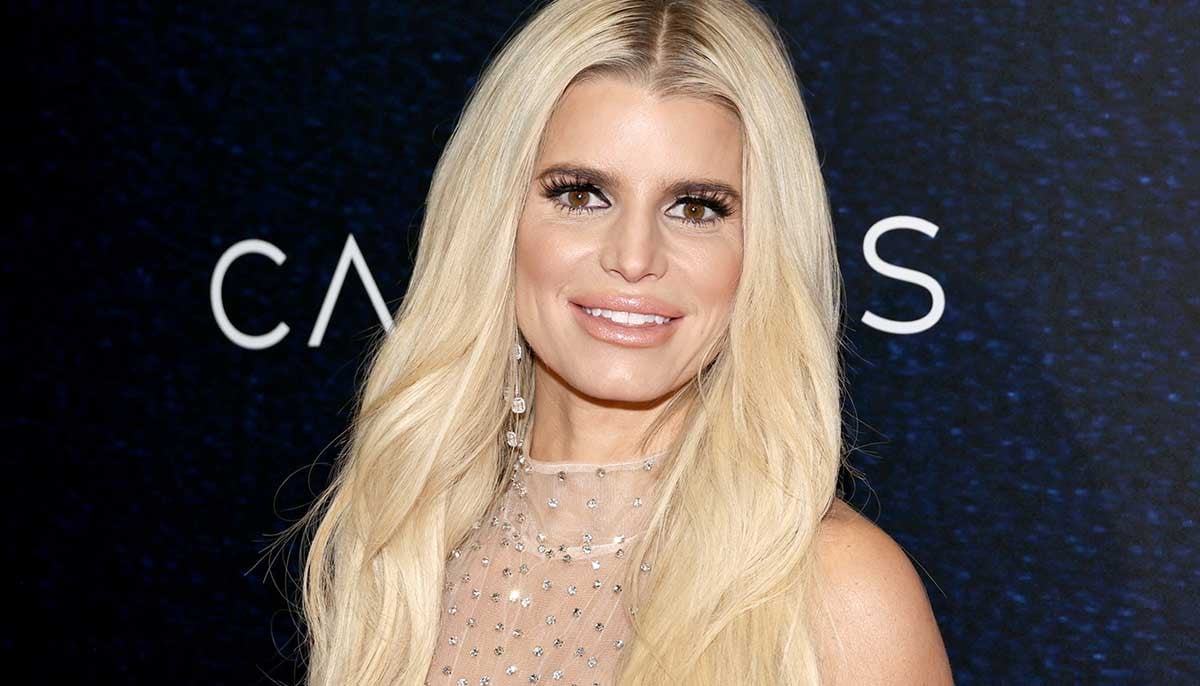
Rebecca Visser, a 36-year-old content creator and stay-at-home mom from California, permanently cut ties with her mother nearly three years ago, blocking her on social media and on her phone — and she has no plans to reverse the decision. It wasn’t something she took lightly. “Adult children don’t go no contact out of the blue,” Visser tells The Independent. “It’s something that’s been building up, and once they’d done it — nine times out of 10 — it’s a last resort. If they’re going no contact, maybe it’s time to look at the parent and not necessarily the child.”
It’s a dilemma that has made headlines recently due to the reported chasm that has opened up between 26-year-old Brooklyn Beckham and his famous parents, soccer icon David and former Spice Girl-turned-designer Victoria. Responding to reports last month that his parents had unfollowed their estranged son on Instagram, Brooklyn’s 20-year-old brother, Cruz, claimed it was Brooklyn who had, in fact, blocked Posh and Becks. “My mum and dad would never unfollow their son… Let’s get the facts right. They woke up blocked… as did I,” he wrote. Days later, the Beckhams were celebrating Christmas with their children, Cruz, Romeo, 23, and Harper, 14 — while Brooklyn was in Miami with his wife, Nicola Peltz Beckham, 31, and her billionaire parents, Claudia and Nelson Peltz.
While the reasons behind Brooklyn’s reported estrangement from his parents remain private, no two decisions to cut off contact with a family member are ever the same. For Visser, the turning point came in her twenties, when she says she tried to speak with her mother about alleged abuse she experienced as a child involving both her mother and her stepfather. According to Visser, her mother was unwilling to acknowledge the allegations.
By 2023, Visser — now married with a three-year-old son — says she had accepted that her mother was never going to take accountability for the alleged abuse. She sent her one last email, telling her, “I can’t have contact with you until something changes. And I just know those changes aren’t going to happen.” Visser says the decisive moment came when the dynamic began to affect her own family. “When I brought up things about adulthood and childhood, my mother would make me feel crazy and say none of this ever happened. Once, I started seeing her do this in front of my son and husband, I said, ‘I’m going to put a stop to this.’”
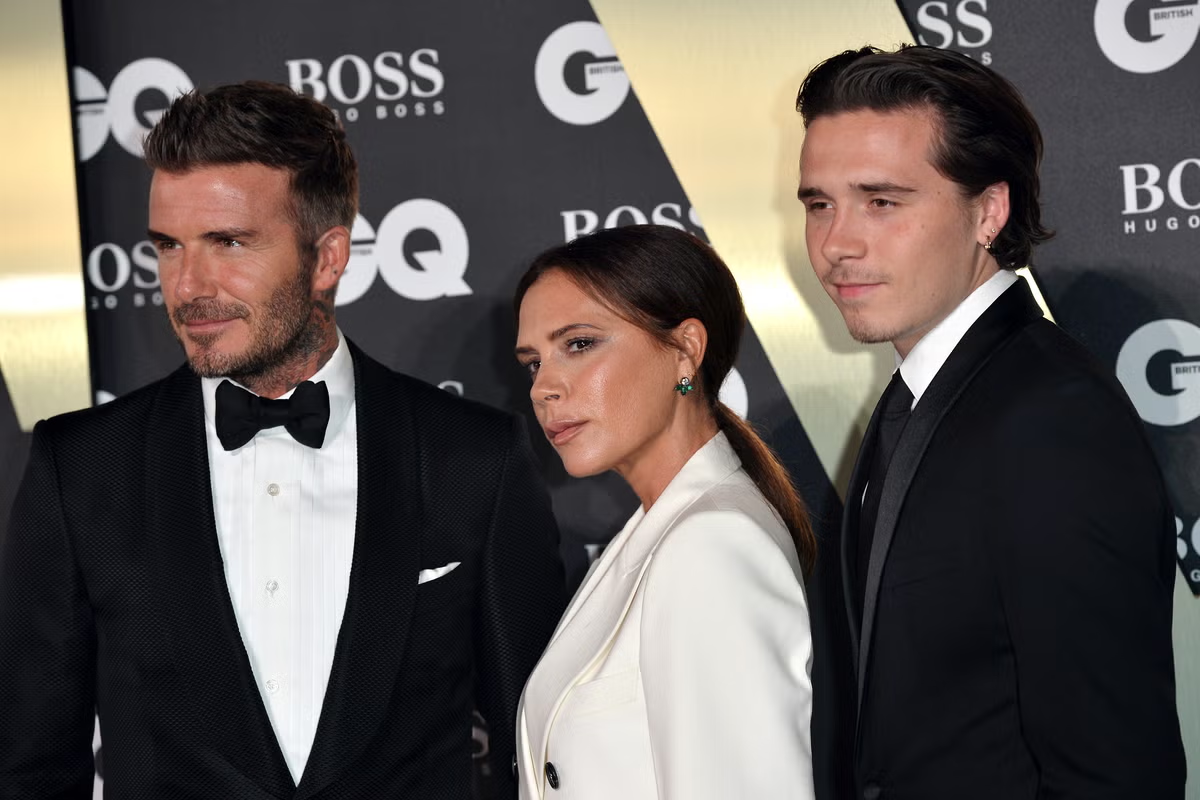
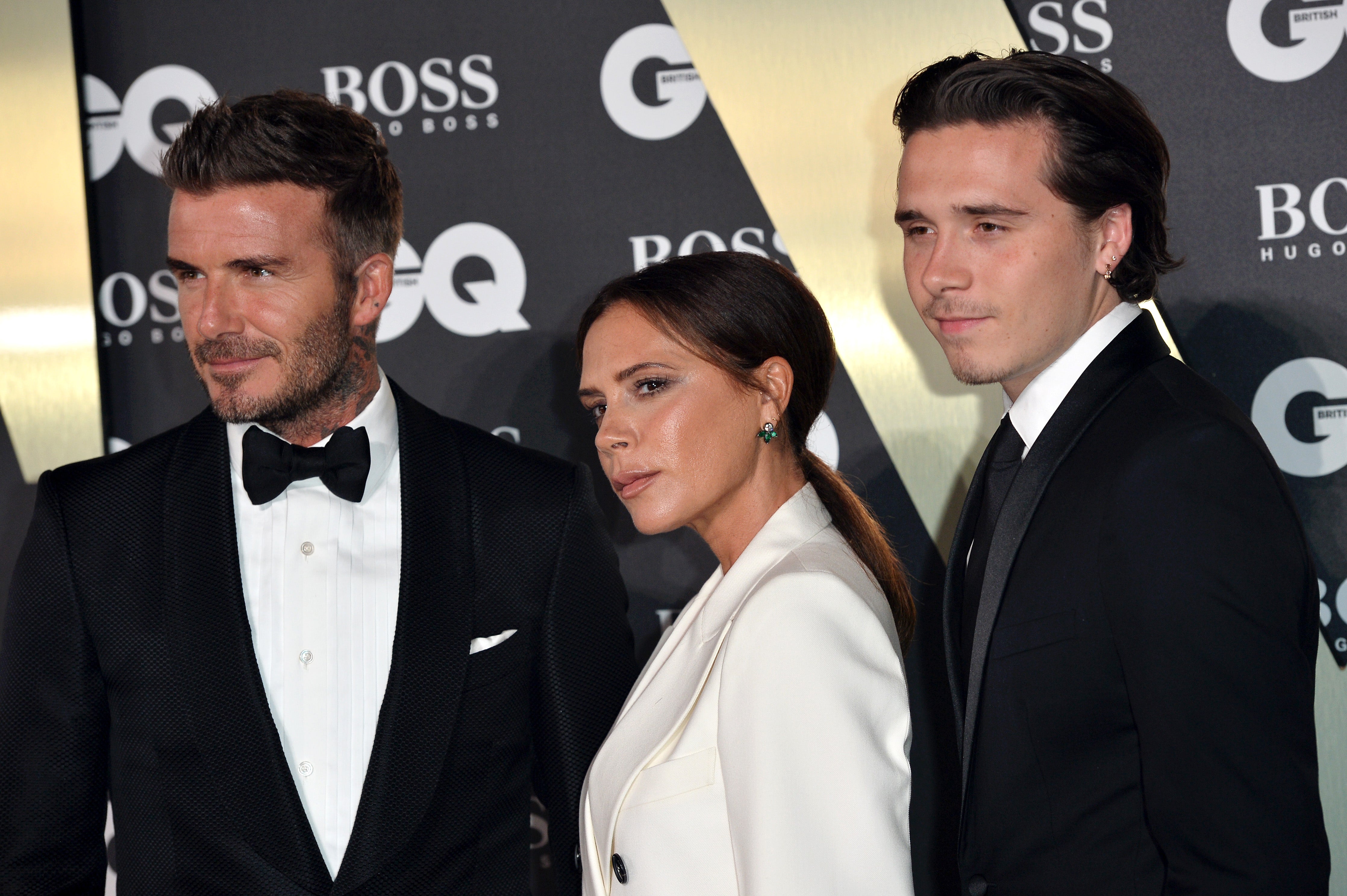
Brooklyn Beckham blocked his mother and father on Instagram last month, according to his brother Cruz (Getty)
Since cutting off contact with her mom, Visser says her stress and anxiety levels have reduced significantly, making her a better mom. “My first year of being a mom, especially being postpartum, was so stressful because of the abuse my mother was putting me through. Now that I’m without that, it gives me more ability to focus on my son,” she says. “As the last two years have gone by, it’s become more and more apparent that this was the best decision I could have made.”
Similarly, 31-year-old Annie Emerson says her mother struggled to take accountability for her actions. The Georgia-based hospice nurse says things reached a tipping point after she tried to confront her mother about her strict upbringing, which she says was shaped by the belief that children should be seen and not heard. According to Emerson, her mother simply accused her of misremembering her childhood.
Although the pair had argued for more than a decade, Emerson says one incident was the straw that broke the camel’s back: her mother placing Emerson’s two-year-old daughter in the front seat of a car on her step-grandfather’s lap. “My husband and I learned that she did not have a car seat with her,” the mother of two says. “She intentionally kept it from us until after she’d driven our daughter. When we said, ‘Hey, we’re not OK with this,’ she essentially said, ‘Well, you guys are being ridiculous and making a mountain out of a mole hill. This isn’t a big deal.’”
Rebecca Visser has had no contact with her mother since 2023 (Courtesy of Rebecca Visser)
Emerson says she had no choice but to end her relationship with her mother, who wasn’t taking accountability for her actions. Just four months on, she says the decision has changed her life for the better. “ I have so much peace now. I have a great support system, from my husband, close friends, and my in-laws,” she says. “ I’m very grateful to feel like I’m allowed to be who I am. There was a lot of shrinking of myself I did around my mother for a very long time, in an effort to try to keep a relationship with her.”
For many of us who have strong relationships with our parents, the decision to cut ties with them seems unfathomable. Ariel Rae — a 29-year-old marketing agency co-founder from New Jersey — made that choice a year ago, and hasn’t spoken to her mother since. However, she says she’s already grown accustomed to acquaintances describing the estrangement as “sad.” “If you don’t accept it or get it, that’s OK,” she says. “I’m grateful that you’ve never experienced this level of pain. But I know this was the right decision I had to make for myself to heal, to be functioning in society and in my relationships, and to grow as an adult.”
Annie Emerson says she has ‘so much peace’ since blocking her mother (Courtesy of Annie Emerson)
Rae says her relationship with her mother was fraught throughout her childhood, marked by frequent conflict and comments that steadily eroded her self-esteem. Her mother struggled with alcoholism and displayed narcissistic behavior, often denying or failing to recall the hurtful things she had said. Instead, Rae says, her mother would turn the blame back on her, calling her a “bad daughter.”
She realized that no matter how much she begged her mother for an apology, she would never get one. That brought a harsh clarity: the relationship was no longer worth having. Rae sent a final goodbye text and then blocked her mother’s number. The changes since ending the relationship, she says, have been profound. “I’m feeling happy and showing up as my best self with my friends and family and boyfriend,” she explains. “I used to just like throw my emotions out there and like kind of expect the other person to regulate them, and that is no way to be an adult. If I get emotional, I now have self-talk that I can start saying out loud to myself, and it calms me down. Without my mother, my negative self-talk stopped because she’s where it sources from.”
Nothing can erase the sense of loss that comes with breaking off contact with a parent. On difficult days, Emerson allows herself to sit with that sadness. “I also remind myself that the motherly love that I’m missing is not actually love that my mother ever gave me, or was capable of giving. I think it’s just that deep-seated desire of a child wanting to be loved by their parent.”
Ariel Rae’s relationship with her mother was fraught throughout her childhood. ‘Without my mother, my negative self-talk stopped because she’s where it sources from’ (Courtesy of Ariel Rae)
Today, neither Rae, nor Emerson, nor Visser regrets keeping their mothers out of their lives. They’re moving on from the resentment and disappointment they felt, which once felt impossible to manage. “I weirdly see some women sometimes that look like her, and it makes me feel pity or sad. Like, ‘Oh, like maybe she’s doing better,” Rae says. “ I think I’ve gotten to a point where I’ve done so much work on myself, and I’m so grateful for that, that it has allowed me to not hold as much anger towards her. I’ve healed a lot of my internal turmoil.”
Visser sympathizes with Brooklyn, “Your parents could have all the money in the world, but if they treat you poorly, you don’t have to stay in contact with them.”
Palace takes bold stand for Prince Harry amid security fight
Prince Harry’s ties with the Palace have not been smooth-sailing since the past many years and it seemed to have exacerbated over time, especially during his security battle.
The Duke of Sussex is awaiting a verdict on his UK taxpayer funded protection after he sent a letter to the UK Home Secretary for a review on risk assessment in October. Sources since early this month have been suggesting that tides are tipping in Harry’s favour even though the official verdict has not been announced.
Despite Harry calling his past defeat to gain back his security an “establishment stitch-up”, Buckingham Palace is refuting claims that it will intervene in the decision UK Home Office will make.
In a Mail on Sunday report, it was claimed that Harry has won his security and the decision announcement will just be a formality unless the Palace intervenes. A Royal aide slammed it calling it “both unjust and inaccurate”, via GB News.
“The palace has no such powers within Ravec. While they sit on the committee it is not their role to advise on threat analysis or appropriate mitigations,” they said.
“That is for the actual intelligence and security experts to advise on — as of course they do whenever the duke’s visits to the UK are being reviewed under the existing Ravec process.”
Meanwhile, a source familiar with the proceeding doubled down on the claims.
“I have no idea what the RMB (risk management board) recommendation to Ravec (the Royal and VIP executive committee) will be, but what I do know with certainty is that neither does anyone else, since they are still undertaking the review.”
The news comes as Prince Harry’s ties with King Charles have been improving with reports suggesting a major olive branch on the horizon. Prince Harry is reportedly extending an invite to King Charles to not only attend the Invictus Games but also to open the ceremony alongside him.
For two years now, Meena Bazaar in Karimabad has had a giant ditch dug up on its doorstep. Promised as a kilometre-long underpass (above which is a flyover), construction work has been ongoing for nearly two years, with barely any measurable progress. From Malir to the Quaid’s Mausoleum, a rapid bus service is supposed to run, but for now, motorists taking University Road have been delivered a safari on their daily commute.
The areas for these two projects are dominated by the Muttahida (formerly Muhajir) Qaumi Movement (MQM)-Pakistan, which itself broke apart in the last decade, following the Altaf Hussain-led MQM’s formation on the back of a new kind of student politics that gained shape in the 1970s. When the All-Pakistan Muhajir Student Organisation (APMSO) was founded at the University of Karachi in the summer of 1978, it marked an ethnic shift from the right and left-wing student politics that had led to the ouster of General Ayub. Later, General Zia’s ban on student unions in 1984, fearing a similar uprising, only led to the groups being unregulated and much more violent.
This photograph shows MQM London chief Altaf Hussain in his younger years standing in the centre with the APMSO flag in the backdrop. — X/@AHMERFALASTINI
An October 1988 Herald article by Zahid Hussain notes that while 14 students had been killed in Karachi between 1977 and 1984, the next four years saw 66 students murdered, the deaths also higher due to guns that had entered the city with the spillover of the Cold War.
That violent brand of politics, however, did not remain limited to university campuses. Instead, it spiralled the entire city into the kind of politics MQM became committed to. A whole generation later, however, new entrants to Karachi’s political scene, such as the Pakistan Tehreek-e-Insaf (PTI), have reshaped how elections in the city can be contested, and the former has done so far more successfully than the Jamaat-e-Islami (JI), despite its long political history in the city.
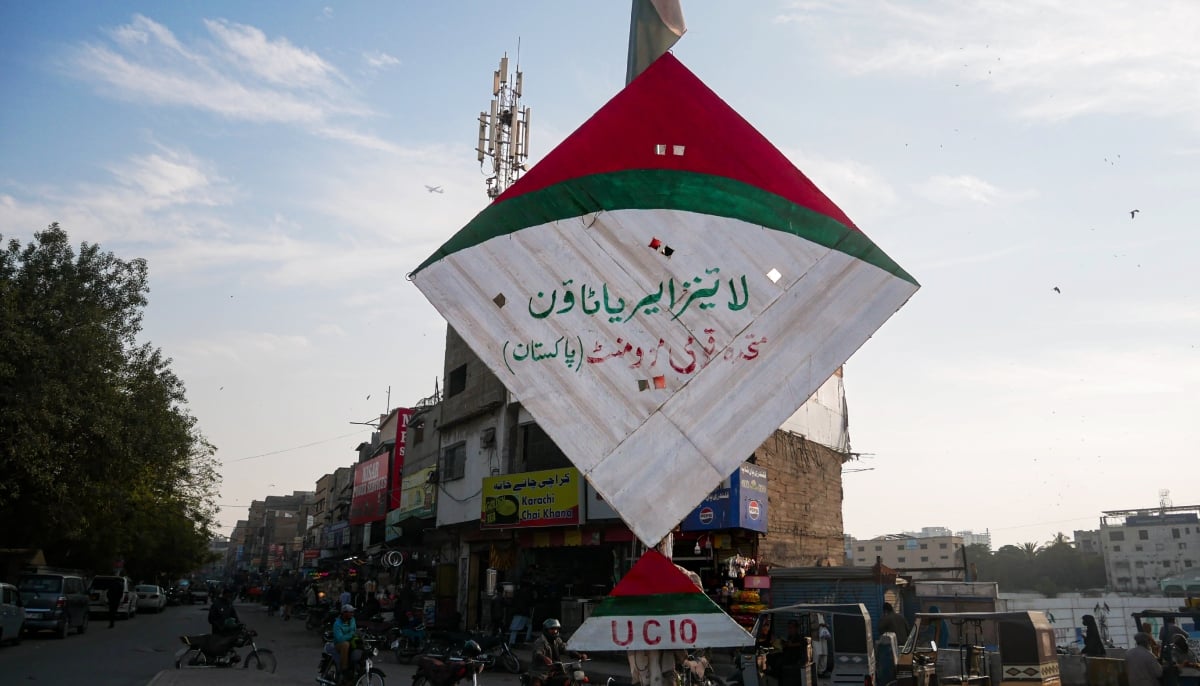
Kite, the election symbol of the MQM, is on display at an intersection in Karachi. — Instagram/@umersheikhphoto
However, is ethnic politics truly dead? Despite obvious issues in Karachi’s census data and challenges in defining ethnicity, the Muhajir vote still holds significant political sway, largely due to its numerical strength in the city. This is despite an uptick in newly-migrated Sindhi voters, and even a decrease in the Pashtun vote.
Manzil nahin, rehnuma chahiyeh
Major political parties in Pakistan are dynastic, such as the Pakistan Muslim League-Nawaz (PML-N) and the Pakistan People’s Party (PPP). There is a tried and tested method of maintaining their power by either passing the torch on to their progeny or one of the alliances through marriage. Similarly, Awami National Party (ANP) remains tethered to its family — Aimal Wali Khan is the great-grandson of Bacha Khan.
MQM and PTI, however, have demonstrated significant sway in Karachi’s recent politics and potential future; they have no hereditary structure in place. Imran’s sons’ entering the political landscape in Pakistan is tenuous at best, and a post-Imran PTI doing well seems unlikely.
Geo.tv illustration
In the past decade, two realpolitik manoeuvres have taken place in which both PTI and MQM have since been forced to deal with a radical restructuring for political survival. The first was the crackdown against workers loyal to Altaf Hussain, which led to the creation of MQM-Pakistan, a group that disavows any reference to Altaf, and the second was the continued incarceration of Imran and other PTI leaders, which has limited the party’s reach.
The MQM minus Altaf was unable to capture the imagination of the muhajir vote bank in the 2018 general elections, where they only won seven seats (one reserve), facing electoral rigging that they themselves had previously become famous for. In the city’s new politics by design, then, the PTI, following massive rallies and support, ended up dominating Karachi’s seats in both the provincial and national assembly. To even the casual onlooker, the shift was seismic.
Fast forward to 2023, the MQM-Pakistan found favour with Pakistan’s power brokers, and although on Form-47, MQM-Pakistan has 21 seats in the National Assembly, independent observers maintain that widespread rigging seems to have been the primary reason.
This, however, was not the first time that the MQM had received a nod from Islamabad. Musharraf’s takeover of the country in 1999 protected the MQM and even led to the creation of the City District Government Karachi (CDGK), in which those loyal to the MQM received jobs.
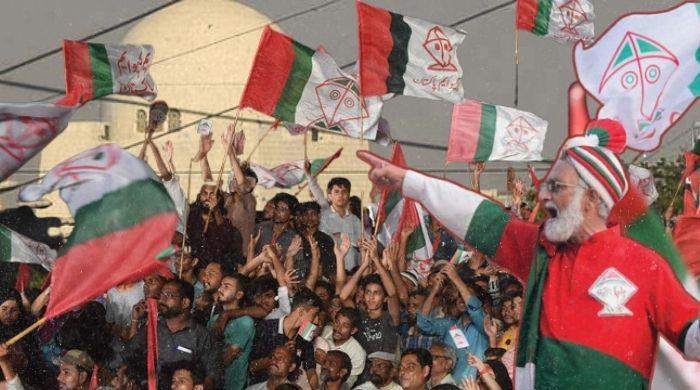
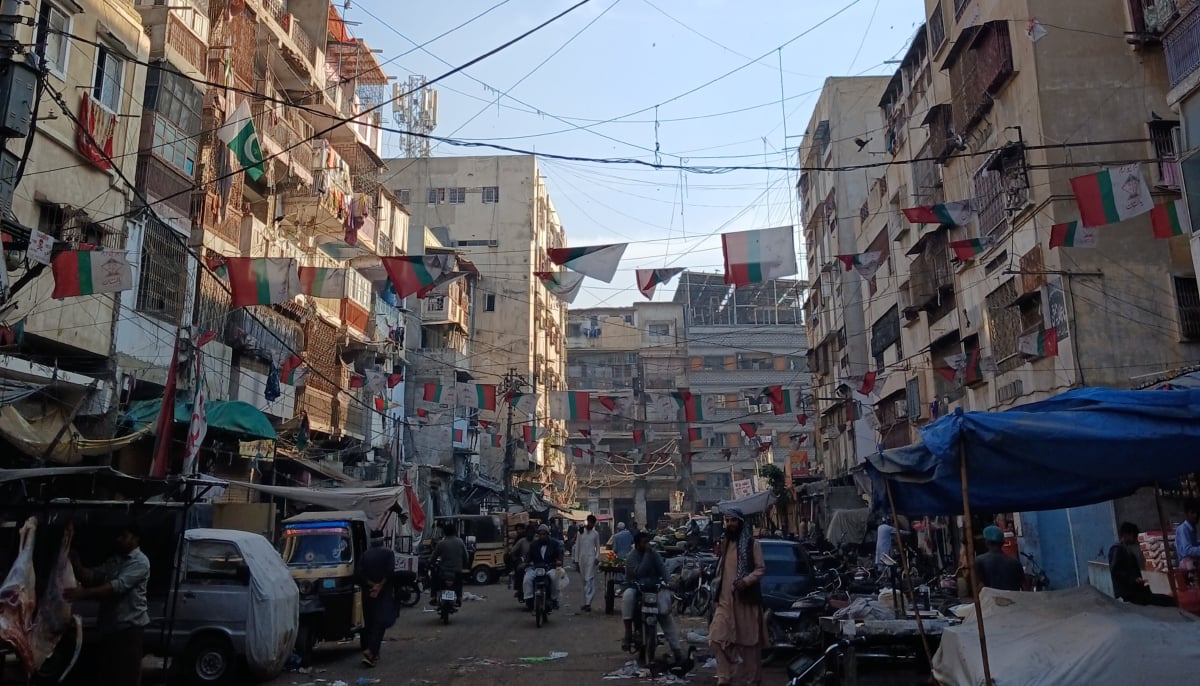
A street in Karachi is decorated with MQM flags ahead of general elections in Pakistan. — Instagram/@umersheikhphoto
Musharraf’s ouster in 2008, however, then began maligning MQM’s power. Despite a hold on the city’s politics in the 2013 elections — one marred by violence — the movement had begun to dissipate MQM’s control of the city. Altaf’s August 22 speech in 2016 ended with paramilitary forces raiding Nine Zero, MQM’s headquarters, and arresting its leaders. It was almost a precursor to Imran’s arrest in Lahore by the police.
While the PTI struggles with leadership after Imran, the MQM has already become a litmus test, particularly in Karachi. After Altaf and Imran, neither the current MQM nor PTI leadership has produced an heir apparent.
Among political parties in Pakistan that have, to some degree, managed to stay afloat despite a lack of hereditary support is the Jamaat-e-Islami (JI), but it has delivered poor electoral results. In Karachi, while it has performed at the union council level, with several members elected, it has so far been unable to do so beyond that.
Whom to speak against?
A callous charade has overtaken the blame game for Karachi’s issues, with the news cycle unfolding as follows: for every bad incident, be it rain, lack of utilities, or even death by criminal negligence, the PPP blames the MQM, which, in turn, pins it on the former, and life returns to normal.
As it stands, the MQM-P and PPP are in a coalition federal government. Outside of flimsy arguments and posturing on traditional and social media, the allies cannot actually spar with each other when it comes to both major and minor administrative problems that Karachi faces today. If Karachiites were to protest, they don’t have a party to mobilise a protest with.
Any cracks within the federal coalition and Karachi once again goes up for grabs, which could potentially spiral into violence. Unfortunately, for Karachiites, this has left the PPP as the sole choice for governance.
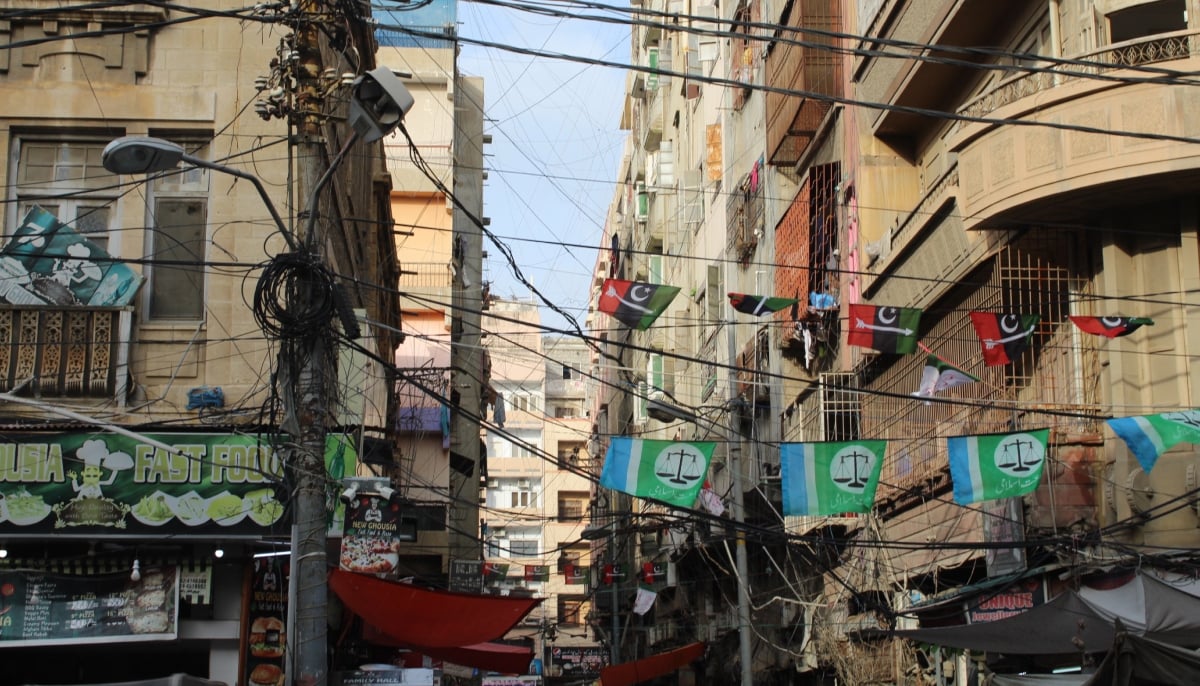
A street in Karachi’s Saddar area is decorated with flags of PPP and JI. — Instagram/@umersheikhphoto
The PPP’s political calculus for Karachi has also, for now, determined that the MQM-P is the political group that they would most likely side with. In ethnic terms, they have chosen an Urdu-speaker, Murtaza Wahab, as mayor in an allegedly fraudulent election which saw the PTI team up with JI.
Wahab, however, has now come to only represent failures of the PPP, but behind an ethnic lens. A non-muhajir mayor supported by the PPP might spur resentment amongst Urdu-speaking Karachiites. Therefore, PPP remains committed to a mayor who has become a beta, low-budget version of the kind of projection politics that Shahbaz Sharif began in the late 2000s, and which now his niece Maryam has taken a step further in Punjab.
The idea of muhajir
The idea of a muhajir cannot exist without the idea of Pakistan, and this is precisely why scholars such as Fazila-Yacoobali Zamindar have noted in reference to the 1990s operations against Altaf Hussain, that muhajir disillusionment with the idea of Pakistan has been “ironic”, given their contributions in demanding a separate Muslim homeland in South Asia in the first place. Muhajirs felt that the creation of Pakistan was both a political and religious duty.
The fact that an anti-Pakistan sentiment for muhajirs would emerge as early as the 1990s represents, according to Yacoobali, “…one of the most significant ruptures in the narrative of Pakistani nationalism”.
However, more recent work shows that following the 2016 crackdown against MQM workers loyal to Altaf Hussain, is when a new Muhajir politics could emerge. As Tahir Naqvi writes, “…the post-2015 period is precisely the kind of situation that would benefit from a resurgence of ‘muhajir’ exclusivism, and yet such a move has not been made by domestic leaders of the movement.”
Geo.tv illustration
However, it is difficult to see how the movement that Naqvi points towards is possible with the present ban on student politics, given APMSO’s role in setting the groundwork for the MQM. While student mobilisation has existed to some degree, the ban on student unions has now lasted well over a generation, which has led to the need for a rethinking of what student politics today could look like, with several left-leaning groups emerging. For any muhajir exclusivism, as Naqvi suggests, an APMSO might be the only vehicle that could deliver.
This ethnic exclusivism, however, is one of two routes a new muhajir politics could take, and is one that continues to term itself a muhajir politics, and essentially rewinds time to launch a new MQM. This further enmeshes the muhajir identity back into the ethnically fuelled politics the country has found itself in.
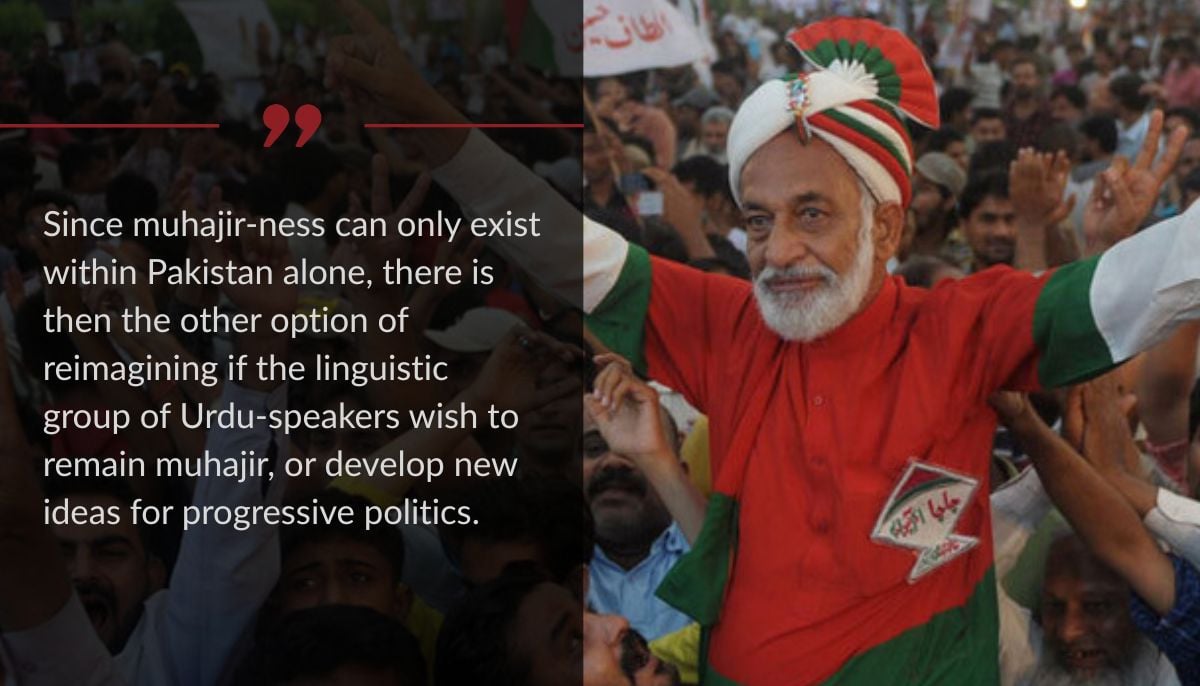
However, since muhajir-ness can only exist within Pakistan alone, there is then the other option of reimagining if the linguistic group of Urdu-speakers wish to remain muhajir, or develop new ideas for progressive politics. Is Karachi to remain passive, or will it become a hub of progressive political activity once again?
Saeed Husain is an anthropologist and editor at a publication house. He posts on X @saeedhusain72 and can also be reached at [email protected]
Pakistan is taking decisive steps to transform its vast but underutilized mineral resources into a driver of strategic economic growth, as the country prepares to host the Second Pakistan Minerals Investment Forum (PMIF26) on April 8–9 in Islamabad.
With an estimated trillions of dollars in untapped reserves—including copper, gold, lithium, cobalt, rare earth elements, and gemstones—Pakistan aims to position itself as an investment-ready and responsible player in the global minerals market.
Despite its rich resource base, mineral exports remain minimal, and local communities have historically seen limited economic benefits.
The upcoming PMIF26 seeks to change this trajectory by promoting transparency, policy reform, and international partnerships.
The forum follows the success of PMIF25, which attracted over 5,000 delegates from 50 countries and resulted in 14 memorandums of understanding (MOUs).
Pakistan’s mineral wealth is largely concentrated in Balochistan, Khyber Pakhtunkhwa, and Gilgit-Baltistan, regions long underexplored due to security and infrastructure challenges.
Among the flagship projects is Reko Diq, one of the world’s largest undeveloped copper-gold deposits, estimated to contain over 5.9 billion tonnes of ore.
In addition, Pakistan’s gemstone reserves—valued at approximately $450 billion—remain vastly underexploited, with annual exports standing at just $5.8 million.
To address this gap, the government has introduced the country’s first national gemstone policy framework, targeting $1 billion in exports within five years through certification reforms, value addition, and youth-led entrepreneurship.
Prime Minister Shehbaz Sharif has approved the establishment of international-standard laboratories, certification systems, and centers of excellence to modernize the sector and attract private investment.
The reforms aim to integrate local miners and communities into formal supply chains while improving productivity and export potential.
Federal Minister for Petroleum Ali Pervaiz Malik has emphasized that PMIF26 will serve as a global platform for promoting sustainable mining, attracting foreign investment, and enhancing policy clarity.
The forum will feature strategic conferences, technical sessions, an international gemstone exhibition, and a comprehensive resource library for investors.
Pakistan is also strengthening international collaboration. A recent MOU between US-based Strategic Metals (USSM) and Pakistan’s Frontier Works Organization (FWO) highlights growing cooperation in critical minerals production and technology transfer.
US officials have described such partnerships as vital to both economic and strategic security.
Experts estimate that comprehensive development of Pakistan’s mineral and gemstone sector could add $5–7 billion annually to GDP over the next decade and create tens of thousands of jobs.
The government has stressed that environmental protection, worker safety, ESG compliance, and domestic value addition will remain central to future mining projects.
By processing minerals locally rather than exporting raw materials, Pakistan aims to maximize economic returns and ensure inclusive growth.
As global demand for critical minerals accelerates, PMIF26 is being positioned as a strategic milestone—signaling Pakistan’s transition from untapped potential to measurable economic performance and sustainable development.
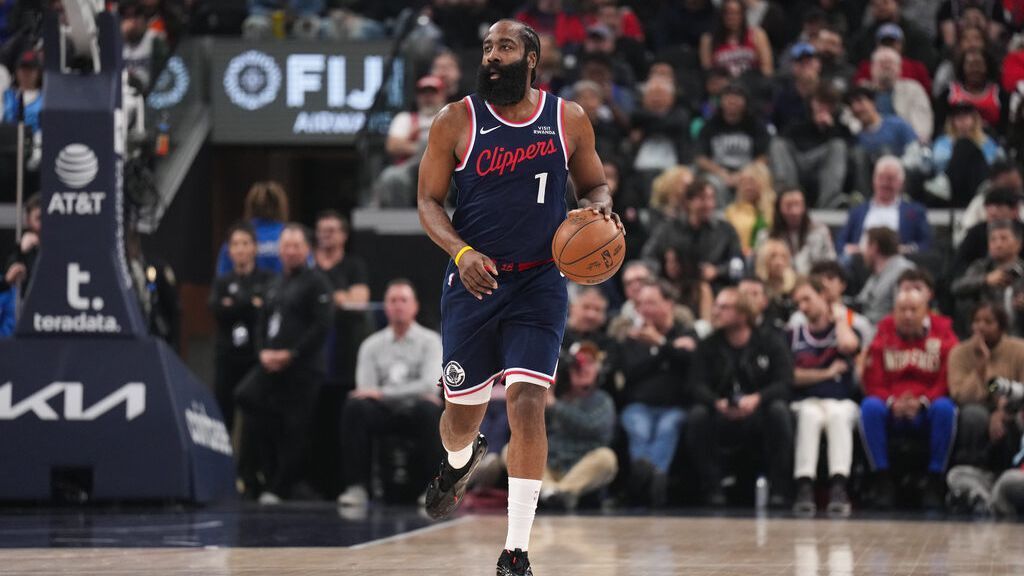
James Harden passed Shaquille O’Neal for ninth place on the NBA’s all-time scoring list.
The LA Clippers guard made a 3-pointer early in the third quarter Monday night against the Charlotte Hornets at Intuit Dome in Inglewood, California, pushing his career total to 28,598 points in his 1,187th regular-season game. O’Neal had 28,596 points in 1,207 games over 19 years.
“Shaquille O’Neal, somebody that I literally grew up watching here in L.A.,” Harden said. “Him and Kobe [Bryant] doing their thing, winning multiple championships, the most dominant big man in the history of the game. It’s a true honor, it’s a testament to the work that I put in.”
Harden, who began the night 14 points behind O’Neal, finished with 32 points and 10 assists in the Clippers’ 117-109 win against the Hornets. He had 13 points in the first half — including 11 in the first quarter — and scored 11 in the third and eight in the fourth to increase his scoring total to 28,614.
Harden entered the night averaging 25.6 points per game, his highest average since the 2019-20 season (34.3 points per game) when he won the last of three straight league scoring titles.
Harden, who began the game with 28,582 career points in his 17th season, faces a steep climb to the next spot. Wilt Chamberlain is eighth with 31,419 points, in just 1,045 games over 14 years. LeBron James is the all-time leader with 42,601 points entering his game with the Los Angeles Lakers on Monday. Following him are Kareem Abdul-Jabbar, Karl Malone, Kobe Bryant, Michael Jordan, Dirk Nowitzki and Kevin Durant.
Harden recently moved up to 12th on the all-time assists list (8,604). The 11-time All-Star also ranks second in 3-pointers made (3,291), behind Stephen Curry.
The NFL postseason brings elevated play on the field with the stakes higher — and one team even upped its pettiness.
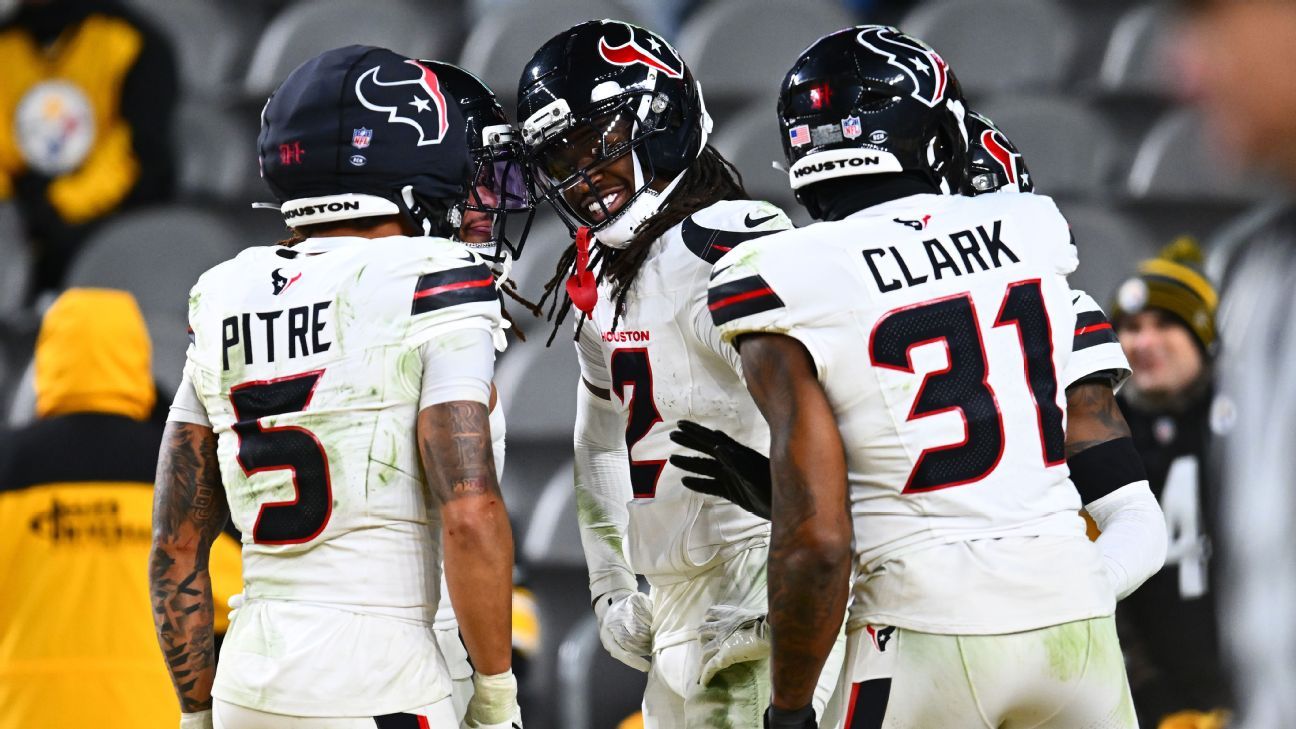
The Houston Texans dominated the Pittsburgh Steelers30-6 to clinch the final divisional round spot. The Steelers’ 24-point loss is their worst in a home playoff game in franchise history and third worst in any playoff game, according to ESPN Research.
Houston’s defense allowed just 175 total yards and forced two turnovers — both of which were returned for scores. Pittsburgh forced three turnovers, but those resulted in only six points. The Steelers became the first team to score six or fewer points in a playoff game despite having at least three takeaways since the Tampa Bay Buccaneers in 1999. Steelers quarterback Aaron Rodgers had 146 passing yards, while Texans signal-caller C.J. Stroud had 250 passing yards.
Houston made sure to poke fun at Pittsburgh after its victory. The Texans edited a “Welcome To Pittsburgh” sign by spray-painting the final score and “Swarm City” on it — a spin on Steel City. They also included the character from the Fallout video game series with the 713 Houston area code on the bottom.
Here are the top trolls from the NFL wild-card round.
The San Francisco 49ers upset the defending champion Philadelphia Eagles on the road. The 49ers closed as a 5.5-point underdog — according to DraftKings Sportsbook — their third-largest upset win in a postseason game in the Super Bowl era, according to ESPN Research.
With 43 seconds left, Philadelphia faced a fourth-and-11 at San Francisco’s 21-yard-line with a chance to take the lead. But Eagles quarterback Jalen Hurts‘ pass was incomplete, clinching a 49ers win. San Francisco quarterback Brock Purdy threw for 262 yards and two touchdowns. Hurts had 168 passing yards and a touchdown.
The 49ers followed their massive victory by trolling the Eagles. They poked fun at Philadelphia’s “Fly Eagles Fly” chant, including spelling out “Eagles.” San Francisco instead spelled out “Niners” in its caption. It also wouldn’t be a troll without referencing a Philly cheesesteak, which the 49ers posted to emphasize that they are “still hungry for more.”
The Buffalo Bills held off the Jacksonville Jaguars for their first playoff road win since the 1992 AFC Championship Game, according to ESPN Research.
The fourth quarter included touchdowns on each of Jacksonville’s and Buffalo’s first two drives — both teams had only one touchdown apiece before the final quarter. The Bills capped a nine-play, 66-yard drive with a 1-yard rushing score from quarterback Josh Allen. The Jaguars had a chance to answer with just over a minute left, but quarterback Trevor Lawrence‘s pass was picked off, sending Buffalo to the next round.
After Jacksonville clinched the AFC South in Week 18, teammate and cornerback Jarrian Jones gave Lawrence a grill in the locker room. The moment was inspired by an AI photo someone posted on social media of Lawrence wearing a grill and a giant chain around his neck.
The Bills’ postgame graphic included what resembles a grill — with “Bills Win” written on it — buried in the sand at a beach. They also shared a photo of Allen rocking shades and a chain from a July 2024 video and resurfaced a Jaguars’ post from Friday.
Los Angeles and Carolina threw haymakers in the fourth, each scoring 14 points. There were four lead changes, tied for the most in a playoff game in NFL history. But the Rams had the go-ahead score when quarterback Matthew Stafford connected with tight end Colby Parkinson for a 19-yard touchdown with 38 seconds left. The Panthers turned it over on downs on their ensuing possession, clinching the Rams’ victory.
A huge win came with multiple clever trolls.
Los Angeles first posted a graphic of a hook with a string holding a football as a panther looked up with the caption referencing the sound commonly used to lure cats. The Rams then referenced a famous scene from the 1994 film “The Lion King,” when Rafiki presents a young Simba to the other animals as the future king. This time, Rafiki held the Panthers logo then tossed it.
Once the top food festival, this year’s edition totally failed to match expectations
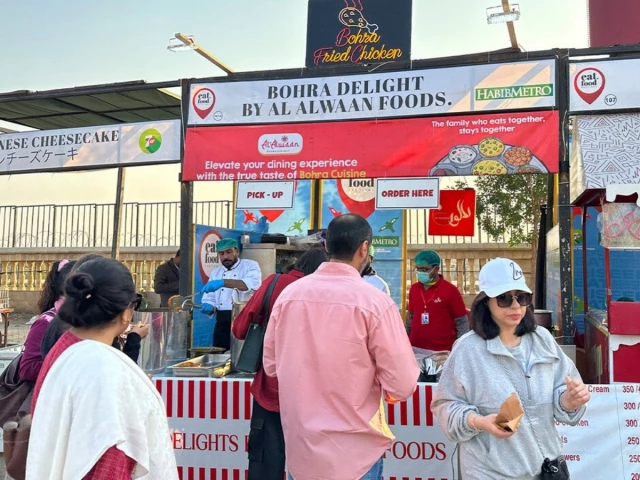
Karachi Eat once regarded as the city’s most exciting food festival, came under sharp criticism this year. Despite months of hype, the experience fell short for many attendees.
From petty thefts and arguments to long walks across scattered sections, visitors shared their frustration. Food lovers felt let down, while those who came primarily for concerts enjoyed themselves. For many, the event felt more like a music festival than a food one.
Attendance on the first day appeared modest, but crowds surged on the second and third days. While congestion was high, facilities were not. Across Instagram, TikTok, and YouTube, most videos circulating about the festival carried a critical tone.
Another major grievance was the venue itself. With very little grass in sight, the park turned into a dusty space once the crowds built up. The distances between sections were tiring, and many argued that a basic leisurely walk should have been possible but wasn’t.
Karachi Eat has long been known for inventive food, but this year the offerings proved disappointing. “We look forward to Karachi Eat every year, but this time nothing felt new,” one attendee told The Express Tribune. “It was the same corndogs, the same hot pots, and the same Creek Walk dishes. No new ideas, no innovation, everything was repetitive.”
Compared to previous editions, there were fewer food stalls. The more attractive ones were those serving loaded fries, creamy burgers, Lahore-style tawa chicken, or khausa, yet many visitors seemed more inclined to film content than to eat.
“We come every year with our family, but this time it was quite disappointing,” another visitor said. “No new items. Half the things are the same as Creek Walk. Variety just wasn’t the same.” Prices also drew complaints. Portions were small and costs high, with many arguing the food was simply not worth the mark-up.
If the food and logistics failed to impress, the concerts largely saved the festival. Performances by Asim Azhar, Havii, Hasan Raheem, Ashir Wajahat, and Samar Jaffri drew excitement, and amusement rides made their first appearance this year.
But videos of fights and arguments also went viral, adding to the perception of weak security. There were too few seating options, long distances to cover, and a general lack of coordination leaving many to feel the festival required endurance rather than offering entertainment.
Karachi Eat 2026 was not a complete flop, but it did fall short of the standards it once set. The festival still draws crowds and social media hype naturally, yet basics like organization, safety, affordability, and comfort were lacking. For some, dust, chaos and crowds have become part of the Karachi Eat experience. For others, it’s enough reason to think twice before returning next year.
Note: Despite multiple attempts to contact the Karachi Eat management for comment, they did not respond.
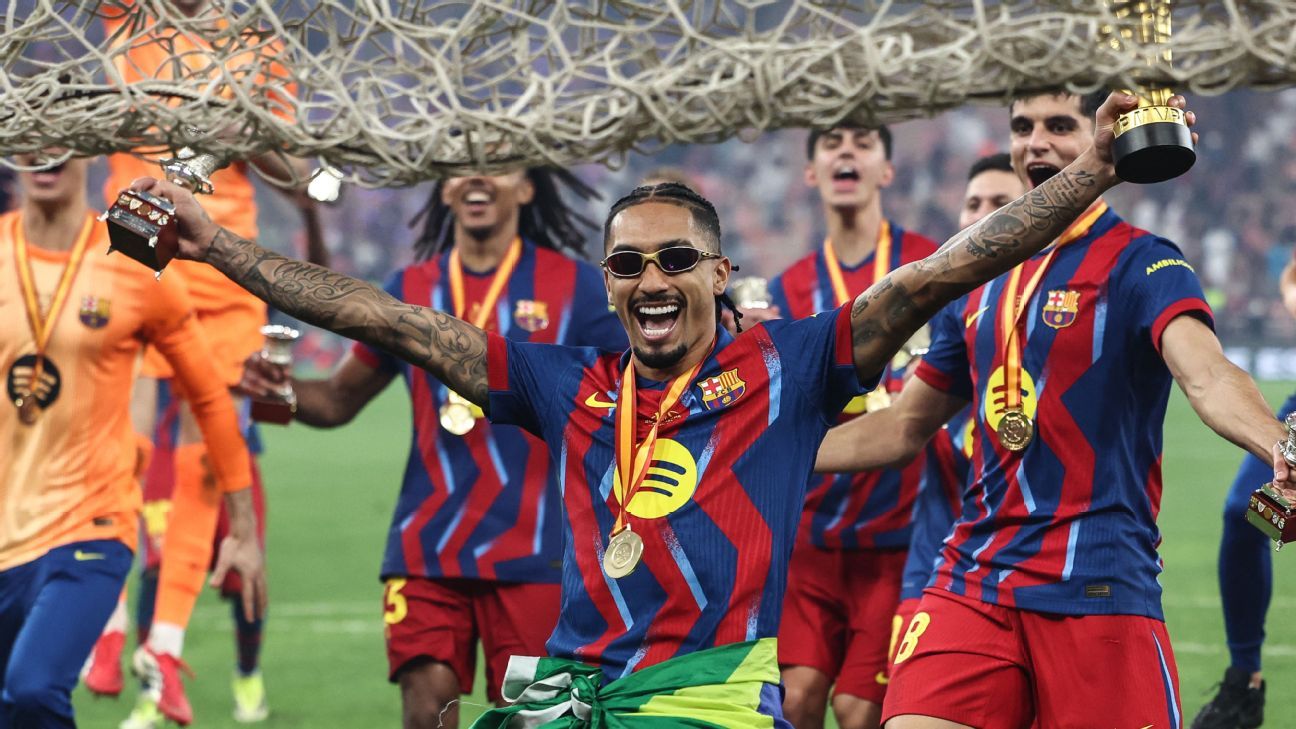
The European soccer weekend is over, but it’s left us A LOT to talk about and unpack on Monday! For a start, the Supercopa de España concluded in Riyadh on Sunday with Barcelona — led by the incandescent attacking stylings of Raphinha — defeating Clásico rivals Real Madrid 3-2 to claim the crown. Xabi Alonso did try to play more conservatively despite his tactical tendencies, and it still didn’t work, so … what will they do next?
In England, it was the weekend of the FA Cup third round and we got plenty of shocks to unpack, from nonleague Macclesfield FC dumping defending champions Crystal Palace out of the competition — the biggest upset in tournament history — to Manchester United, still with an interim manager in Darren Fletcher, losing to Brighton in one of the few ties to pit Premier League teams against one another.
Then, in Italy, we had a top-of-the-table clash — and classic Antonio Conte meltdown — when Inter met Napoli, plus talking points galore around Tottenham (more pressure on Thomas Frank), Bayern Munich (who won 8-1), the Africa Cup of Nations (as Nigeria and Egypt both booked semifinal places), Liverpool (who face a defensive crisis), Chelsea (who welcomed new boss Liam Rosenior to the touchline), Milan, and much, much more.
It’s Monday morning, so what better time for some musings? Let’s get into it.
Too much Barcelona, too much Raphinha even for a ‘safety first’ Real Madrid in Supercopa
Some might say it’s not really “safety first” when, with Kylian Mbappé not yet fit enough to start, you still line up with three forwards (Vinícius Jr., Rodrygo and Gonzalo García) plus Jude Bellingham. But it’s not just about the names; it’s about what they’re asked to do.
Bellingham held his position, adding density to the midfield. Garcia and Rodrygo doubled back to disrupt (or try anyway) the Pedri–Frenkie de Jong creative access. Fede Valverde was essentially a wingback and, of course, there was no Arda Güler in the starting XI, with some suggesting it was part of cloak-and-dagger shenanigans.
The Turkish playmaker was in the lineup announced prior to kickoff only to disappear 20 minutes later, with Real Madrid citing “human error.” Was it that, or was it come sort of “curveball” to confuse Barcelona? We might never know, but given Hansi Flick rarely reacts to the opposition and generally always plays the same way, you want to give Madrid the benefit of the doubt.
The upshot was Barça with a whopping 76% possession in the first half and, to be fair, the plan might have worked if Gonzalo or Vini had taken their chances in the first half hour. But they didn’t, Raphinha did and Real Madrid were down. Then, because Barça are Barça(even Jules Koundé) and Vini can go beast mode at any time, Real Madrid equalized in a wild injury period at the end of the first half, which saw three goals in five minutes: Vini’s solo run, Pedri setting up Lewandowski to make it 2-1 and then Garcia’s equalizer after the penalty box pinball.
At halftime it was 2-2, but the script was familiar. Barça scored through movement and patterns of play, Real Madrid relied on individual brilliance and set piece chaos. The latter is simply not a sustainable formula for a big club, but in Jeddah they played with the humility of a small club taking on a more gifted opponent.
And so, it came to pass that if Raúl Asencio or Álvaro Carreras had taken their late chances — after Raphinha’s winner to make it 3-2 — we would have had a draw, then penalties, and then maybe a different narrative. But fundamentally the substance wouldn’t have changed.
The game was entertaining and there were positives, like Vini reminding us what he can do or the fact that some of Xabi’s superstars showed they can be humble, work hard and follow instructions. But this is a reactive Real Madrid, not a proactive one. This is Xabi Alonso cosplaying as Jose Mourinho or Carlo Ancelotti. You can justify it, perhaps, in a one-off game like this one; week in, week out, he’ll have to change or the club will change him with another manager.
As for Barcelona, Raphinha obviously stands out thanks to the two goals — the winner was scored while falling over, which takes some doing — but overall they simply looked more like a team. A flawed team, perhaps, and we can second-guess Flick until the cows come home (from the defensive line to the substitutions), but they have a very clear identity and that matters. He’s making his 12-month head start over Xabi count.
Manchester United bounced out of FA Cup, but at least they’re close to appointing a manager
play
1:25
Is the Manchester United job ‘attractive’ for Amorim’s successor?
Ale Moreno questions whether the “reality” at Manchester United could hinder their manager search despite competing for a top four spot in the Premier League.
OK, that’s a bit of a “troll” from me. It wasn’t the only silver lining to another disappointing weekend for the club: The 2-1 home defeat marks only the third time in 41 years that they exit the competition at this stage.
The problem is that United feel like they’re in a holding pattern, and that won’t change until they get a manager. Monday morning was full of rumors that the appointment of Michael Carrick as interim boss — I guess Fletcher is the “interim interim boss” — through the end of the season was imminent. Carrick is liked and respected, though lest we forget he finished 8th and 10th in his last two full seasons at Middlesbrough, eventually getting sacked last June.
If they do get a new boss, a couple things seem logical.
Their next game is the Manchester derby. Maybe making it his debut — when there’s a risk of a heavy defeat at Old Trafford and further negativity — isn’t the greatest idea. Be clear, too, about what the club goals are: Champions League football (they’re one point out of fifth place, lest we forget) and finding someone to take the club forward next season.
And please remember your own history, and what happened the last time you brought in a club legend to take you through the summer on an interim basis (Ole Gunnar Solskjaer): No matter how well he does, stick to the original plan and bring in a permanent boss in the summer. No matter how much Carrick’s old teammates in the commentariat tell you that you should just stick with him.
Antonio Conte goes ballistic over VAR penalty as Inter and Napoli draw
play
1:19
Are Inter favourites in the Serie A title race?
Gab Marcotti reacts to Inter’s 2-2 draw vs. Napoli following Scott McTominay’s brace against the league leaders.
It was one of those classic cases where the letter of the law leaves match officials no real option. Step on an opponent’s foot, and it’s a foul: That’s what the directives for referees say. So when Henrikh Mkhitaryan got to the ball a split-second before Amir Rrahmani and the latter came down on his foot, technically it should be a penalty.
In real life, for anyone who has played the game at any level, it doesn’t seem right. Referee Daniele Doveri waved play on, but VAR called him to the screen (reportedly because he didn’t have a clear view) and at that stage, he had to give it. That’s when Conte lost his cool, got in everyone’s faces and got himself sent off.
It was unprofessional, but relatable, if not understandable. However, those are the protocols, and unless we all grow up and accept errors, then we need to have protocols. Even if they’re somewhat inflexible.
You can see why Conte was angry. After conceding an early goal, Napoli actually played very well, equalizing via Scott McTominay, and at that point of the game (20-ish minutes to go), they appeared to have the upper hand. After Hakan Calhanoglu converted from the spot, Napoli got their deserved 2-2 scoreline thanks to McTominay, making the draw a fair result. (Inter did also hit the woodwork late, too.)
So what did we learn? Inter reminded you that they are the best team in Serie A even on a day when their big guns don’t really fire (Lautaro Martínez was uncharacteristically anonymous). Napoli showed that when Conte gets them purring, they can punch well above their weight and challenge anyone. Even when, as McTominay pointed out postgame they are missing key players (Romelu Lukaku, André-Frank Zambo-Anguissa, David Neres, Kevin De Bruyne).
“I’d like to see how they would have fared against us if they had been missing the guys we were missing,” McTominay said. He’s right. Then again, Napoli have one of the better coaches around (when he’s not getting sent off), and Inter are coached by a guy who had half a season of top flight experience until last August.
Vibes matter, and they go from bad to worse for Tottenham following Aston Villa defeat
play
2:18
How long does Thomas Frank have left at Tottenham?
ESPN’s Steve Nicol and Julien Laurens react to Tottenham’s 2-1 defeat to Aston Villa in the third round of the FA Cup.
If there’s a damning indictment of Thomas Frank’s tenure as Tottenham manager, it’s that they’ve won just six of 15 home games since he took over. Three of those were in the Champions League against Slavia Prague, Villarreal and Copenhagen — the former two almost certain to exist in the group stage, the Danes possibly — while the other three were against Brentford, Burnley and Doncaster Rovers. That’s Frank’s previous team, the second-bottom side in the Premier League and a club in the League One relegation zone.
I realize a win away is worth (points-wise) just as much as one at home. The difference is the vibe, the crowd and the mood. If your fans only see you beat no-names and generally see you play poorly, it has a multiplying effect of negativity. Frank is like Pig-Pen from Peanuts, the kid with the cloud following him everywhere, and he can’t shake it.
Tottenham weren’t terrible against Aston Villa in the 2-1 defeat that knocked them out of the FA Cup at the third-round stage, and they did show fight. They just weren’t particularly good and, worryingly, showed little clarity. Frank’s football is almost mechanical (and not in the good, “patterns of play,” way either) and against a better coach like Unai Emery, he gets outfoxed pretty quickly. Throw in the fact that many of his players are a bundle of nerves (even when Cristian Romero isn’t there) and it’s not a good recipe.
Quick hits
play
1:39
Colin Udoh: This is the best Nigeria team I’ve seen!
Colin Udoh reacts to Nigerian’s excellent display vs. Algeria in the quarterfinals of AFCON.
10. Nigeria storm past Algeria, and we’re going to miss them this summer: I get it. It’s how World Cup qualifying works, and Nigeria were really poor in CAF qualifiers. They failed to win their first four games, they failed to beat Zimbabwe at home and they lost their playoff final to Congo on penalties. That’s why they won’t be at the World Cup.
That said, it’s hard to argue they’re not in the top 20 — let alone top 48 — in the world right now. At this Africa Cup of Nations, Nigeria have five wins in five games, 14 goals scored and a resounding quarterfinal victory Saturday over Algeria, who were undefeated in their last 22 competitive games. They won 2-0, though it could have been five or six (their xG was 3.36).
There’s a ton of focus on the sparkly front three of Ademola Lookman, Akor Adams and Victor Osimhen, but the back line has been getting stronger as the tournament has progressed — Algeria were held to three shots for a combined xG of 0.13 — which is a testament to the job coach Eric Chelle has done.
If you can, watch their toughest test yet in Wednesday’s semifinal against hosts Morocco. And be sad you won’t get to see him at the World Cup.
9. The biggest upset in FA Cup history? Technically, yes: Macclesfield’s 2-1 win over FA Cup holders Crystal Palace was just that. There are 117 places between the National League North side and Oliver Glasner’s crew, and that’s a far greater gap than any other “giant killing” in the history of the cup. Of course, if you want to be a buzzkill, you can point out that Palace were without most of their first choice XI, that Macclesfield are a “phoenix club” (born out of the ashes of Macclesfield Town, who went bust in 2021) with far more resources than their peers in their division, and that Palace have other priorities right now.
But that wouldn’t change the substance: This was a seismic feat and Palace’s XI, you’d imagine, would probably walk the National League North undefeated. And yet on Saturday, they were comprehensively beaten. This wasn’t some kind of smash-and-grab: Macclesfield had more shots, more goals and a higher xG. Not to mention, of course, they had far more drive and desire.
play
2:26
Is Macclesfield beating Crystal Palace the biggest upset in FA Cup history?
ESPN’s Steve Nicol and Julien Laurens react to Macclesfield FC beating Crystal Palace 2-1 in the third round of the FA Cup.
8. Bayern Munich pick up where they left off: It was their first game in three weeks, they had a young untested midfield (Aleksandar Pavlovic and Tom Bischof), no Joshua Kimmich … you wondered if ring rust might get to Bayern for the visit of Wolfsburg. You can argue that to some degree, it did just that in a somewhat contested first half in which they took just four shots, but that served only to unleash the hounds of hell after the break.
It was a 45-minute blast that saw them score six goals (it could have been more) while racking up 71% possession (no, they don’t take their foot off the gas and play on the counter when they’re out of sight) en route to an 8-1 win. We saw Harry Kane score a worldie, Michael Olise show (again) that he’s the most important creative force on the team (at least until Jamal Musiala returns), and the sort of collective hunger coaches crave. The Champions League is on notice.
play
1:45
Moreno: Musiala & Karl ‘difference makers’ for Bayern’s Champions League hopes
Ale Moreno assesses Bayern Munich’s Champions League chances after extending their lead at the top of the Bundesliga table.
7. Gabriel Martinelli doesn’t want to be Arsenal‘s odd man out: Big squads like Arsenal’s are a wonderful thing until one of two things happens. Either the bean counters insist on cutting costs, or players realize that while winning is great, playing is even greater. Because, fundamentally, you can’t rotate all the time and there is always a hierarchy.
Gabriel Martinelli’s hat-trick (he should have scored four) in the 4-1 FA Cup win at Portsmouth is a reminder of just what he can do. Yet with Leandro Trossard sticking round and the additions of Eberechi Eze and Noni Madueke, it’s pretty evident he’s not top of the pecking order. He has started just six league this season and, if someone out of that group is expendable, on paper it’s him. At 24, he’s the youngest, he’s been there the longest, and his deal is up in 2027 (2028, if the club pick up his extra one-year option), which means he could still fetch a sizable transfer fee. It would be a shame, because he brings something different and likely has no desire to leave, but with a squad this size, coaches have to make tough decisions.
6. Free from commitment, could Villarreal actually do something in LaLiga? They are pretty much out of the Champions League, where they’ve been atrocious (one point in six games, same as Kairat Almaty, I kid you not) and they were knocked out of the Copa del Rey a month ago. LaLiga is all they have and if the old trope about making lemonade with lemons holds, they owe it to themselves and their fans to do something really special, because who knows when they’ll have another chance like this?
Well, Saturday’s 3-1 win over Alaves means they’re third, with a game in hand. Win that (it’s second-bottom Levante away, so it’s doable) and they’ll be one point behind Real Madrid and five behind Barcelona, who are second and first respectively. Just finishing third would be a feat — only once in the past 17 years has someone other than Barça, Real or Atletico Madrid finished in the top three — but they have a genuine shot at aiming higher. No football other than LaLiga means fewer injuries, a full week to prepare and the ability to play with higher intensity. And anyone who has watched Barcelona and Real this season can point out plenty of flaws and weaknesses in both teams. Marcelino has a pretty unique opportunity here.
play
1:06
Will Man City’s 10-1 victory vs. Exeter give them confidence?
ESPN’s ‘FC TV’ crew react to Manchester City’s 10-1 thrashing of Exeter City in the third round of the FA Cup.
5. Antoine Semenyo is a “teachable moment”: The winger scored on his debut for Manchester City (a 10-1 FA Cup trouncing of third-flight Exeter City) and some are debating whether the £64 million ($85M) fee to sign him from Bournemouth represents “good business.” My take, TLDR version? Probably not given he just turned 26, but if you’re City and Pep Guardiola, the last step to put you over the top is often the priciest.
More interesting, I think are two Semenyo-related factors. One is that it’s probably not so much about what he can contribute offensively — City already have the most goals, the highest xG and more guys who can score than anyone else in the Premier League — but rather what he does off the ball. Semenyo comes from a hardcore pressing system at Bournemouth and has the athleticism, mindset and intelligence to work his backside off out of possession more than any other City forward or winger. That’s particularly important if Guardiola is going to continue playing midfielders at fullback and leave them solo to defend in space.
The other is that Semenyo (if we accept the £64M fee) represents a collective failure of the football and talent ID system. He was born and raised in London, which is teeming with scouts, he failed a trial at 15 with Crystal Palace, and he was generally unattached for a couple years before signing with Bristol City at 17. Given the number of professional clubs in the capital and their armies of scouts, did nobody realise his potential? He didn’t make his Premier League debut until he was 23 and, before that, he was in and out at Bristol City in the championship. Again, did he get a lot better all of a sudden or did 99% of the Talent ID system take a collective nap? There’s a lesson there…
4. Liam Rosenior’s Chelsea looking a lot like that of his predecessors: At least when it comes to systems and rotation and at least in his first outing, a 5-1 FA cup win at Charlton, that is. And that’s entirely normal and understandable. Not just because he’s had hardly had any time to work, but also because Enzo Maresca left because of deteriorating relationships, not issues with tactics or personnel deployment.
And so we saw a very familiar 4-2-3-1 formation with a fullback (Jorrel Hato, in this case) stepping into midfield in possession with a midfielder moving into the hole, creating a de facto 3-2-2-3. Guys like Hato, Filip Jorgensen, Facundo Buonanotte and Marc Guiu got the start just as they would have under Maresca and the football, for better or worse, was Maresca-like. If Rosenior succeeds, it won’t be because he fiddles with the way Chelsea play: It will be because he does a better job getting some guys to live up to their transfer fees, and because he does a better job managing up.
3. Egypt down Ivory Coast to follow the script (sort of): They had won 10 of 11 games against the Elephants and like many of their previous wins, this was about guile and mental fortitude. Egypt took the lead when Omar Marmoush punished Odilon Kossounou’s error, went 2-0 up on a set piece and managed the game en route to a 3-2 win that sets up a semifinal against Senegal on Wednesday.
Where it deviated somewhat was that the Ivorians showed a ton of fight and reopened the game at 2-1, before Mohamed Salah (who else?) on the counter made it 3-1. Still the Ivorians fought, clawing another one back with Guela Doué (you might be familiar with his little brother, Desire) and setting up a tight finale. This could easily have gone the other way, and it’s a reminder of how much the Ivorians have grown. Egypt can’t coast on their big names or their innate ability to punish opposing mistakes against Senegal. They need to raise it another notch.
2. Liverpool needed defensive help before, now even more so: You feel for Conor Bradley, whose season ended on Thursday night in the 0-0 draw at Arsenal, when he went down injured. And you feel for Northern Ireland fans, as he’ll miss the World Cup playoffs. The difference, of course, is that Liverpool can sign a replacement, whereas Northern Ireland can’t.
We’ve pointed out the club’s lack of defensive depth all season long, but that was at centerback — now there’s a gaping hole at right back too. Can you play whack-a-mole with some combination of Jeremie Frimpong (who is coming off an injury and more of a wingback), Dominik Szoboszlai (who is an attacking midfielder), Andy Robertson (who is a left back) and Joe Gomez (who is injury-prone and more of a center back)? Sure you can. But you shouldn’t, not unless you want to be the guy who drops half a million on a Ferrari but refuses to get insurance, figuring he can always get spare parts from his old, rusty Ford Fiesta. Logic dictated one center back signing this window. Now, after injuries to Bradley and Alexander Isak and whatever is going on with Mohamed Salah, they probably need three (but might have to do with one).
1. Wasteful Milan drop points again (and it could have been worse): Sometimes you do the right thing, possibly for the wrong reasons, and it boomerangs and bites you in the backside. Away to relegation threatened Fiorentina and with a trip to Como coming up midweek, Milan manager Max Allegri opted to give a number of regulars — Rafael Leão, Luka Modric, Adrien Rabiot, Youssouf Fofana, Davide Bartesaghi — a breather. It worked in the sense that Milan looked bright and created plenty in the first half, with Christian Pulisic fluffing a couple of chances. It didn’t work in the sense that Milan didn’t score and got markedly worse after the break. They went a goal down and only equalized in the final minutes, and it could have been worse: “Magic” Mike Maignan had to make a key save in injury time, and Fiorentina somehow hit the woodwork.
Allegri is by nature conservative, but he made a bold choice here. It worked in terms of performance — ironically — until he sent on the big guns with half an hour to go. But because they dropped points (again) he’s going to get slaughtered in the media and likely become even more conservative next time out.
Is Jessica Simpson really joining ‘The Bachelorette’?
Jessica Simpson has “no interest” in starring in the popular dating show, The Bachelorette.
Speaking to TMZ on Monday, the 45-year-old singer said that she doesn’t need Hollywood’s help in finding a man.
When she asked if she would ever star in The Bachelorette, Jessica responded, “I have options. I’m good.”
The Irresistible hitmaker didn’t share more about her single life, skipping a question about what she’s looking for in a partner.
In July 2025, Jessica made an appearance on the Today show, where she revealed that she is looking to date someone who is a skilled kisser.
“It has to be a very good kisser,” she said at that time. “See, that’s like the most intimate thing. Grab my face and pull me in!”
The Take My Breath Away songstress further shared that she is open to dating and is looking for someone with unique qualities.
“My type of person is a one-of-a-kind,” she said. “I don’t have like, a look or anything like that. I just like for somebody to be individually who they are and exude confidence without the ego.”
“I don’t need somebody to be supportive of me all the time,” she added. “I feel like the independence I have right now, if I can have that and give it to someone else, that would be cool.”
For those unversed, Jessica announced her split from Eric Johnson in January 2025 after 10 years of marriage.
Meghan Trainor addresses ‘toxic mom group’ rumours again
Meghan Trainor has once again addressed the “toxic mom group” drama.
Taking to TikTok, the singer posted a hilarious video insisting that she has nothing to do with the “toxic” mom group drama that erupted after Ashley Tisdale French’s viral essay.
For those unaware, Ashley published a personal essay in The Cut in January 2026, sparking conversation around the concept of toxic mom group. Clinically and socially, the group is parenting social circle that appear to be supportive on the surface, but operates through judgement, comparison, and exclusion.
In the essay, Ashley described her experience of leaving a “toxic” mom group, with readers attempting to identify the alleged members. While the actress kept names anonymous, Meghan’s name circulated repeatedly online.
ow, Meghan shared a video of herself lip-syncing to a scene from Stranger Things while the text over the video read, “Me still trying to convince everyone I’m not involved in the mom group drama.”
In the caption, the singer added, “I swear i’m innocent.”
Meghan Trainor, who shares two sons with husband Daryl Sabara, also addressed the situation previously. In another TikTok video, she poked fun at the moment she learned about the alleged drama and suggested that she was just as surprised as everyone else.
Furthermore, her husband Daryl also shut down rumours, telling TMZ that there is “no drama” between his wife and Ashley, noting that their focus is simply on raising their two young children.





 Too much Barcelona, too much Raphinha even for a ‘safety first’ Real Madrid in Supercopa
 Manchester United bounced out of FA Cup, but at least they’re close to appointing a manager
 Antonio Conte goes ballistic over VAR penalty as Inter and Napoli draw
 Vibes matter, and they go from bad to worse for Tottenham following