Recently unredacted construction plans for China’s new super embassy in London have ignited a storm of national security concerns across the United Kingdom, as blueprints reveal a hidden underground room positioned alarmingly close to some of Britain’s most sensitive communication cables.
Major critics of the proposed site, which will run as close as three feet to the internet infrastructure, warned that the secret room could serve as a hub for Chinese espionage. While the British government reportedly assured its allies that the lines do not carry sensitive government data, the cables transmit financial transactions as well as communication traffic for millions of internet users.
The blueprints were publicly unredacted Monday by The Telegraph, just one week before Prime Minister Keir Starmer is widely expected to approve the plans before his visit to see President Xi Jinping in China.
A government spokesman told the outlet that despite the security concerns, “national security is our first duty and government security experts have been involved throughout the process so far.”
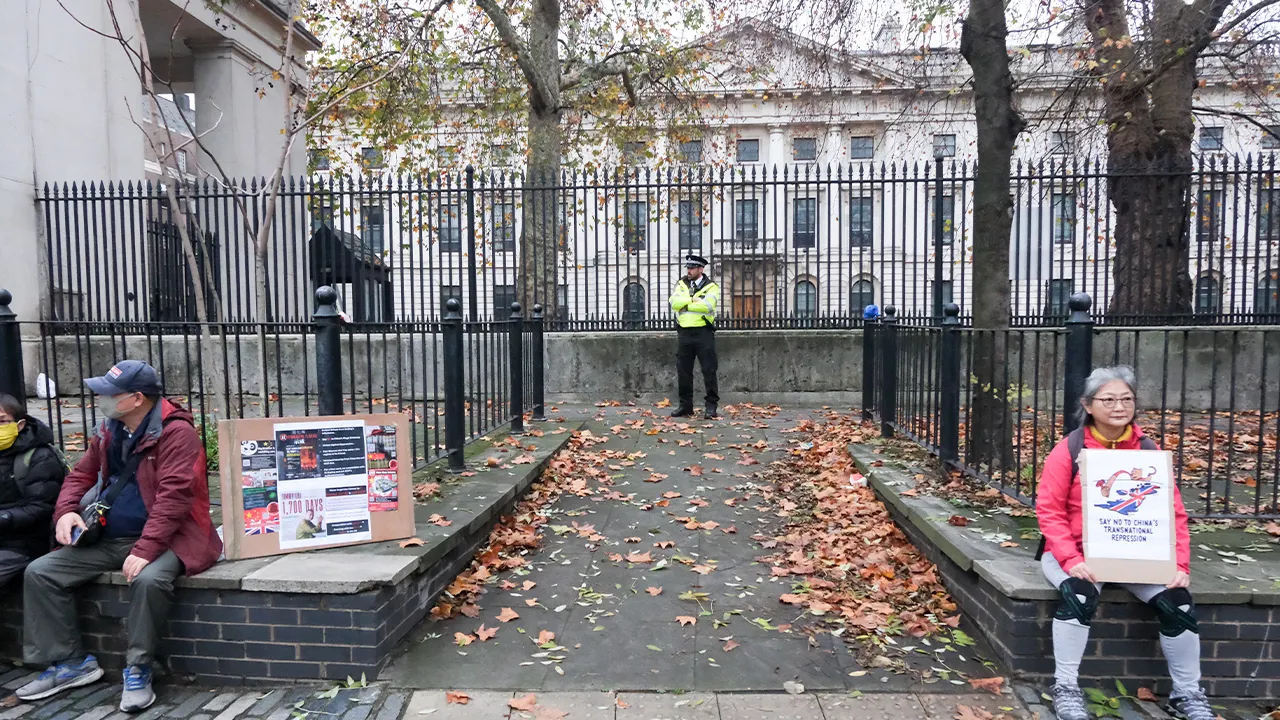
Protest against the proposed China Embassy at the Royal Mint Court, London(Matthew Chattle/Future Publishing via Getty Images)
According to the blueprint, the facility will be located at the former Royal Mint and will become Europe’s largest Chinese embassy.
Construction plans indicate that China intends to demolish and rebuild a basement wall, placing officials and equipment just over three feet from critical fibre-optic cables. Security experts have warned that such proximity could create opportunities for “cable-tapping,” which involves inserting wiretaps or reading light signals leaking from the lines.
Professor Alan Woodward, a security expert at the University of Surrey, highlighted the technical feasibility of espionage given the physical layout, the Telegraph reported. He described the demolition as a “red flag” and noted, “If I were in their shoes, having those cables on my doorstep would be an enormous temptation.”
Royal Mint Street at the rear of the possible future Chinese embassy which has been locked in a planning battle for years and whose decision is still due for review, on 10th June 2025, in London, England(Richard Baker / In Pictures via Getty Images)
Additionally, the concealed chamber appears to be equipped with at least two hot-air extraction systems designed to ventilate heat-generating equipment. Experts reportedly inferred that this infrastructure suggests that the room is designed to accommodate high-powered technology such as advanced computers typically used for espionage and data processing.
Beyond the single chamber near the cables, the unredacted plans also revealed a network of 208 secret rooms beneath the diplomatic site. The basement appears to allow for emergency backup generators, sprinkler systems, communications cabling and showers, suggesting that officials could remain underground for extended periods, potentially to operate or monitor equipment.
The construction plans have generally raised fears that the London complex could serve as a Beijing intelligence hub. According to UK outlet The Times, Britain has been pressured to reassure the United States and other intelligence partners that the cables do not transmit any sensitive government data.
Protesters hold a huge banner saying “No To China’s New Mega Embassy Spy Base In London’ during the demonstration outside the Royal Mint on March 15, 2025.(Martin Pope/SOPA Images/LightRocket via Getty Images)
CLICK HERE TO DOWNLOAD THE FOX NEWS APP
Alicia Kearns, the shadow national security minister and prominent critic of the project, described the approval of the embassy as handing Beijing a strategic advantage against British interests.
“Giving China the go-ahead for its embassy site would be to gift them a launchpad for economic warfare at the very heart of the central nervous system of our critical financial national infrastructure,” she said in a post on X.
Bonny Chu is a Digital Production Assistant at Fox News Digital.
Among individuals spending more than eight hours per day sedentary, reducing sitting time by 30 minutes per day may lead to meaningful reductions in mortality risk, says a study
The findings suggest that even small shifts—adding a few minutes of brisk walking or reducing prolonged sitting—can deliver substantial population-level health gains when adopted broadly. Representational image
“Sitting is the new smoking” has now got the backing of hard data. Doing a little more physical activity each day and reducing time spent sitting may go a long way in preventing premature deaths, according to a large international study.
Health warnings about too much sitting are not new. What is new is the scale of evidence. The study, published in the medical journal The Lancet, pooled individual-level data from nine prospective cohort studies from more than 135,000 adults across the UK, the US, and Scandinavia. By analysing physical activity and sedentary time as continuous exposures rather than broad categories, researchers sought to estimate the health impact of realistic, incremental behaviour changes rather than idealised targets.
“Small and realistic increases in moderate-to-vigorous intensity physical activity (MVPA) of 5 minutes per day might prevent up to 6% of all deaths in a high-risk approach and 10% of all deaths in population-based approach. Reducing sedentary time by 30 minutes per day might prevent a smaller, but still meaningful, proportion of deaths in the two risk scenarios,” said the report.
The study has been authored by a group of 20 researchers representing several educational organisations, including the Norwegian School of Sports Science, the Norwegian Institute of Public Health, the Sydney School of Public Health, the University of Vigo in Spain, the University of Sydney, the University of Alabama at Birmingham, and the Department of Epidemiology, Harvard TH Chan School of Public Health, USA.
What did the study find?
The analysis found that increases in moderate-to-vigorous physical activity (MVPA) were strongly associated with lower all-cause mortality, particularly among individuals who were least active at baseline. Among participants accumulating around one minute of MVPA per day, increasing activity to six minutes per day was associated with approximately a 30% reduction in mortality risk. Increasing MVPA from one minute to about 11 minutes per day was linked to an estimated 42% lower risk of death.
However, the benefits were not linear across the activity spectrum. While mortality risk continued to decline with higher levels of MVPA, the magnitude of benefit diminished beyond roughly 20 to 25 minutes per day, suggesting diminishing returns at higher activity levels.
Using population impact modelling, the researchers estimated that if all participants increased their MVPA by five minutes per day, approximately 6% of deaths could potentially be prevented. A ten-minute increase in daily MVPA was associated with an estimated 10% reduction in deaths at the population level. These estimates were driven largely by gains among the least active participants, reinforcing the importance of targeting those at the lower end of the activity distribution.
Cutting sitting time matters, especially for the most sedentary
The study also examined sedentary time independently of physical activity and found that reducing daily sitting time was associated with lower mortality risk, though the relationship varied by baseline levels of sedentariness.
Among individuals spending more than eight hours per day sedentary, reducing sitting time by 30 minutes per day was associated with meaningful reductions in mortality risk. A 60-minute reduction in daily sedentary time was linked to even larger benefits, particularly among those sitting for more than ten hours a day. In this group, a 60-minute reduction in sedentary time was associated with an estimated 25% lower risk of death.
“Reducing sedentary time by 30 minutes per day might prevent 3 per cent of all deaths in the high-risk approach and 7.3% in the population-based approach. Results from the UK Biobank were of a smaller magnitude but still substantial—e.g., reducing sedentary time by 30 minutes per day in all except the most active participants was associated with preventing 4.5% of total deaths,” the study noted.
By contrast, reductions in sedentary time were not consistently associated with lower mortality risk among participants who already spent relatively little time sitting, highlighting that interventions may need to be tailored to baseline behaviour.
Realistic targets over idealised guidelines
A key contribution of the study is its focus on realistic, achievable changes rather than theoretical scenarios such as eliminating sedentary behaviour altogether, an approach commonly used in earlier research.
Instead, the findings suggest that even small shifts—adding a few minutes of brisk walking or reducing prolonged sitting—can deliver substantial population-level health gains when adopted broadly.
The analysis used harmonised accelerometer data and adjusted for multiple confounders, including age, sex, smoking, body mass index, pre-existing cardiovascular disease, cancer, and diabetes. Sensitivity analyses excluding early deaths and participants with mobility limitations yielded similar results.
“Our approach has several strengths. Analyses are based on small and realistic changes in device-measured physical activity and sedentary time and take into account the non-linear shape of the association between activity levels and mortality,” the authors of the study noted while concluding that public health strategies should prioritise helping the most inactive and most sedentary individuals. These individuals should be encouraged to make small, sustainable changes, rather than focusing solely on achieving recommended activity thresholds that may be unrealistic for large sections of the population.
First Published:
January 14, 2026, 05:50 IST
Newslifestyle ‘Chair’ Today, Gone Tomorrow? Moving Even A Little More And Sitting Less May Cut Early Death Risk
Disclaimer: Comments reflect users’ views, not News18’s. Please keep discussions respectful and constructive. Abusive, defamatory, or illegal comments will be removed. News18 may disable any comment at its discretion. By posting, you agree to our Terms of Use and Privacy Policy.
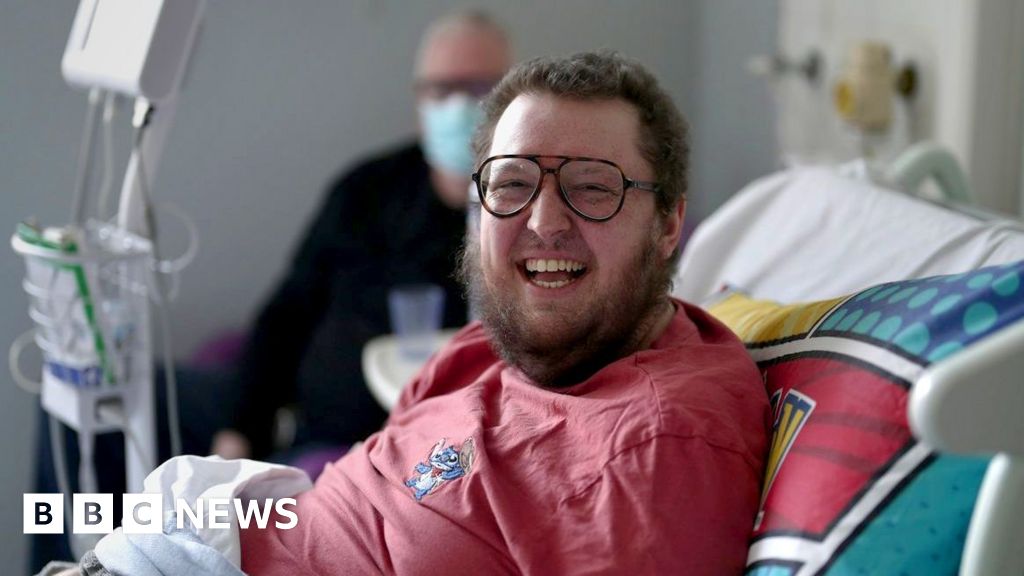
Oscar Murphy has now finished his CAR-T therapy and is hopeful for his future
The first leukaemia patient to receive a breakthrough treatment since it was made available on the NHS has said it was “fantastic” and “very sci-fi”.
Oscar Murphy, 28, who has an aggressive form of the blood cancer, was given the “living drug”, called CAR-T therapy, at Manchester Royal Infirmary.
BBC News was present on 2 January when Oscar received the first of two infusions of his own immune cells, which had been genetically modified to recognise and target his cancer.
NHS England has agreed to fund the immunotherapy at several centres across the country. About 50 NHS patients a year are likely to benefit from it.
Oscar was diagnosed with B-cell acute lymphoblastic leukaemia (B-cell ALL) in March 2025.
He underwent chemotherapy and a donor stem cell transplant in July but in November was told that his cancer had returned.
“The leukaemia I’ve got is so fast-acting,” the car salesman from Bury said. “It needs an even quicker response to stop it. And we’ve now got an answer for that.”
On average, the treatment gave patients 15.6 additional months of life.
Oscar’s haematologist, Dr Eleni Tholouli, said the CAR-T therapy was safer than existing treatments, with fewer side-effects and much more effective.
“Usually, this type of leukaemia is very aggressive and adult patients don’t live beyond six to eight months. With this therapy, we are able to offer them years and potentially a cure.
“It’s very significant and is revolutionising the way we tackle this cancer.”
Family handout
Oscar married Lauren in hospital last month because of the uncertainty surrounding his treatment
CAR-T therapy has been available on the NHS for several years for certain types of leukaemia and lymphoma but has only now been extended to adults with B-cell ALL.
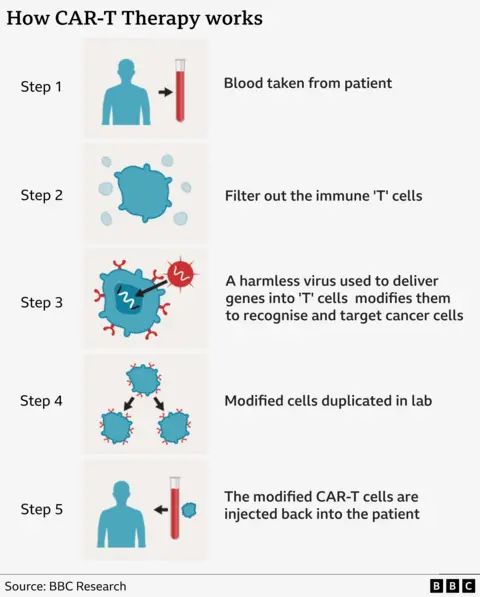
Last month, Oscar had T-cells – a type of white blood cell – removed and sent to a lab in Stevenage.
The cells were then reprogrammed using a harmless virus to introduce a genetic sequence that enables them to identify the cancer.
New surface receptors can then recognise and are able to attach to cancer cells – like a lock and key – and mark them for destruction.
They become “chimeric antigen receptor T-cells” – or CAR T-cells – and their numbers are greatly expanded in the lab to make millions of copies.
Oscar’s personalised treatment, or living drug, was cryopreserved and sent to Manchester Royal Infirmary.
The tiny bag containing Oscar’s personalised treatment held 100 million CAR T-cells in just three teaspoons of liquid, and it took only a few minutes to infuse into his bloodstream.
Oscar said he was surprised the treatment could pack such a powerful punch in such a small dose.
“It’s very sci-fi, but if it means it gets rid of the cancer permanently and my own cells can do it it’s just fantastic.”
Oscar had a second infusion of 300 million cells yesterday, marking the end of his CAR-T treatment.
As this is a “living drug”, the cancer-killing T-cells stay in the body for a long time and will continue to grow and work inside the patient after the final infusion.
The CAR-T therapy is manufactured by Autolus, a spin-out company from University College London.
During clinical trials, the patient’s cells had to be sent to laboratories in the US.
It will be available to patients over the age of 26 whose B-cell ALL has not responded to treatment or has returned at several centres in England, including Cambridge, Newcastle, Sheffield, Plymouth and London.
Patients from Wales and Northern Ireland will need to travel to England for treatment. It has not yet been approved in Scotland.
NHS England estimates that around 50 patients a year may benefit, but Tholouli told the BBC she believed it could be more, and predicted it would eventually be used as a first-line treatment instead of stem cell transplantation.
Prof Peter Johnson, NHS National Clinical Director for Cancer, said it was a “landmark moment” for people with aggressive blood cancer.
He added it was “remarkable” the treatment now delivered at NHS centres had been developed from scientific research within the UK.
“It will help more people like Oscar live longer and healthier lives.”
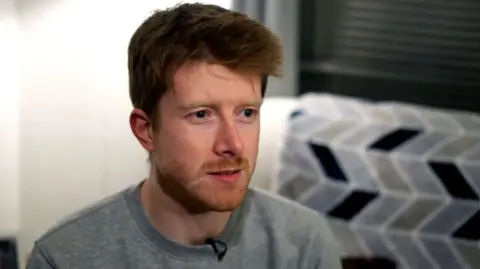
Chris Williams had the treatment during its experimental phase and has been in remission for nearly three years
Chris Williams, 29, from Belfast was diagnosed with the same aggressive type of leukaemia as Oscar in 2021.
When the cancer returned, he was given the CAR-T therapy in Manchester when it was still an experimental treatment. He has now been in remission for nearly three years.
“A few years ago I was very unwell and now I’m able to live a full life. I was able to go back to work. I also met Chloe and now we’re engaged.
“I have fantastic support from my family and they are over the moon.”
Oscar and his fiance Lauren were married at Manchester Royal Infirmary last month.
He told the BBC he wanted to “get it done” because of the uncertainties surrounding his condition, but the couple have another ceremony booked for October.
“I want children and the white picket fence with my amazing wife – I just want that normality. This is my gateway to doing it and I can’t wait.”
Mike Tomlin has embodied the stability created by routine and transparency throughout his 19 seasons as the Pittsburgh Steelers head coach. It has endeared him to hundreds of players and kept him entrenched in an organization that mirrors the values of its coach.
That stability has come to an end as Tomlin is stepping down with two years left on his contract, sources told ESPN’s Jeremy Fowler and Adam Schefter on Monday afternoon.
Tomlin, 53, informed players Tuesday of his decision to walk away at a 2 p.m. ET meeting, a day after falling to the Houston Texans 30-6 in the wild-card round of the AFC playoffs, extending the team’s playoff win drought to nine seasons.
He leaves Pittsburgh with the unprecedented accomplishment of never having a losing season in nearly two decades at the helm of the franchise. He clinched his 200th career NFL victory in Week 16 against the Detroit Lions and tied Chuck Noll for ninth all time with 193 regular-season wins in a Week 18 victory against the Baltimore Ravens that clinched the AFC North title.
With Tomlin’s departure, the Steelers will begin the search for just their fourth head coach since 1969. Before his resignation, Tomlin was the longest-tenured head coach of any North American professional sports franchise, having taken the Steelers job in 2007. He finishes his career in Pittsburgh with 193 regular-season wins, 114 losses and two ties.
Steelers reporter Brooke Pryor and NFL reporters Jeremy Fowler and Dan Graziano answer the pressing questions in the wake of Tomlin’s departure.
How much of a shock is the news of Mike Tomlin’s departure?
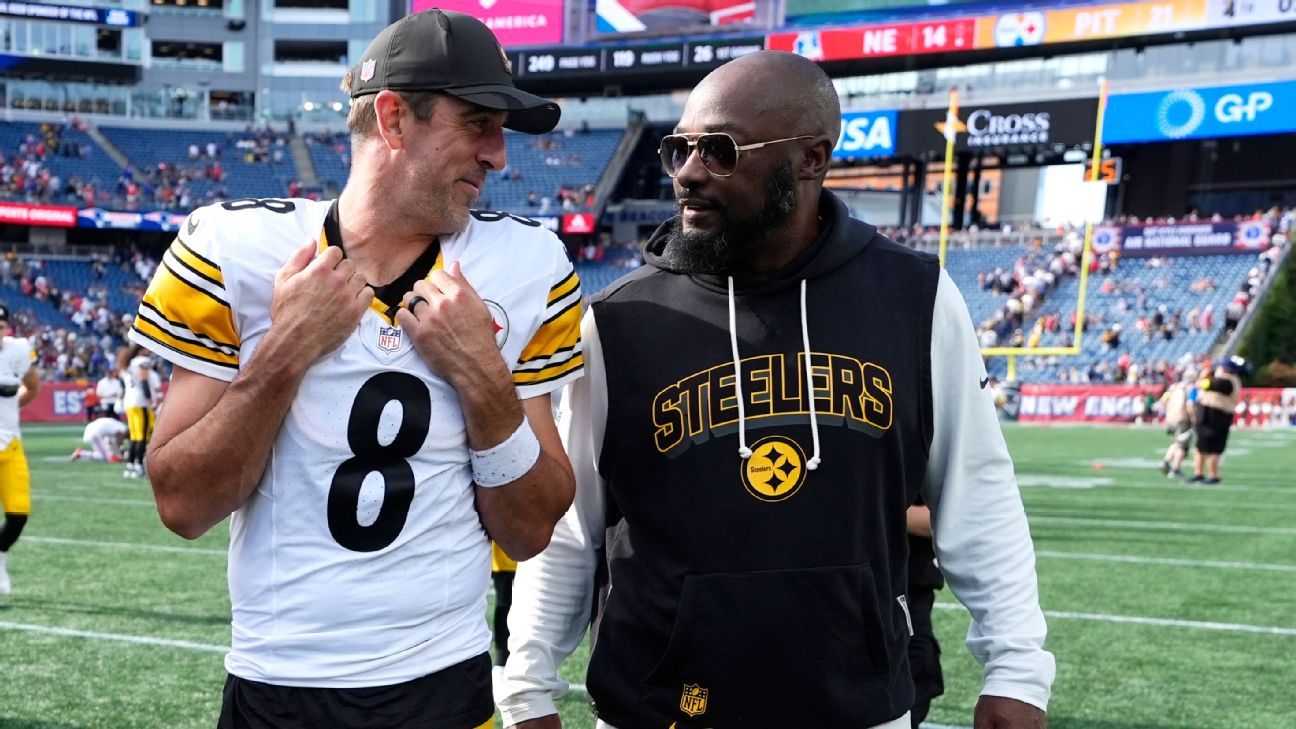
Though there had been rumblings that Tomlin could walk away, potentially to pursue opportunities in television, his announcement and decision coming to fruition was still a surprise to many in the Steelers’ building. Tomlin’s Tuesday started as it often did during the regular season, with an early-morning arrival and a scheduled 2 p.m. team meeting. Players were in the locker room cleaning out their lockers following Monday’s wild-card loss. Before Tomlin’s meeting, there didn’t appear to be any indication that the players inside the locker room knew big news was coming. Less than 24 hours earlier, both Cameron Heyward and Aaron Rodgers had stumped for their head coach’s job.
And in the locker room Tuesday afternoon, tight end Jonnu Smith said he couldn’t imagine the Steelers without Tomlin.
“Ever since my childhood growing up, it was Mike Tomlin, Mike Tomlin, Mike Tomlin, Mike Tomlin, and winning,” he said. “And winning and winning. And the culture that the city has established football-wise based around what Mike Tomlin has done, the culture that he’s built, the way he’s constructed this team, the way he’s treated people in the building, the way he’s cared about this organization so much, and has embodied the true meaning of a Pittsburgh Steeler.” — Pryor
Who could the Steelers target at head coach, and how does Pittsburgh’s tendency to keep coaches for decades factor into this decision?
This is an all-hands-on-deck, drop-everything job for any and all candidates. The Steelers have had three head coaches since 1969, uncanny stability for the modern era. The championship tradition, coupled with the chance for real tenure, will make Pittsburgh’s the best job available. The Steelers will prioritize leadership, most likely, and as they did with Tomlin, they could identify a rising star in the business.
Several defensive coordinators — the Los Angeles Rams‘ Chris Shula, the Green Bay Packers’ Jeff Hafley and the Los Angeles Chargers‘ Jesse Minter — seem to fit that mold. Notre Dame’s Marcus Freeman has rebuffed NFL intrigue but could revisit that for a job like this. The Steelers would be smart to modernize the offense, looking hard at that side of the ball, so several young offensive playcallers could come into play. — Fowler
play
1:37
Alex Smith lauds ‘one of a kind’ Aaron Rodgers
Alex Smith lauds ‘one of a kind’ Aaron Rodgers Alex Smith joins the “The Rich Eisen Show” to discuss Aaron Rodgers’ career after the Steelers’ wild-card loss to the Texans.
What does the future hold for Aaron Rodgers and the Steelers’ QB position?
Rodgers’ one-year deal expired with Monday’s wild-card loss, but he recently expressed that he hadn’t thought about what was next for him. After posting a playoff career-low of 14.3 QBR in Monday night’s loss to Houston, Rodgers said he wasn’t going to make an “emotional” decision about his future. In June, he told “The Pat McAfee Show” that he was “pretty sure” 2025 would be his last season.
If that is indeed the case, the Steelers would be in the market for their next starting quarterback. Mason Rudolph is under contract for another year, and the team also selected former Ohio State quarterback Will Howard in the sixth round of the 2025 draft. The Steelers have been doing their homework on the 2026 quarterback draft class, but with a pick at No. 21, they aren’t likely to land one of the few top-tier rookie signal-callers unless they use draft capital to move up.
Like last year, Pittsburgh will undoubtedly host a number of quarterbacks on predraft visits to do their due diligence, but it seems more likely the Steelers would look for another inexpensive bridge quarterback option to get them to a stronger 2027 draft class. — Pryor
What’s next for Tomlin?
On some level, whatever he wants (other than coaching the Steelers). He’ll likely draw interest from multiple TV networks for a variety of possible roles if he wants to take some time off from coaching, with the potential to go back later. He’ll also surely draw interest from teams that need a head coach, since plenty of these front offices are looking for coaches who have NFL head coaching experience; no one on the current market except John Harbaugh has anywhere close to as much of that as he does.
Tomlin’s entry into the coaching free agent market is sure to alter teams’ plans and interview schedules, and if he wants to jump right into another head coaching job, he’ll have his pick. — Graziano
How does the 2025 season affect Tomlin’s legacy?
Tomlin’s final season was a microcosm of his 19-year tenure at the helm of the Steelers. There were incredible highs and improbable wins coupled with inconceivable lows and befuddling losses. Ultimately, the 10-7 final season was like so many before — good enough to reach the postseason, but not good enough to make a run and recapture the magic of his early years. The Tomlin era in Pittsburgh will be remembered for near-instant success and an unprecedented streak of non-losing seasons as the head coach raised the floor of his squad every single season by being a transparent leader and a players’ coach.
“Obviously, he’s the fall guy, right? You look at this situation and you said, ‘OK, we went down. Who’s the leader?’ They’re going to look at the leader. And for us, that’s Mike Tomlin. But we had a hell of a leader, a great leader, a man that is capable of leading us to ultimately the ultimate goal. And he’s done it. He’s very capable of doing it. Like I said before, we just came up short,” Smith said on Monday. — Pryor
Protesters take part in a ‘No to Digital ID’ demonstration against the planned introduction of a government-issued digital ID for all British adults, near to the Labour Party Conference in Liverpool, Britain, September 28, 2025. — Reuters
Britain is set to drop plans to make it mandatory for workers to hold a digital identity document, The Times newspaper, the BBC and other media reported on Tuesday, potentially marking another policy U-turn for the Labour government.
Prime Minister Keir Starmer announced in September last year that his government would require every employee to hold a digital ID in an attempt to tackle illegal migration and reduce the threat from the populist Reform UK party.
The government said the digital ID would be held on people’s mobile phones and become a mandatory part of checks employers must make when hiring staff.
The plan drew criticism from political opponents, with some arguing it would not deter illegal migration and others warning it could infringe on civil liberties.
The Times said the government abandoned the plan amid concerns it could undermine public trust in the scheme, noting that when introduced in 2029, digital IDs would be optional rather than mandatory.
Other forms of documentation, such as an electronic visa or passport, would still be valid, The Times said.
“We are committed to mandatory digital right to work checks,” a government spokesperson said. “We have always been clear that details on the digital ID scheme will be set out following a full public consultation which will launch shortly.”
The spokesperson said current checks rely on a “hodgepodge” of paper-based systems, with no record of whether they were ever carried out, leaving the process open to fraud and abuse.
If plans for a mandatory digital ID are dropped, it would mark another policy climbdown for Starmer.
In December, the government scaled back a plan to raise more tax from farmers, months after it backed down on cuts to welfare spending and scaled back a proposal to reduce subsidies on energy bills for the elderly.
NASA plans to return humans to deep space next month, targeting a Feb. 6 launch for Artemis II, a 10-day crewed mission that will carry astronauts around the Moon for the first time in more than 50 years.
“We are going — again,” NASA said Tuesday in a post on X, saying the mission is set to depart no earlier than Feb. 6.
The first available launch period will run from Jan. 31 to Feb. 14, with launch opportunities on Feb. 6, 7, 8, 10 and 11.
If the launch is scrubbed, additional launch periods will open from Feb. 28 to March 13 and from March 27 to April 10. For the former, launch opportunities will be available on March 6, 7, 8, 9 and 11, and for the latter on April 1, 3, 4, 5 and 6.
NASA’s new moon rocket lifts off from Launch Pad 39B at the Kennedy Space Center in Cape Canaveral, Fla., Wednesday, Nov. 16, 2022. This launch is the first flight test of the Artemis program. (John Raoux/AP Photo)
The mission is scheduled to lift off from Launch Complex 39B at NASA’s Kennedy Space Center in Florida aboard the Space Launch System, the most powerful rocket the agency has ever built.
Preparations are underway to begin moving the rocket to the launch pad no earlier than Jan. 17. The move involves a four-mile journey from the Vehicle Assembly Building to Launch Pad 39B aboard the crawler-transporter 2, a process expected to take up to 12 hours.
“We are moving closer to Artemis II, with rollout just around the corner,” Lori Glaze, acting associate administrator for NASA’s Exploration Systems Development Mission Directorate, said. “We have important steps remaining on our path to launch and crew safety will remain our top priority at every turn, as we near humanity’s return to the Moon.”
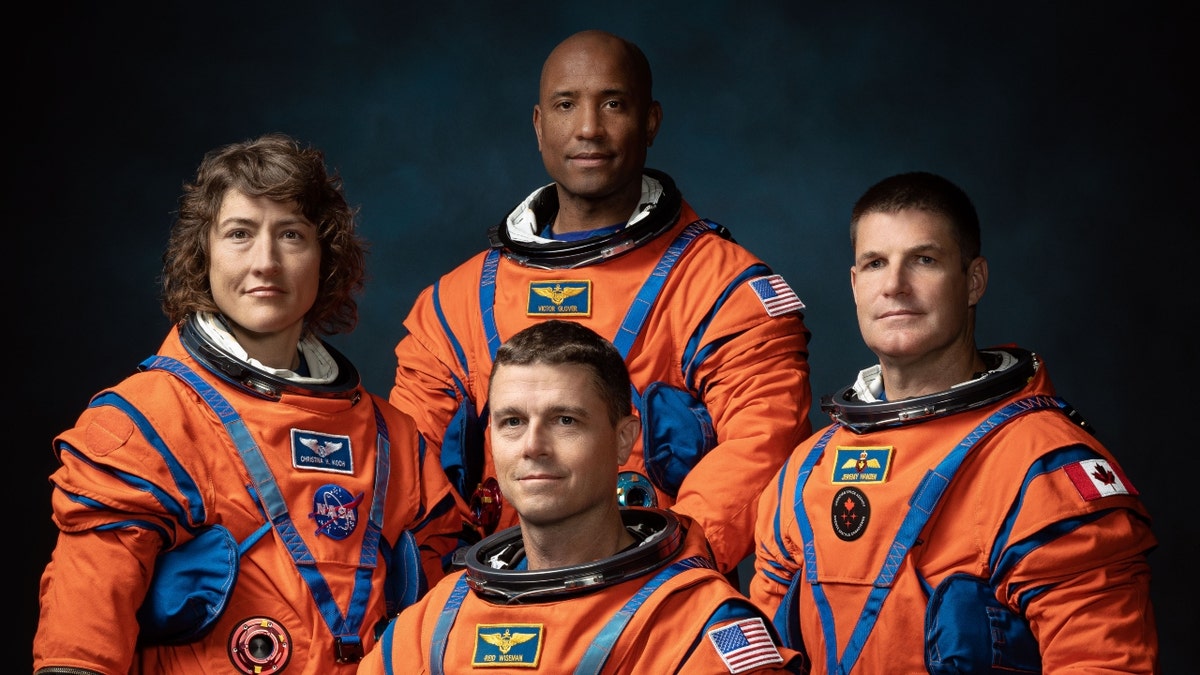
The crew of NASA’s Artemis II mission (left to right): NASA astronauts Christina Hammock Koch, Reid Wiseman (seated), Victor Glover, and Canadian Space Agency astronaut Jeremy Hansen.(NASA)
The 322-foot rocket will send four astronauts beyond Earth orbit to test the Orion spacecraft in deep space for the first time with a crew aboard, marking a major milestone following the Apollo era, which last sent humans to the Moon in 1972.
The crew includes NASA astronauts Reid Wiseman, Victor Glover and Christina Koch, along with Canadian Space Agency astronaut Jeremy Hansen, making Artemis II the first lunar mission to include a Canadian astronaut and the first to carry a woman beyond low Earth orbit.
After launch, the astronauts are expected to spend about two days near Earth checking Orion’s systems before firing the spacecraft’s European-built service module to begin the journey toward the Moon.
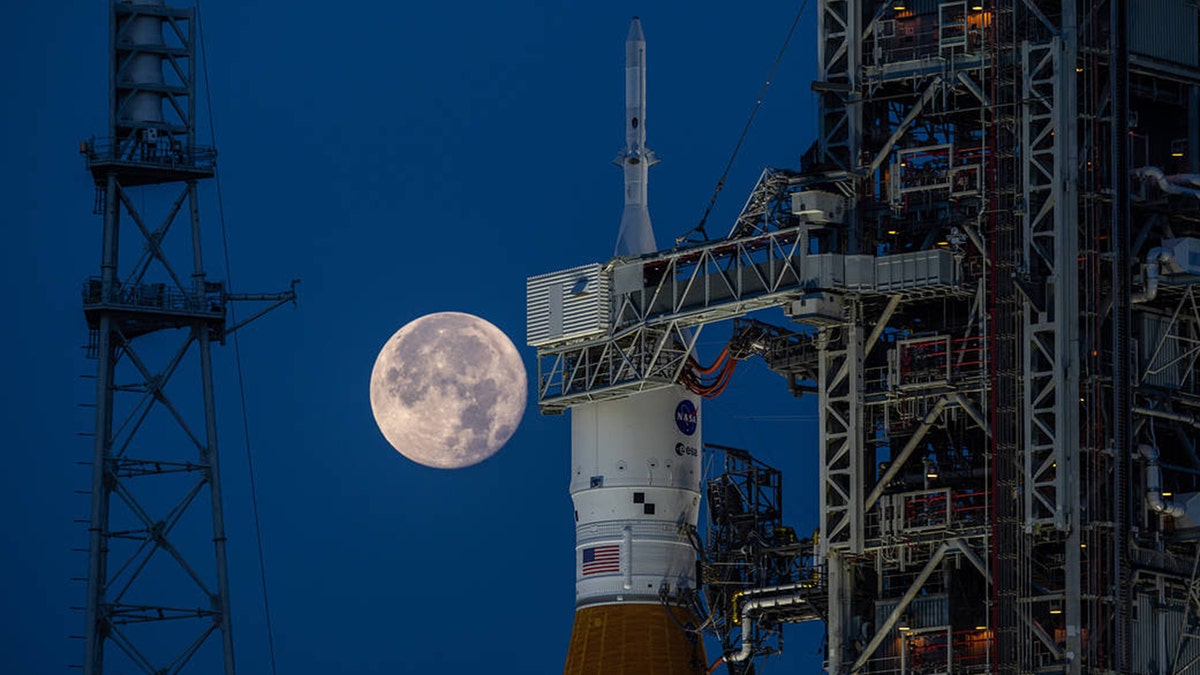
A full moon was visible behind the Artemis I SLS (Space Launch System) rocket and Orion spacecraft at Launch Complex 39B at NASA’s Kennedy Space Center in Florida on June 14, 2022. The first in an increasingly complex series of missions, Artemis I tested SLS and Orion as an integrated system prior to crewed flights to the Moon.(NASA/Ben Smegelsky)
That maneuver will send the spacecraft on a four-day trip around the far side of the Moon, tracing a figure-eight path that carries the crew more than 230,000 miles from Earth and thousands of miles beyond the lunar surface at its farthest point.
Instead of firing engines to return home, Orion will follow a fuel-efficient free-return path that uses Earth and Moon gravity to guide the spacecraft back toward Earth during the roughly four-day return trip.
The mission will end with a high-speed reentry and splashdown in the Pacific Ocean off the coast of San Diego, where NASA and Department of War teams will recover the crew.
CLICK HERE TO DOWNLOAD THE FOX NEWS APP
Artemis II follows the uncrewed Artemis I mission and will serve as a critical test of NASA’s deep-space systems before astronauts attempt a lunar landing on a future flight.
NASA says the mission is a key step toward long-term lunar exploration and eventual crewed missions to Mars.
Greg Wehner is a breaking news reporter for Fox News Digital.
Story tips and ideas can be sent to Greg.Wehner@Fox.com and on Twitter @GregWehner.
The first, published in The Lancet, found that “small and realistic” increases in moderate-to-vigorous intensity physical activity can reduce the risk of death in a significant number of people.
Researchers, led by academics from the Norwegian School of Sports Sciences, wanted to assess the impact of small increases in exercise among the least active people and among the general population.
The study examined data from almost 95,000 middle-aged and older adults in the UK, and 40,000 people from Norway, Sweden and the US.
It found that just five extra minutes of brisk walking per day could reduce 6 per cent of deaths among the least active people and could reduce the risk of deaths among the general population by 10 per cent.
The team also analysed reductions in the amount of time sitting each day.
Just five minutes extra of exercise per day could reduce six per cent of deaths among the least active people (Getty)
Figures from the UK arm of the study, taken from the UK Biobank study, which is tracking the health of middle-aged adults, also show that reducing sedentary time by 30 minutes a day could reduce 4.5 per cent of deaths among all adults taking part in the study, apart from those who were already very active.
“Considering that it is unlikely for all individuals to achieve the WHO (World Health Organisation) physical activity recommendations of 150 min of moderate-to-vigorous-intensity physical activity weekly, our data underscore the large impact of realistic and achievable behaviour goals on population health,” the authors wrote.
Study co-author Professor Melody Ding, from the School of Public Health at the University of Sydney, said: “Inactive lifestyles are associated with a range of health problems and this study shows the huge public health benefit from even small increases in physical activity.”
Meanwhile, a separate study, published in eClinicalMedicine, identifies a number of small changes people can make to live a longer life.
Experts led by academics at the University of Sydney gathered information on the levels of activity, diet and sleep of 50,000 people with an average age of 64 who were taking part in the UK Biobank study.
They were then tracked for an average of eight years.
During this follow-up period, there were 2,400 deaths, almost 10,000 cases of heart disease and 1,500 cases of lung disease (AFP/Getty)
During this follow-up period, there were 2,400 deaths, almost 10,000 cases of heart disease diagnosed, and 3,000 cases of type 2 diabetes, 7,600 cancers, 1,500 cases of lung disease and 500 cases of dementia.
The research team said that people who had the best sleep, exercised most and had the healthiest diets lived for 9.35 years longer than those with the worst sleep, lowest activity levels and poorest diets – and they spent more of their lives in good health.
Overall, they estimated that a “combined dose” of increasing sleep by five minutes per day, just two minutes more of increased moderate to vigorous physical activity and half an extra portion of vegetables could increase a person’s lifespan by one year for people with the worst sleep, lowest activity levels and poorest diets.
“This study demonstrates that small, concurrent improvements in sleep, physical activity, and diet quality were associated with clinically meaningful theoretical gains in lifespan and healthspan,” the authors wrote.
Research lead Dr Nicholas Koemel, from the University of Sydney, said: “Sleep, physical activity and nutrition are all factors known to be linked to healthier lives, but they are usually studied in isolation.
“By investigating these factors in combination, we can see that even small tweaks have a significant cumulative impact over the long-term.”
Ben Affleck, Matt Damon joke about each other’s messiest habit
Despite Ben Affleck and Matt Damon’s infamous decades-long friendship, there are still things they do not like about each other.
The pair made a recent appearance on the Today’s show for the promotion of their new film, The Rip.
During the conversation, Matt and Ben opened up about their “least favorite” habits about each other.
“Um, [he’s] not great at cleaning up around the house,” Ben told journalist Craig Melvin of Matt.
Matt responded, “Hey! [That was] when I was younger.”
Ben continued, “Well, that’s all I have to go by.”
“I mean, we could ask your wife and see if it’s gotten better,” he said jokingly.
In return, Damon revealed that Ben’s not-so-good habit is being late.
“We got here this morning and Ben was three minutes early. He got here before me and that’s the first time in 45 years he has not been late,” Matt noted.
Ben quipped, “Oh my god, that’s a complete myth. I work hard. I’m doing other stuff.”
They recently revealed in a video interview, sharing “key to making a friendship last for more than 40 years.”
“We were both obsessed with [making movies and acting] from an early age which definitely kind of linked us up,” Matt said at the time.
It was a breakfast meeting involving Sir Alex Ferguson, Jason Wilcox and Omar Berrada, two days after the dismissal of Ruben Amorim, that set the course for former Man United star Michael Carrick to return to Manchester United as their new head coach, which was confirmed on Tuesday night. The task ahead of him? Steering the team to stability, and some kind of success, between now and the end of the season.
United director of football Wilcox and CEO Berrada called time on Amorim’s 14-month reign in charge of the team — his 38.1% win rate was, by some distance, the worst of any United manager during the Premier League era — on Jan. 5, a day after drawing 1-1 at Leeds United. Having installed Under-18 coach and former Darren Fletcher as interim coach for a two-game period, the two men needed to identify a more experienced candidate to take charge until the summer, ultimately settling on Carrick, who won every major honour, including five Premier Leagues and a Champions League title, during a 12-year, 464-game playing career at United.
Carrick, Ole Gunnar Solskjaer and Ruud van Nistelrooy, all of whom had previously enjoyed brief spells as United’s interim coach, were shortlisted to return by Wilcox and Berrada, but despite minority owner Sir Jim Ratcliffe ending Ferguson’s £2 million-a-year ambassador role at Old Trafford in Oct 2024, the club’s most successful-ever manager was invited into the training ground to give his verdict on the manager search.
“Omar and Jason spoke to Sir Alex,” a source with knowledge of the meeting told ESPN. “They met over breakfast to discuss three guys who had all played under him in the past. Some might criticise that, so you can’t win, but Sir Alex knows Michael, Ole and Ruud better than anyone, so Omar and Jason canvassed his opinion.”
While United sources have declined to say whether Ferguson directly anointed Carrick as his favoured choice — the last time he had such direct input, with “the Chosen One,” David Moyes, it ended in ignominy after just 10 months and 51 games — a source outside the club has told ESPN that the 84-year-old was wholly positive about his former midfielder and fully supports his appointment.
Club sources told ESPN that Wilcox made first contact with Carrick, Solskjaer and Van Nistelrooy last Tuesday, 24 hours after terminating Amorim’s contract, and that all three men were spoken to at length about their plans to resurrect the team’s season. Carrick and Solskjaer met Wilcox and Berrada in face-to-face meetings while Van Nistelrooy held discussions via video meeting; one source familiar with the process telling ESPN that was because the former Netherlands forward already had a pre-existing relationship with Wilcox and Berrada, having initially worked as a coach under Erik ten Hag before taking charge of the team for four games following Ten Hag’s dismissal in Oct 2024.
Despite having half a season to play and with United still aiming for European qualification through a top-four finish in the Premier League, Wilcox and Berrada opted for an interim appointment until the end of the season in order to allow time to recruit a permanent coach in the summer.
‘Someone who knew and understood the club’
The decision to turn to a former United player and coach was rooted in wanting to, according to a source, “bring in someone who knew and understood the club to reduce the risk of a period of adaptation.” Sources connected to the search told ESPN that all three candidates impressed Berrada and Wilcox, but Carrick ultimately emerged as the unanimous choice.
“They all presented very well, all good guys, but Michael stood out,” a United source said. “He is a smart young coach, he isn’t overawed by the club and it was felt that he has the right leadership, authority and adaptability to do the job.”
Carrick’s more hands-on approach to coaching also played in his favour: the 41-year-old shared coaching duties with Kieran McKenna, now Ipswich manager, during his time as Solskjaer’s assistant at United from 2018-2021. During that span, Carrick’s personality and presence also made him a popular and respected figure among the playing squad. But sources have said it was a close-run contest between Carrick and Solskjaer in particular, with the Norwegian being given the demoralising news on Tuesday that he had missed out on a return to the club having managed the team for three seasons, following Jose Mourinho’s departure in December, 2018.
“Ole took the news like a gentleman,” a United source told ESPN. “Jason spoke to both Ole and Ruud on Tuesday morning. All three guys on the list are great guys, but in the end, the club just preferred Michael.”
Carrick, who has spent time on the golf course and working as a TV analyst since leaving his post as manager of EFL Championship side Middlesbrough at the end of the 2024-25 season, will take charge of training for the first time on at Wednesday ahead of Saturday’s Manchester derby against Manchester City at Old Trafford. The former England midfielder will be assisted by coaches Jonathan Woodgate, Jonny Evans and Travis Binnion, as well as Steve Holland, who worked as Gareth Southgate’s number two with England between 2016 and 2024.
Holland was hired by United after Carrick and Wilcox discussed the need for a coach with experience of working at the highest level. The 55-year-old is known to be demanding and abrasive — one source said he can be “cold and aloof” — but Southgate regarded Holland as a crucial element of his reign as England manager.
“Gareth was the long-term guy, somebody who the players could identify with, but Steve was the tougher figure,” a source close to Southgate told ESPN. “Steve spent a long time at Chelsea, working with Jose Mourinho, Carlo Ancelotti and Antonio Conte, and he has a hard edge because of that. He made Gareth realise that you have to win today as well as plan for tomorrow.”
While neither Carrick nor Wilcox have worked with Holland previously, a United source said that the club’s England players were “delighted” when told of his addition to the coaching staff. But while United have overhauled their coaching team, the responsibility for results will fall on Carrick’s shoulders.
Despite an outward appearance for being quiet and under-stated, Carrick has a tough streak and he has shown it in the past at United. During his three-game stint as interim coach following Solskjaer’s dismissal in 2021, Carrick was bold enough to drop both Bruno Fernandes and Cristiano Ronaldo from the team.
Fernandes was dropped for a Champions League game against Villarreal in his first game in charge – a 2-0 win – and Ronaldo was demoted to the substitutes’ bench for a 1-1 draw at Chelsea. Carrick’s third game was a 3-2 Old Trafford win against Mikel Arteta’s Arsenal and although incoming interim manager Ralf Rangnick wanted him to remain on the staff, Carrick rejected the offer, a source familiar with these conversations told ESPN, out of loyalty to Solskjaer.
play
2:18
What went wrong for Man United vs. Brighton?
Gab Marcotti and Julien Laurens look back on Manchester United’s 2-1 defeat to Brighton in the third round of the FA Cup.
There is little fuss with Carrick. When he signed for United as a player from Tottenham in the summer of 2006, six months after legendary captain Roy Keane’s acrimonious departure, he readily accepted the challenge of taking Keane’s number 16 shirt when other players might shy away from the pressure. And during Louis van Gaal’s two-year reign as manager between 2014-16, Carrick and Wayne Rooney met with the former Ajax and Barcelona coach to relay squad concerns about his over-bearing style of management and repetitive training methods.
“The players had had enough of Van Gaal’s tactics, so Michael and Wayne told him to ease off and give them more freedom,” a source with knowledge of that meeting said. “Van Gaal listened and respected them for fronting him up, but while he relented briefly, it didn’t last long.”
But by dropping Fernandes and Ronaldo and then confronting Van Gaal, Carrick displayed his steely side and it was one that he will need to show if he is to revive United and guide the team to Champions League qualification.
If he succeeds, supporters and pundits may clamour for Carrick to be given the job on a permanent basis, but no promises have been made. However, the task in front of him is daunting. United have won just one of their last seven games in all competitions and his first two fixtures are City at home and Arsenal away.
For somebody who once confessed to being a car obsessive, admitting that he would swap his football career for that of a Formula One driver, Carrick might believe he has been given the keys to a Ferrari after taking the United job.
Right now, the tires are flat and the wrong oil is in the engine, but Carrick is in the drivers’ seat now, and he has four months to get everything in working order and finally heading in the right direction.
Dashcam video shows a Tennessee Highway Patrol trooper navigating around a protester in Memphis, Tennessee, who appeared to play possum in front of a patrol car, leading the agency to swat down viral claims the man was actually hit.
Video posted to social media by the Tennessee Highway Patrol shows the trooper trying to work his way around a group of protesters. A man who appeared to be one of the protesters walked into frame from behind a white SUV.
The man, wearing a bright orange construction vest and holding a handheld radio, raised his hands and stepped in front of the trooper.
The trooper can be heard on camera shouting, “Move! Get out of my way! Get out of my way! Move!”
Tennessee Highway Patrol released dashcam video showing a protester grabbing a patrol car and falling, disputing viral claims he was struck during a Memphis protest.(Tennessee Highway Patrol)
Instead, the protester shook his head and raised his index finger as if signaling the trooper to “hold on.”
The protester then grabbed the patrol vehicle’s push bars and fell backward, appearing to act as if he had been hit by the trooper’s vehicle.
The protester popped right back up after falling backward.(Tennessee Highway Patrol)
“We respect and protect the right of people to protest peacefully,” the Tennessee Highway Patrol said. “That right, however, does not include entering active roadways or placing themselves in danger.
“In this case, video clearly shows the individual holding onto the front of the trooper’s vehicle, lying down, then standing back up afterward and leaving the scene under his own power,” the statement continued. “At no point does the video show the individual being run over or injured, despite the narratives circulating on social media.”
CLICK HERE TO DOWNLOAD THE FOX NEWS APP
The agency added that its priority is public safety for protesters, motorists and troopers.
“When someone enters the roadway, it creates a serious and immediate risk, and troopers are trained to respond to prevent injuries or worse outcomes,” the agency added.
Greg Wehner is a breaking news reporter for Fox News Digital.
Story tips and ideas can be sent to Greg.Wehner@Fox.com and on Twitter @GregWehner.













.jpg)