
Scientists in Antarctica have inaugurated the world’s first global repository of mountain ice cores, aiming to preserve vital records of Earth’s atmospheric history as glaciers rapidly melt due to global warming.The frozen sanctuary was opened on Wednesday at the Concordia research station on the Antarctic Plateau by the Ice Memory Foundation, a consortium of European research institutes. The foundation livestreamed the ceremony, which included the opening of a cave carved deep into compacted snow where the ice cores will be stored for future generations, news agency AP reported.Ice cores act as atmospheric time capsules, preserving traces of past climate conditions, including gases, aerosols, pollutants and dust trapped in layers of ice over centuries. With glaciers disappearing at an unprecedented rate, scientists are racing to extract and conserve these samples before they are lost forever.“These ice cores are not relics, they are reference points,” the Associated Press quoted Celeste Saulo, secretary-general of the UN World Meteorological Organization as saying. “They allow scientists now and in the future to understand what changed, how fast and why.”.The first ice cores stored in the vault were drilled from Mont Blanc in France and the Grand Combin massif in Switzerland. They reached Concordia station after a 50-day journey by refrigerated icebreaker and aircraft from Trieste, Italy.During the inauguration, foundation members carried box after box of ice cores into the cave, which is burrowed into a five-metre-high compacted snow drift and maintained at a constant temperature of around minus 52 degrees Celsius.“By safeguarding physical samples of atmospheric gases, aerosols, pollutants and dust trapped in ice layers, the Ice Memory Foundation ensures that future generations of researchers will be able to study past climate conditions using technologies that may not yet exist,” said Carlo Barbante, vice-chair of the foundation and a professor at Ca’ Foscari University in Venice.The Ice Memory project was launched in 2015 by research institutions from France, Italy and Switzerland, including France’s CNRS and IRD, Italy’s National Research Council and Ca’ Foscari University, and Switzerland’s Paul Scherrer Institute.Scientists have already identified and drilled ice cores from 10 glacier sites worldwide and plan to transport them to the Antarctic sanctuary in the coming years. Over the next decade, the project aims to establish an international convention to preserve and safeguard the samples for future study.According to the foundation, glaciers have lost between 2% and 39% of their ice regionally since 2000, with a global average loss of about 5%, leading to the disappearance of critical atmospheric records.
Two Nipah-Infected Nurses In Bengal Critical, Contact Tracing And Screening Intensified
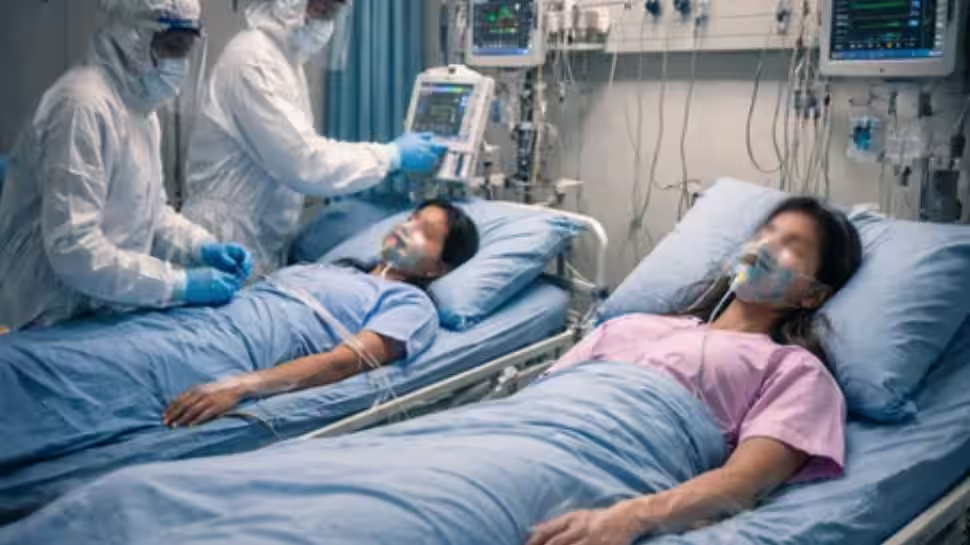
Two nurses from Barasat in North 24 Parganas district of West Bengal who have tested positive for the Nipah virus are in a coma and in extremely critical condition, hospital sources said on Wednesday.
In both cases, the Glasgow Coma Scale (GCS) scores for eye opening, verbal response, and motor response are below five. The female nurse has tested positive for Nipah, with her samples confirmed by the National Institute of Virology (NIV), Pune. Doctors said the male nurse, who is currently on ventilator support, is also likely to test positive.
Around 65 people who came into contact with the two nurses have been identified and placed under isolation. The infected nurses were staying as paying guests in Hridaypur, Barasat. Two people who stayed with the male nurse and one who stayed with the female nurse have developed fever and are under observation.
Those exposed to the patients—including the ambulance driver who transported them to Burdwan Medical College and Hospital, medical staff involved in their treatment, and others present at the time—have been screened and provided preventive care.
The Centre has activated standard protocols for surveillance, sample collection, and bed preparedness. A joint team of experts from the state and central health departments has visited the private hospital in Barasat, where the nurses are admitted. Samples of 14 contacts have been sent to AIIMS Kalyani for testing, while additional samples have been collected from Katwa and Burdwan Medical College Hospitals.
Sources said a female nurse from Katwa is also in a critical condition and has slipped into a coma. An RMO from the same hospital has developed similar symptoms and is undergoing treatment. His blood samples have been sent for testing. At least 23 hospital staff members have been quarantined so far, a number that may rise further.
The two Nipah cases were first identified on Sunday by the Virus Research and Diagnostic Laboratory (VRDL) at ICMR-AIIMS Kalyani. Both nurses are attached to a hospital in Barasat and are currently admitted to the ICU of a private facility.
A national joint outbreak response team has been deployed to assist the state government in containment and public health measures. The team includes experts from the All India Institute of Health and Public Hygiene, Kolkata; NIV, Pune; National Institute of Epidemiology, Chennai; AIIMS Kalyani; and the Department of Wildlife under the Ministry of Environment, Forest and Climate Change.
Union Health and Family Welfare Minister J.P. Nadda has assured full support from the Centre. He wrote to West Bengal Chief Minister Mamata Banerjee and also spoke to her over the phone, reiterating the Union government’s commitment to provide all necessary assistance, according to a statement from the health ministry.
A broken home is not a joke,” Javed Sheikh responds to Bushra Ansari’s taunt | The Express Tribune

The veteran actor publicly pushes back after a personal remark at a press event sparks backlash online
Veteran actor Javed Sheikh recently found himself at the centre of controversy following a press event attended by several senior artists, including Bushra Ansari, Behroze Sabzwari, Rubina Ashraf, and Shabbir Jan. What began as a lighthearted exchange quickly escalated when a personal remark struck a nerve.
Kabhi Main Kabhi Tum actors Bushra Ansari and Javed Sheikh share a friendship spanning nearly five decades, dating back to their early years in the entertainment industry. Over the years, they have spoken fondly of their bond, making the recent public exchange all the more surprising for fans.
During the press event, Bushra Ansari made a remark that many interpreted as a taunt about Sheikh’s divorce. “I visited Javed Sheikh, and he didn’t even serve me any food,” she said. “His house was built in front of my eyes and was also broken in front of my eyes – not because of me, but in front of me.”
The comment drew a visibly angry response from Sheikh.
“Bushra taunted at my broken marriage as a joke, but a broken home is not a joke,” he said.
“I never commented on her broken home or questioned why her marriage ended,” he went on, referring to Bushra Ansari’s divorce with her ex-husband, Iqbal Ansari in 2014.
“Next time, whenever you share my story, mention your own,” he said. “Your marriage did not work out either.”
The exchange quickly made its way to social media, where users largely expressed support for Sheikh and criticised the remark, calling the comment unnecessary and insensitive.
Nasser bin Radan Al Rashid Al Wadaei: Saudi Arabia’s oldest man dies at 142, leaves behind 134 children and grandchildren – The Times of India
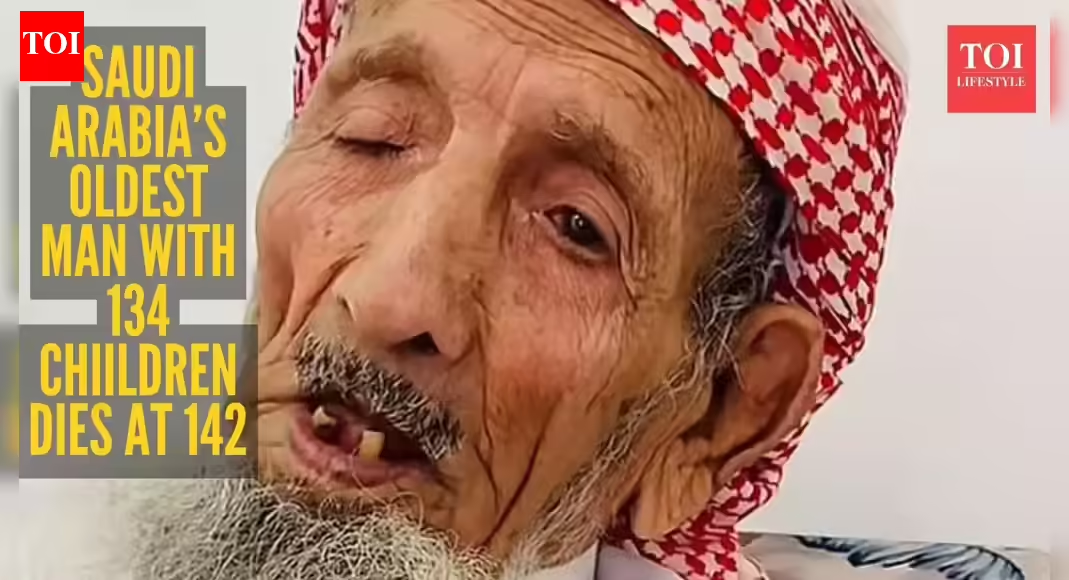
Saudi Arabia is grieving the loss of a man who didn’t just grow old, he grew alongside history. Nasser bin Radan Al Rashid Al Wadaei, believed to be the country’s oldest citizen, has passed away at an almost unbelievable 142. He was born in the late 1800s, long before the Saudi Arabia we know today even existed. The world he entered was nothing like the one he left behind.He didn’t just count years. He built an entire family across generations. Al Wadaei leaves behind around 134 children and grandchildren, all shaped by very different times. He married three times in his life. His third wife lived with him for 30 years and reached the age of 110. Their daughter is still alive. Two of his three sons survive him, and among his six daughters was one who lived into her 90s. That alone tells you how long and layered his life was.
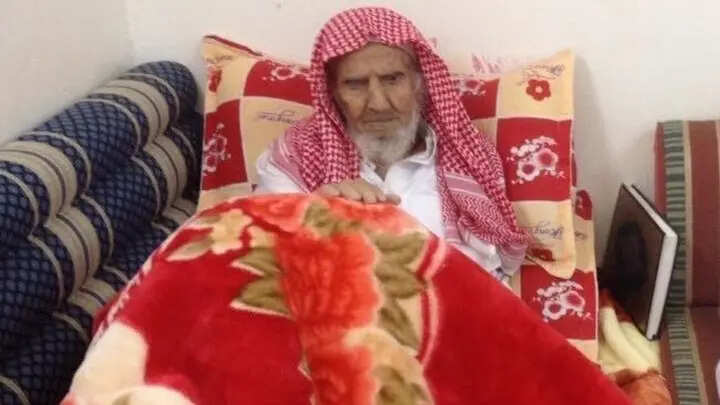
But it’s the changes he saw that really stop you in your tracks. Al Wadaei lived through the reign of every Saudi king – from King Abdulaziz, who built the modern Kingdom, to today under King Salman. He watched deserts slowly turn into cities. Roads appeared where there were once dirt paths. Electricity, hospitals, oil wealth, and modern technology arrived right before his eyes. Most of us see change over decades. He saw it over a century.To the people around him, he wasn’t just “the old man everyone talked about.” He was known for his faith, his discipline, and how simply he lived. His family says he performed Hajj more than 40 times. Forty. Even regular pilgrims find that hard to believe. They say his long life came down to simple habits and a traditional diet rooted in southern Saudi customs.So when he passed away, people showed up. In large numbers. More than 7,000 gathered in Dhahran Al Janoub for his funeral prayers. That kind of turnout doesn’t happen by accident. Afterward, he was laid to rest in his ancestral village of Al Rashid – the same land where generations of his family began their lives.And as the news spread, Saudi social media filled with messages and memories. Many called him a symbol of faith, strength, and endurance. In a country that has changed at lightning speed, Al Wadaei’s life feels like a quiet anchor – a reminder of where it all began, and how far it’s come, through the story of one remarkable man.
Blue Light Exposure And Skin Ageing: Myth Or Medical Reality?
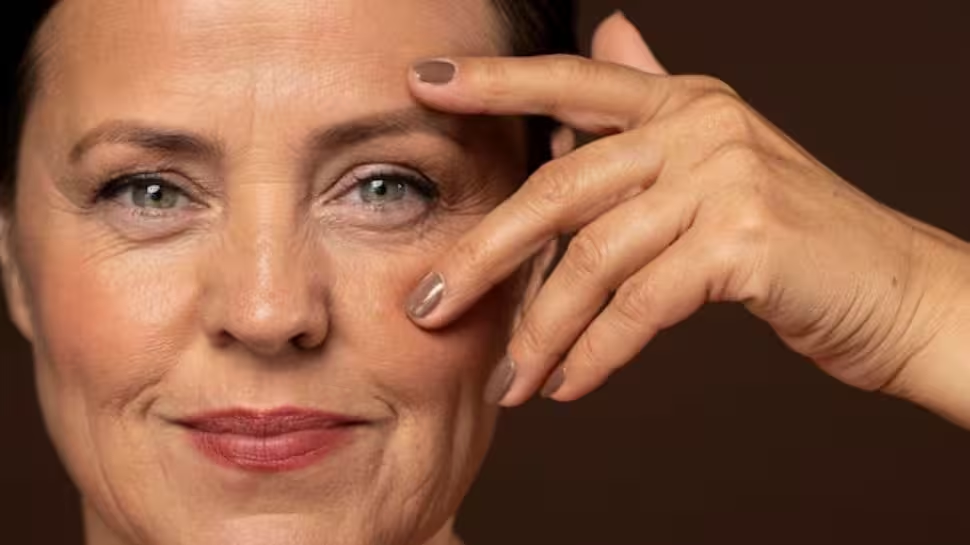
As screens have become literally inseparable from our daily life smartphones, laptops, tablets and LED lighting concerns about the exposure to blue light and the impact on skin have also increased. A lot of social media posts claim that blue light is the main cause of premature ageing, pigmentation and dull skin.
But what percentage of this is pure science and how much is just a marketing ploy? Dermatologists provide their opinion on the issue whether blue light is really ageing our skin or the fear is blown out of proportion. Dr. Vidushi Jain, Dermatologist and Medical Head, Dermalinks shares her insights on blue light exposure and skin ageing: myth or reality.
What Exactly Is Blue Light?
Blue light or High Energy Visible (HEV) light is a part of the visible light spectrum and is emitted by the sun naturally. Even if the major source of blue light is still the sun, the number of devices such as mobile phones, computers, and TV that used LED lights that emit blue light is increasing. But their intensity is much lower than that of the solar radiation.
Is it true that blue light can harm the skin?
According to medicine, blue light does biologically affect the skin, but there are certain limitations. The research shows that very long exposure to high, intensity blue light can go deeper in the skin than even UVB rays, reaching the dermis. And this may result in excessive oxidative stress, thus the body reacts by producing free radicals which in turn causes collagen and elastin the proteins responsible for skin firmness and elasticity are damaged.
Additionally, some research works have revealed that blue light may cause melanocytes activation thereby leading to hyperpigmentation getting worse which is a case that is usually observed in individuals with dark skin (Fitzpatrick skin types IIIVI). The above makes blue light to be a solid risk factor that can induce melasma and post, inflammatory pigmentation.
What about its comparison with UV damage?
Things should be looked at from a different angle and not in a direct comparison. Although still an important factor, blue light radiation is far less potent than ultraviolet (UVA and UVB). In fact, UVB and UVA are the main and most significant external sources of premature skin aging, wrinkling, as well as skin cancer. The emission of blue light from electronic devices is significantly lower than that of the sun. Therefore, normal screen usage is unlikely to result in accelerated aging.
On the other hand, the continuous exposure to blue light predominantly in urban indoor lifestyle, where one is likely to find people working for 810 hours in front of a screen daily, may gradually lead to the situation of skin damage that is not evident at the moment but will be there when time comes and if the person is also exposed to other environmental factors.
The Rise of Blue Light Protection Skincare
Very quickly, the skincare industry has put out a plethora of products that purpose is to protect skin from blue light. The product label ingredients to help in this regard are antioxidants (vitamin C, vitamin E, niacinamide), iron oxides, and certain botanical extracts. These substances are thought to assist in neutralizing free radicals generated by HEV light. As a matter of fact, skin care loaded with antioxidants will definitely be of good use to the skin. However, dermatologists warn not to concentrate aging caused by blue light alone and disregard other factors.
Who Should Be More Careful?
Maybe the blue light exposure would be more of a concern for: Individuals with pigmentation disorders like melasma People with darker skin tones, who are prone to uneven pigmentation Professionals with prolonged screen exposure (IT professionals, content creators, office workers), Those already exposed to high levels of pollution and UV radiation For these people, a thorough skincare regimen is a must.
Practical Dermatologist, Approved Tips
Sunscreen remains vital: Broad-spectrum sunscreens that protect against UVA and UVB are still the most potent anti-ageing weapon. One component that may add an additional layer of protection against visible light is iron oxides in tinted sunscreens.
Antioxidants should be used daily: One serum containing vitamin C, ferulic acid or niacinamide is the best weapon to fight the oxidative stress.
Try to cut down on unnecessary screen time: Digital hygiene such as taking breaks from the screen and reducing the brightness is a good idea.
The good lifestyle still works: Proper sleep, good nutrition and intake of water have a far greater impact on skin ageing than just the time spent in front of a screen.
Myth or Medical Reality?
The truth is not far from either side. Blue light is not a myth the light does have measurable effects on the skin, especially in terms of oxidative stress and pigmentation. However, it is not the main cause of premature ageing. Compared to UV radiation, blue light is a minor contributor to skin ageing. Dermatologists think that it is always good to be aware but there is no need to panic. A comprehensive skincare regimen, regular sun protection and making
(This article is based on information available in the public domain and on input provided by experts consulted.)
Connor Storrie reveals why his dad hasn’t seen ‘Heated Rivalry’ yet

Connor Storrie has shared his family’s reaction to his hit steamy hockey show, Heated Rivalry.
The 25-year-old actor made a guest appearance on the Today show on Wednesday, where he discussed his family’s reaction to its explosive popularity.
“My mom is my Number One supporter,” began Connor. “My family’s crazy.”
“From a young age, when I was like, ‘I wanna be in movies’ and stuff, they were like, ‘Yeah, go do it!’ They’ve always believed in me, and I think it’s probably pretty surreal to watch things like this happen,” he added.
However, the actor revealed that his father has not watched the show yet, which features tons of nude scenes.
“My dad hasn’t seen it, and I’m not asking him to see it,” said Connor. “I don’t think he needs to see it if he doesn’t want to.”
“I think for him specifically, I mean you know with streaming and the way television and movies work now is so different then it did even when I was little. Even me sometimes I’m like ‘Oh this isn’t real because I don’t see it on commercials necessarily and I don’t see like billboards for it,” he explained.
“You know when I was little, we all had specific channels and it was like you only see the movie stars and all these things and now that streaming is a thing it’s not the same. We don’t take media the same way so it doesn’t always you know feel ‘real,'” concluded the Riley star.
Heated Rivalry is available to watch on HBO Max.
Iran reopens airspace after hours-long shutdown spooks airlines
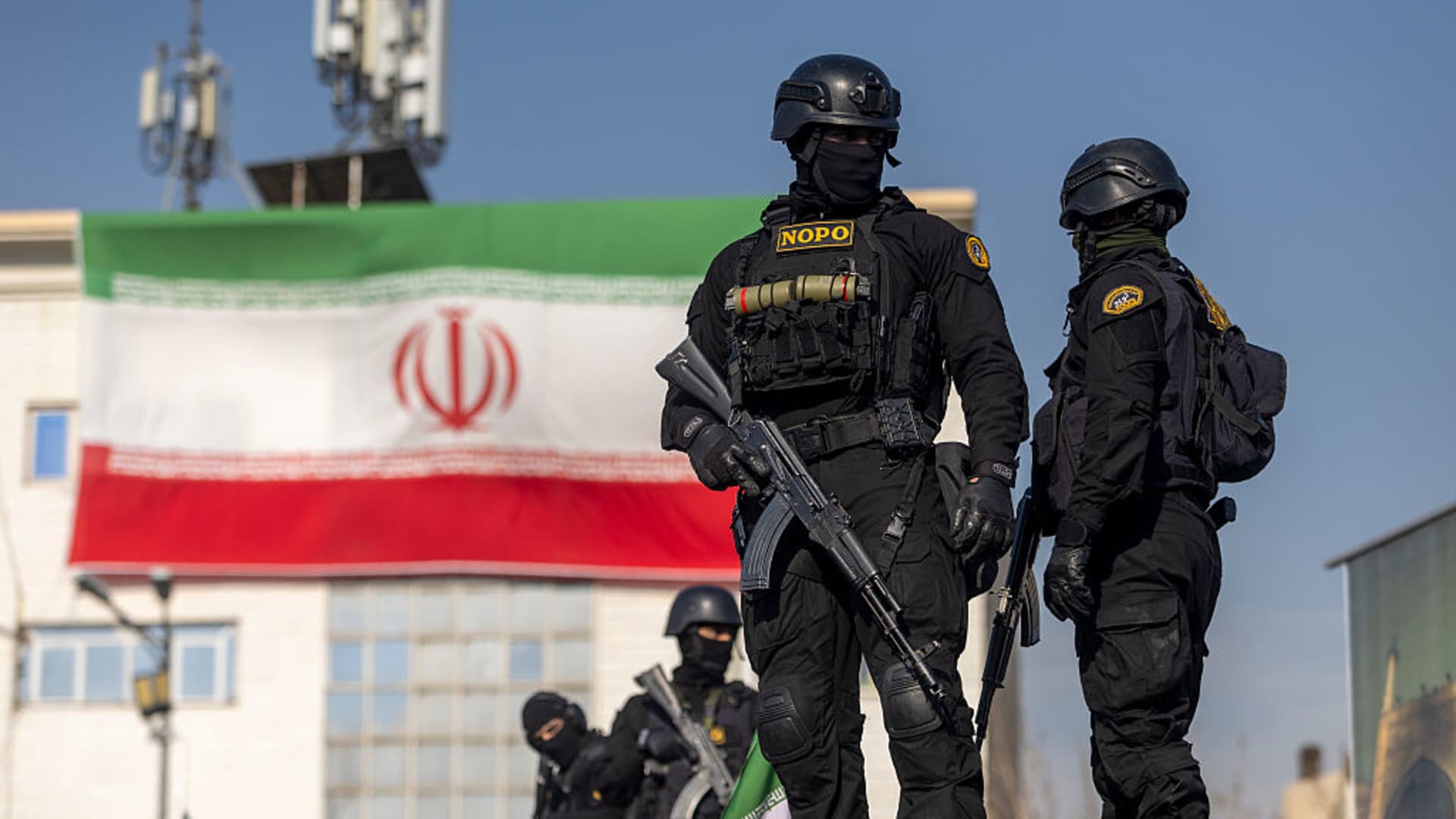
Security forces are seen during a pro-government rally on Jan. 12, 2026 in Tehran, Iran.
Getty Images | Getty Images News | Getty Images
Iran reopened its airspace early Thursday after a temporary closure that barred most incoming and outgoing flights for several hours amid concerns the U.S. could carry out military strikes, raising risks for airlines.
The restriction, which ended at 3:30 a.m UTC, or 10:30 p.m. EST Wednesday, was in place for 5 hours.
Live data from flight tracker FlightRadar24 showed most aircraft still skirting Iranian airspace as of 4 a.m. UTC, though some domestic carriers had begun resuming flights.
The initial order exempted international flights to and from Tehran, provided they received prior approval from Iran’s civil aviation authority.
The airspace closure comes as tensions escalated after U.S. President Donald Trump threatened intervention following a deadly crackdown on anti-government protests in Iran. Trump has publicly said he would “come to the rescue” of Iranian protestors if the violent crackdown continued.
The U.S. has begun relocating some personnel and equipment from American military bases in the Middle East amid Iranian threats to strike those locations if Washington launches an attack.
Trump later appeared to soften his tone. Speaking at the White House on Wednesday night, Trump said he has been assured that the killings of protestors in Iran had stopped and that he would “watch it and see” regarding potential U.S. military action.
Several airlines have canceled or rerouted flights to Tehran in recent days. India’s largest airline, IndiGo, said Thursday that some of its international flights would be impacted by Iran’s airspace closure.
Earlier this week, Germany warned its airlines against entering Iranian airspace. In an emailed response to CNBC on Thursday, the Lufthansa Group said it would bypass Iranian and Iraqi airspace until further notice, with some flights canceled.
The U.S. has prohibited all American commercial flights from overflying Iran. Airlines, including Emirates, Qatar Airways and Turkish Airlines have also canceled multiple flights to Iran over the past week.
Protests erupted late last year after Iran’s national currency, the rial, plunged to record lows, worsening a cost-of-living crisis. The unrest has since evolved into a broader movement against the government’s theocratic rule, leading to brutal clashes that have killed at least 2,571 people, according to the U.S.-based HRANA rights group.
— CNBC’s Nur Hikmah Md Ali contributed to this story.
Andrew receives one final consolation prize after humiliating eviction
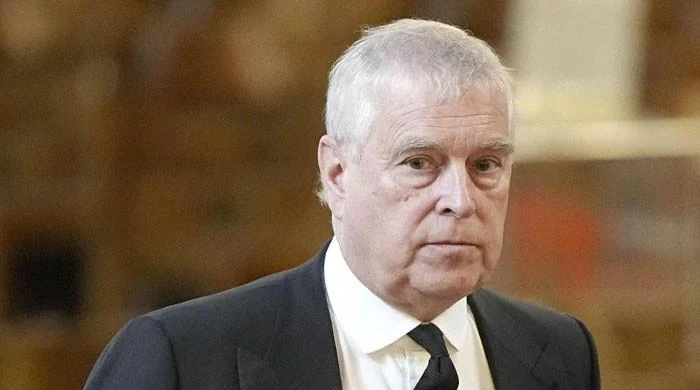
King Charles’s brother, ex-Prince Andrew, is all packed and ready to leave his beloved Windsor home, Royal Lodge, for good following the landmark decision of the monarch.
Andrew Mountbatten-Windsor had not only lost all his royal titles and honours owing to his sexual abuse allegations and connection to paedophile financier Jeffery Epstein, but he also had to give up his ‘iron-clad’ 75-year lease on Royal Lodge.
The former Duke of York was initially expected to vacate the premises before Easter but the process has been sped up as moving vans arrived on Wednesday morning at Windsor to collect Andrew’s belongings.
While there are still repairs being made at the Marsh Farm at Sandringham, there is one VIP service that he will get to enjoy after his fall from grace.
Workmen in Sky VIP team gear were spotted installing broadband at Marsh Farm on King Charles’s Sandringham estate in Norfolk. So, it seems that internet reception for Andrew will be seamless.
After living in the 30-room lavish mansion in Windsor, Andrew is downsized to ‘shoebox-sized’ accommodation which was formerly a farmhouse. It has five bedrooms, two reception rooms, and a kitchen, which is a major fall from the luxury.
According to a report by The Sun, the renovations would be completed by April and the no-fly zone of the Sandringham has been extended to Marsh Farm as well.
Oil prices fall about 3% after Trump’s comments on Iran – SUCH TV

Oil prices plunged on Thursday after fears over instability in Iran were eased by comments from US President Donald Trump.
West Texas Intermediate dropped 3.0 percent to $60.16 per barrel while Brent crude was down 2.93 percent to $64.57, after Trump said he had been told the killings of protesters in Iran had been halted.
In a surprise announcement at the White House, the US president added that he would “watch it and see” about threatened military action.
“They’ve said the killing has stopped and the executions won’t take place — there were supposed to be a lot of executions today and that the executions won’t take place — and we’re going to find out,” he said.
Trump had repeatedly talked in recent days about coming to the aid of the Iranian people over a crackdown on protests that rights groups say has left at least 3,428 people dead.
Concern that the situation could restrict supplies of crude had caused oil prices to rise around 1.5 percent on Wednesday.
“Oil prices dropped… on comments from US President Donald Trump that Iran would refrain from any further killing of protesters, watering down fears of a looming supply shock in energy markets,” said Kyle Rodda of Capital.com.
Iran makes up three percent of global oil production, analyst Michael Wan of financial group MUFG noted this week.
Wan said Thursday that Trump’s latest comments “come even as the United States has redeployed some personnel in Qatar and other American bases from ongoing geopolitical tensions and possible Iranian threats to target those locations”.
Nottingham A&E: ‘Every hospital corridor I saw had people in beds’
George Torrand
Angela Rafferty,East Midlands
 BBC
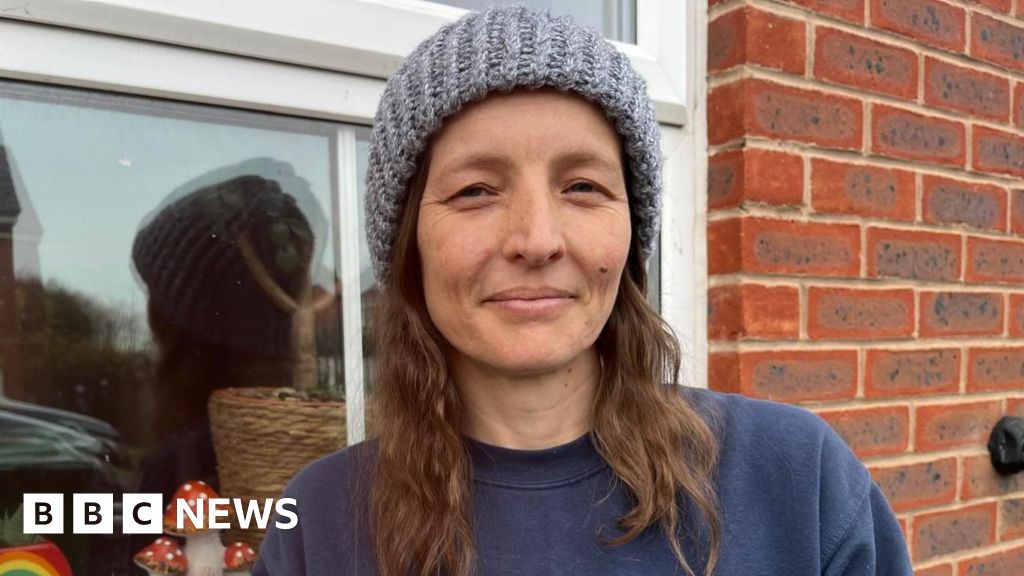
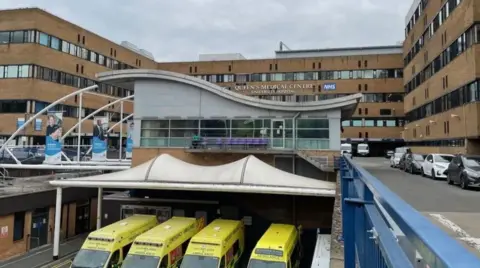
BBCA woman who was told to go to A&E during a critical incident at Nottingham’s hospitals said she saw people “in beds in every corridor” she came across.
Lucy Buckle, 38, said the scenes inside the Queen’s Medical Centre (QMC) on Tuesday were “frightening” and described the atmosphere as “very loud and very chaotic”.
Nottingham University Hospitals (NUH) said the situation was improving but their hospitals were “still full”.
Speaking to the BBC, Buckle praised the staff and said: “They were amazing… everybody was so professional and they really did put me at ease.”
The trust said on Tuesday the emergency department at the QMC was designed to treat 350 patients a day, but the site was “regularly” seeing more than 500 patients.
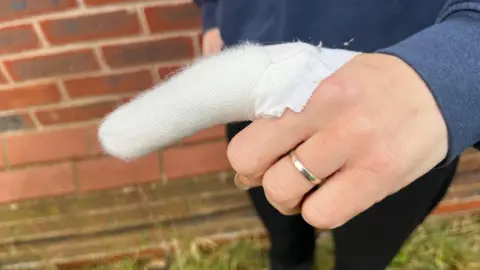
Buckle suffered a dog bite and rang the NHS 111 service. She was then advised to go to A&E to get a tetanus jab and for someone to assess the wound.
She said she had heard about the critical incident at the hospital before being told to go there.
The 38-year-old added she was seen relatively quickly as she turned up bleeding.
“I was quite resistant to going because I knew how busy it was going to be but they said that was my best course of action,” she said.
“I was told that I had to go and not risk losing my finger, so I was apprehensive.”

“It was so busy in [A&E], very loud, very chaotic… as I was moved around the hospital to different departments, every corridor had people in beds and I’d say the majority of those were the elderly.
“It was really quite upsetting at times when I was waiting for an X-ray, I could hear people calling out in the corridor.
“You could see the nurses and the staff running around trying to get to everybody as quickly as possible, machines beeping from everywhere.
“I felt guilty for being there, I didn’t want to take up a space unless I absolutely had to but it was quite scary to think if I was in there for a heart attack or something really serious,” she said.
But Buckle praised staff who were on shift and said they dealt with the situation with a smile on their face despite coming into contact with “aggressive people”.
“They were amazing… everybody was so professional and they really did put me at ease.
“I couldn’t work in that environment and we all need to be very grateful to them for keeping going everyday,” she said.
A spokesperson for NUH said: “While our position is improving, we are still not where we need to be for our patients or staff and our hospitals are still full.
“We continue to take all actions we can, including opening more space, but you can help too by only attending A&E in an emergency.”
The trust also urged people to “collect patients promptly” when they are ready to be sent home.