Kelly Clarkson recently learned she has an unexpected namesake.
The revelation came in a recent episode of The Kelly Clarkson Show, the singer and talk show host welcomed Andrea Clulow, a former preschool teacher, and her husband, Darrell Clulow, who are working to educate children about sharks through their organisation and new children’s book, Finn & Friends.
The couple appeared on the show to discuss their mission of promoting shark conservation and reducing fear around the often-misunderstood animals.
As Clarkson introduced the segment, she noted that while sharks are frequently viewed as frightening, they are also essential to ocean ecosystems. That led Andrea to share a personal story with a link to the host.
Andrea explained that during a research expedition the previous summer, she and her husband had the opportunity to help tag and adopt a shark as part of a conservation effort. The shark, a female, was named “Kelly Sharkson” in honour of Clarkson. This revelation left the singer surprised.
The project, Andrea explained, was inspired in part by a widely reported shark attack off the coast of Australia in 2022. Wanting to shift the narrative around sharks, the couple focused on teaching children empathy rather than fear.
“I wrote a story about this shark and his ocean friends,” Andrea said, adding that the goal was for kids to see sharks as animals deserving understanding and protection, not monsters.
Darrell emphasised that Finn & Friends was designed to be interactive and encourage children to engage with the story rather than reading it once and moving on. A portion of the book’s proceeds will support shark research, ocean conservation, and educational initiatives.
Try hard enough, we are often told, and eventually you’ll get what you want.
But sometimes the hardest – and bravest – thing to do, is to stop trying.
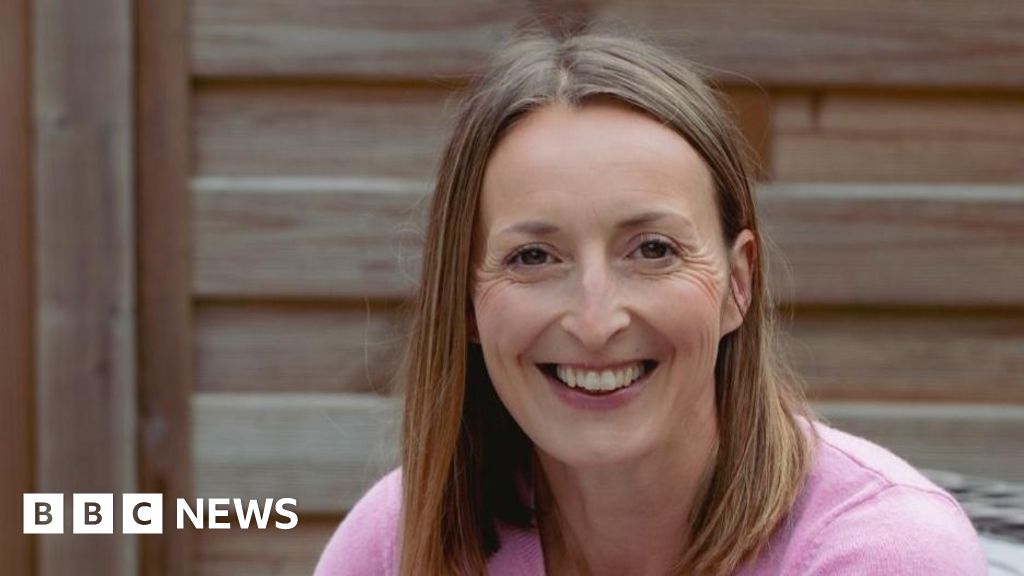
After years of hoping to start a family, including the painful rollercoaster of fertility treatment and a devastating miscarriage on Christmas day, Caroline Stafford, found the only way to find some kind of peace again was to accept it was not going to happen and to build a different future.
But that meant overcoming what she calls the “don’t give up” narrative.
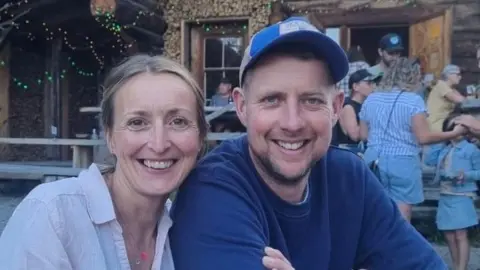
Like many people, Caroline and her husband Gareth, who she met at school, took it almost for granted they would have children in due course.
“We spend all our lives trying not to get pregnant. I just assumed as soon as I wasn’t trying not to, I would,” she says.
Caroline Stafford
Caroline and Gareth met at school in Nottinghamshire
Nearly one in five women in the UK do not have children.
That can be for a variety of reasons, including personal choice. But some simply find that the family life they had imagined, does not happen.
After a year of failing to conceive Caroline and Gareth went to see the GP. A round of IVF in the UK was followed by more rounds abroad – a process of anxious appointments, medications and injections.
At the same time she watched as her friends fell pregnant and had babies of their own.
“We were absolutely delighted for them, but the truth was, it was the worst thing to hear,” she tells Ready to Talk with Emma Barnett.
For anyone in Caroline’s situation, simply seeing a parent with a pram can be painful, the source of a gnawing envy.
That feeling ate away at her, changing who she was.
“Your world view becomes smaller and often more negative.
“I started to not really like how I was feeling towards other people,” she says.
Friends would tell her not to worry, it would happen in the end, or that she should stop trying, because then she would fall pregnant.
Then in November six years ago, out of the blue, her friends were proved right. Not trying seemed to have worked.
She and Gareth had been living in a big farmhouse, in Rutland. They had just moved to a small cottage in a village, a kind of acceptance on some level that the large family they had been dreaming of was not going to be.
As the festive season approached they began to share the good news with friends and family.
Then on Christmas morning Gareth went out to deal with the dairy herd. By the time he was back she had lost the baby.
“It was the timing, the way it happened. It just felt so cruel.”
Her memories of that day are hazy.
But both of them feel that it was the turning point.
Caroline Stafford
Taking up long-distance running allowed Caroline to change her relationship with her body
“It felt like we both knew it was time to begin to try to let go,” she says, but that in itself required a huge effort.
“I didn’t know at the point whether I was right. But we just began to tread forward,” she says.
She threw herself into work. She had started her business, selling biscuits stamped with personalised messages, during their second round of IVF.
At first if people said her business was her baby, she would bristle. These days she finds it comforting. After all, it is something she has nurtured for a decade.
She now has a team of 14 in the bakery, sends her biscuits all over the country, and has partnered with a mail order flower firm.
For Gareth letting go has meant rethinking his work altogether. He is about to start a new job as a greenkeeper at his golf club.
People do ask her if she considered adopting, but she says it “wasn’t the path that we chose.”
“Adoption isn’t just another way to become a parent. It’s a major decision.
A decade of IVF had changed Caroline’s relationship with her own body.
“I was focusing on this one thing it couldn’t do,” she says.
She started long distance running and instead of berating her body over its failure, she started celebrating what it could do instead. She has now done four half and full marathons, while Gareth is on his sixth.
“I love the life I’ve got.
“I don’t feel that direct sense of loss any more. It’s a different, a softer kind of sadness now.”
She has found a greater sense of peace as time passes. Even that comes though with pangs of guilt, wondering whether coming to terms with her childlessness, means she did not want it enough, or try hard enough.
She knows that’s still the “don’t give up” message, nagging at her conscience.
“We’re taught growing up that effort equals results, but it’s often not how it works.
“Life can still have meaning and it can still have purpose, even when it looks so drastically different from what you expected.”
If you, or someone you know, have been affected by pregnancy issues, please visit BBC Action Line to find information on organisations that can help.
All episodes of Ready to Talk with Emma Barnett are available on BBC Sounds. New episodes drop every Friday.
HBO plans Arya Stark spin-off in ‘Game of Thrones’
A series about Jon Snow, a spin-off of Game of Thrones, was said to be in development, but it was later scrapped because HBO found the original idea too depressing.
As the initial concept unfolds, Jon Snow is living north of the Wall, suffering from PTSD, or post-traumatic stress disorder, with no Ghost, his dire wolf, on his side, nor his sword, Longclaw.
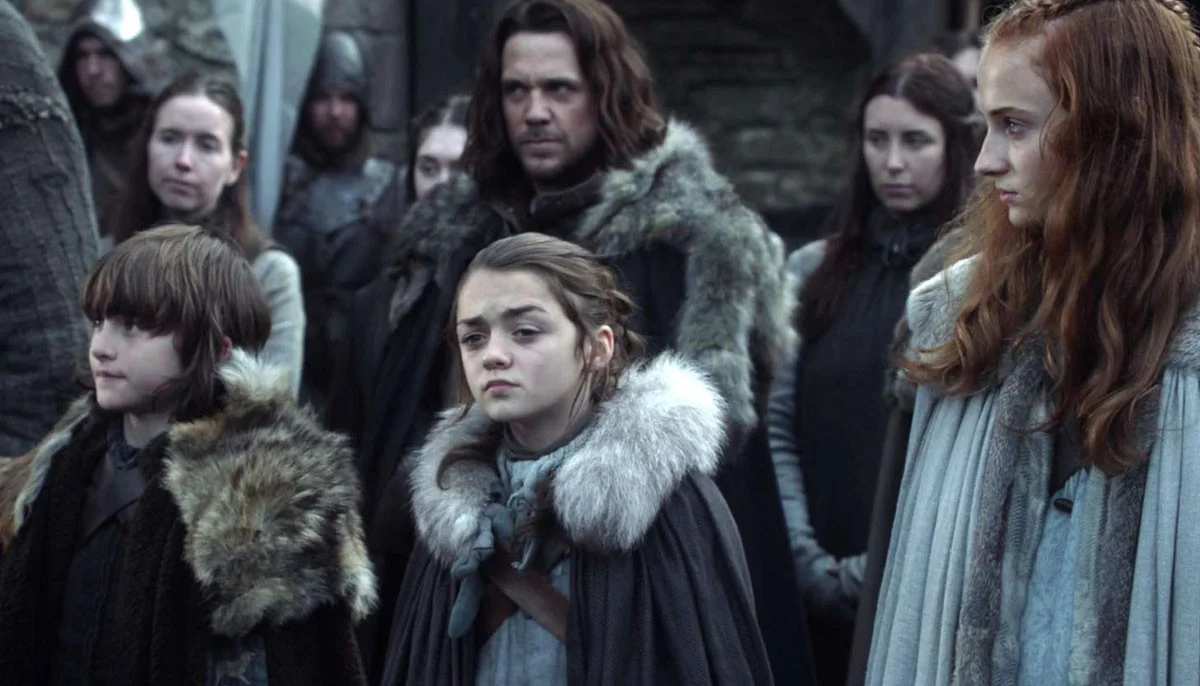
Now, the network has changed the direction of the show, which will reportedly focus on another Stark: Arya Stark.
Though the series’ plot is in early development, reports say it may show her return to Essos after the events of the Game of Thrones finale.
Quoc Dang Tran, known for writing Drops of God on Apple TV+, is attached to the show.
Furthermore, a source told The Hollywood Reporter, “We are very interested and excited by the prospect of a sequel but also keenly aware of how high the bar of execution needs to be.”
However, there is a roadblock to the series’ development: Jon Snow himself, because the actor Kit Harington, who plays the character, is vocal about not returning.
But he is not alone; George R.R. Martin, the brain behind the Game of Thrones universe, is also against sequels because he told THR that his novels, which he is in the process of writing, would be different from what the future series, if made, would show.
“[The book’s ending is] going to be significantly different,” he shared. “Some characters who are alive in my book are going to be dead in the show, and vice versa.”
Meanwhile, A Knight of the Seven Kingdoms, a spin-off of Game of Thrones, is set to premiere on HBO Max on Jan. 18.
A Florida community is reeling from the deaths of two teenage best friends who lost their lives while enjoying a day in the sand.
George Watts, 14, and Derrick Hubbard, 14, were digging a hole and tunnel in a sandpit near Sportsman’s Park in Inverness, roughly 70 miles north of Tampa, on Jan. 11, according to FOX 13.
“They were just kids,” Corey Edwards, their coach and mentor in the 352 Legends program, told the outlet. “They were just kids doing what we try to tell kids to do, get outside and play.”
Best friends George Watts and Derrick Hubbard, pictured as younger children, were killed when their sandpit collapsed while digging near a park in Inverness, Florida, on Sunday, Jan. 11, 2026.(GoFundMe)
According to a Citrus County Sheriff’s Office report obtained by FOX 13, their parents became worried when neither Watts nor Hubbard answered their cellphones during lunchtime and came to the area to search for them.
Their parents reportedly located the boys’ bicycles and shoes by the sandpit, and immediately called for help as they began digging.
When first responders found Hubbard, he did not have a pulse and was transported to a hospital, where he was pronounced dead.
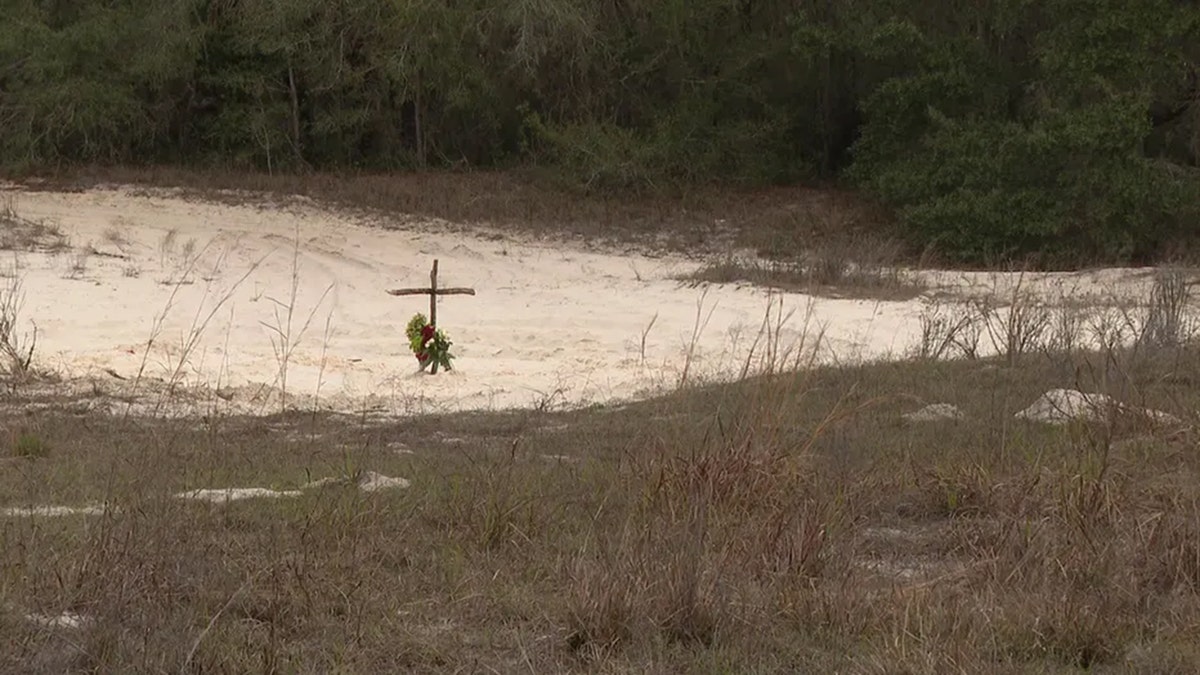
A makeshift memorial stands where George Watts and Derrick Hubbard were killed when their sandpit collapsed while playing at a local beach in Inverness, Florida, on Sunday, Jan. 11, 2026.(FOX 13)
Watts was located with a pulse, but was unconscious and not breathing when he was pulled from the sand. He was transported to a hospital, and later flown to UF Health Shands in Gainesville in critical condition, FOX 13 reported.
He was pronounced dead two days later at 4:25 a.m. Tuesday, according to the outlet.
Details regarding the length of time in which the boys were trapped remain unclear.
George Watts and Derrick Hubbard were lifelong best friends before both boys were killed when their sandpit collapsed while playing at a local beach in Inverness, Florida, on Sunday, Jan. 11, 2026.(GoFundMe)
“They were digging a hole,” Edwards reportedly said. “They were having fun, being adventurous, using their imagination. They’re doing things that we preach to kids that we want them to do and, unfortunately, this just turned into a tragedy.”
CLICK HERE TO DOWNLOAD THE FOX NEWS APP
The two boys reportedly grew up together and were like brothers. They had recently celebrated winning the Citrus NFL Flag Football league championship, and are being remembered by loved ones as always being kind, funny and adventurous.
“It really killed a part of all of us, losing them,” Lina Bilodeau told FOX 13. “This is a pain that will never subside. Born together and passed together. A true friendship most of us as adults never even get to experience.”
Julia Bonavita is a U.S. Writer for Fox News Digital and a Fox Flight Team drone pilot. You can follow her at @juliabonavita13 on all platforms and send story tips to julia.bonavita@fox.com.
CEO of Coinbase Brian Armstrong is interviewed for CNBC in the Russell Senate office building on Capitol Hill in Washington, D.C., U.S., Jan. 15, 2026.
Annabelle Gordon | Reuters
Senators are vowing to go forward on a major crypto bill that would give the industry the rule of the road after a planned committee vote was derailed at the 11th hour.
But the biggest sticking points have been issues for months as Democrats, Republican, the crypto industry and banks have tried to find common ground.
The likelihood that the latest version of the bill, which was released late Monday, would be able to get the approval of the Banking Committee was already tenuous when Coinbase CEO Brian Armstrong tweeted on Wednesday afternoon that Coinbase would not be able to support the bill, listing several concerns including a reduced role for the CFTC and limits on the ability for crypto to offer consumers rewards in the bill..
“It was the 1,000th cut in a death by 1000 cuts,” Sen. Cynthia Lummis told CNBC of Armstrong’s tweet.
A few hours after Armstrong publicly opposed the bill, Banking Chair Tim Scott, R-S.C., formally called off the hearing, postponing it to a yet-to-be-announced date.
Armstrong told CNBC that after a new version of the bill was dropped late Monday night, he was surprised by some of the provisions in it. By the time Coinbase’s team identified key areas of concern, it was too late for any changes to be made in a markup.
“We’ve got a chance to do a new draft and hopefully get back into a markup in a few weeks,” Armstrong said.
Lummis, said it could take until February or March to re-hold the vote.
“I feel like I got run over by a Mack truck,” said Lummis, one of the biggest crypto proponents on Capitol Hill who has worked on similar legislation for years.
“But we’ll get back at it after this break and find some ways to fix the bill.”
One of the biggest debates around the bill deals with the rewards that companies can offer stablecoin holders. Under the stablecoin law, crypto exchanges cannot offer customers interest on stablecoin – however they can offer rewards that act like interest.
Banks have said the language could lead to hundreds of billions being moved from deposits to stablecoin – one Fed report suggests there could be a credit squeeze of hundreds of billion to as much as $1.2 trillion if stablecoin can offer interest.
Armstrong said he would like to speak with bank CEOs directly on this, but argued that the bill needed to treat both industries equally.
“Crypto companies should be allowed to compete and offer loans just like banks,” he said.
Banks are also preparing to fight for more favorable language. More than 3,000 banks signed a petition lead by the American Bankers Association warning that allowing crypto to offer interest-like rewards “will siphon trillions from local lending, leaving less money available for car loans, agricultural loans, mortgages, and small business borrowing that drive local economies.”
Sen. Angela Alsobrooks, D-Md., said she’s spoken with representatives from the banking and crypto industries, and she thinks if there is more time to negotiate, an agreement can be reached soon.
“Everyone agrees that there has to be a compromise somewhere in there, and making sure that we are allowing the innovation to grow,” she said.
Laundry is an essential activity in every household, but it is imperative to consider the time you do your laundry, as it makes a substantial impact on your energy bills, the planet, and your comfort in the house. It is quite common for many individuals to do their laundry whenever it is convenient for them without contemplating the use of electricity, heating, and the drying aspects, as it can be exceptionally expensive and also stress the machines in use.Having an awareness of the times when there is high and low electric power, employing an efficient temperature in washing, and ensuring strategic laundry time can greatly assist in cutting down on your expenditures as well as energy consumption. Moreover, ensuring proper management in the use of the dryer, optimizing the use of renewable resources, and maintaining these machines can enable you to have cleaner laundry while ensuring it is more planet-friendly.Timing is an aspect that makes an ordinary task, such as laundry, much more effective and stress-free in a household.
Best times to run your washing machine to reduce electricity costs
Electricity costs fluctuate depending on demand. Peak hours occur when most households and businesses are using power, often late afternoon or early evening in summer and early morning in winter in regions with electric heating. Running laundry during off-peak times, such as evenings, nights, and weekends, reduces electricity costs and relieves pressure on the power grid. Checking with your local utility helps identify the cheapest times to wash.For maximum savings, plan laundry during low-demand hours. Evening or nighttime loads in warmer months reduce additional indoor heat, which helps minimise air conditioner usage. In colder months, avoiding early-morning peaks prevents higher electricity charges associated with heating. Washing in cold water and running full loads further improves efficiency while maintaining cleanliness.
How to use your washer and dryer efficiently
Most energy is used to heat water. Using cold water for most laundry can dramatically reduce consumption, and full loads maximise energy use per cycle. Regular maintenance, such as cleaning cycles, leak checks, and servicing, keeps your washing machine operating efficiently, reducing energy waste and prolonging its lifespan.The dryer consumes more electricity than the washer and produces heat and humidity, increasing cooling needs. Running laundry in cooler hours or ensuring proper ventilation minimises heat buildup. Air-drying where possible and timing dryer use strategically can reduce energy consumption and prevent indoor humidity issues.Homes with solar panels benefit from running washing machines during daylight hours to use clean energy directly. This approach lowers grid dependency, reduces carbon footprint, and combines environmental benefits with cost savings.
Additional laundry efficiency tips
Use energy-efficient wash cycles to minimise electricity usage.
Maintain your washing machine regularly, including cleaning cycles and checking for leaks.
Monitor indoor humidity to prevent mould and reduce cooling costs.
Consider using disposable or secondary numbers for certain laundry-related setups, such as temporary laundries or outdoor washing.
Ensure proper ventilation in the laundry area to reduce heat and moisture buildup.
Plan loads carefully, washing full loads when possible to maximise energy efficiency.
Air-dry clothes when possible to reduce dryer energy consumption.
Work to fix hospitals built using unsafe concrete will not be completed in time to meet the government’s target, a new report has warned.
Seven hospitals built using Raac, or reinforced autoclaved aerated concrete, were prioritised for remedial work last year, with the government setting a deadline of 2030.
The new buildings are now expected to open in 2032 and 2033 – but some are already facing pressure to meet the revised timetable, the National Audit Office (NAO) said.
In a number of hospitals, roofs are being supported by metal props and some areas have been closed as unsafe.
Meanwhile, affected health trusts face huge maintenance bills to keep their aging buildings safe.
Health Secretary Wes Streeting called the original New Hospitals Programme – 40 new hospitals by 2030 – promises “that were never going to be met”.
In January 2025 he revised the scheme, prioritising 20 of the projects, including Raac hospitals, with more funding and later dates of completion.
The NAO report says the 2025 review did put the programme on a “more realistic, stable, long-term footing”.
Standardising the design for some of the new buildings should speed up delivery and reduce costs, for example.
But some of the new dates for completion have slipped. Torbay, Kettering and Musgrove Park hospitals are all delayed – they are estimated to be open nine to ten years later than under the previous plan.
Raac is less durable than reinforced concrete as the “bubbly” structure can let water in, weakening the building material which can crumble and collapse.
All of the seven “prioritised” schemes to replace Raac now won’t be completed until 2032-33 and with “significant operational and clinical risk and cost “, says the NAO.
In the meantime, hospitals including the West Suffolk Hospital in Bury St Edmunds and The Queen Elizabeth Hospitals in Kings Lynn are facing huge maintenance bills to keep their sites open.
By 2025 the seven hospitals will have required more than £500 million of investment to prevent structural failure.
The NHS aims to remove all Raac concrete from its estate by 2035. The Department for Health and Social Care says so far there are 20 sites where it has been eradicated and that it is investing £1.6 billion across the next four years.
Chair of the Public Accounts Committee Sir Geoffrey Clifton-Brown says the delays in addressing crumbling Raac must now be addressed “as a matter of urgency.”
But the report warns that there is a tight construction schedule overall with little contingency in the next five years, so delivery dates could slip further.
Mr Tim Mitchell, President of the Royal College of Surgeons of England, said: “A steadier plan is better than drifting, but patients cannot wait a decade for capacity that we need now.
“NHS trusts will be pouring scarce funds into patching up old buildings for longer, when that money should be used to create extra operating theatres, securing ring‑fenced beds and making sure that there is enough staff to run them.”
A spokesperson for the Department of Health and Social Care said: “We’ve confirmed a sustainable funding plan and an achievable timetable to deliver all schemes in the programme. We are now getting on with building these much-needed facilities as quickly as possible.”
Young adults across the UK are “facing pressures both inside and outside of work”, with nearly two in five taking time off in the past year due to poor mental health exacerbated by stress.
The figures stem from a new survey where over 90 per cent of people reported experiencing high or extreme levels of stress.
The chief executive of Mental Health UK warned that attempting to boost the economy without tackling chronic workplace stress is like “trying to accelerate with the handbrake on”.
The charity is urging organisations to “move faster” in equipping managers to initiate conversations about mental health, aiming to prevent staff burnout and avoid them being “pushed out of work”.
The findings from Mental Health UK’s latest Burnout Report are based on a YouGov poll of over 4,500 people, including 2,591 workers.
One in five workers took time off due to poor mental health caused by stress (Alamy/PA)
The NHS describes burnout as “a state of physical and emotional exhaustion” caused by constant pressure at work.
The survey found that more than nine in 10 (91 per cent) people experienced high or extreme levels of stress in the last year.
One in five (20 per cent) workers took time off due to poor mental health caused by stress, a similar level to last year’s report.
People aged 25 to 34 were most likely to experience high or extreme levels of stress (96 per cent), overtaking those aged between 35 and 44.
However, the report suggests young adults aged between 18 and 24 “continue to face a great deal of strain in the workplace”.
Some 93 per cent said they experiencing high or extreme levels of pressure and stress in the last year, with almost two in five (39 per cent) taking time off with poor mental health, up 3 per cent on the previous 12 months.
Almost half of people in this age group (45 per cent) told the survey that feeling isolated at work had contributed to their issues, with other factors including fears of redundancy (43 per cent) and high workloads (57 per cent).
Almost two thirds (65 per cent) of 18 to 24-year-olds reported poor sleep and money worries (64 per cent), with 60 per cent saying they feel isolated outside of work.
Brian Dow, chief executive of Mental Health UK, warned that burnout is “fast becoming one of the UK’s most serious shared challenges”.
He said: “We all want a thriving economy that benefits employers and workers alike, but unless we tackle chronic workplace stress and help people perform at their best, we are effectively trying to accelerate with the handbrake on.
“This year’s report highlights continuing concerns about high levels of absence among younger workers.
The report suggests young adults aged between 18 and 24 “continue to face a great deal of strain in the workplace” (Getty Images)
“This group is facing pressures both inside and outside work, alongside an uncertain job market where AI is increasingly seen as a threat to some entry-level roles. For many, the social contract that rewarded previous generations for hard work is breaking down.
“While young people are often seen as championing better attitudes towards mental health at work, our survey shows many are staying silent about their own stress levels.
“Our workplace training team reports that young people do value regular check-ins on workload and wellbeing, when managers create the right environment for discussion.”
Of those who took time off work due to stress, more than a quarter (27 per cent) said they received no support when they returned to work, and fewer than one in five (17 per cent) had a formal return to work plan put in place.
Some 18 per cent of workers told the survey they feel mental health is treated as a “tick box exercise”, while one in 10 said mental health is not prioritised at all.
For the first time, the poll asked women if menopausal symptoms were a contributing factor to burnout.
More than two thirds of women (68 per cent) aged between 45 and 54 agreed, along with more than a third (35 per cent) aged between 35 and 44, and more than a quarter (27 per cent) aged 55 and over.
Mr Dow added that “employers have a vital role in helping people stay in work” but managers “often feel unsure about starting conversations on stress and mental health”.
He added: “If we want to see a thriving workforce, organisations must move faster in supporting managers to act early, before stress and poor mental health turns into burnout and people are pushed out of work.”
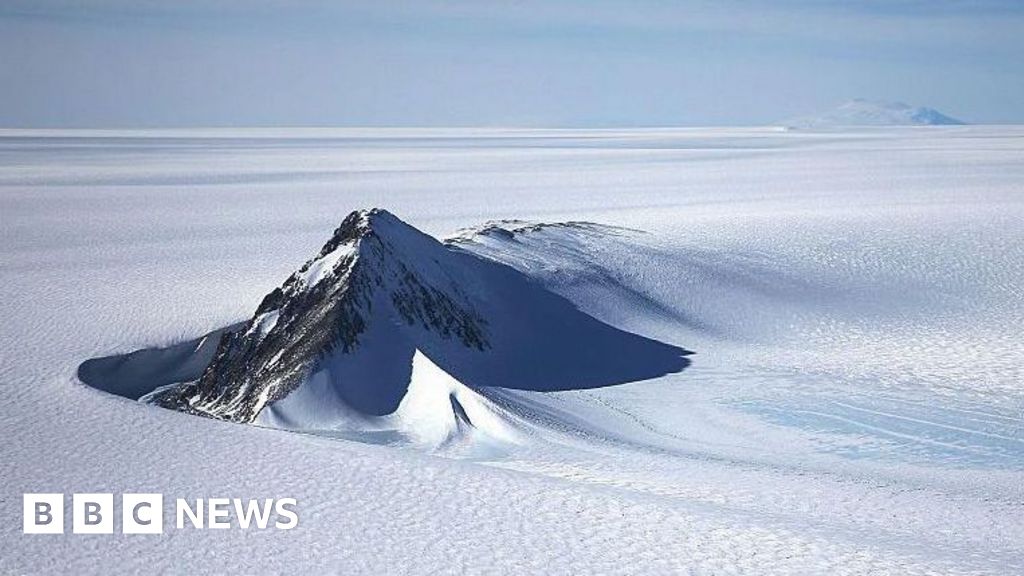
A new map has unmasked the landscape beneath Antarctica’s ice in unprecedented detail, something scientists say could greatly enhance our understanding of the frozen white continent.
Researchers used satellite data and the physics of how Antarctica’s glaciers move to work out what the continent might look like beneath the ice.
They found evidence of thousands of previously undiscovered hills and ridges, and say their maps of some of Antarctica’s hidden mountain ranges are clearer than ever before.
While the maps are subject to uncertainties, the researchers believe the new details could shed light on how Antarctica will respond to climate change – and what that means for sea-level rise.
“It’s like before you had a grainy pixel film camera, and now you’ve got a properly zoomed-in digital image of what’s really going on,” lead author Dr Helen Ockenden, a researcher at the University of Grenoble-Alpes, told BBC News.
Thanks to satellites, scientists have a good understanding of Antarctica’s icy surface – but what lies beneath has remained more of a mystery.
In fact, more is known about the surface of some planets in our Solar System than much of Antarctica’s “underbelly” – the topography beneath the ice sheet.
But researchers now have what they believe to be the most complete, detailed map of that underbelly ever made.
“I’m just so excited to look at that and just see the whole bed of Antarctica at once,” said Prof Robert Bingham, a glaciologist at the University of Edinburgh who co-authored the study. “I think that’s amazing.”
Traditional measurements from the ground or air have used radar to “see” beneath the ice – which is up to three miles (4.8km) thick in places – often along individual survey lines or tracks.
But these tracks could be tens of kilometres apart – leaving scientists to fill in the gaps.
“If you imagined the Scottish Highlands or the European Alps were covered by ice and the only way to understand their shape was the occasional flight several kilometres apart, there’s no way that you would see all these sharp mountains and valleys that we know to be there,” said Bingham.
So the researchers used a new approach, combining their knowledge of the ice surface from satellites and their understanding of how the ice moves from physics – and checking them against those previous tracks.
“It’s a little bit like if you’re kayaking in a river, and there’s rocks underneath the water, sometimes there’s eddies in the surface, which can tell you about the rocks under the water,” explained Ockenden.
“And ice obviously flows very differently to water, but still, when the ice is flowing over a ridge or a hill in the bedrock […] that manifests in the topography of the surface, but also in the velocity as well.”
While we knew about Antarctica’s major mountain ranges, the scientists’ new approach has revealed tens of thousands of previously undiscovered hills and ridges, as well as greater details around some of those mountains and canyons buried under the ice.
“I think it’s just really super interesting to look at all these new landscapes and see what’s there,” said Ockenden.
“It’s like when you see a map of topography on Mars for the first time, and you’re like, ‘whoa, this is so interesting, this looks a bit like Scotland,’ or ‘this looks like nothing I’ve ever seen before’.”
One intriguing discovery is a deep channel incised in Antarctica’s bed in an area called the Maud Subglacial Basin.
The channel is on average 50m deep, 6km wide and runs for nearly 400km (about 250 miles) – roughly the distance from London to Newcastle as the crow flies.
The researchers’ new map is unlikely to be the final one. It relies on assumptions about exactly how ice flows which, like any method, comes with uncertainties.
And much remains to be discovered about the rocks and sediments that lie beneath the ice.
But other researchers agree that, combined with further surveys from the ground, air and space, the maps are a valuable step forward.
“This is a really useful product,” said Dr Peter Fretwell, senior scientist at the British Antarctic Survey in Cambridge, who was not involved in the new study but has been extensively involved in previous mapping.
“It gives us an opportunity to fill in the gaps between those surveys,” he added.
A more detailed understanding of all of the ridges, hills, mountains and channels could improve computer models of how Antarctica might change in future, the researchers say.
That is because these landforms and features ultimately shape how fast the glaciers above move, and how quickly they can retreat in a warming climate.
And that is important because the future speed of melting in Antarctica is widely considered to be one of the biggest unknowns in climate science.
“[This study gives] us a better picture of what’s going to happen in the future and how quickly ice in Antarctica will contribute to global sea-level rise,” agreed Fretwell.
The study is published in the academic journal, Science.
Toy balls and other objects flew onto the field as fans protesting the Bundesliga‘s scheduling forced a five-minute interruption in a game between Augsburg and Union Berlin on Thursday.
The objects were thrown from the stands when the ball went out behind Augsburg’s goal in the 32nd minute. Players, substitutes and staff all joined in to the clear the field before play could resume in the 37th.
Fans displayed two banners protesting the decision for a rare Thursday game, and called for more games to be played in a traditional Saturday afternoon slot.
With 18 teams and a 34-game season, midweek games are rarer in the Bundesliga than other major European leagues.
Playing on Thursday was the result of the league’s TV broadcast contract, which began this season, requiring five different kickoff times for each round of games, German agency dpa reported. This midweek round of games also had early and late games on Tuesday and Wednesday.
Thursday’s game ended in a 1-1 draw after Union Berlin scored a stoppage-time equalizer.