Australia’s Marcus Stoinis (left) embraces Pakistan bowler Haris Rauf after the third T20I at the Bellerive Oval in Hobart, Australia, November 18, 2024. — AFP
The Pakistan Cricket Board (PCB) on Saturday announced revised match timings for the national side’s upcoming three-match T20I series against Australia, set to begin on January 29.
The PCB said that the decision was taken in response to extreme weather conditions, with all T20 matches now scheduled to start at 4:00pm local time.
The toss for each match will take place at 3:30pm. Previously, the matches were set to begin at 6:00pm, with the toss at 5:30pm.
Pakistan and Australia will clash in three T20Is at Gaddafi Stadium, Lahore, on January 29, January 31, and February 1.
The series will serve as vital preparation for both sides ahead of the ICC Men’s T20 World Cup 2026, scheduled in India and Sri Lanka from February 7 to March 8.
In the World Cup, Pakistan have been drawn in Group A alongside India, the United States, the Netherlands, and Namibia, while Australia will compete in Group B with Sri Lanka, Ireland, Zimbabwe, and Oman.
Sources have said that the probable Pakistan players for the tournament include captain Salman Ali Agha, Sahibzada Farhan, Saim Ayub, Fakhar Zaman, Shadab Khan, Babar Azam, Faheem Ashraf, Mohammad Nawaz, Usman Khan, and Abrar Ahmed.
Other players under consideration are Shaheen Shah Afridi, Naseem Shah, Haris Rauf, Salman Mirza, and Khawaja Nafay, while Abdul Samad, Mohammad Wasim Jr, and Usman Tariq are likely to be named among the reserve players.
The upcoming tour will mark Australia’s third visit to Pakistan since March–April 2022, when they toured for a historic Test series, followed by an ODI series and a one-off T20I.
Australia also played three matches of the ICC Champions Trophy 2025 in Pakistan.
Historically, Pakistan and Australia have met 28 times in T20Is. Australia have won 14 matches, Pakistan 12, with one match ending in a tie and another producing no result.
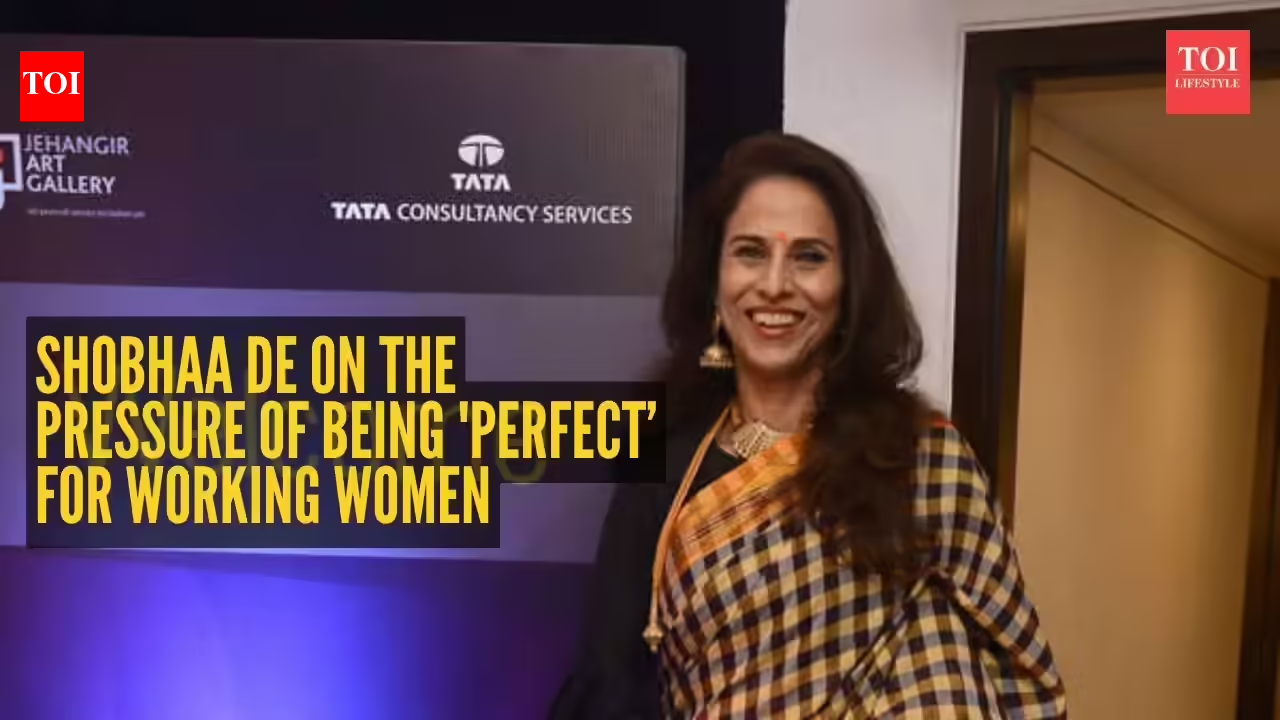
Shobhaa De has never been one to mince words, and at the Jaipur Literature Festival 2026 press conference, she didn’t disappoint the audience. The author and columnist spoke about the true feminism and the need for better gender equality , especially at the workplace. Cut straight to the heart of modern feminism. Forget hashtags or hot takes – according to De, financial independence is the real game-changer that empowers women to break free from unfair systems. It’s the quiet strength that turns awareness into action.Picture this: A woman knows she’s being shortchanged at work or home, but hesitation creeps in. Why? As De put it bluntly, “They hold back because they are not aware of their position legally, and they don’t have the resources to fight in a court of law because they’re not earning their own money.” It’s a sobering reality check. Without that economic backbone, pushback feels risky – almost impossible. But De sees hope ahead. “At the end of the day, it all comes back to being financially independent,” she declared. And for the next generation? “I already see change unfolding. Younger women are far better placed to assert their agency.”Balancing energiesThe conversation then shifted to the trendy talk of “masculine and feminine energy”. De, a practising Hindu, reframed it beautifully as coexistence, not competition between genders. “I completely accept the concept of male and female energy. It’s a beautiful balance. They can’t exist in isolation,” she shared. Both men and women carry these energies within, ready to tap into as needed. Imagine a world awake to that harmony? “It will be a better world,” she shared.The relentless pressure on working womenThen came the raw truth about workplace woes. Are women expected to be flawless superwomen? De didn’t sugarcoat it: Pressure hits everyone, but women face a microscope. “In a work environment, they look at how a woman dresses, her body language, how she negotiates,” she observed. Snag a promotion? Don’t expect pure merit credit – other “reasons” get whispered. “If she gets a promotion, they will attribute other reasons. They’re very reluctant to give her credit for merit,’ she said.And it’s not just India. “America is at least two decades behind India when it comes to work environment for women,” De fired back, calling out overt objectification abroad.At nearly 80, with her latest book ‘The Sensual Self: Explorations of Love, Sex & Romance’ still turning heads, Shobhaa De remains a force. She’s outspoken, sometimes polarizing, but always authentic. Indian women, she insists, already possess “an assertive dignity within themselves.” The challenge? Harness it and charge forward.Do you agree with De’s viewpoints about the importance of financial independence for women and the need for better gender equality at the workplace? Tell us in the comments below.
Excess oil increases cholesterol levels, adds unnecessary calories, and can lead to weight gain, high blood pressure, heart attacks, and also puts strain on the heart.
Small changes in how you cook and eat can make a big difference in the long run.
Fried foods and oily snacks are tempting, but knowing the right amount of oil for daily cooking can protect your heart and overall health. Here, the expert helps to understand the impact of oily food on heart health. He also recommends an appropriate quantity of oil for everyone to use while cooking food. Eat oil in moderation and save your heart.
Want to know more about protecting your heart from the impact of oily food? Dr Rahul Gupta, Director – Cardiologist, Gleneagles Hospital, Parel shares things to keep in mind.
Oily food is commonly eaten by a large number of people. A large number of people tend to enjoy fried foods like potato chips, namkeens, vada, medu vada, and kachori that are mouthwatering but can do more harm than good. So, they are tasty and hard to resist, whether at home, parties, or street stalls. The ill effects of oily food on the heart and often neglected.
Excess oil increases cholesterol levels, adds unnecessary calories, and can lead to weight gain, high blood pressure, heart attacks, and also puts strain on the heart. So, be attentive when it comes to heart health and minimize the consumption of oily food.
Know how much oil you should use while cooking: Everyone needs to seek the help of an expert who will guide you regarding which oil is suitable for you. Using more than 2-3 teaspoons of oil can lead to clogged arteries, obesity, and heart disease. Deep-fried foods absorb a lot of oil, so they should be treated as occasional treats rather than daily staples. Choosing the right type of oil also makes a big difference. Oils rich in unsaturated fats, such as mustard oil, olive oil, sunflower oil, groundnut oil, and rice bran oil which will support the heart. Try to have healthy snacks such as roasted makhanas, fruits, nuts, and seeds instead of eating oily stuff. Cut down the oil usage smartly and stay healthy. You can also opt for cold-pressed or minimally processed oils for a healthier balance of Omega-6 to Omega-3 fatty acids and improve heart health.
Tips for heart-healthy cooking: Steaming, baking, or grilling the food can do the trick. Say NO to deep-fried foods; instead, opt for fresh fruits, vegetables, and whole grains. Cook with a non-stick pan to reduce the amount of oil needed. Fried snacks should be eaten once in six months. Rotate oils rather than using just one type to get a balance of healthy fats
Remember, small changes in how you cook and eat can make a big difference in the long run, helping you stay healthy while still enjoying your favourite foods. It is necessary to take care of the heart. So, get going and regulate your oil consumption with the help of an expert.
First Published:
January 17, 2026, 19:45 IST
Disclaimer: Comments reflect users’ views, not News18’s. Please keep discussions respectful and constructive. Abusive, defamatory, or illegal comments will be removed. News18 may disable any comment at its discretion. By posting, you agree to our Terms of Use and Privacy Policy.
The Artemis II rocket makes its way from the Vehicle Assembly Building to pad 39B at the Kennedy Space Center, Saturday, Jan. 17, 2026, in Cape Canaveral, Fla. (AP Photo/John Raoux)
Nasa’s giant new moon rocket headed to the launch pad Saturday in preparation for astronauts’ first lunar fly-around in more than half a century. The out-and-back trip could blast off as early as February. The 322-foot (98-meter) rocket began its 1 mph (1.6 kph) creep from Kennedy Space Center’s Vehicle Assembly Building at daybreak. The four-mile (six-kilometer) trek could take until nightfall. Thousands of space center workers and their families gathered in the predawn chill to witness the long-awaited event, delayed for years. They huddled together ahead of the Space Launch System rocket’s exit from the building, built in the 1960s to accommodate the Saturn V rockets that sent 24 astronauts to the moon during the Apollo program. The cheering crowd was led by Nasa’s new administrator Jared Isaacman and all four astronauts assigned to the mission. Weighing in at 11 million pounds (5 million kilograms), the Space Launch System rocket and Orion crew capsule on top made the move aboard a massive transporter that was used during the Apollo and shuttle eras. It was upgraded for the SLS rocket’s extra heft. The first and only other SLS launch – which sent an empty Orion capsule into orbit around the moon – took place back in November 2022. “This one feels a lot different, putting crew on the rocket and taking the crew around the moon,” Nasa’s John Honeycutt said on the eve of the rocket’s rollout. Heat shield damage and other capsule problems during the initial test flight required extensive analyses and tests, pushing back this first crew moonshot until now. The astronauts won’t orbit the moon or even land on it. That giant leap will come on the third flight in the Artemis lineup a few years from now. Commander Reid Wiseman, pilot Victor Glover and Christina Koch – longtime Nasa astronauts with spaceflight experience – will be joined on the 10-day mission by Canadian astronaut Jeremy Hansen, a former fighter pilot awaiting his first rocket ride. They will be the first people to fly to the moon since Apollo 17’s Gene Cernan and Harrison Schmitt closed out the triumphant lunar-landing program in 1972. Twelve astronauts strolled the lunar surface, beginning with Neil Armstrong and Buzz Aldrin in 1969. Nasa is waiting to conduct a fueling test of the SLS rocket on the pad in early February before confirming a launch date. Depending on how the demo goes, “that will ultimately lay out our path toward launch,” launch director Charlie Blackwell-Thompson said on Friday. The space agency has only five days to launch in the first half of February before bumping into March.
Kanye West, who has officially changed his name to Ye, and Kim Kardashian’s daughter North West’s latest moves suggest she’s gravitating more toward her father’s controversial style than her mother’s influence.
From eyebrow raising fashion choices to a public reunion with Kanye’s wife Bianca Censori, fans are wondering if the Kardashians star is slowly losing her first born to ex husband?
Such speculations gained traction after the 12-year-old dropped a snippet of her new collaboration song with her dad, titled Piercing on My Hand (Ye Version).
In the wee hours of Friday morning, January 16, she shared a video on her Instagram Stories, featuring herself, singing, “Piercing on my hand, the other holding bands. No friends, just filter, you wouldn’t understand.”
“Went to school for two days, then I got banned/ Skipping school, yeah, I do it on the daily,” she continues across a beat heavily influenced by the rage rap that frequently soundtracks her social media posts.
Kanye West daughter North drops ‘Piercing on My Hand (Ye Version)’ snippet
X (formerly Twitter) users picked up on the lyrics and began tagging Kim with messages of apology.
While some mocked her parenting with sarcasm, others genuinely sympathised with the mother, who tries to protect her child from following in her father’s controversial footsteps.
“Got some new rings, yeah, they’re so crazy,” North continues to rap. “All my friends are hits, you know I’m not lazy/ You’re so angry that I’m so mainstream.”
she sneers near the end of the snippet, adding, “I’m not sure I’m crazy/ I want more piercings and tats/ I love blue hair, put it in some plaits/ Put the music to the max/ I want like a hundred thousand racks.”
The pre-teen captioned the post, writing, “Piercing on my hand @ye version.”
Although North’s fans seemed to love her music influence and the teaser, the collaboration with her 24-time Grammy-winning dad is just another reason which proved she is more like her dad than her famous mother.
This preview follows a string of daring fashion statements from North in early 2026, including a temporary bridge piercing, black dental grills, and a diamond skull pendant, accessories more closely associated with her father’s unconventional style than her mother’s polished aesthetic.
While her fashion choices made waves, she grabbed further attention given to her growing comfort in sharing personal moments online.
On December 26, 2025, North posted a screenshot from a FaceTime call with Bianca Censori, her step mom and singer BabyXsosa.
The viral image, originally shared by BabyXsosa, marked one of the first times North publicly featured her stepmother on her own social media, signaling her increasingly visible bond with Kanye’s inner circle.
Together, the music, fashion, and social media activity suggest North is exploring her identity in ways that feel more aligned with her father’s influence, prompting thoughts like may be she is drifting away from her mother.
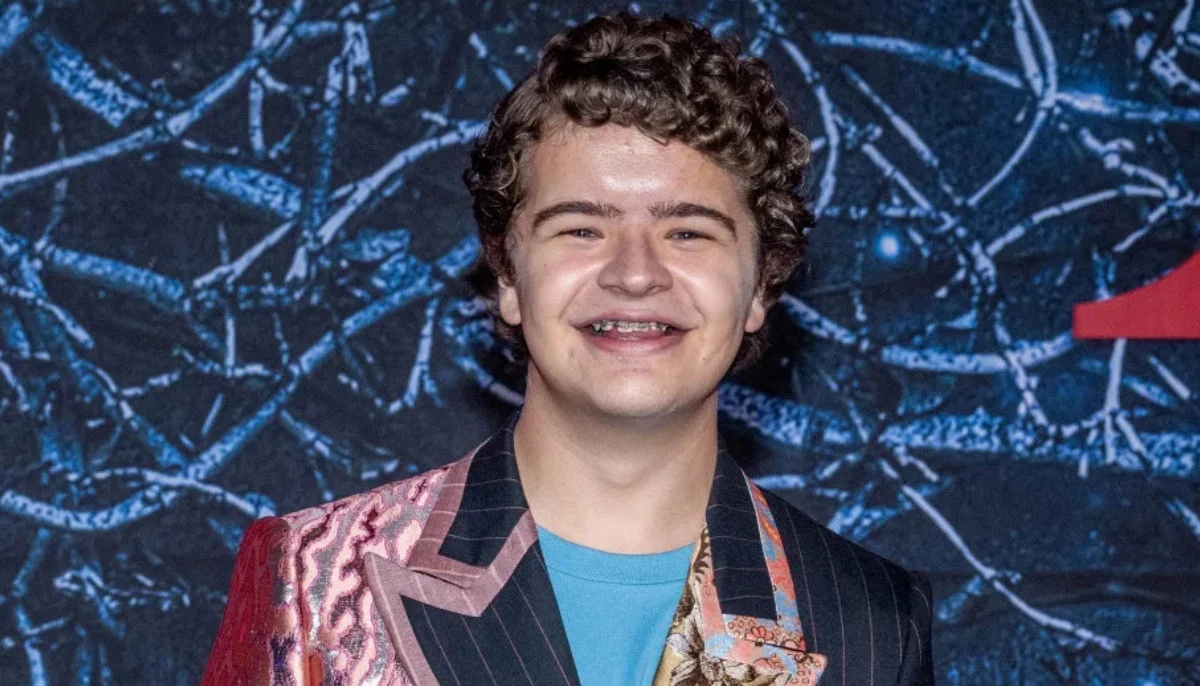
Photo: Gaten Matarazzo heaps praise for Duffer brothers
Gaten Matarazzo has taken a trip down memory lane and gushed over Stranger Things creators.
In a new chat with GQ Magazine, the acting sensation reflected on working with the Duffer brothers, Matt and Ross, and highlighted the care and caution they exhibited while working with a younger cast.
He began by saying, “It felt like they were okay with deliberately making a meta moment there.”
Matarazzo also addressed, “So much of the conversation around the show is centered around us acting in it throughout our childhood.”
“And the stigma that comes along with the experience of child actors and what tends to happen in an industry like this when kids get involved, which can be not the healthiest.”
Appreciating the creators’ approach, he remarked, “And Matt and Ross were always so cautious and loving and caring towards us, to make sure that we did this in a very healthy and safe professional environment,” after which he signed off from the chat.
It is noteworthy that Gaten Matarazzo is set to star in an untitled Hulu college comedy, where he also served as an executive producer.
With awareness and careful guidance, most women can achieve relief from heavy bleeding, pelvic pain, and fibroids without resorting to hysterectomy unnecessarily.
A hysterectomy is a surgery to remove a woman’s uterus.
Prolonged periods, heavy bleeding, pelvic pain, or fibroids are common problems affecting many women today. In most cases, they are advised to undergo a hysterectomy as the only option left. But these symptoms can be easily treated sometimes with medication, hormonal treatments, or very delicate surgeries. Hysterectomy is usually the first option recommended, but it has the potential to cause the patient to lose her uterus unnecessarily and undergo long-term physical and emotional impact.
We speak to Dr Gayathri Kamath, Additional Director, Obstetrics & Gynaecology, Fortis Hospital, Bannerghatta Road, Bengaluru, to understand what a hysterectomy is and what other options are available for women.
A hysterectomy is a surgery to remove a woman’s uterus, the organ where a baby grows during pregnancy. Doctors often do it to treat heavy bleeding, fibroids, endometriosis, or cancer. Sometimes they also remove the cervix, ovaries, or fallopian tubes. After this operation, periods stop, and pregnancy is no longer possible. Recovery takes a few weeks
Common symptoms such as heavy menstrual bleeding, spotting between periods, pelvic discomfort, and bloating can often be addressed without removing the uterus. In fact, fibroids are non-cancerous tumours that sometimes do not need surgical excisions at all. The chance of fibroids turning malignant is less than 1%. Many patients are unaware that modern gynaecology now offers several uterus-preserving treatments that can effectively control symptoms while keeping the uterus intact.
Hormonal intrauterine devices (IUDs) like Mirena, for instance, are the ones that release small quantities of progesterone gradually inside the uterus. This helps reduce bleeding. In case the fibroids become troublesome, one can opt for a minimally invasive process such as laparoscopic or robotic myomectomy, where the fibroids are removed, but the uterus continues to function.
Another alternative is Uterine Artery Embolisation (UAE), a non-surgical method that cuts off the blood supply to fibroids, causing them to shrink away and thus reduce the bleeding without involving any major surgery.
The advantage of this stepwise treatment approach is that it prioritises safety and fertility preservation, reserving hysterectomy only for cases where conservative measures have failed or where malignancy is suspected. Jumping directly to surgery exposes women to risks such as surgical complications, loss of fertility, and long-term effects on cardiovascular and bone health that occur only when ovaries are removed.
If none of these options are feasible, one may then resort to a hysterectomy. With minimally invasive laparoscopic and robotic technology nowadays, recovery after hysterectomy has been very gratifying.
Before consenting to a hysterectomy, women should feel confident to ask questions: Are there minimally invasive options available? Could a hormonal IUD or UAE help my symptoms? What are the short- and long-term risks of removing my uterus? How will surgery impact my hormonal balance and overall health? Understanding all available options helps women make informed decisions that are tailored to their health and lifestyle.
The objective is to get rid of the symptoms in the most effective way possible while still keeping the uterus whenever possible. With awareness and careful guidance, most women can achieve relief from heavy bleeding, pelvic pain, and fibroids without resorting to hysterectomy unnecessarily.
First Published:
January 17, 2026, 18:37 IST
Disclaimer: Comments reflect users’ views, not News18’s. Please keep discussions respectful and constructive. Abusive, defamatory, or illegal comments will be removed. News18 may disable any comment at its discretion. By posting, you agree to our Terms of Use and Privacy Policy.
Blue aliens, a family of superheroes and a city of talking animals boosted the Walt Disney Company to the top of the domestic box office in 2025.
Full-year ticket sales in the United States and Canada rose about 4% from 2024 to $9.05 billion. Disney accounted for the highest share of that haul with $2.49 billion in ticket sales, or 27.5%, according to data from Comscore.
It’s closest competitors were Warner Bros. Discovery, which tallied $1.9 billion domestically, or 21%, and Universal, which took in $1.7 billion, or 19.7%. Together, these three studios accounted for nearly 70% of the domestic box office market share.
No other studio surpassed $1 billion in domestic ticket sales or accounted for more than 7% of the total box office haul.
“[Warner Bros., Disney and Universal] have the advantage of having at least two or more distinct and successful sub-brands labels — such as Marvel under Disney, New Line under WB and Illumination under Universal — under their corporate umbrella that enables these studios to dominate at least in terms of the overall box office and percentage of the marketplace that they control,” said Paul Dergarabedian, head of marketplace trends at Comscore.
Disney’s standout performance came on the backs of already popular intellectual property. Four of its films were part of the top 10 highest-grossing domestic releases of the year, including the live-action remake of “Lilo & Stitch,” a sequel to 2016’s “Zootopia,” another entrant in the Marvel Cinematic Universe with “Fantastic Four: First Steps” and a third “Avatar” film.
“Most years at the box office are dominated by known IP and non-original content; films that have the baked in brand name recognition that theoretically gives those films a leg up in terms of marketing and potential box office success,” Dergarabedian said.
In fact, nine of the 10 biggest movies at the domestic box offices were from existing IP. Warner Bros.’ “Sinners” was the only original title to make the list.
“In 2025 there were some big budget originals that did incredibly well … but lest anyone think that trend is going away, 2026 looks to eclipse 2025 in terms of the number of high-profile sequels and known IP on the slate for the year,” Dergarabedian said.
That’s especially true for Disney.
The studio is set to release its first Star Wars film in theaters since 2019 called “The Mandalorian and Grogu” after the popular characters of its “The Mandalorian” series on Disney+; “Toy Story 5” is will hit theaters in June followed by a live-action “Moana” in July; then the hotly anticipated “Avengers: Doomsday” arrives in December.
A new Spider-Man film will also sling into theaters in 2026, but as part of a deal with Sony to have the character as part of Disney’s MCU, Sony keeps the majority of box office profits while Disney gets merchandise sales.
The box office will also get a boost from Warner Bros.’ “Supergirl” and “Dune: Part Three,” Universal’s “Minions 3,” “The Super Mario Galaxy Movie” and “The Odyssey,” Lionsgate’s “Hunger Games: Sunrise on the Reaping” and Sony’s third “Jumanji” film.
“As we look into 2026, there’s plenty of optimism to go around,” said Shawn Robbins, director of analytics at Fandango and founder of Box Office Theory “The slate is packed with top-tier franchises, some fan-driven and others family-oriented, alongside filmmaker-driven tentpoles … plus an inevitable crop of strong or potentially surprising performers out of horror, comedy, indie, and other genres.”
Disclosure: Versant is the parent company of CNBC and Fandango.
Welcome to Fox News’ Artificial Intelligence newsletter with the latest AI technology advancements.
IN TODAY’S NEWSLETTER:
– Data center boom powering AI revolution may drain US grids — and wallets
– Grok AI scandal sparks global alarm over child safety
– In 2026, energy ‘wars’ new frontier is AI, and U.S. must win that battle, API chief says
The COL4 AI-ready data center is located on a seven-acre campus at the convergence point of long-haul fiber and regional carrier fiber networks on July 24, 2025 in Columbus, Ohio. (Eli Hiller/For The Washington Post via Getty Images)
POWER CRUNCH: The rapid expansion of artificial intelligence (AI) data centers is raising alarms over how much power and water they consume — and what that could mean for Americans’ utility bills — as Washington lawmakers clash over whether the boom helps or harms the economy.
GLOBAL ALARM: Grok, the built-in chatbot on X, is facing intense scrutiny after acknowledging it generated and shared an AI image depicting two young girls in sexualized attire.
ENERGY WINS: The next global energy war won’t just be fought over oil and gas – it will be decided by who can power artificial intelligence first, and the U.S. must win that race, the head of the nation’s largest oil and gas trade group told Fox News Digital.
War Secretary Pete Hegseth announced plans to lead the U.S. to becoming the global leader in AI military technology.(iStock)
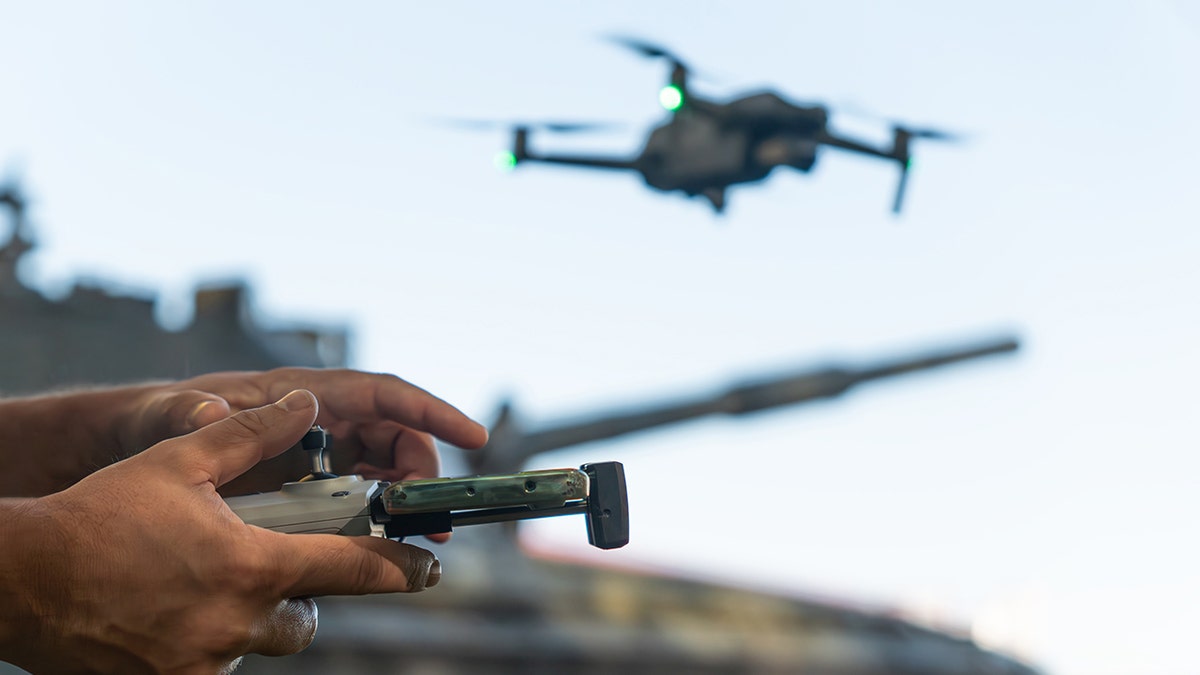
‘WE WILL WIN’: Pentagon chief Pete Hegseth announced on Monday a plan aimed at making the U.S. a global leader in artificial intelligence, drones and space technology, arguing that a risk-averse culture has slowed innovation and prevented the Pentagon from providing the best resources to its service members.
FRIES MEET FUTURE: Fast-food giants are racing to bring artificial intelligence to the ordering process, hoping it will reduce errors, speed up service and lighten the load on workers, according to multiple reports.
OUT OF THIS WORLD: Surging demand for energy to power artificial intelligence (AI) data centers is reaching new heights as companies are pursuing plans to station data centers in space.
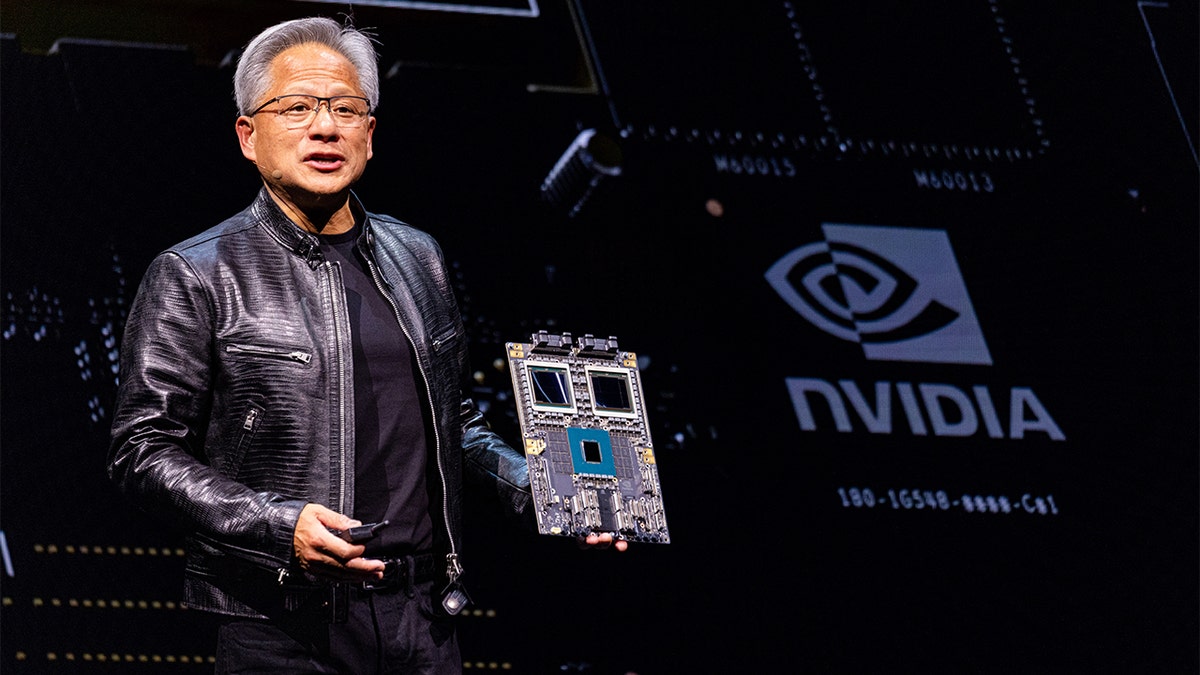
Jensen Huang, co-founder and CEO of Nvidia Corp., gives a talk in Taipei, Taiwan.(Annabelle Chih/Bloomberg via Getty Images)
CHIPS TO CHINA: The Trump administration formally greenlit Nvidia exports Tuesday, allowing the tech giant to ship its artificial intelligence chips to China and other countries.
SHIFT SHOCK: As fears grow that artificial intelligence (AI) will wipe out jobs, Robinhood CEO Vlad Tenev says the opposite may be true.
NOT JUST CHIPS: Amazon’s push to build massive artificial-intelligence data centers is now extending into Arizona, where a recently restarted copper mine is supplying industrial metal seen as increasingly critical to powering Big Tech’s AI infrastructure.
LONG-HAUL WIN: Kodiak AI, a leading provider of AI-powered autonomous driving technology, has spent years quietly proving that self-driving trucks can work in the real world. The company’s core system, the Kodiak Driver, brings software and hardware together in a practical way. As the company explains, “The Kodiak Driver combines advanced AI-driven software with modular, vehicle-agnostic hardware into a single, unified platform.”
Stay up to date on the latest AI technology advancements, and learn about the challenges and opportunities AI presents now and for the future with Fox News here.
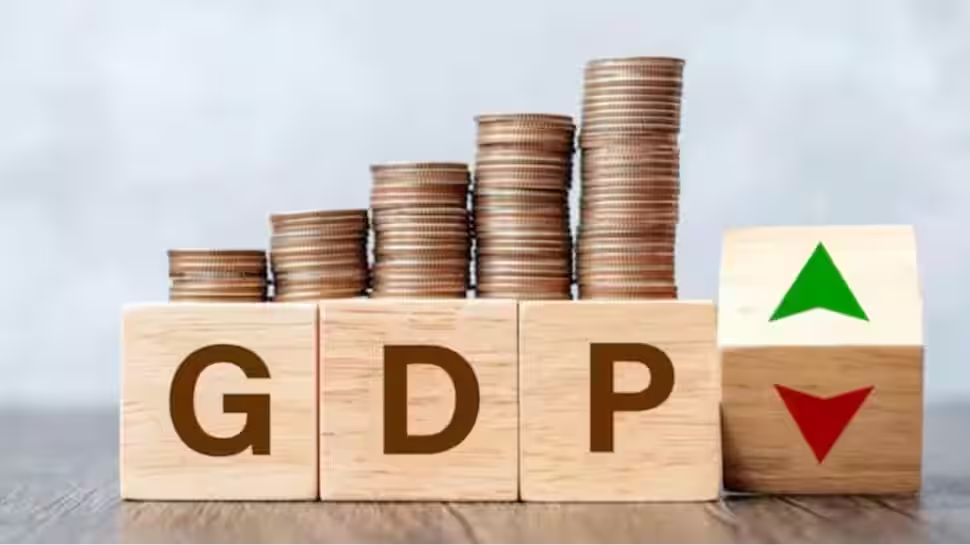
New Delhi: India’s real GDP growth in FY27 is expected to be in the range of 6–7 per cent, supported by domestic consumption, interest rate cuts, and public capital expenditure, according to a new report. For budgetary analysis, ICRA used the NSO’s ‘First Advance Estimates’ of nominal GDP of Rs 357.1 trillion for FY26, reflecting a growth of 8.0 per cent, and its own estimate of Rs 392.0 trillion for FY27, implying nominal GDP growth of around 9.8 per cent.
The rating agency further said that it expects the government to cap the fiscal deficit at 4.3 per cent of GDP in FY27, compared to the Budget Estimate of 4.4 per cent in FY2026, assuming nominal GDP growth of 9.8 per cent. “The FY27 Budget is expected to reflect a shift in focus from annual fiscal deficit targets to a medium-term debt consolidation path, especially in the context of the forthcoming 16th Finance Commission recommendations,” the report mentioned.
ICRA also expects the government to increase capital expenditure by around 14 per cent to Rs 13.1 trillion in FY27, equivalent to 3.3 per cent of GDP. This follows a likely overachievement of the capital expenditure target in FY26, with capex estimated at Rs. 11.5 trillion, compared to the BE of Rs 11.2 trillion.
Add Zee News as a Preferred Source
“The acceleration in capital expenditure in FY27 is expected to occur before fiscal rigidities increase from FY28 onwards, due to higher committed expenditure related to salary and pension payouts following the 8th Central Pay Commission recommendations,” said the report.
The rating agency also expects gross tax revenues to grow by around 7 per cent in FY27, led by direct tax growth of around 11 per cent. In contrast, indirect tax revenues are expected to grow by a subdued 2 per cent, primarily due to the impact of GST rate cuts implemented from September 2025, said the report.