Home Blog Page 2878

Access Denied

0
Access Denied


Access Denied

You don’t have permission to access “http://food.ndtv.com/news/viral-video-shows-man-cooking-food-while-comfortably-seated-impresses-internet-10773056” on this server.

Reference #18.4c011502.1768781244.bc482cc

https://errors.edgesuite.net/18.4c011502.1768781244.bc482cc

Access Denied

0
Access Denied


Access Denied

You don’t have permission to access “http://www.ndtv.com/business-news/why-the-european-union-and-mercosur-signed-a-major-trade-deal-after-25-years-10773492” on this server.

Reference #18.afe41602.1768759240.852f144

https://errors.edgesuite.net/18.afe41602.1768759240.852f144

‘There is no information’: Families search for loved ones after Gul Plaza fire

0
‘There is no information': Families search for loved ones after Gul Plaza fire

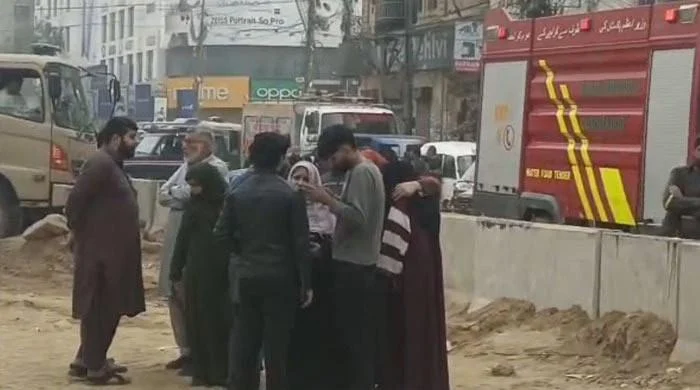
A woman who is searching her missing son after fire at Karachi’s Gul Plaza shopping mall speaking to Geo News on January 18, 2025. — Geo News

Family members of several missing persons, including shopkeepers and buyers — four of them women — are searching for their loved ones after they went missing during the fire at Karachi’s Gul Plaza shopping mall.

The deadly blaze that broke out Saturday night at the shopping mall has killed at least six people, with officials warning on Sunday that the toll may rise as several remain trapped inside.

One woman, still in shock, said she learned around 9am that her young son had gone missing. The shaken mother could not confirm whether her son was a shopkeeper or had visited the plaza to buy something.

“I found out at 9 o’clock when my other son, who was going to church, called me and said, ‘Amma, come fast, my brother is missing,'” she said.

“My young son… there is no information about him,” she cried.

A large number of anxious family members were seen outside the Burns Centre at Civil Hospital, fearing that several people may still be inside the building more than 13 hours after the blaze erupted on MA Jinnah Road.

A man searching for six members of his family told Geo News that the group had visited the plaza for wedding shopping and were last contacted at 10:10pm while on the second floor selecting utensils.

Another woman searching for her husband, a shopkeeper at the plaza, said his whereabouts are unknown. She said that two children who also work at his shop are missing along with him.

Helpline established

Meanwhile, in the wake of the Gul Plaza fire incident, the district administration and South Zone Police have established dedicated helplines to facilitate the public and provide timely information.

Deputy Commissioner South Javed Nabi said citizens can share information related to the Gul Plaza tragedy or report missing persons by contacting the DC South office.

The helpline numbers provided for this purpose are 0313-5048048, 021-99206372, and 021-99205625.

Separately, DIG South announced that South Zone Police have also set up helplines to assist and guide citizens affected by the incident. Members of the public can obtain information or seek help by calling 021-99205670, 021-99201196, and 021-99205691.

Authorities urged citizens to use these helplines for accurate information and cooperation during relief and response efforts.

Gold and Silver Prices Outlook: What Investors Should Watch This Week

0
Gold and Silver Prices Outlook: What Investors Should Watch This Week

Last Updated:

Gold and silver hit new records in 2025, with silver crossing 90 dollars per ounce. Experts highlight silver’s industrial demand and gold’s role as a hedge.

Gold and Silver outlook this week

Gold and Silver outlook this week

Gold and Silver Prices Outlook: Gold and silver prices saw a marginal dip after a record-breaking rally. Continuing the upward momentum of 2025, gold and silver made new records with silver crossing $90 per ounce-mark for the first time in history. Meanwhile, gold hovered in the range of $4,596-$5,600 per ounce.

COMEX Silver has seen a relatively sharper correction to the $89–$90 region after peaking above $93.7, reflecting short-term profit-booking following an extended rally.

In India, gold futures with expiry on February 05, 2026, stood at Rs 1,42,474 per 10 grams as on January 16, 2026. Silver futures with expiry in March were at Rs 2,87,701 per kg.

The tussle between European Union and the United States of American will be watched closely across the world this week. Trump administration has put fresh tariffs on the European Union following his demand to acquire Greenland, an autonomous region under Denmark, prompting the EU to halt the trade deal with the US with immediate effect.

“The 0 per cent tariffs on US products must be put on hold,” Weber said in a post on X, citing concerns over Washington’s latest actions.

European Commission President Ursula von der Leyen warned that the new tariffs risk damaging transatlantic ties.

“Tariffs undermine transatlantic relations and risk a dangerous downward spiral,” she said, stressing that Europe would uphold its sovereignty and remain united.

Gold, Silver Outlook

The long-term appeal of silver and gold will remain. Chronic supply shortages, especially in silver, sustained central bank gold purchases, accelerating demand from green energy, EVs, AI, and electronics, and ongoing macro and geopolitical uncertainties continue to support the long-term bullish narrative, said Ponmudi R, CEO – Enrich Money.

While near-term volatility may persist due to profit-taking, dollar movements, and key U.S. macro data, any corrective phases are expected to remain shallow and attract buying interest, added Ponmudi R.

“Silver continues to offer relative outperformance potential due to its higher industrial leverage, while gold remains a reliable hedge against macro and geo-political uncertainty,” he said.

Prasenjit Paul, Equity Research Analyst & Fund Manager at 129 Wealth Fund said one of the biggest mistakes investors can make is treating gold, silver, and debt as one broad “defensive” allocation.

“Doing so masks overlapping risks and can lead to a situation where supposedly safe assets decline at the same time as equities,” he said.

For gold he added that it should be viewed purely as catastrophe insurance—largely independent of the business cycle and the most reliable hedge against systemic stress.

Adding for silver, Paul said, Silver does not belong in the defensive category at all. Its demand is heavily linked to industrial activity, particularly in areas like solar energy and electric vehicles.

“As a result, silver behaves more like a cyclical asset and should be treated as a tactical satellite allocation,” Paul added.

Disclaimer: The views and investment tips by experts in this News18.com report are their own and not those of the website or its management. Users are advised to check with certified experts before taking any investment decisions.

Click here to add News18 as your preferred news source on Google.

Follow News18 on Google. Join the fun, play QIK games on News18. Stay updated with all the latest business news, including market trendsstock updatestax, IPO, banking finance, real estate, savings and investments. To Get in-depth analysis, expert opinions, and real-time updates. Also Download the News18 App to stay updated.
Disclaimer: Comments reflect users’ views, not News18’s. Please keep discussions respectful and constructive. Abusive, defamatory, or illegal comments will be removed. News18 may disable any comment at its discretion. By posting, you agree to our Terms of Use and Privacy Policy.

Read More

Ansel Elgort welcomes his first baby in secret

0
Ansel Elgort welcomes his first baby in secret

Ansel Elgort welcomes his first baby in secret

Ansel Elgort has welcomed his first child.

Insiders confirmed to People Magazine that the actor, known for his roles in The Fault in Our Stars and Baby Driver, has entered the chapter of fatherhood.

This comes after he was spotted out in New York City, carrying a newborn child.

It is pertinent to mention that the details about the child have remained under wraps.

The son of fashion photographer Arthur Elgort and Opera director Grethe Holby, Ansel previously talked about the exposure to spotlight through his father’s work.

He told Vogue, “My dad would throw me in the picture if they needed an extra.”

Ansel went on to add, “From an early age, I understood the concept that, if you’re not the star, then your job is to not pull attention away from the star.”

Ansel Elgort’s career took off in 2013 with Carrie before skyrocketing with The Fault in Our Stars and the Divergent franchise.

On the other hand, the actor also faced accusations of sexual harassment. In June 2020, a woman named Gabby on X (Former Twitter) claimed that she was harassed by the actor when he was 20.

However, Ansel Elgort addressed the allegations, stating that he and the woman had a “brief, legal and entirely consensual relationship”.

Furthermore, he apologized for his behaviour and admitted to not handling breakup well.

Greenland row: Trump rattles EU with tariff threats – why India should take note for US trade deal – The Times of India

0
Greenland row: Trump rattles EU with tariff threats - why India should take note for US trade deal - The Times of India

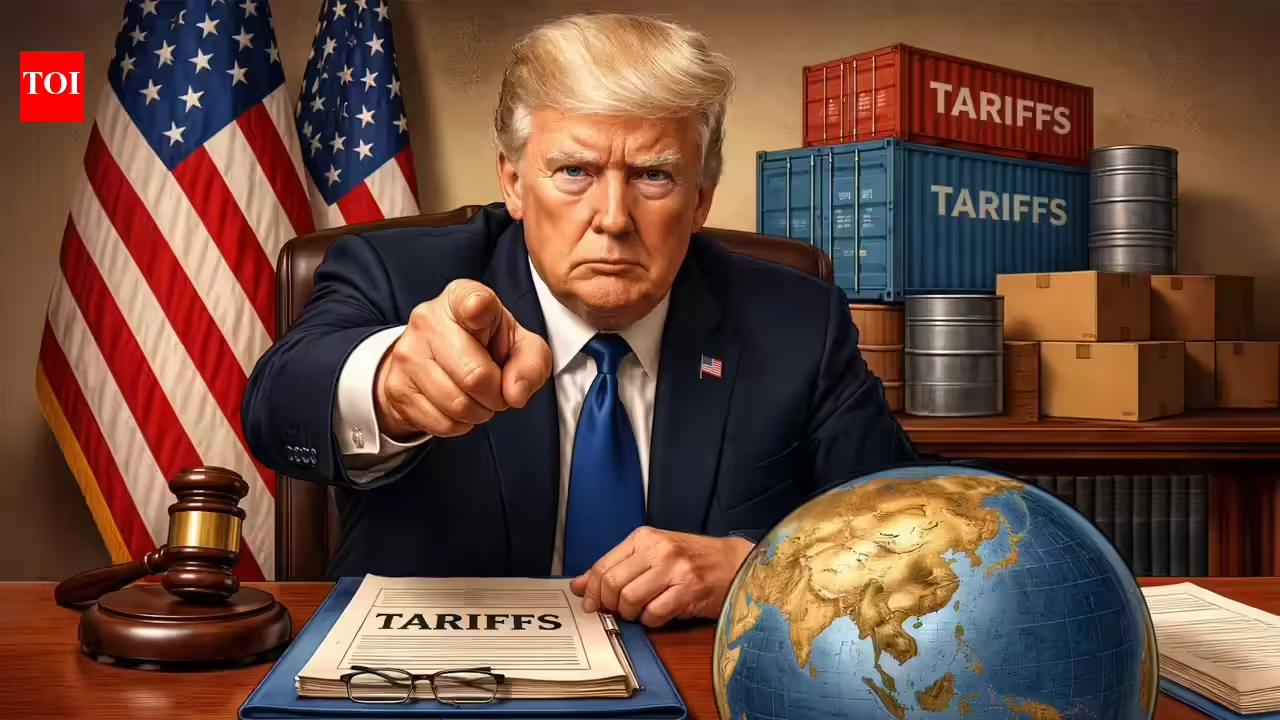
While the tariffs are for EU countries, the policy uncertainty under Trump is a reminder for India which is currently negotiating a trade deal with the US. (AI image)

US President Donald Trump’s latest threat to impose tariffs on European Union countries – a move openly linked to Greenland, following these countries’ support for Denmark’s refusal to permit any US takeover of the territory – holds an important warning and lesson for India too!On January 17, 2026, Trump announced 10% import duty on goods from Denmark, Norway, Sweden, France, Germany, the United Kingdom, the Netherlands and Finland. The tariffs are scheduled to come into force on February 1 and are set to increase to 25% from June 1. They will remain in place until the United States achieves what Trump described as the “complete and total purchase of Greenland.”While the tariffs are for EU countries, the policy uncertainty under Trump is a reminder for India which is currently negotiating a trade deal with the US. India already faces 50% tariffs for its exports. But, according to Global Trade Research Initiative (GTRI) founder Ajay Srivastava, the US decision to impose tariffs on European allies over Greenland underlines a reality India cannot ignore: trade deals with the US offer no guaranteed protection when economic measures are used for political leverage.

What Donald Trump Has Threatened:

In a rather long social media post, Donald Trump said that 10% tariffs would be imposed on all European Union countries. This figure will go up to 25% from June this year. What was Trump’s rationale? Here’s what he posted:“We have subsidized Denmark, and all of the Countries of the European Union, and others, for many years by not charging them Tariffs, or any other forms of remuneration. Now, after Centuries, it is time for Denmark to give back — World Peace is at stake! China and Russia want Greenland, and there is not a thing that Denmark can do about it. They currently have two dogsleds as protection, one added recently. Only the United States of America, under PRESIDENT DONALD J. TRUMP, can play in this game, and very successfully, at that! Nobody will touch this sacred piece of Land, especially since the National Security of the United States, and the World at large, is at stake.” “On top of everything else, Denmark, Norway, Sweden, France, Germany, The United Kingdom, The Netherlands, and Finland have journeyed to Greenland, for purposes unknown. This is a very dangerous situation for the Safety, Security, and Survival of our Planet. These Countries, who are playing this very dangerous game, have put a level of risk in play that is not tenable or sustainable. Therefore, it is imperative that, in order to protect Global Peace and Security, strong measures be taken so that this potentially perilous situation end quickly, and without question. Starting on February 1st, 2026, all of the above mentioned Countries (Denmark, Norway, Sweden, France, Germany, The United Kingdom, The Netherlands, and Finland), will be charged a 10% Tariff on any and all goods sent to the United States of America,” he said.According to Trump, this tariff rate will go up in some months. “On June 1st, 2026, the Tariff will be increased to 25%. This Tariff will be due and payable until such time as a Deal is reached for the Complete and Total purchase of Greenland. The United States has been trying to do this transaction for over 150 years. Many Presidents have tried, and for good reason, but Denmark has always refused. Now, because of The Golden Dome, and Modern Day Weapons Systems, both Offensive and Defensive, the need to ACQUIRE is especially important. Hundreds of Billions of Dollars are currently being spent on Security Programs having to do with “The Dome,” including for the possible protection of Canada, and this very brilliant, but highly complex system can only work at its maximum potential and efficiency, because of angles, metes, and bounds, if this Land is included in it. The United States of America is immediately open to negotiation with Denmark and/or any of these Countries that have put so much at risk, despite all that we have done for them, including maximum protection, over so many decades. Thank you for your attention to this matter!,” he said in his Truth Social Post.On their part, European leaders cautioned against Trump’s warning. A senior German member of the European Parliament said the latest threat cast doubt on the future of the EU–US trade agreement concluded last year. European Commission President Ursula von der Leyen and European Council President Antonio Costa responded with a joint statement issued hours after the remarks. They said such measures would weaken transatlantic ties and could trigger a harmful cycle of escalation. They also stressed that Europe would act collectively, remain aligned, and defend its sovereignty.

What’s The Lesson For India?

According to GTRI, there is a lesson for India in Trump’s ever changing policies and uncertain behaviour. Here’s how:“Europe’s experience—like Canada’s earlier treatment and Australia’s subsequent hedging—shows that even close allies are not spared sudden tariff action,” Srivastava cautions.“India has already paid a price by stepping back from Chabahar, altering energy imports and limiting engagement within BRICS, yet continues to face pressure in trade talks,” he adds.Srivastava says that the lesson is clear: New Delhi should not trade away strategic autonomy in the hope that a US trade deal will ensure stability. In a volatile global order, restraint, diversification and sovereign decision-making matter more than promises that can be withdrawn overnight.Coming soon after US actions involving Venezuelan oil assets and regime change, the Greenland episode highlights an approach in which Trump deploys tariffs and sanctions as tools of economic pressure to gain access to other nations’ resources, disregarding established international norms.For European governments, the signal is unambiguous. Even recently negotiated trade arrangements do not shield partners from fresh US tariff measures. The Greenland dispute has, in turn, hastened a wider reconsideration of dependence on the United States.

  • Canada, part of the Five Eyes intelligence grouping and one of America’s closest security partners, had earlier faced 35% US tariffs, was told the USMCA no longer mattered, and was subjected to rhetoric portraying it as America’s “51st state.” Ottawa responded by broadening its external relationships, concluding eight agreements with China and seeing Beijing overtake Washington as the top buyer of Canadian crude oil.
  • Across Europe, confidence in the US has weakened markedly. Surveys indicate that 76% of Germans now regard America as unreliable, the lowest reading ever recorded.
  • Australia has moved to repair ties with China after trade reprisals disrupted exports of wine, barley and coal, while the United Kingdom’s new administration is preparing a visit to China. Together, these shifts point to a clear trend: nations are seeking to cushion themselves against unpredictable US policy moves rather than depending on trade deals as a safeguard.

For India, the consequences are already being felt. But the Greenland episode delivers a straightforward message that agreements with the United States do not insulate partners from coercive measures. “Tariffs and sanctions can be reimposed regardless of agreements. India should therefore avoid making unilateral concessions to the US—on energy sourcing, regional projects, technology platforms, or strategic alignments—in the expectation that a trade deal will buy stability,” notes GTRI.Even the Iran issue provides a cautionary example. When Starlink services were operational there, footage of protests circulated widely. Once the authorities disrupted satellite access and tightened controls, that information flow diminished sharply. Satellite-based networks can bypass national oversight, leaving governments with limited ability to respond. GTRI also strikes a cautionary note on allowing Elon Musk’s Starlink services in India. “As India considers allowing Starlink, it should factor in these strategic risks.” “With limited room to pivot toward China due to border tensions, a $115-billion trade deficit, and Beijing’s support for Pakistan, India’s safest course is principled neutrality: diversify partners, ring-fence sovereign decision-making, insist on reciprocity, and retain leverage across energy, technology, and regional connectivity,” it adds.GTRI concludes by pointing out the most important takeaway from America’s ongoing policy uncertainties: India should not trade strategic autonomy for promises that recent history shows can be withdrawn overnight.

Slowdown in rising cost-of-living set for December pause, say economists

0
Slowdown in rising cost-of-living set for December pause, say economists

UK inflation could have ticked higher last month, as Christmas getaways helped fuel price rises at the end of the year, economists have said.

Some economists are expecting the rate of Consumer Prices Index (CPI) inflation to have risen in December after falling sharply the previous month.

Rob Wood and Elliott Jordan-Doak, economists for Pantheon Macroeconomics, said they were forecasting CPI to rise to 3.3% in December, from 3.2% in November.

A hike to tobacco duties, which was announced at the autumn budget in November, is set to have pushed up overall inflation during the month.

The price of plane tickets and hotels are also expected to have soared amid stronger demand for Christmas travel.

Analysts forecast that airfares could have jumped by about 30% between November and December.

But economists stressed that the choice of date for the Office for National Statistics (ONS) to collect the latest inflation data would be crucial, as prices would have differed throughout the month.

If it was collected later in the month, travel prices could have been much higher in line with the school holidays, pushing up the overall rate of inflation.

Andrew Goodwin, chief UK economist for Oxford Economics, said he thought the slowdown in the rising cost of living was “temporarily halted” in December.

He said: “Some of November’s downward pressure came from volatile categories, including clothing, airfares, and accommodation services, and this is likely to have unwound in December, although the choice of date for collecting the data will likely have a crucial bearing on the outturn for airfares.”

He is predicting a much sharper increase of CPI inflation to 3.6% in December.

On the other hand, analysts for Barclays said they thought inflation would remain unchanged at 3.2% in December.

They forecast energy price inflation to have slowed, while food and drink price rises to have steadied at the end of the year.

But experts said they thought inflation was still heading downwards this year.

Victoria Scholar, head of investment for Interactive Investor, said that “longer term, the trajectory for inflation is still on the downside, heading back towards the 2% target later this year”.

“November’s budget from the Chancellor was largely viewed as disinflationary owing to its contractionary fiscal measures, including tax increases and spending cuts,” she said.

“Plus, there are growing signs of slack in the labour market, also easing inflationary pressures in the UK economy.”

Infertility, Pregnancy Loss & Low Parity Linked to Higher Osteoporosis Risk in Menopausal Women

0
Infertility, Pregnancy Loss & Low Parity Linked to Higher Osteoporosis Risk in Menopausal Women

Last Updated:

When a woman experiences infertility, repeated miscarriages, or low parity, it is not just about fertility; it is about her long-term health.

Integrating bone health into fertility care can help clinicians identify at-risk women decades earlier. (Representative Image)

Integrating bone health into fertility care can help clinicians identify at-risk women decades earlier. (Representative Image)

Emerging evidence is reshaping how clinicians understand women’s bone health after menopause. A new wave of observational data suggests that women with a history of infertility, recurrent miscarriages, stillbirth, or low parity face a significantly higher risk of osteoporosis once they reach natural menopause. Surprisingly, age at menopause, which was long considered a primary determinant of bone loss, appears to have little influence on these associations. In fact, the studies are highlighting that reproductive history itself may be a powerful predictor of long-term skeletal health.

Dr Sandhya Mishra, Consultant – Reproductive Medicine – Obstetrics and Gynaecology, Milann Fertility Hospital, Bengaluru, says, “For decades, menopause was seen as the turning point for bone density decline due to reduced oestrogen levels. However, fertility patterns across a woman’s life may offer even deeper insights. Conditions such as repeated pregnancy loss, difficulty conceiving, or having fewer children than biologically attempted are often rooted in underlying hormonal, metabolic, or autoimmune factors. These same factors may also compromise bone strength over time.”

Importance of reproductive history for bone health

Women who face infertility often have hormonal irregularities, which include low oestrogen, thyroid disorders, polycystic ovarian syndrome (PCOS), or diminished ovarian reserve, each of which plays a crucial role in regulating bone turnover. When oestrogen levels remain suboptimal for years, bones tend to become porous long before menopause begins, explains Dr Sandhya Mishra.

Similarly, recurrent miscarriages and stillbirths, although caused by diverse factors, are frequently linked to chronic inflammation, autoimmune disorders, and coagulation abnormalities. Many of these conditions subtly alter calcium metabolism or increase bone resorption, contributing to reduced bone density later in life.

Low parity, which is defined as having fewer pregnancies carried to a viable gestational age, has also been identified as a risk marker. Each full-term pregnancy creates a surge of oestrogen that temporarily protects bone mass. Dr Sandhya Mishra says, “Women who do not experience these protective phases may have comparatively lower cumulative oestrogen exposure across their lifetime.”

Age at menopause is not the full story

Traditionally, early menopause is considered a strong predictor of osteoporosis. While this remains true, recent insights reveal that irrespective of when menopause occurs, a woman’s reproductive journey, fertility challenges, pregnancy outcomes, breastfeeding patterns, and parity, may independently shape her bone health trajectory.

Dr Sandhya Mishra says, “This is particularly important for Indian women, who often delay fertility for education and career or face silent reproductive disorders that go undiagnosed for years. By the time they reach menopause, many of these women have never been evaluated for underlying endocrine or metabolic issues that could have been managed early.”

Also, most women always put family responsibilities first over their personal health, making conditions like low bone density go unnoticed until a fracture occurs.

Why fertility–bone health integration should be prioritised

Reproductive health is not confined to the years of attempting conception. Instead, it forms the foundation for lifelong metabolic and skeletal well-being. Dr Sandhya Mishra says, “Women with infertility or recurrent pregnancy loss frequently undergo hormonal assessments, but these evaluations rarely extend to bone markers, vitamin D levels, or long-term osteoporosis risk screening.”

Integrating bone health into fertility care can help clinicians identify at-risk women decades earlier, enabling timely intervention through lifestyle modification, nutritional counselling, and medical therapy when required.

Remember, reproductive challenges are often windows into deeper hormonal imbalances. When a woman experiences infertility, repeated miscarriages, or low parity, it is not just about fertility; it is about her long-term health. Screening these women for bone health early can prevent major complications after menopause. A woman may reach menopause at a normal age but still be at high risk of osteoporosis if she has had unresolved fertility or pregnancy-related issues.

Disclaimer: Comments reflect users’ views, not News18’s. Please keep discussions respectful and constructive. Abusive, defamatory, or illegal comments will be removed. News18 may disable any comment at its discretion. By posting, you agree to our Terms of Use and Privacy Policy.

Access Denied

0
Access Denied


Access Denied

You don’t have permission to access “http://www.ndtv.com/india-news/union-budget-2026-health-budget-healthcare-leaders-urge-focus-on-capacity-building-reforms-ahead-of-budget-10773595” on this server.

Reference #18.4c011502.1768726112.9a76a6b

https://errors.edgesuite.net/18.4c011502.1768726112.9a76a6b

A wedding invitation to the clouds: Inside India’s frog marriages | Guwahati News – The Times of India

0
A wedding invitation to the clouds: Inside India’s frog marriages | Guwahati News - The Times of India

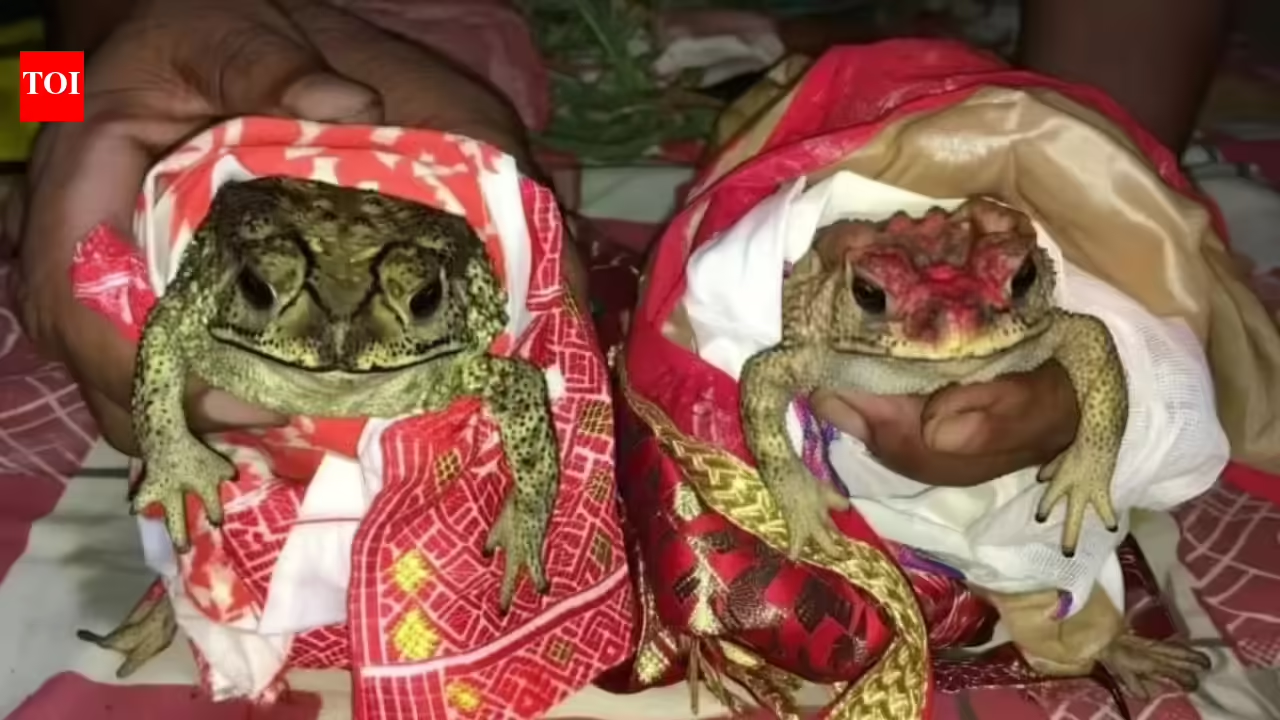
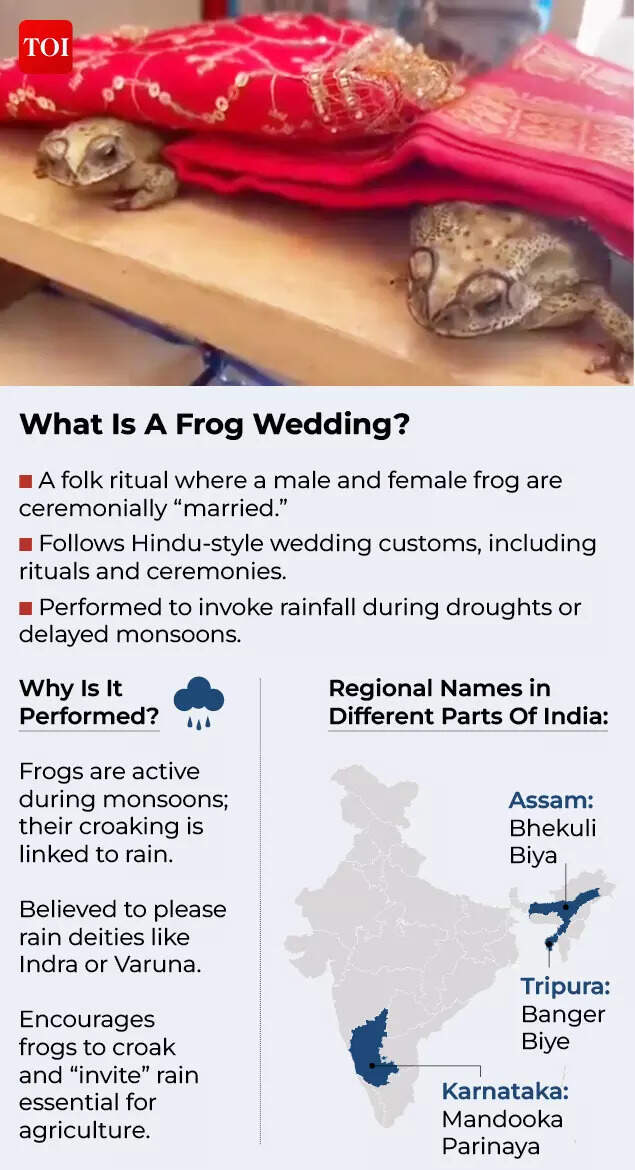
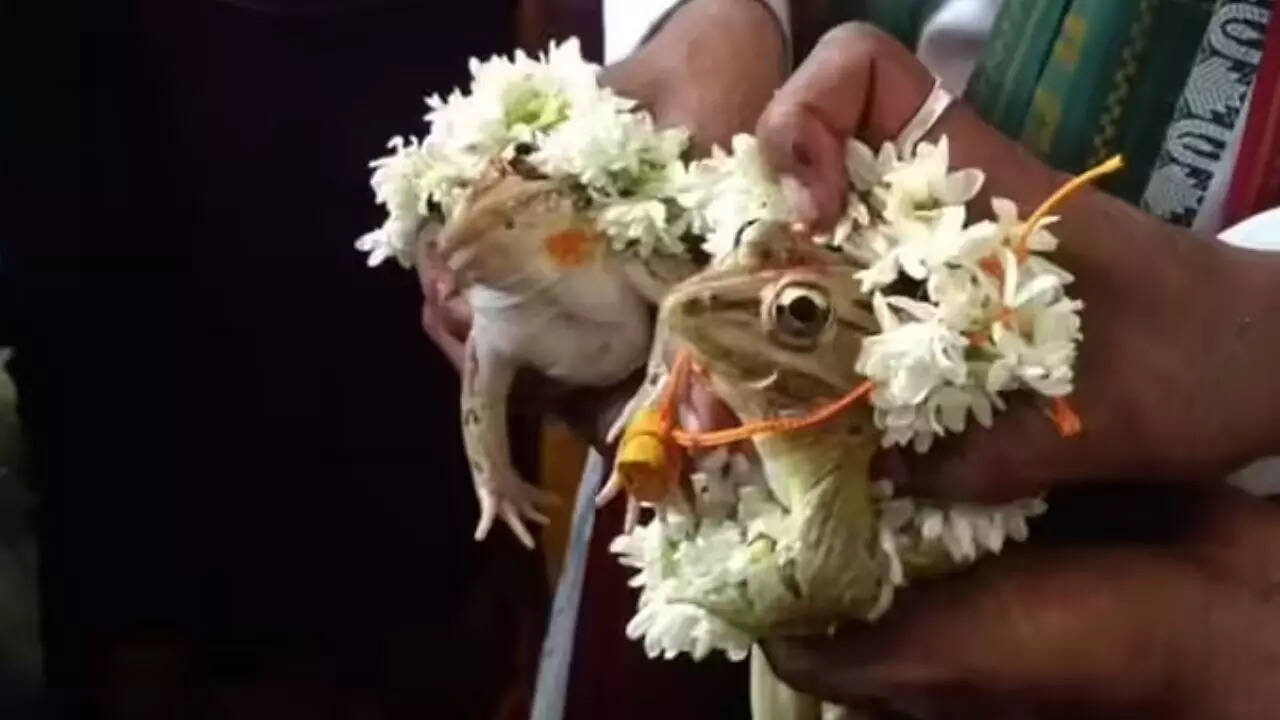
For generations, they have lived quietly at the edge of ponds, paddy fields, and village lore—small, croaking creatures whose voices rise just before the skies open. To meteorologists, frogs are bioindicators. To farmers staring at cracked earth and empty canals, they are something more.In villages across India, when the monsoon fails and prayers go unanswered, hope takes an unusual shape.It is dressed in miniature wedding clothes.It is blessed with turmeric, vermilion, and mantras.And it is sealed not by humans—but by frogs.This is the story of India’s frog weddings—rituals born of drought, fear, faith, and an intimate relationship with nature. From Assam’s exuberant Bhekuli Biya to Karnataka’s solemn Mandooka Parinaya, these ceremonies reveal how communities confront climate uncertainty not with data charts, but with song, symbolism, and collective belief.What Is A Frog Wedding And Why Is It Performed?A frog wedding is a folk ritual in which a male frog and a female frog are ceremonially “married” following Hindu-style wedding customs. The primary purpose is to invoke rainfall during prolonged dry spells, droughts, or delayed monsoons.Frogs are closely associated with rain because they become most active during the monsoon—their mating season—when they croak loudly and breed in newly formed water bodies. Villagers believe that marrying frogs encourages them to croak joyfully, appeases rain deities such as Indra or Varuna, and invites rain essential for agriculture.The ritual is not prescribed in ancient Hindu scriptures like the Vedas or Puranas. Instead, it is a folk custom, shaped by indigenous tribal beliefs, agrarian anxieties, and local Hindu practices, reflecting a deep emotional bond with nature.How Old Is This Tradition?The frog wedding ritual is believed to have originated in Northeast India, particularly Assam, and later spread to states such as Uttar Pradesh, Madhya Pradesh, West Bengal, and Karnataka.It is a very old oral tradition, passed down through generations rather than recorded in religious texts. Although the Sanskrit word manduka means frog (as seen in the Mandukya Upanishad), no frog wedding is mentioned there.Scholars suggest the practice is several centuries old, dating back to pre-British times when monsoon failures posed existential threats to farming communities. Folklore studies from the 1990s document it as part of traditional Assamese culture, with some tracing its roots to ancient tribal belief systems of the Northeast.The ritual continues today. In Assam alone, frog weddings were reported in 2023, 2024, and 2025 in districts such as Kamrup, Biswanath, and Darrang—demonstrating how age-old customs persist as coping mechanisms amid changing climate patterns.

Frog Wedding

Where Did The Frog Wedding Ritual First Take Shape?The ritual is widely believed to have originated in Assam, where it is known as Bhekuli Biya.Its emergence is linked to animistic beliefs and agrarian life, where communities dependent on monsoon rains developed symbolic rituals to cope with drought and delayed rainfall. Observing that frogs croak intensely during the rainy season, villagers associated their mating with the arrival of rain.Socially, the ritual arose in weather-dependent rural societies facing water scarcity. It blends local superstitions with Hindu rites, offering communities emotional relief, collective hope, and a sense of control during harsh dry periods.From Assam, the practice gradually spread to northern, central, and western India—adapting to similar environmental anxieties in regions such as Uttar Pradesh, Madhya Pradesh, Maharashtra, and Karnataka.

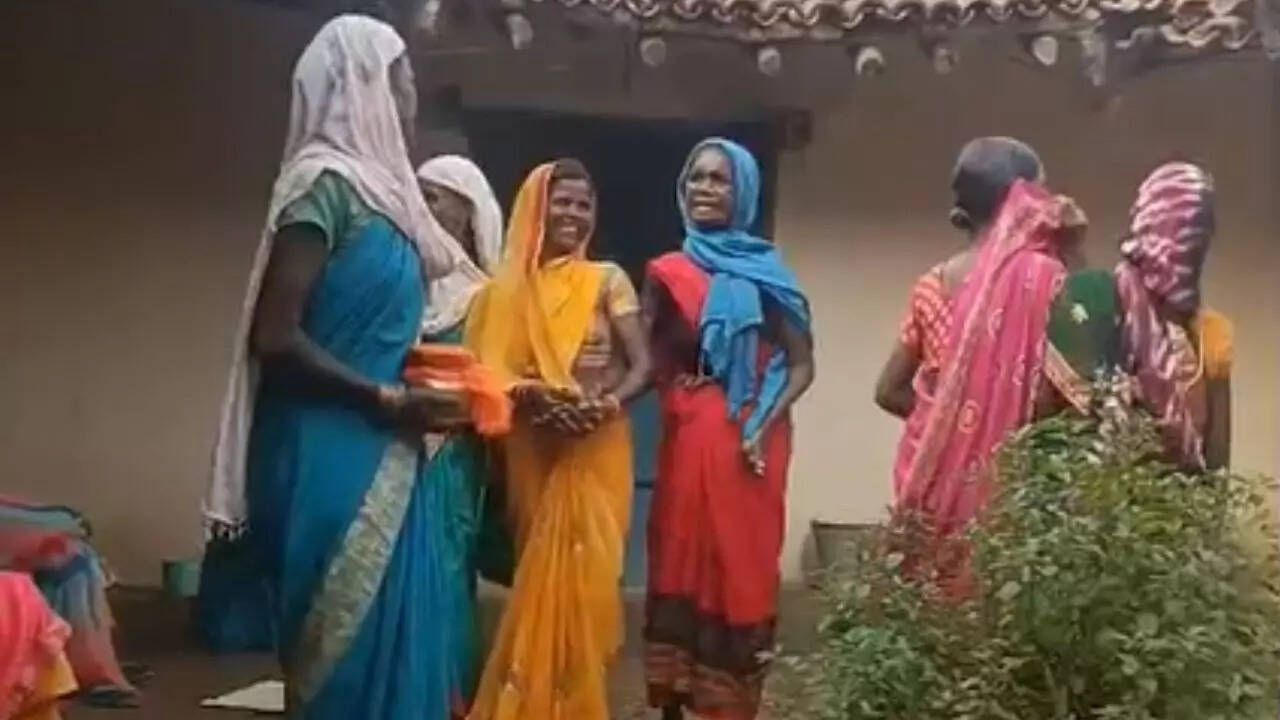
dance ceremony

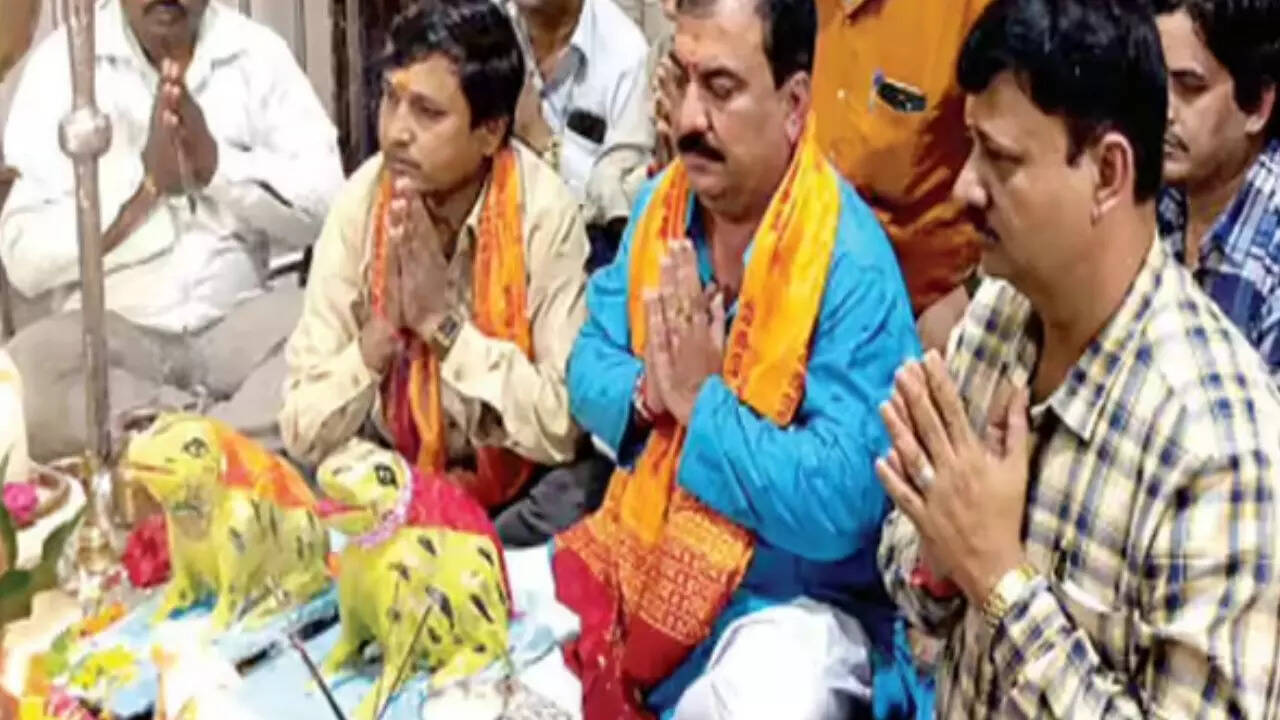
How Do Frog Wedding Rituals Change Across Different Regions?The basic steps remain the same: villagers catch a male and a female frog, conduct a wedding ceremony with prayers (puja), mantras, and offerings, dress the frogs, and then release them into water. However, the style, scale, and details vary according to local customs.Assam (Bhekuli Biya):The ceremony is lively and elaborate, resembling a full Assamese wedding. Frogs are cleaned with turmeric and mah dal paste, rubbed with oil, bathed, and dressed in traditional Assamese clothes and jewellery. They are placed on a platform, tied with a red thread, and vermilion (sindoor) is applied to the female frog. A priest performs prayers to rain gods such as Varuna. The entire village participates with band parties, dhuliya (drummers), dances, food, and a procession similar to a groom’s party. Afterward, the frogs are released into a pond. If they remain together, it is believed rain will come soon.Songs sung during Bhekulir Biya form an important genre of Assamese folk literature. These songs have no specific author or composer and have been passed down orally from generation to generation since time immemorial.Uttar Pradesh (Varanasi, Gorakhpur):The ritual follows traditional Vedic Hindu customs and is often conducted in temples such as the Kalibari temple. Priests chant mantras, sindoor is applied, and the ceremony is performed seriously by community groups, especially during intense heat or drought.Karnataka (Mandooka Parinaya):The ceremony is calmer and more prayer-focused. Frogs are often named Varuna (male, water god) and Varsha (female, rain). They are bathed in turmeric water, dressed in special clothes, and adorned with symbols such as toe rings. The ritual takes place in temples or community spaces decorated with flowers and small pandals, with less festivity than in Assam.Madhya Pradesh:In some cases, clay or toy frogs are used to avoid harming live animals. Prayers are offered to Indra. In one instance in Bhopal in 2019, a symbolic “frog divorce” was performed after excessive rainfall followed the wedding.Tripura (Banger Biye):Similar to Assam’s version but influenced by local tribal and tea-garden traditions, including garlands and the application of sindoor.Overall, rituals in the northeast and north tend to be more vibrant, with songs, food, and dances, while southern versions are quieter and more symbolic. The practice reflects a blend of tribal beliefs and Hindu traditions shaped by dependence on rainfall for agriculture. It is generally viewed as a belief or superstition, with no scientific proof—rain follows seasonal patterns, and frog activity coincides with moisture levels.Other places: Occasionally observed in Bihar (such as Saharsa), West Bengal (Nadia district), and rarely in parts of Maharashtra, Rajasthan, Tamil Nadu, or hilly regions.The ritual does not occur everywhere in these states. It is usually performed only in small rural villages when rainfall is scarce and farming is affected.

Inside Frog Weddings

Faith, Science, And Tradition: How Assam’s Frog Weddings Are Interpreted TodayInterpreting traditional rain-invocation rituals like Assam’s Bhekulir Biya does not require choosing only one perspective. These practices are layered and meaningful, and a balanced understanding can draw from faith, science, and cultural heritage, especially in a world affected by climate change.From a faith-based perspective, frog weddings are expressions of spiritual belief and connection with divine or natural forces. In agrarian communities, frogs symbolise fertility and rain due to their link with water and monsoons. The ritual is an act of devotion, invoking Hindu gods like Indra or local deities. Even today, faith offers comfort during droughts, reinforcing moral and cosmic harmony and providing hope and resilience.Scientifically, these rituals do not cause rain, but they align with ecological patterns. Frogs breed and croak in response to humidity and rainfall, acting as bioindicators. Anthropology and psychology show that such communal rituals reduce stress, strengthen cooperation, and help communities cope with drought. In this sense, they can be seen as early, observation-based responses to weather variability.As cultural heritage, frog weddings preserve folklore, music (such as biya-naam songs), and community traditions passed down for generations. In Assam, they reinforce identity and continuity at a time when urbanisation and globalisation threaten traditional practices. Anthropologists and institutions like UNESCO recognise such rain rituals as intangible cultural heritage that supports resilience and respect for nature’s cycles.Ultimately, an integrative interpretation works best: faith provides emotional depth, science offers explanation, and cultural heritage ensures continuity. In regions like Assam, dismissing these rituals as “mere superstition” overlooks their role in social cohesion and well-being.Reports also suggest that rituals like Bhekulir Biya (frog weddings) in Assam have become more frequent in recent years, as climate change has made rainfall patterns increasingly unpredictable.Frog Weddings: Nature As Observed By CommunitiesThe practice of Bhekulir Biya in Assam reveals how historical agrarian communities understood and engaged with nature and climate.Keen Observation Of Ecological CuesVillagers noticed that frogs croak vigorously during their mating season, coinciding with the monsoon. Folklore reflects this, such as an Assamese verse where clouds say rain will come only when frogs croak. By ritually “marrying” frogs, communities symbolically encouraged this natural signal, demonstrating ecological wisdom and using amphibians as bio-indicators long before modern meteorology.Animistic And Interdependent WorldviewNature was seen as alive and relational. Frogs symbolized water, fertility, and abundance, acting as intermediaries to rain deities. Dressing frogs in miniature wedding attire, applying vermilion and turmeric, and performing priest-led ceremonies reflected a belief that human actions could harmonize cosmic forces. Agriculture, weather, and human welfare were viewed as interconnected.Cultural Adaptation To Climate VulnerabilityIn monsoon-dependent regions like Assam, Uttar Pradesh, Karnataka, and Madhya Pradesh, delayed rains caused drought and crop failure. Frog weddings served as a cultural coping mechanism—offering psychological comfort, reinforcing community solidarity through songs, feasts, and collective participation. Symbolic “divorces” during excessive rainfall show adaptability to real-time weather changes.Faith, Folklore, And HopeThese rituals combine respect for nature with human dependence on it. Even amid modern climate challenges, frog weddings persist, preserving cultural memory and teaching resilience and harmony.Songs Of Bhekulir BiyaTraditional songs, often called Bhekuli Biyar Geet or Biya Naam, are sung collectively, mostly by women, in lively, repetitive styles that mimic human weddings. They praise frogs as rain-bringers, invoke rainfall, and blend humour, devotion, and pleas to agricultural deities. Orally transmitted, these songs vary regionally, with motifs like frog croaks (tor tor), dhol beats, and calls for rain to fill paddy fields.

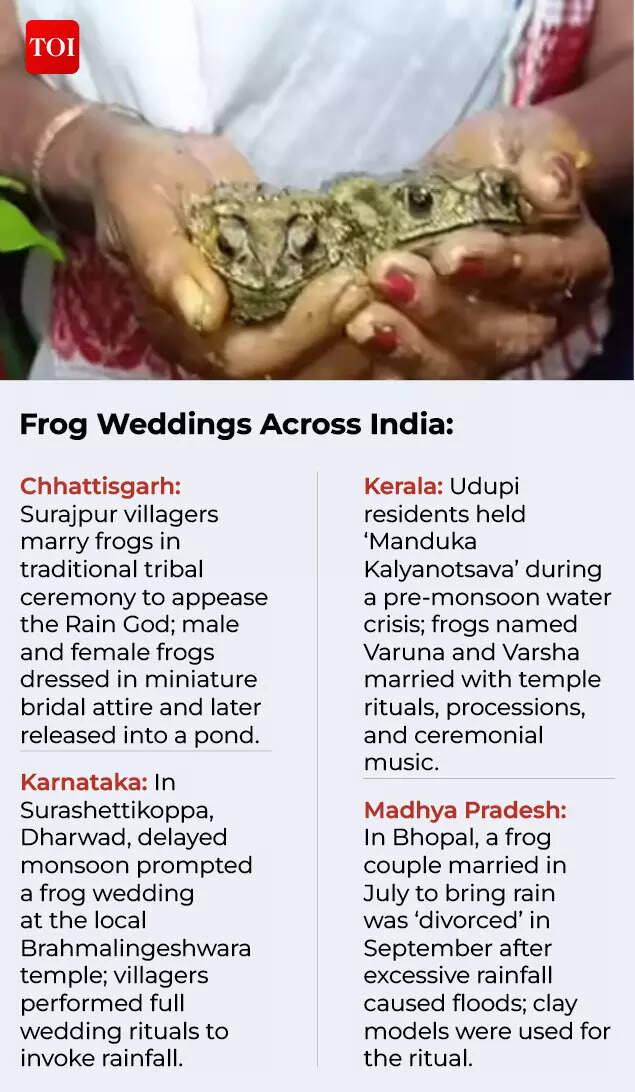
Frog Weddings Across India

Chhattisgarh: Tribal Frog Wedding Held To Appease Rain GodAn unusual wedding took place in a remote village of Chhattisgarh’s Surajpur district in August last year—not between humans, but between two frogs. The ceremony, steeped in centuries-old tribal belief, was performed to appease the Rain God as monsoon clouds remained elusive over the region.The male and female frogs were adorned in miniature bridal attire, and their union was solemnised with rituals identical to a human marriage. The ceremony included dance, a wedding procession, music, and the beating of traditional drums.Villagers from Dhondha and neighbouring hamlets thronged the venue, dancing and singing in celebration. Women performed the main rituals and sang folk songs. In videos from the event, tribal women can be seen dressed for wedding ceremonies, holding frogs in covered copper vessels while singing and dancing.Among the Gond and Oraon tribal communities of Chhattisgarh, such ceremonies are rooted in the belief that marrying frogs can invoke the God of rain to bless parched fields.“When the skies remain dry, we turn to our deities in the ways our ancestors taught us,” said village elder Ramesh Kerketta. “The frog wedding is symbolic, it’s nature calling to nature to save us from drought and bring rain.”Dozens participated in the ceremony, treating it with religious reverence and festive enthusiasm. The frog couple, bound in a sacred “pact of rain,” was later released into a nearby pond, symbolising the union’s connection with water.Such rain-invoking rituals are still practised across rural Chhattisgarh, reflecting the deep intertwining of tribal cosmology, agrarian life, and seasonal rhythms. While meteorologists forecast scattered showers later that week, villagers said the frog wedding had already lifted spirits and raised hopes of rainfall.Speaking to TOI, prominent tribal leader and former Union minister Arvind Netam said,“Tribal communities have a rain God of their own, whom they call upon through weddings of frogs. It happens in almost all tribal-dominated villages and is part of several traditions directly related to nature.”He added that these rituals remain integral to tribal life.“Be it trees, forests, woods, land, river, everything is worshipped by tribals without any interference of any other religion.”Karnataka: Frog Wedding Held As Monsoon Delay Halts FarmingIn June 2023, residents of Surashettikoppa village in Kalghatgi taluk of Dharwad district, Karnataka, conducted a frog wedding after the delayed monsoon dried up water bodies and brought agricultural activity to a standstill.To appease the Rain God, villagers organised the wedding of a pair of frogs—a practice followed in several parts of North Karnataka whenever monsoon delays or drought-like conditions prevail. In some villages, people also conduct donkey weddings.The villagers decorated the local Brahmalingeshwara temple with flowers, buntings, and festoons. All customary wedding rituals were performed, including pujas, a pandal, and other local traditions. The frog couple was married inside the temple in the presence of villagers.Kubergowda Nagangowda Murali, a folk artist and villager, said enthusiastic participation ensured the ceremony’s success. After the wedding, a mass feeding was organised.“A few years back, we faced a drought-like situation and held a frog wedding. After a few days, we received rainfall. We are supposed to be busy with agricultural activities at this time, but due to the lack of rain, agricultural activities have stopped. So, we decided to perform a frog wedding once again in the hope of rain,” he said.Gangangowda Naduvinmani, a GP member, added, “We sowed maize last week, but there has been no rain. If there are no rains in the next few days, we are likely to face drought. As our elders suggested that we marry a pair of frogs, we did so.”‘Manduka Kalyanotsava’ Performed Amid Drinking Water CrisisWith pre-monsoon showers absent and the southwest monsoon reaching Kerala nearly 10 days late, residents of Udupi held a frog wedding in June 2019 to propitiate the Rain God.The ‘Manduka Kalyanotsava’ saw frogs named ‘Varuna’ and ‘Varsha’ enter wedlock during the auspicious Simha Lagna. The ceremony was preceded by an elaborate reception beginning at Maruthi Veethika and ending at Hotel Kidiyoor, with a procession passing through Kavi Muddana Marg and Old Diana Circle.Organised by Udupi Zilla Nagarika Samiti Trust and Pancharatna Trust, the frogs—brought from Kelinje and Kalsanka—were transported in a cycle rickshaw. Women from Matru Mandali and Bhajana Mandali initiated the rituals, while Chitpadi Nasik Band provided ceremonial music.After the priest solemnised the marriage, the couple was returned to the cage. Janardhan Sherigar hosted lunch for guests, and later the frogs were released into Mannapalla lake.“Four frogs were brought in, and a zoologist’s help was sought to pick ‘Varuna’ and ‘Varsha’, a male and a female. We organised this ritual because Udupi is facing acute drinking water shortage and hope it ends soon,” said Nithyananda Olakadu, general secretary of Nagarika Samiti.Social worker Tharanath Mestha said, “This kalyanotsava was organised as per Hindu rituals. Despite criticism, we are doing this for betterment of society and for rain.”

Clay frog divorce ritual

Frog ‘Divorce’ Performed After Excess RainfallIn September 2019, a frog couple married two months earlier to bring rain was symbolically ‘divorced’ in Bhopal after incessant rainfall caused widespread flooding across Madhya Pradesh.The original frogs, married in mid-July during a dry spell, could not be found. Organisers therefore created two clay frog models and performed the divorce ritual in a temple.“It is believed that getting a male and female frog married brings rain as Indra Dev sends his blessings. Till mid-July, the state was facing a dry spell and people were suffering, so we decided to perform the ‘totka’. Bhopal had rain the very next day,” said Rinku Bateja, secretary of the Mandal.But the rain did not stop.“Now, the heavy rain has started causing a lot of problems and there is flooding in many parts of the state. So, our priest suggested that we separate the two,” Bateja said.Unable to locate the frogs, the Mandal used oversized clay models.“As Madhya Pradesh has received more than enough rain, we decided to follow the priest’s advice and performed a ceremony to separate the frogs. We sent the female back to her ‘maternal home’ and then immersed the two clay-frogs in separate vessels filled with rainwater,” he said.

Why Frog Weddings

Why Frog Weddings Still Matter In An Age of Climate Change?Speaking to TOI, Dr Dipankar Thakuria, a folklore researcher and environmental activist, said frog weddings must be viewed through the twin lenses of cultural memory and ecological understanding. | Expert ViewQ: What is Bhekulir Biya, and why is it practiced in Assam?A: Bhekulir Biya, or the frog wedding, is a traditional rain-invocation ritual practiced mainly in rural Assam during periods of low or delayed rainfall. It is deeply rooted in agrarian life, where farming depends almost entirely on timely monsoons. The ritual symbolises a community’s collective appeal to rain gods and natural forces for survival.Q: Many see frog weddings as superstition. How should they really be understood?A: Viewing frog weddings only as superstition misses their deeper cultural and social meaning. These rituals evolved from generations of close observation of nature. Frogs are strongly associated with water, humidity, and monsoons, so they became natural symbols of rainfall and fertility. The ritual also provides emotional reassurance and strengthens community bonds during times of environmental stress.Q: Is there any ecological logic behind associating frogs with rain?A: Yes, there is a clear ecological connection. Frogs are highly sensitive to moisture and rainfall. Their breeding and croaking increase with rising humidity and the onset of monsoons. Communities noticed these patterns long before modern science explained them. While frogs do not cause rain, their behaviour often signals changing environmental conditions.Q: How does modern science view such rituals today?A: Scientifically, these rituals do not influence weather. However, ecology and anthropology show that they reflect early, observation-based responses to climate variability. Communal rituals like these also reduce stress, encourage cooperation, and help people cope with drought—benefits that are very real, even if the ritual itself does not produce rain.Q: Are frog weddings still being performed today?A: Yes. In rural Assam, frog weddings continue to be performed, especially during severe dry spells. Reports suggest that they have become more frequent in recent years as rainfall patterns have grown increasingly unpredictable due to climate change.Q: Are these rituals changing with time?A: They are evolving. In some places, frog weddings have become more symbolic or heritage-focused, and sometimes they attract media attention. However, in many villages, the ritual still carries genuine meaning and is performed only when rain is urgently needed.Q: Will rituals like Bhekulir Biya survive in the future?A: I believe they will survive, though in adapted forms. As long as rural communities remain dependent on rainfall and face climate uncertainty, such rituals will continue to serve as cultural lifelines—connecting people to nature, shared memory, and collective resilience.